Colorado Natural Heritage Program Logo Colorado Natural Heritage Program Logo CNHP
  • About Us
    • About Us
      • Biennial Report
    • Conserving Biodiversity
    • Events
    • Careers
    • Internships
    • Volunteer
    • The NatureServe Network
    • Partners
    • Staff Directory
  • Our Work
    • Statewide Natural Heritage Survey
    • Ecology
    • Wetlands
    • Plants
    • Animals
    • Climate Change
    • Education
    • Invasive Species
  • Our Services
    • Database Development
    • GIS Analysis & Modeling
    • Mapping
    • Surveys & Inventories
    • Monitoring & Assessment
    • Conservation Planning
    • Private Lands Conservation
  • Data
    • About CNHP Data
    • Tracking Lists
    • Request Data
    • Contribute Data
    • Download Data
    • Potential Conservation Areas
    • Help & Documentation
  • Maps
    • (CODEX) Conservation Data Explorer
    • CNHP Spatial Layers
    • Wetlands Mapper
    • COMaP
  • Library
    • Reports
    • Tracking Lists
    • Potential Conservation Areas
    • Field Guides
      • Rare Plant Guide
      • Colorado Wetland Field Guides
  • Blog
  • Use CODEX Conservation Data Explorer

  • Donate Now

Colorado Wetland Field Guides and App

Is it true that sedges have edges and rushes are round? Need help figuring out one willow from another? Or ever wondered about the names of all those beautiful wildflowers growing along mountain streams? CNHP has developed a series of digital and printed field guides to wetland plants that will answer these questions and more. The field guides have been made possible through Wetlands Program Development Grants from U.S. Environmental Protection Agency, Region 8, and in-kind match from Colorado Parks and Wildlife Wetland Program, Colorado Department of Transportation, and Colorado State University.

CNHP Wetland Field Guide App Screenshot

Colorado Wetlands Mobile App

The Colorado Natural Heritage Program is pleased to offer the Colorado Wetlands Mobile App! The App is available for FREE at the iTunes App Store (for iPhones/iPads). Functionality fixes were completed in October 2025, including the restoration of download capabilities for offline use. Please note that an Android version of the App is currently unavailable.

The Colorado Wetland Mobile App contains three main sections:

  • Wetland Plants: Detailed descriptions and photos of 711 plant species found in Colorado's wetland and riparian areas. The plants are searchable through many different search criteria and filters.
  • Wetland Maps: Access to digital National Wetland Inventory (NWI) maps. The App shows NWI maps for the entire state of Colorado and can use location information from the device to show mapped wetland where the user is located. The Maps screen can also be used to search for wetland plants potentially found at the user's location.
  • Wetland Types: Brief description of the most common wetland and riparian types found in Colorado. Wetland types can also be used as a filter for searching plant species.

For more information, see the user's manual
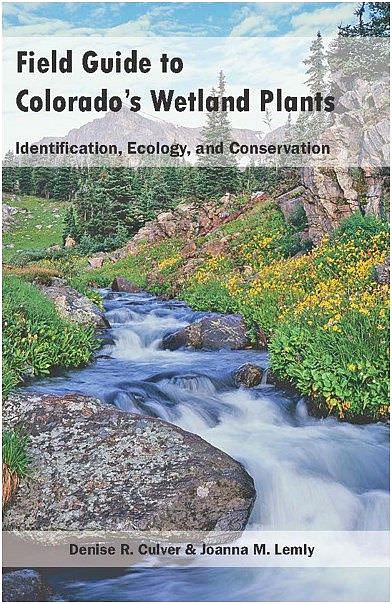
Wetland Field Guide Cover

Field Guide to Colorado’s Wetland Plants

The Field Guide to Colorado’s Wetland Plants: Identification, Ecology, and Conservation helps professionals and amateurs alike identify most plant species found in Colorado’s wetlands. The Guide is an easy-to-use resource that includes detailed descriptions and photos of over 600 wetland plant species, plus information on their wetland indicator status, conservation status, rarity, distribution, and ecology. The Guide not only assists with identifying wetland plants, but helps users apply that knowledge towards proactive conservation and protection of one of Colorado’s most valuable resources. View a sample page.

Purchase the field guide online at the CSU Bookstore. You can also download the pdfs! (zip)

Download the updated index and errata. (zip)

Common Wetland Plants of Colorado's Eastern Plains: A Pocket Guide

Common Wetland Plants of Colorado's Eastern Plains

The Common Wetland Plants of Colorado’s Eastern Plains: A Pocket Guide is a complimentary publication to the comprehensive Field Guide to Colorado’s Wetland Plants. The Pocket Guide highlights common wetland plants, both native and non-native located within the Eastern Plains. It is designed to help landowners and other wetland managers correctly identify common wetland plants, manage for preferred species, and identify noxious ones. The Pocket Guide contains 119 species with 6 key characteristics (with bolded highlights of diagnostic characters), similar species, habitat and ecology comments, and management comments.

Hard copies of the Pocket Guide are available for free from CNHP or we can ship them with a $15.00 shipping and handling charge. You can also download the pdf!

Common Wetland Plants of Colorado's Southern Rocky Mountains: A Pocket Guide

Common Wetland Plants of Colorado's Southern Rocky Mountains

New in 2018, the Common Wetland Plants of Colorado’s Southern Rocky Mountains: A Pocket Guide is a complimentary publication to the comprehensive Field Guide to Colorado’s Wetland Plants. The Pocket Guide highlights common wetland plants, both native and non-native located within the Southern Rocky Mountains. It builds upon CNHP’s ongoing effort to provide wetland professionals and the general public with essential tools to identify and assess Colorado’s wetland resource. The Pocket Guide was produced as part of an U.S. EPA Wetland Program Development Grant with inkind match from CSU and The Nature Conservancy.

No hard copies of the Pocket Guide are available at this time.
You can also download the pdf!

Common Wetland Plants of Colorado's Western Slope: A Pocket Guide

Common Wetland Plants of Colorado's Western Slope

New in 2018, the Common Wetland Plants of Colorado’s Western Slope: A Pocket Guide is a complimentary publication to the comprehensive Field Guide to Colorado’s Wetland Plants. The Pocket Guide highlights common wetland plants, both native and non-native located within the Western Slope. It builds upon CNHP’s ongoing effort to provide wetland professionals and the general public with essential tools to identify and assess Colorado’s wetland resource. The Pocket Guide was produced as part of an U.S. EPA Wetland Program Development Grant with inkind match from CSU and The Nature Conservancy.

Hard copies of the Pocket Guide are available for free from CNHP or we can ship them with a $15.00 shipping and handling charge. You can also download the pdf!

For information, contact Tom Baldvins.

Our Work

Ecology
Wetlands
Plants
Animals
Climate Change
Education
Invasive Species

Related Topics

Database Development
GIS Analysis & Modeling
Mapping
Surveys & Inventories
Monitoring & Assessment
Conservation Planning

Web Projects

  • CODEX - Colorado’s Conservation Data Explorer
  • Rare Plant Guide Online
  • Colorado Wetland Info Center
  • COMaP - Colorado Protected Lands
  • Colorado Bat Working Group
  • STReaMS - Endangered Fishes Database
  • Colorado Native Plant Database Data Portal

About Us

  • About Us
  • Contact Us
  • Staff Directory
  • Careers
  • The NatureServe Network
  • Partners
  • Site Map
Warner College of Natural Resources Logo
  • Apply to CSU
  • Equal Opportunity
  • Disclaimer
  • Privacy Statement
  • Search CSU
  • CSU Land Acknowledgement
  • CSU Principles of Community
© 2026 Colorado Natural Heritage Program
Colorado State University Logo
  • About Us
    ▼
    • About Us
      ▼
      • Biennial Report
    • Conserving Biodiversity
    • Events
    • Careers
    • Internships
    • Volunteer
    • The NatureServe Network
    • Partners
    • Staff Directory
  • Our Work
    ▼
    • Statewide Natural Heritage Survey
    • Ecology
    • Wetlands
    • Plants
    • Animals
    • Climate Change
    • Education
    • Invasive Species
  • Our Services
    ▼
    • Database Development
    • GIS Analysis & Modeling
    • Mapping
    • Surveys & Inventories
    • Monitoring & Assessment
    • Conservation Planning
    • Private Lands Conservation
  • Data
    ▼
    • About CNHP Data
    • Tracking Lists
    • Request Data
    • Contribute Data
    • Download Data
    • Potential Conservation Areas
    • Help & Documentation
  • Maps
    ▼
    • (CODEX) Conservation Data Explorer
    • CNHP Spatial Layers
    • Wetlands Mapper
    • COMaP
  • Library
    ▼
    • Reports
    • Tracking Lists
    • Potential Conservation Areas
    • Field Guides
      ▼
      • Rare Plant Guide
      • Colorado Wetland Field Guides
  • Blog
  • Use CODEX Conservation Data Explorer

  • Donate Now
  • About Us
    ▼
    • About Us
      ▼
      • Biennial Report
    • Conserving Biodiversity
    • Events
    • Careers
    • Internships
    • Volunteer
    • The NatureServe Network
    • Partners
    • Staff Directory
  • Our Work
    ▼
    • Statewide Natural Heritage Survey
    • Ecology
    • Wetlands
    • Plants
    • Animals
    • Climate Change
    • Education
    • Invasive Species
  • Our Services
    ▼
    • Database Development
    • GIS Analysis & Modeling
    • Mapping
    • Surveys & Inventories
    • Monitoring & Assessment
    • Conservation Planning
    • Private Lands Conservation
  • Data
    ▼
    • About CNHP Data
    • Tracking Lists
    • Request Data
    • Contribute Data
    • Download Data
    • Potential Conservation Areas
    • Help & Documentation
  • Maps
    ▼
    • (CODEX) Conservation Data Explorer
    • CNHP Spatial Layers
    • Wetlands Mapper
    • COMaP
  • Library
    ▼
    • Reports
    • Tracking Lists
    • Potential Conservation Areas
    • Field Guides
      ▼
      • Rare Plant Guide
      • Colorado Wetland Field Guides
  • Blog
  • Use CODEX Conservation Data Explorer

  • Donate Now
  • About Us
    ▼
    • About Us
      ▼
      • Biennial Report
    • Conserving Biodiversity
    • Events
    • Careers
    • Internships
    • Volunteer
    • The NatureServe Network
    • Partners
    • Staff Directory
  • Our Work
    ▼
    • Statewide Natural Heritage Survey
    • Ecology
    • Wetlands
    • Plants
    • Animals
    • Climate Change
    • Education
    • Invasive Species
  • Our Services
    ▼
    • Database Development
    • GIS Analysis & Modeling
    • Mapping
    • Surveys & Inventories
    • Monitoring & Assessment
    • Conservation Planning
    • Private Lands Conservation
  • Data
    ▼
    • About CNHP Data
    • Tracking Lists
    • Request Data
    • Contribute Data
    • Download Data
    • Potential Conservation Areas
    • Help & Documentation
  • Maps
    ▼
    • (CODEX) Conservation Data Explorer
    • CNHP Spatial Layers
    • Wetlands Mapper
    • COMaP
  • Library
    ▼
    • Reports
    • Tracking Lists
    • Potential Conservation Areas
    • Field Guides
      ▼
      • Rare Plant Guide
      • Colorado Wetland Field Guides
  • Blog
  • Use CODEX Conservation Data Explorer

  • Donate Now

Spatial layers created for the BTPD Habitat Suitability Model`

Methods used for building the BTPD Habitat Suitability Model.

Methodological approach for identifying suitable landscapes for the black-tailed prairie dog (BTPD) ecosystem conservation.

Maps of state-level high conservation potential habitat (top 10% and 30%) for the black-tailed prairie dog ecosystem, under current and future climates (present, warm/wet, hot/dry, and overlaps

Maps of range-wide high conservation potential habitat (top 10% and 30%) for the black-tailed prairie dog ecosystem, under current and future climates (present, warm/wet, hot/dry, and overlaps

LandownershipArea (km2)Percent (%)
Private63,44765.4
Federal14,02114.5
State9,3479.6
Indigenous lands7,7798.0
NGO/private conservation2,2502.3
Local/Regional1000.1
Total96,944100
Overlap of top 10% high conservation potential areas with land ownership types
StateArea (km2)Percent (%)
Colorado24,08424.8
Montana19,40120.0
South Dakota19,33119.9
Wyoming18,94719.5
New Mexico7,0827.3
Nebraska2,5252.6
Arizona1,8451.9
Texas1,5521.6
Oklahoma1,0591.1
North Dakota6990.7
Kansas4200.4
Total96,944100
Lands with high conservation potential (Top 10%) for the prairie dog ecosystem, by state.