Hi! My name is Chris Drew, and I am a student at Colorado State University studying Ecosystem Science and Sustainability. During my time as a CNHP Siegele Conservation Science Intern, I’ve had the chance to work across a wide range of field settings. From rare plant surveys and entomology data collection to prairie dog town mapping with the US Forest Service and line-point intercept (LPI) vegetation monitoring with environmental consulting crews. One of the most memorable parts of my experience for me was getting to spend half my summer working in Phantom Canyon Preserve with The Nature Conservancy. This blog will share one of the weeks that I spent there.
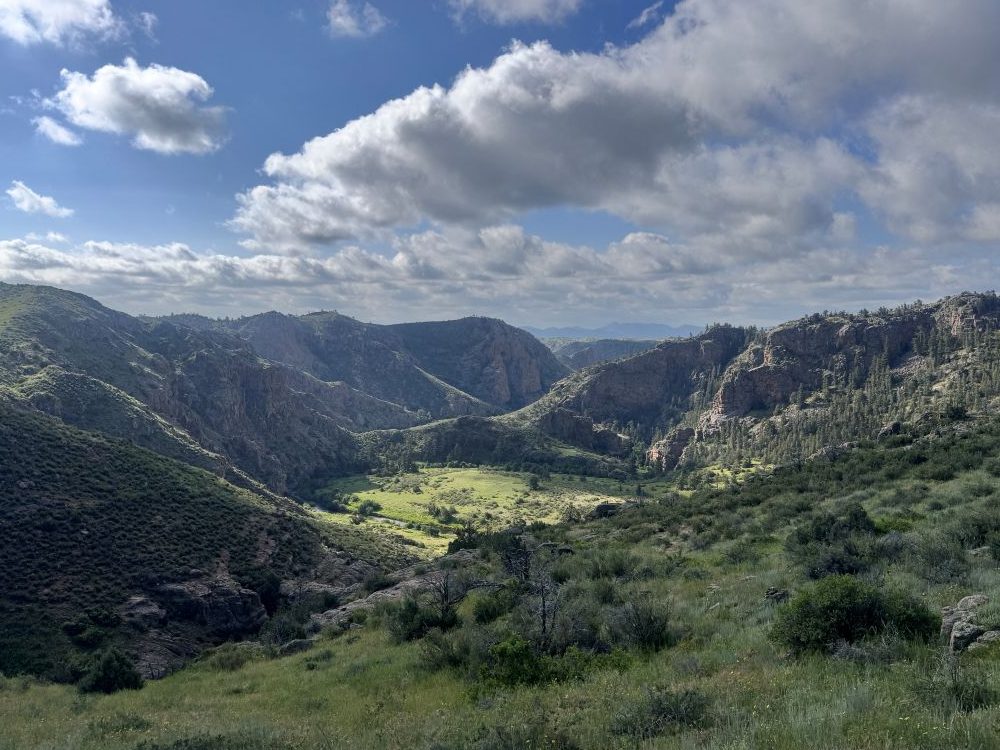
That week at Phantom Canyon week was a mix of long hikes, detailed data collection, and getting to experience one of Colorado’s more rugged and less accessible landscapes. Most mornings started early, hiking down from the rim bunkhouse into the canyon where the North Fork of the Poudre River winds and bends its way down the property. The descent into a beautiful red granite canyon was enough to wake you up, but the real work began once we reached the river at the bottom. Most days, we crossed the river five to ten times, moving back and forth along the wild canyon floor to document invasive plant species. Using tablets, we mapped occurrences with GIS software and noted population conditions. It was a good balance of physical work and real time observation, scanning for large invasive weeds, and trying not to lose footing on slick rocks during crossings.
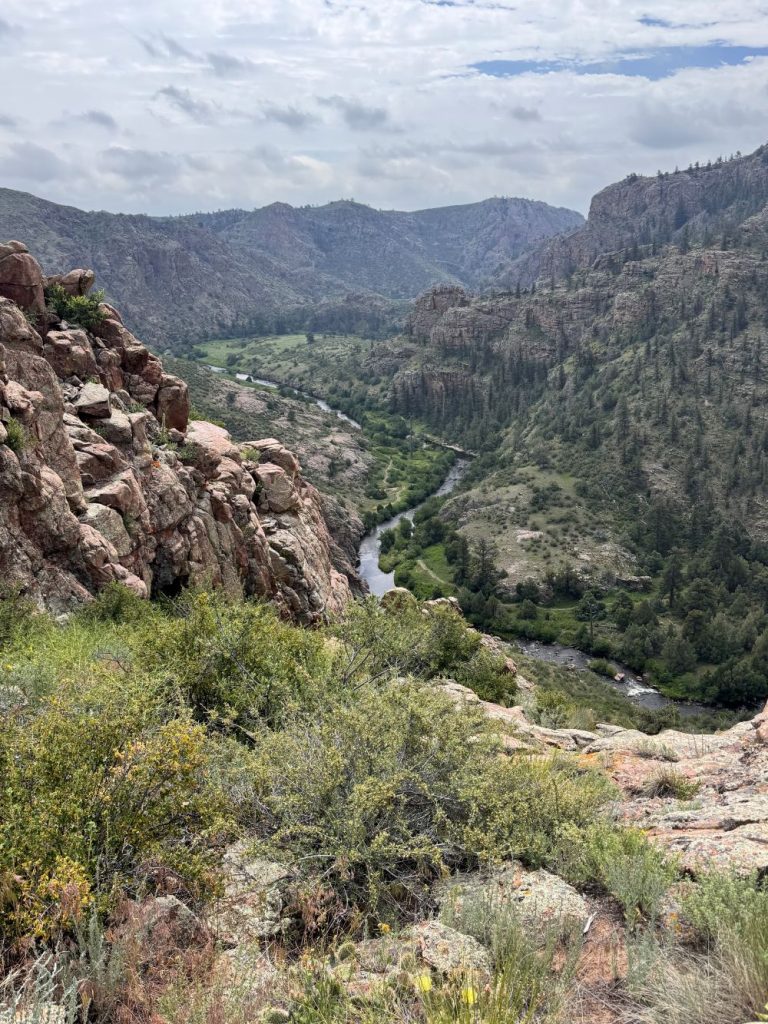
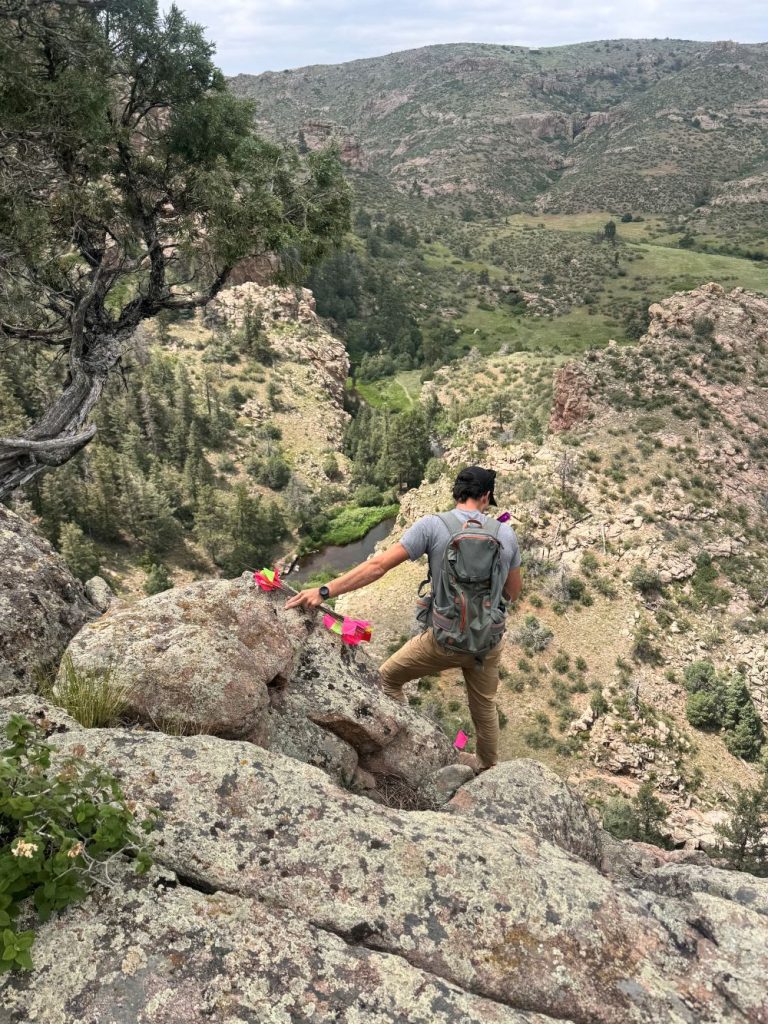
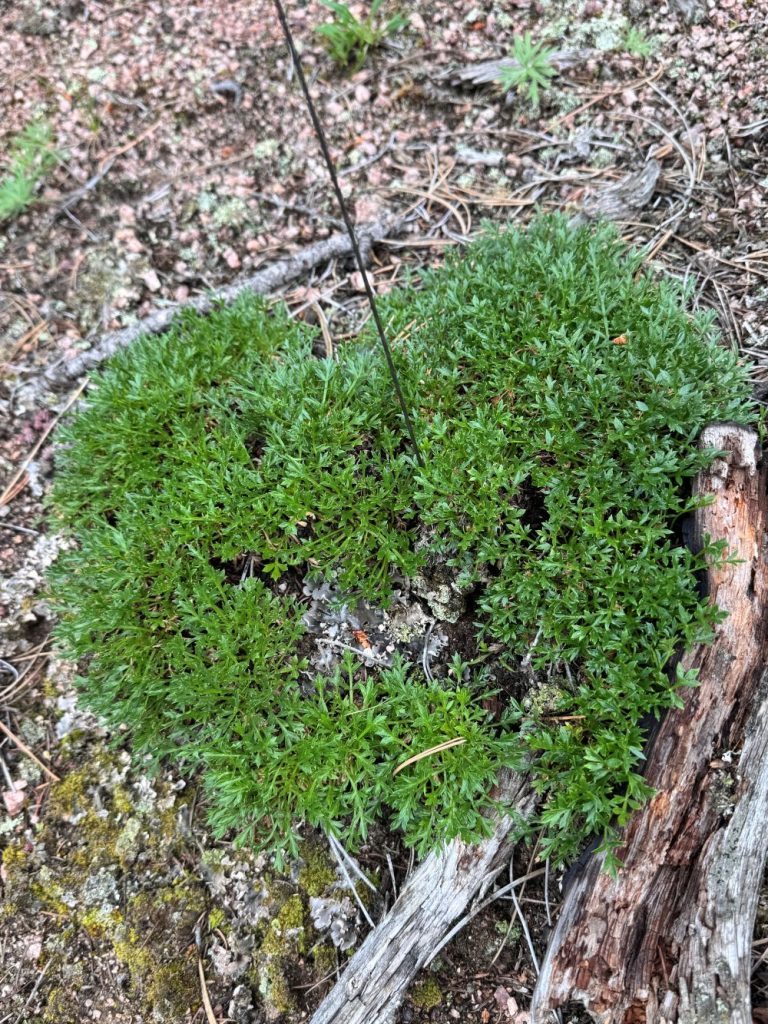
Other days took us in a completely different direction. Instead of heading down into the canyon, we Worked along the rim and cliff edges monitoring a rare plant species known as the Larimer Aletes. This small craggy plant is the main reason The Nature Conservancy acquired this property, to help preserve and protect these endemic plant populations in Colorado. These surveys required a slower, more methodical pace. We carefully navigated rocky slopes and ledges to locate populations, then documented plant counts and measured individual sizes. It felt like a shift from broad landscape surveying to something much more precise and detail-oriented. Getting to work with a species that has such a
limited range made the work feel especially meaningful.
Later in the week, we expanded beyond Phantom Canyon itself and visited surrounding conservation easements that are managed by The Nature Conservancy. These days involved a mixture of driving and hiking to different properties, where we revisited established photo points to document changes over time. This gave us the opportunity to meet with landowners, talk through management practices, and better understand how conservation goals play out in real work. Back at the end of the day, we would review photos, organize data, and contribute to annual monitoring reports for easements we visited. It added another layer to the experience, seeing how field data connects directly to long-term conservation planning and decision-making.
This week in Phantom Canyon was memorable for me because it brought together so many aspects of what I’ve been learning and working toward: conservation work, land management, and natural science in practice. It also showed me how varied fieldwork can be, even within a single location. While I was a Siegele Intern, every day looked different and had new things for me to learn and discover. Experiences like this have reinforced my interest in working in conservation and land stewardship, and I’m grateful to have been part of work that contributes to protecting these landscapes over the long term.