Hi! My name is Ben DuMais, and I am currently a fourth-year student at Colorado State University studying Wildlife Biology and Mathematics. This past summer, I had the opportunity to work as a Siegele Conservation Intern with the Colorado Natural Heritage Program (CNHP). During my internship, I helped with the Statewide Natural Heritage Surveys, which focus on inventorying rare plants and animals across Colorado. The work took me to many different parts of the state and exposed me to a wide range of habitats and species. One of my favorite weeks of the summer was spent working with the Herpetology Crew in Rio Blanco County.
Before this week, I had spent most of my internship working in high-elevation shrublands in Grand, Eagle, and Summit counties. Much of that work focused on plant surveys and alpine ecosystems. While I really enjoyed that experience, I was excited for the chance to focus more on wildlife and explore a part of the state that I had never visited before. This week was also my first real field experience working with reptiles and amphibians. I quickly discovered how fascinating these groups are, and they have since become some of my favorite animals to work with.
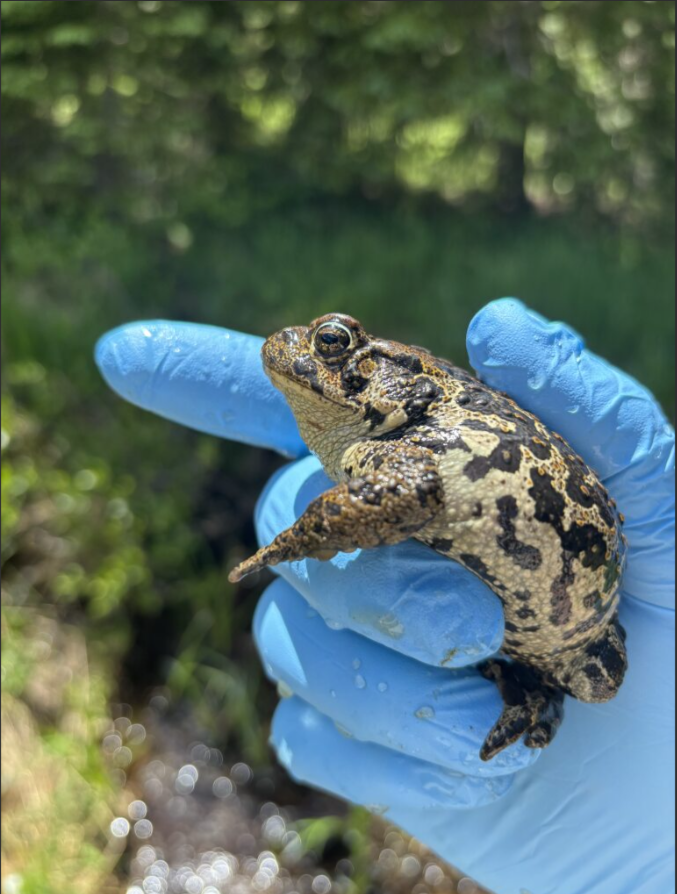
The week started off strong. While driving through Poudre Canyon on our way to the field site, we pulled off the road to conduct a quick Boreal Toad survey at a high-elevation lake. I knew going in that we might not find any toads, since the species has experienced major population declines due to disease. Despite the odds, we were lucky enough to find one. We carefully captured the toad and used a sterile swab to collect a sample that would later be sent to Colorado Parks and Wildlife for testing for chytrid fungus. It was exciting to contribute to monitoring efforts for a species that has faced such significant challenges.
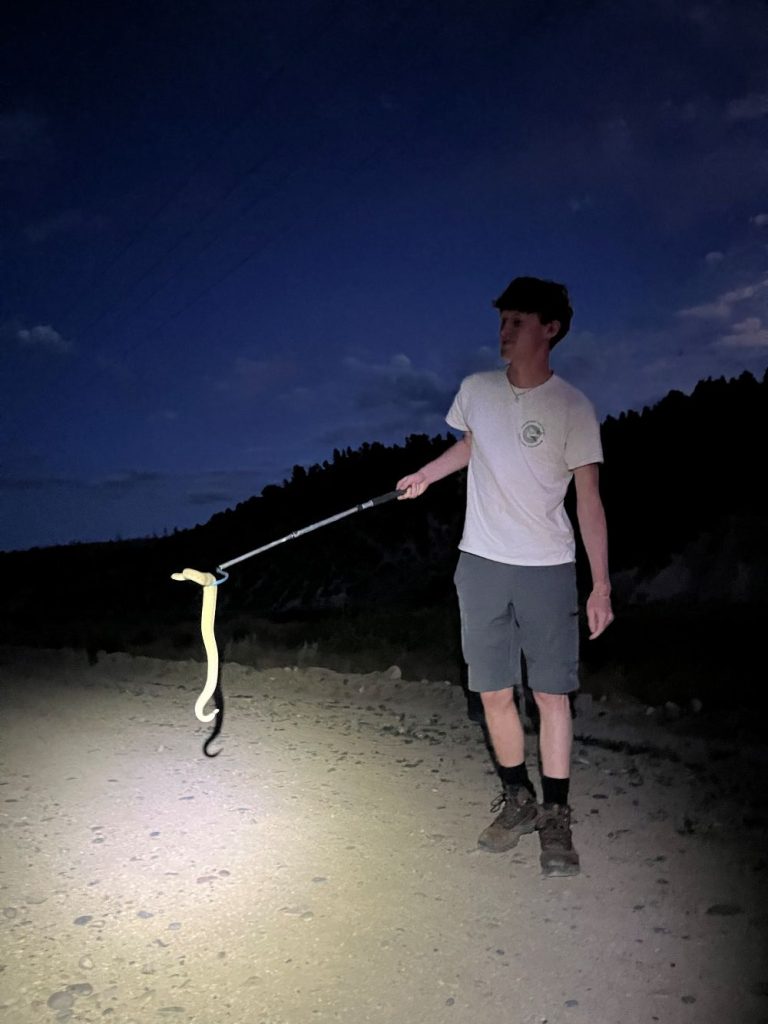
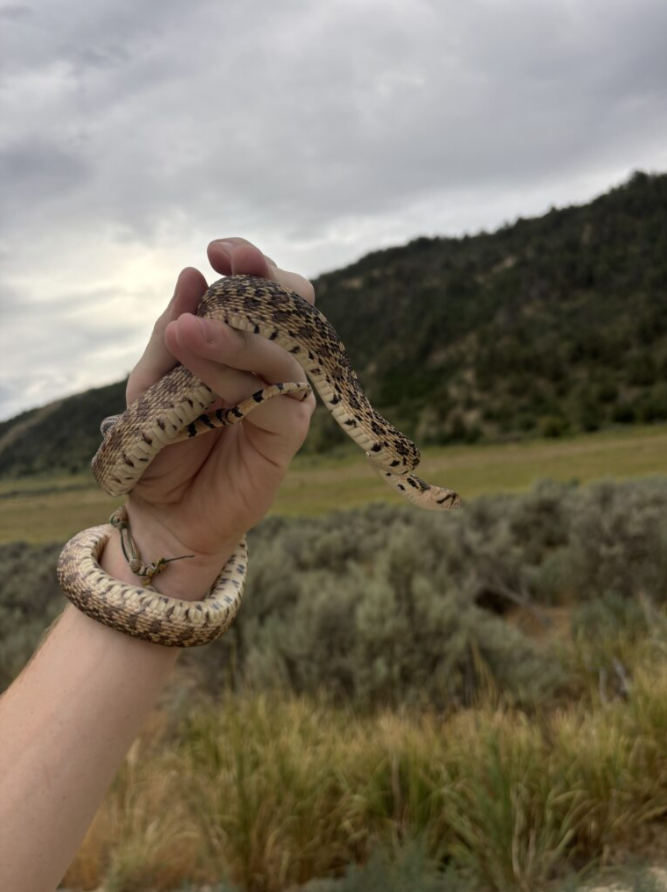
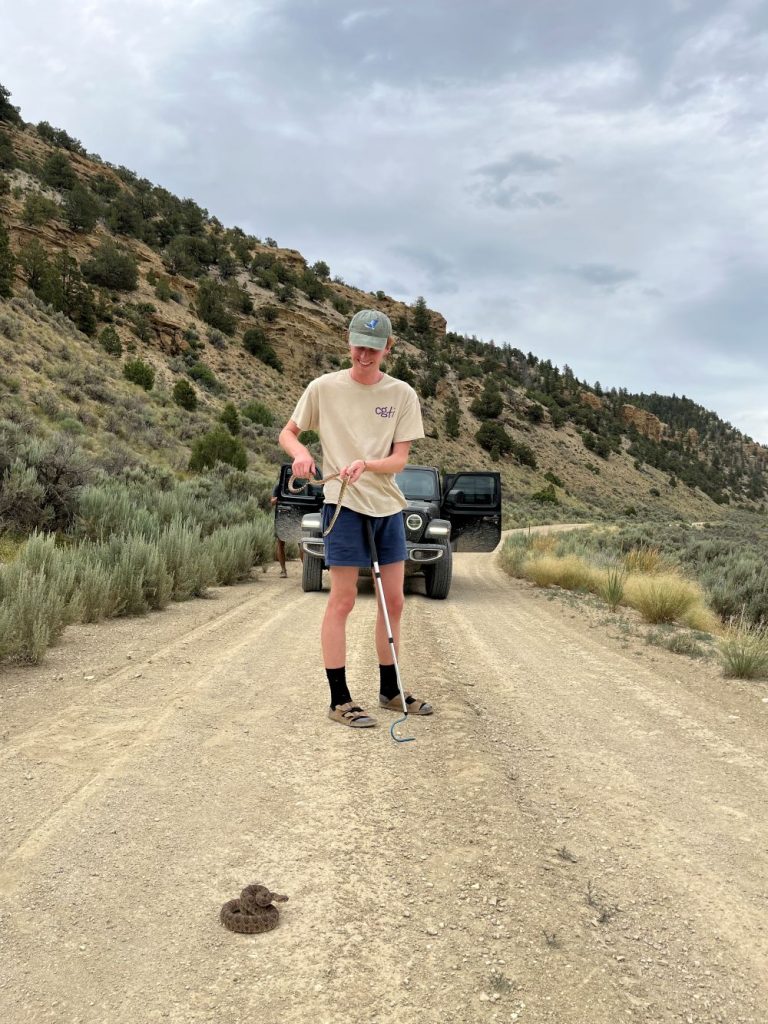
Later that night, we finished the day by roading and cruising through the Colorado Plateau in search of snakes. Road cruising is a survey technique where researchers slowly drive roads at night to look for reptiles that move onto the warm pavement. Over the course of that night and the following three evenings, we found dozens of snakes. These included several rare midget faded rattlesnakes, along with garter snakes and gopher snakes. On our final night, we were also lucky enough to find a yellow-bellied racer. These nighttime surveys were some of the most exciting parts of the week. I spent hours safely wrangling snakes, observing them up close, and learning about their natural history, behavior, and habitat preferences.
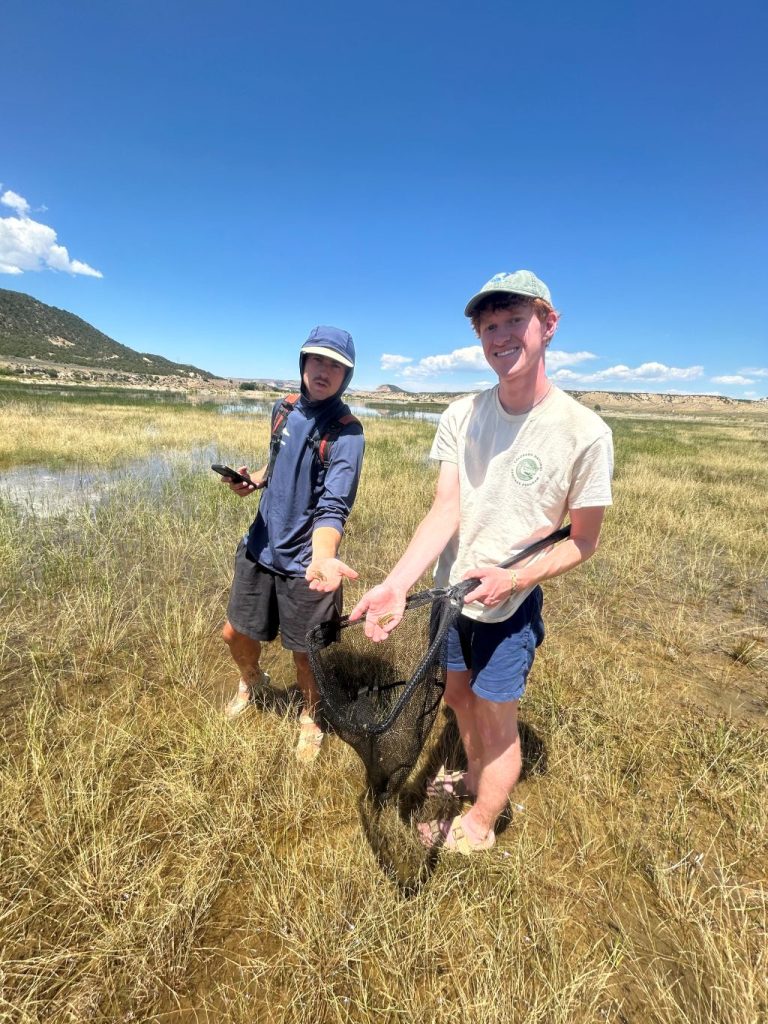
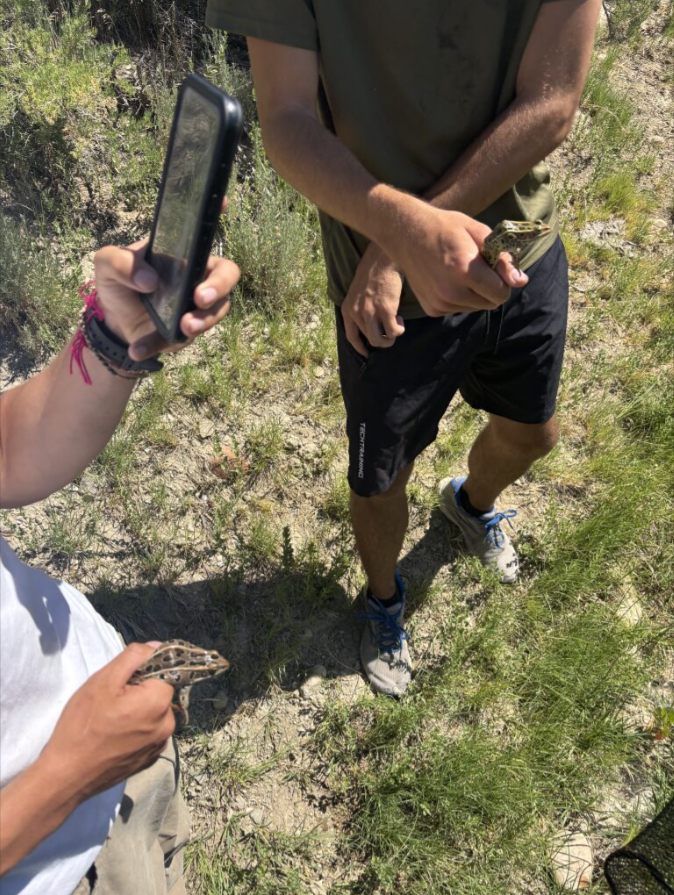
In addition to searching for snakes at night, we spent many of our days surveying local ponds and lakes for Northern Leopard Frogs. This work was another highlight of the week. Surveying for frogs was straightforward and a lot of fun. It often involved taking off our shoes, putting on shorts, and wading into the water with our hands ready. Once we caught a frog, we gently swabbed it to test for chytrid fungus before releasing it back into the water. These surveys help researchers monitor frog populations and track the spread of disease among amphibians.
This week was incredibly valuable for both my career goals and my personal interests. It gave me hands-on experience working with reptiles and amphibians and helped me gain a deeper understanding of the diversity of wildlife in Colorado. I am very grateful for the opportunity to assist CNHP with these natural heritage surveys and to contribute to work that helps inform conservation and management decisions across the state. Experiences like this reinforced my interest in field biology and conservation, and they will continue to shape the direction of my future career.