As a botany major at CSU, there’s one internship that will give you the best, most rewarding, and engaging summer you could ask for. The Colorado Natural Heritage Program hosts the Siegele Internship, meant for college students with an interest in environmental research, forestry and overall natural sciences to gain experiences and skills for their future careers. And I made it in!
This summer, from May to August, I got to work across Colorado on a variety of projects, from rare plant cataloging to peak population surveying. Working with native plants, many of which are rare and difficult to find, I began to build a solid foundation of skills and experiences to take into the rest of my life. Besides career advancement and the incredible experiences, I had a lot of fun and spent time with some cool people.
My most memorable trip was also one of the last. I was tasked to work with a ten-person group on the GLORIA project, a 20-year running research endeavour focusing on the long-term changes of mountain peaks across the world. This project is unique in its scope and difficulty, focusing on remote peaks unaffected by recreation and mining. This is super cool for those who get to do it, as it means backpacking in and spending days away from civilization (and you get paid to do it, too).
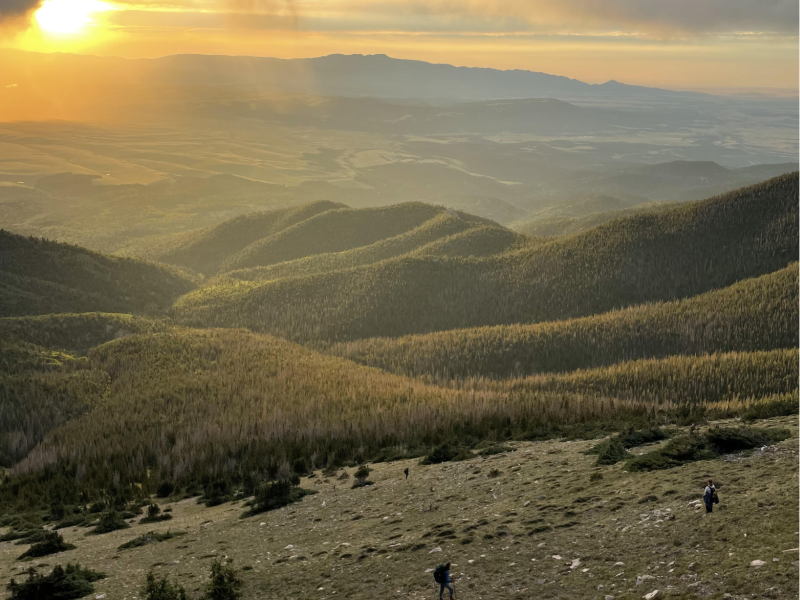
Day four of our first week of GLORIA was a special one for me. It was incredible, the definition of a rewarding experience. It all starts at 5 am, where we wake up, eat a small breakfast, and start hiking. The site we were headed to was our second peak of the trip, sitting at around 12500 feet of elevation, and we beelined our way through the alpine to our peak. It was a stunning morning! Getting the blood flowing, we make it to the summit, labeled as MUD, and I start my ritual of two oatmeal packets with a chunk of dried raspberries and watch the sun rise above us. These moments of peace working for CNHP are the cherry on top.
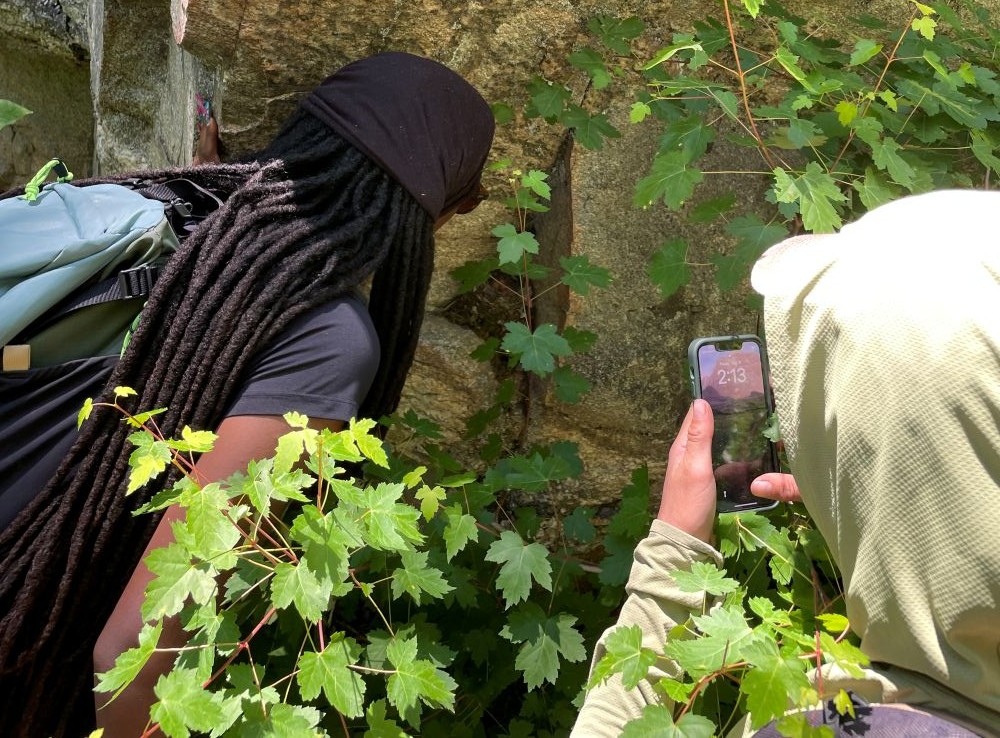
We start working on our quadrats, which we had flagged out yesterday, with 16 1m² plots in each cardinal direction of the peak. Within each plot, we tally and record the percent cover of rock cover, both scree and solid, moss, and plant cover. Then, each species of plant is carefully tallied and estimated for cover percent, finally completing each plot by marking 100 random pin drops to fight researcher bias and give a more complete picture. These plots are kept consistent over the entire course of the study, and require precise setup and monitoring to ensure quality data.
Around 9 am, we all break and have a snack to keep our energy up. I had a light snack of two Nutella tortillas and a granola bar. Afterwards, Ed and I, a volunteer working this trip, were tasked with working our way up to the next peak, sitting at around 12800 ft.
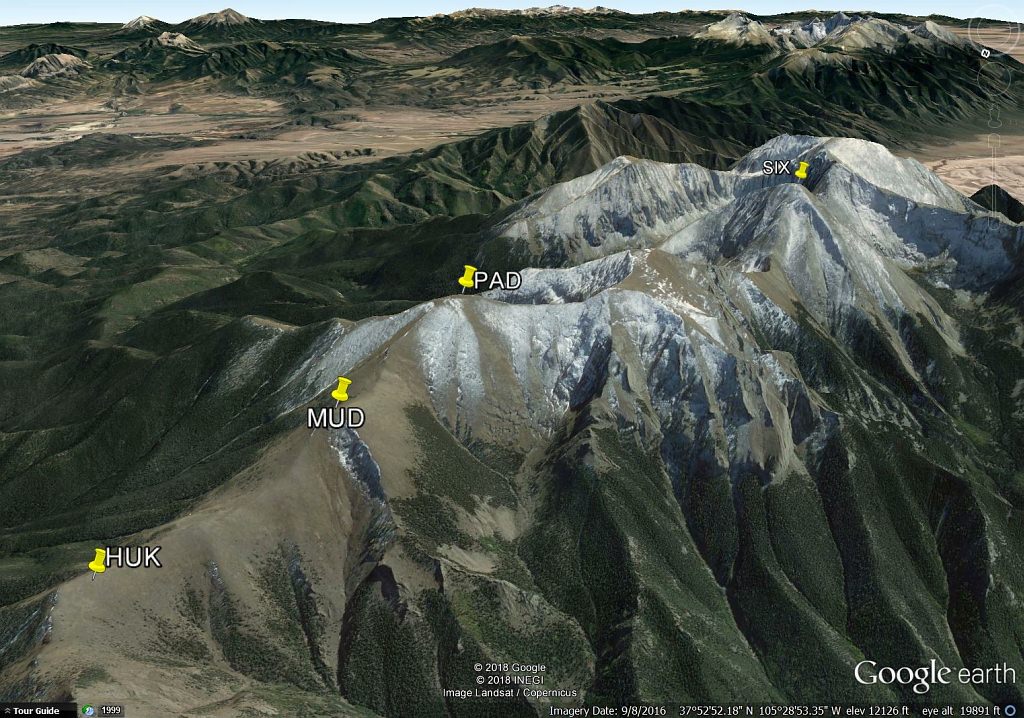
A beautiful hike up, where we worked our way to the saddle before starting on around 400 feet of vertical. Upwards was a rocky and craggy ridge, interwoven with deep moss, Salaginella densa and Cirsium funkia. Slowly and methodically, we made our way up, dividing the San Luis valley and the Wet Mountain valley. The sand dunes were just out of view, blocked by Mount Herard, but the slightest bit of tan could be seen 3000 feet below. A beautiful place to work!
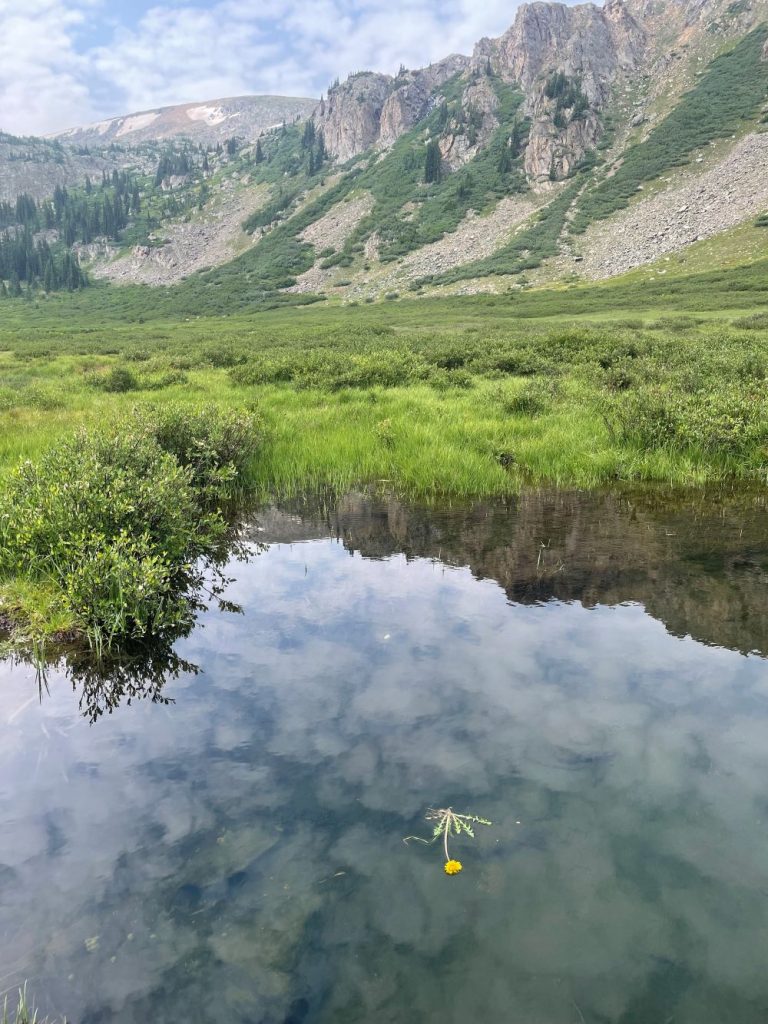
Once we curved our way onto the large, conical peak of PAD, we had to start finding the pins and markers left 20 years ago by the original GLORIA team. These markers were integral to our plotting and research, and took a bit of time to track them all down. We got our compasses out and went to work. From the absolute top of the peak, we found each direction and worked our way out, 20 to 80 meters for each marker. Working in silence, as our words would be whisked away by the wind, we placed our flags and were joined by other members of our team, as their work was done below.
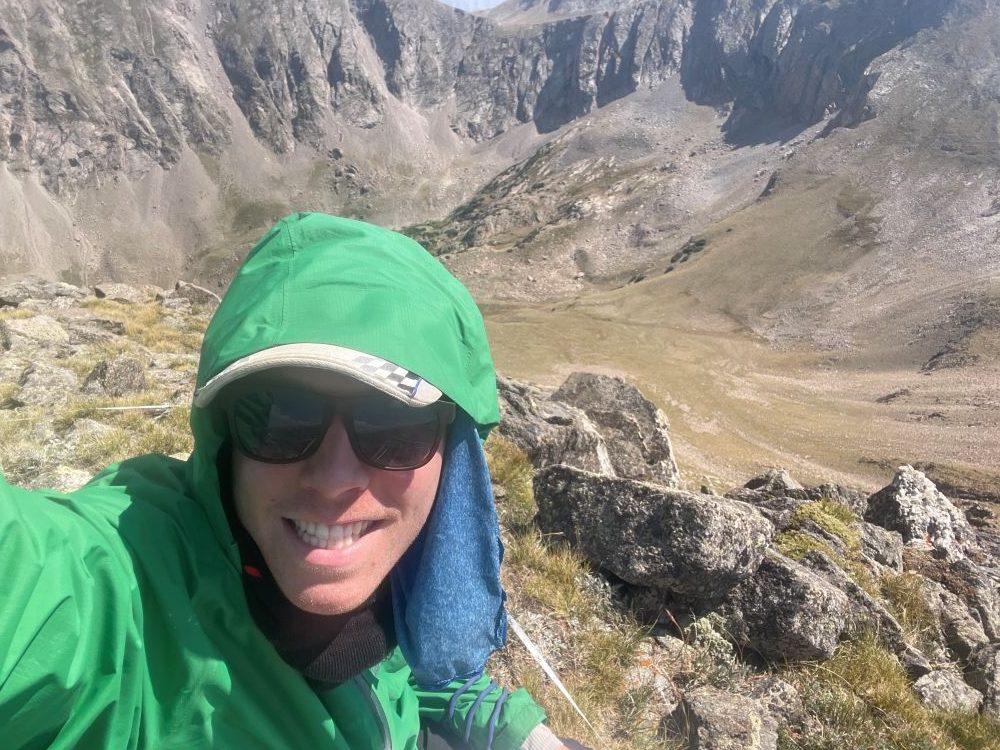
Finishing up for the day, we hiked down and prepared dinner. I spent time in my tent, reading and journaling, and reflected on how lucky I was to spend my time like this. The next day, we made our way back up to PAD and collected our data on each plot, allowing us to get our data showing change over time. After PAD, our week ended, and we shouldered our packs and hiked out for a weekend to relax and live. After one more peak for our next and final work hitch, I ended the internship and began my fall
semester.
The Siegele intern experience is unlike any other and rivals all summer jobs across the nation. While learning about the organisms and nature of this state, I got time to learn about myself and see what really makes me tick. I felt at peace and I had a wonderful, memorable summer, making connections, doing environmental research, and just having fun. Thank you CNHP and the Siegele family!