I spent this summer as a Siegele Conservation Science Intern honing my skills on a variety of projects with Colorado Natural Heritage Program (CNHP). I had the incredible opportunity to travel to over six different counties throughout the state to monitor our native plants and animals. Out of all the projects I worked on – seed collection, herpetology, aquatic zoology, and more – my favorites were the rare plant projects I was able to be a part of. These two projects introduced me to species that I had never seen before, even as a native Coloradan.
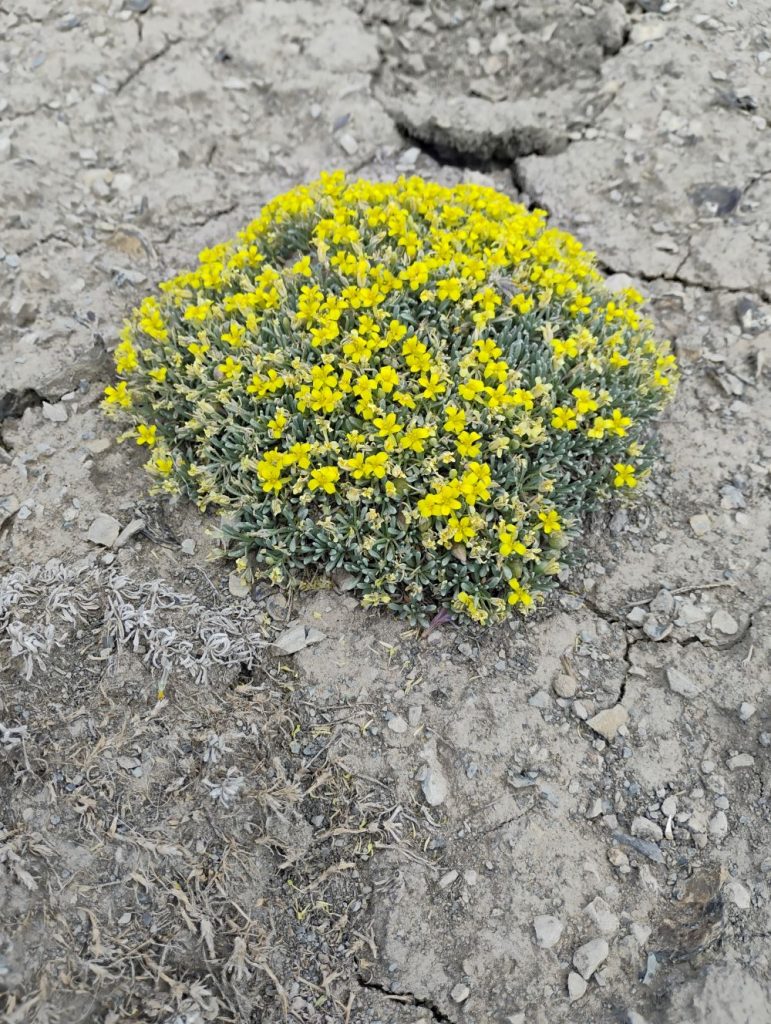
The first rare plant I got to work with was Physaria pulvinata, or cushion bladderpod. This low-growing member of the mustard family (Brassicaceae) is a G1 S1 species, meaning it is critically imperilled at both the global and state level. Part of its rarity may come from the fact that it was unknown to science until 2006. Another reason could be that this plant specializes on Mancos shale substrate, so its growing range is limited. Regardless of its status, I still hold out hope that populations of this tiny yellow plant will be able to persist into the future. As we arrived at the study site in Dolores County, I made sure not to step on any tiny rare bladderpods, which is harder than you’d think! We set up transects at various plots throughout the county, where we would crouch down to count and measure the rare plants. After a few days of monitoring, we had covered all the plots and were onto the next rare plant.
Parachute penstemon (Penstemon debilis) is another plant I was honored to get to work with. This rare plant also specializes on a unique substrate, which adds an extra challenge to monitoring it. Penstemon debilis grows on oil shale talus, an incredibly unstable rocky substrate, and also tends to grow on steep slopes. Previous monitoring methods have involved technology such as drones, but my experience with monitoring involved a camera and lots of human skill. A team of CNHP staff and Colorado Natural Areas Program staff assembled at the bottom of the shale hill, and used large metal poles attached to rope to demarcate monitoring plots along a transect at the bottom of the hill. Photos were taken at each plot we laid out. These photos would be analyzed later to determine the number of plants in each plot. This was no easy feat, and goes to show that Penstemon debilis is one tough plant for being able to grow in this harsh and unstable habitat.
Monitoring rare plants can be hard work. They are often hard to see and access, and it can be hard to have hope that these species will persist into the future. At the same time, rare plant monitoring is some of the most rewarding work I have ever done. The most ordinary places become extraordinary once you know what rarities grow there. Every step you take becomes more interesting (if not more nerve-wracking, depending on the size of the plant you are working on) and you’ll have the opportunity to interact with a species that most people do not even know exists.