Introduction
Over the summer, I had the opportunity to partake in the CNHP Siegele Conservation Science Internship for a second time. I applied again for this internship because I had such a positive experience with it the previous summer. This summer, I was able to partake in so many new and incredible experiences, so I was very happy with my decision to return as a Siegele intern.
The Bird Conservancy
For a majority of the summer, I worked with one of CNHP’s partner organizations, the Bird Conservancy of the Rockies (BCR). My fellow intern Mattie Garcia and I were introduced to several different programs at BCR that fell into the main categories of science, education, and stewardship.
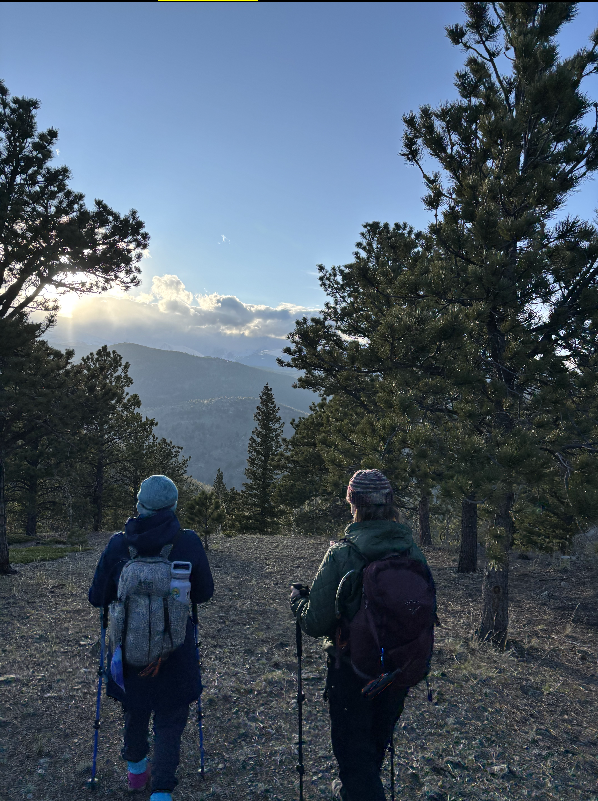
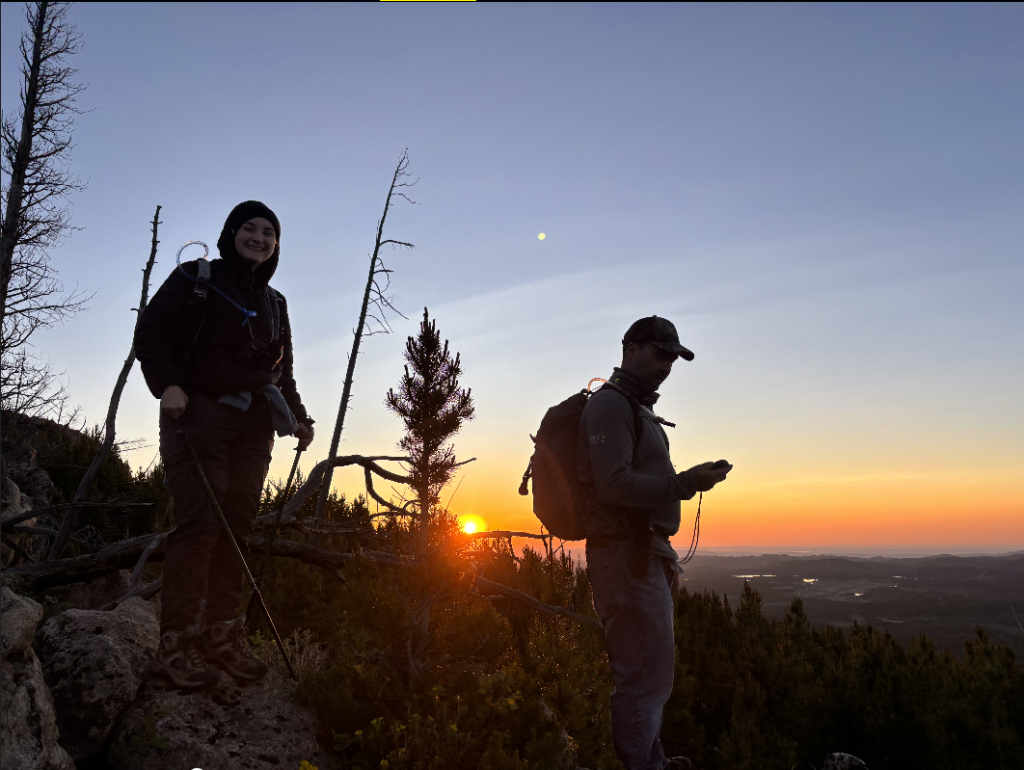
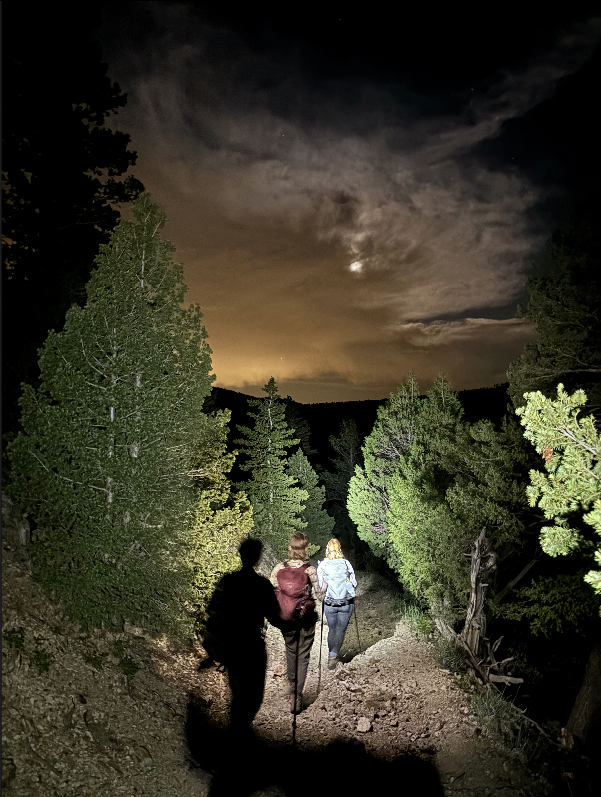
At the beginning of the summer, Mattie and I were assigned to the Mexican Spotted Owl (MSO) monitoring project. We spent most of our time on this project and became an integral part of the crew. During our training week, we learned how to identify various owls and raptors and how to navigate with a GPS unit and compass. We also were taught about MSO life histories and ecology, which I found super interesting. I learned that MSOs prefer a specific microclimate to nest in. This microclimate typically occurs in higher elevations of around 8,000 feet, steep graded slopes, and old-growth Douglas fir forests or canyons. This meant we did all of our surveying at around 8,000 feet and spent a lot of time hiking up very steep slopes. We also conducted all of our owl surveys after sunset, which meant hiking in the dark (often off-trail, doing intense bushwacking) in areas with sizable populations of mountain lions and bears. This posed a considerable mental and physical challenge for me, but I felt like this challenge helped me become a stronger and more resilient field biologist. Aside from the challenges of this project, I found the work very rewarding and built some amazing connections with the people on my owl crew. They were some of the most fun, kind, and energetic people I’ve ever met! I thought it was a very unique and fascinating experience to be able to explore the forest at night. Although we did not come across any MSOs, we often found various other owl species while surveying such as screech, great horned, flammulated, pygmy, long-eared, and saw-whet owls. I also loved exploring this area during the daytime while conducting goshawk surveys. Our survey area was just southeast of Rocky Mountain National Park, so we had an up-close view of Longs and Meeker peaks.
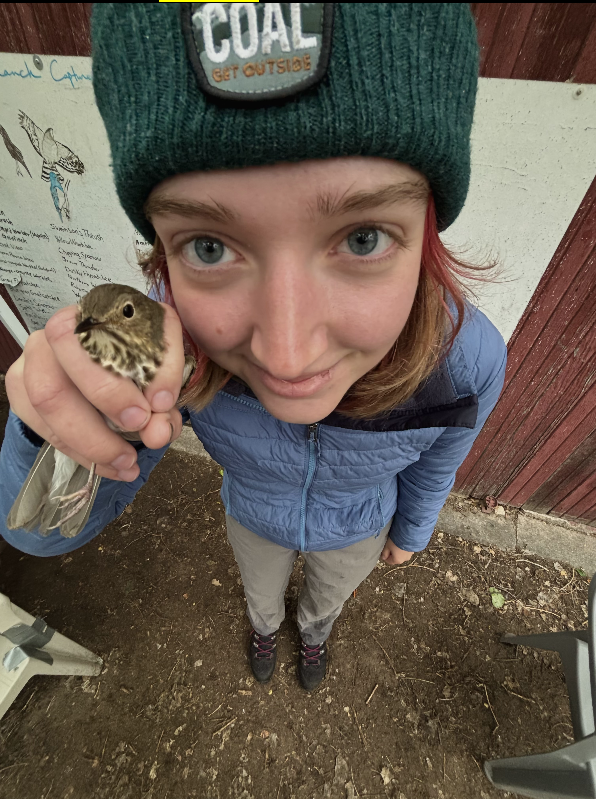
Another one of my favorite experiences with BCR was bird banding at Chico Basin Ranch in Pueblo County. We woke up bright and early to set up passive mist nets in a wooded area of the ranch. We would check the nets periodically for caught birds. Then, we would carefully remove the birds from the nets and place them into bird bags. At the banding station, we removed the birds from the bags, identified their species, weighed them, banded them, checked their fat levels, and then released them. It was such a unique experience to see the birds up close and be able to handle and hold them. It made me feel much more connected to the work I was doing with birds since I usually only interact with them at a distance.
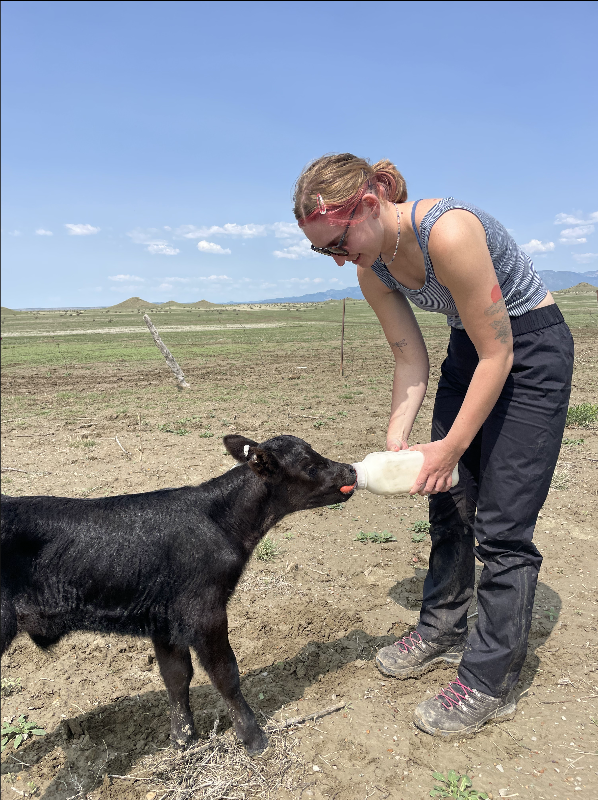
While we were in Pueblo County, Mattie and I also stayed with Maggie Hanna at her ranch for what she referred to as “ranch camp”. Maggie is the Central Grasslands Roadmap Initiative Director at BCR and works with a variety of stakeholders and partners across the central grasslands to help save the prairie. She taught us all about her work and the importance of collaborating with ranchers on conservation efforts to restore and improve their lands. I found the discourse on this subject very interesting. A main theme I gathered is that oftentimes landowners and environmentalists seem to be at odds with each other when in reality if they worked together on these issues they would find that they have a lot more common ground than they initially thought. This is especially true in the case of ranching, since adopting sustainable practices and restoring land is great not only for the cattle but also for the surrounding environment. At the ranch camp, we also learned about Maggie’s irrigation and diversion strategies, met her bulls and learned how her cow-calf operation works, herded some cattle, and planted some willow trees to fortify the banks of her diversion. Maggie was kind enough to let us stay at her home, and for dinner, she gave us grass-fed steaks from cattle that she raised. My favorite part of the experience was definitely herding the cattle. We each were on a four-wheeler and drove the cows and calves into an adjacent pasture. Mattie and I also had the opportunity to bottle-feed a calf that had been unclaimed by her mother.
During our time with BCR, we also experienced a variety of other projects, including Chestnut-Collared Longspur Motus tagging, IMBCR (Integrated Monitoring in Bird Conservation Regions) mid-season training, and wetlands monitoring. We also participated in some education and outreach events, such as the BCR Block Party, a field trip for 6-11-year-olds in Brighton, and helped out at the Calwood bird summer camp. I also created a poster to represent my time on the Mexican Spotted Owl Project for the BCR newsletter (included below)

Entomology
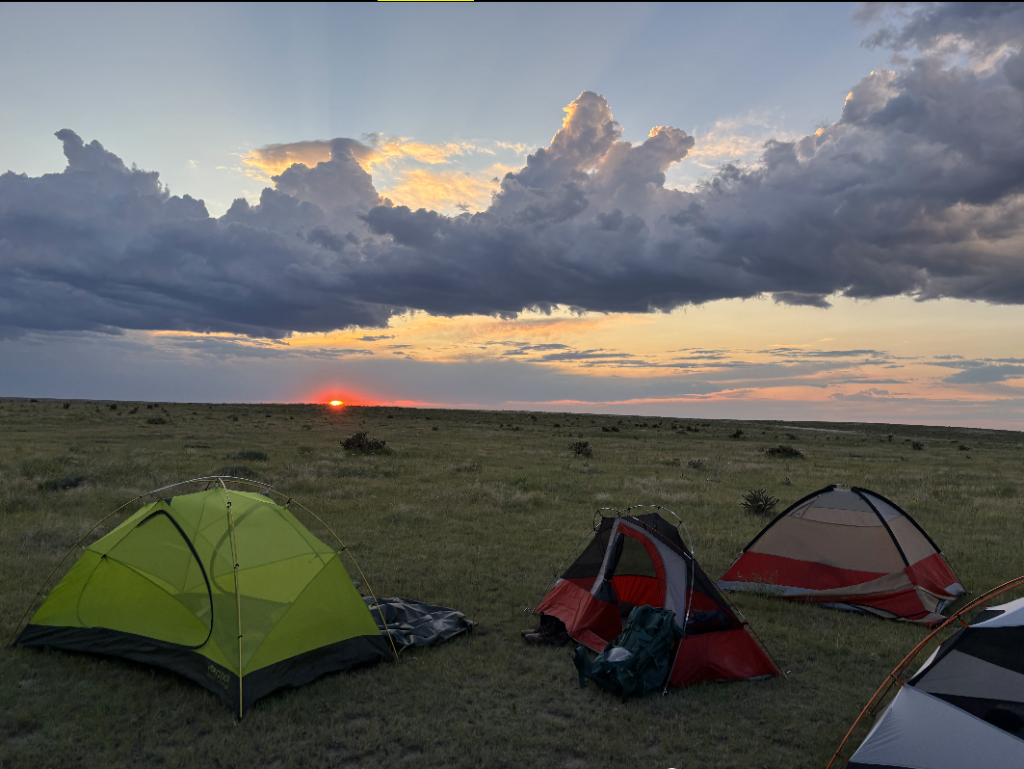
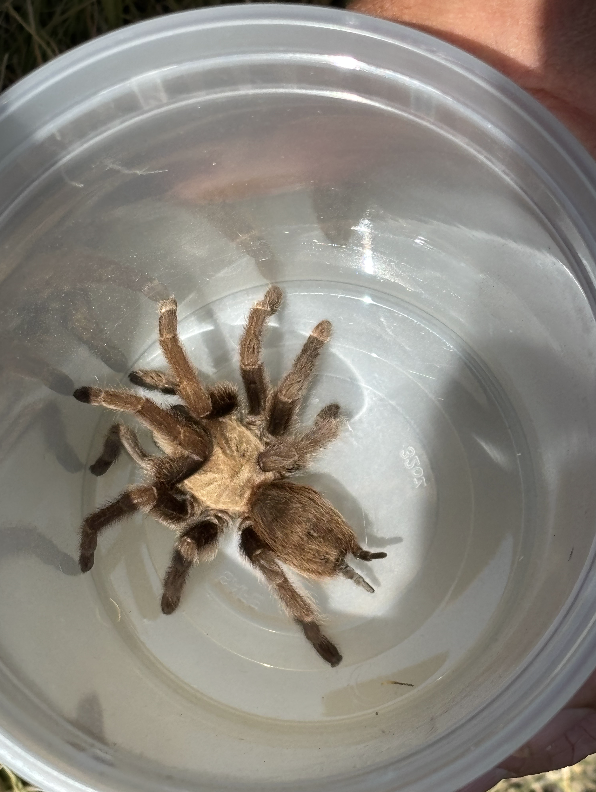
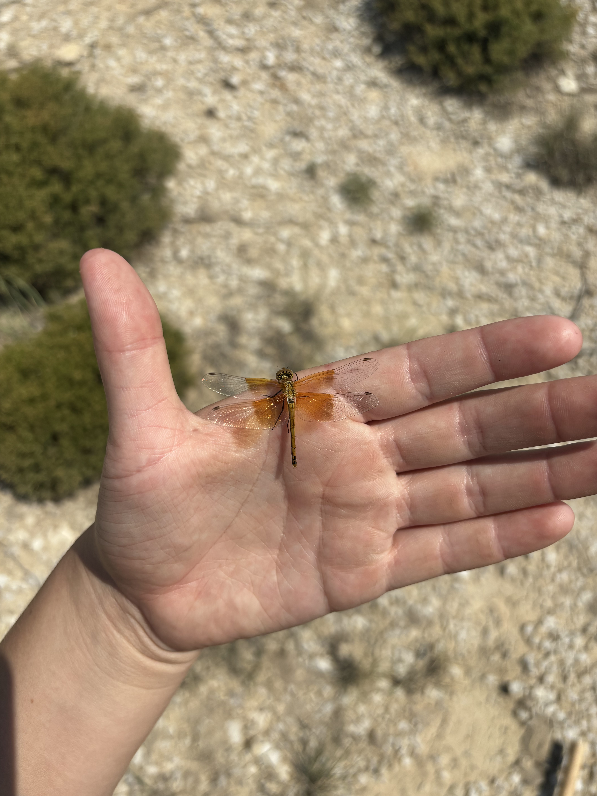
After my time with BCR, I joined CNHP entomologists Tristan Kubik and Nathan Comai on the Comanche National Grasslands in Southeastern Colorado. For this hitch, our main agenda was to get an idea of the insect diversity in the area. We did this by going to locations that were expected to have a high diversity of insects (such as in drainages), and collected one or two of each species we came across. This hitch didn’t have a strict protocol, and I like how that left us with a lot of freedom to just explore. We came across many types of grasshoppers, bees, wasps, cicadas, robber flies, dragonflies, stick bugs, and beetles. We also found various insect species that had evolved to mimic the appearance of other, more dangerous species such as wasps and bees. On flatter terrain, we came across hundreds of tarantula burrows. We were able to coax a few out of their burrows and capture them to get a closer look. I had very interesting conversations with Tristan and Nathan about insects and entomology as a whole. Tristan explained to me the incredible biodiversity of insects and how few entomologists there are compared to the high number of species. This makes studying specific species challenging because there are just too many of them to get detailed and accurate descriptions of many species. There is especially little data on insect behavior since most studies consist of collecting and killing insects in the field to identify them later in a lab. Because of this, Tristan had us do
this activity where we watched and took note of the behavior of a Katydid species. This species has the common name Mormon Cricket and lives on Cholla cacti, which are all over the prairie. We each picked a Cholla cactus and observed the Katydids on our cactus for about an hour. Although they weren’t terribly exciting and moved very little (at least during the daytime), we were able to pick up on a few behavioral characteristics that we wouldn’t be able to tell just by collecting them.
Seed Collection
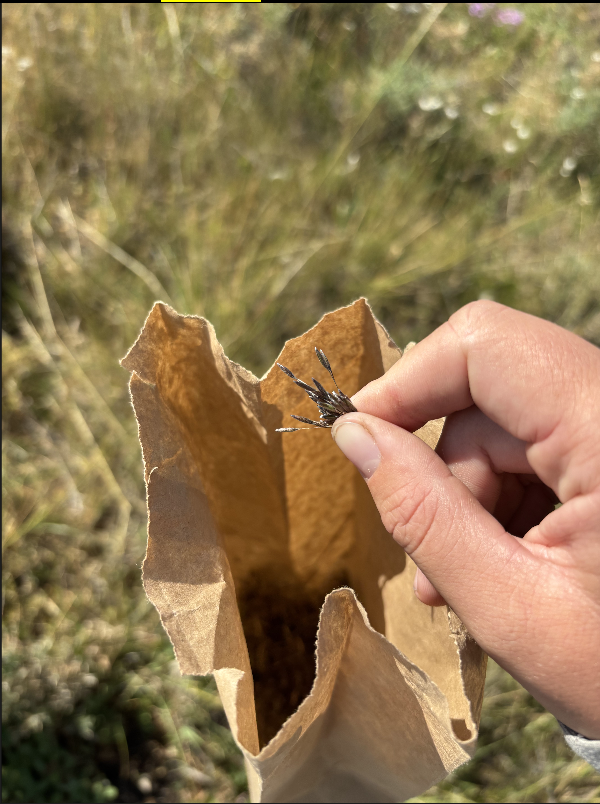
For my last hitch of the season, I joined the seed collection crew in southern Wyoming. On this project, we collected seeds of target species for the US Forest Service. The seeds we collected were to be sent to a nursery to be reproduced. The seeds are then used by the USFS for restoration efforts. For the majority of the season thus far, the seeds of the target species had been too immature to collect. The hitch I was on had the first big collection of the season, which included primarily Achnatherum nelsonii (Columbia Needlegrass), Deschampsia cespitosa (Tufted Hair Grass) , and Geum triflorum (Prairie Smoke). To figure out how mature the seeds were, we collected 5 seeds from 5 different individuals in a population. We then cut the seeds in half and viewed them under a microscope. If the seed was soft or liquidy in the middle, it was considered immature, and if it was hardened, it was mature. If the seeds were mostly mature, we collected from approximately 20 percent of the population (1 in every 5 plants). My favorite species we collected was Geum triflorum. I thought it was such a whimsical looking plant, and it reminded me of a Truffula tree. What I liked about this project and restoration efforts in general is being able to have a direct physical impact on the environment.