Colorado Natural Heritage Program Logo Colorado Natural Heritage Program Logo CNHP
  • About Us
    • About Us
      • Biennial Report
      • Strategic Plan
    • Conserving Biodiversity
    • Contact Us
    • Staff Directory
    • Careers
      • Employment
      • Internship
      • Volunteer
    • Meetings
    • The NatureServe Network
    • Partners
  • Our Work
    • Ecology
    • Wetlands
    • Plants
    • Animals
    • Climate Change
    • Education
    • Invasive Species
  • Our Services
    • Database Development
    • GIS Analysis & Modeling
    • Mapping
    • Surveys & Inventories
    • Monitoring & Assessment
    • Conservation Planning
  • Our Data
    • About CNHP Data
    • Request Data
    • Contribute Data
    • Download Data
    • Tracking Lists
    • PCA Reports
    • Help & Documentation
  • Maps
    • CNHP Spatial Layers
    • Wetlands Mapper
    • COMaP
    • Conservation Environmental Review Tool
  • Library
    • Reports
    • PCA Reports
    • Tracking Lists
    • Field Guides
      • Rare Plant Guide
      • Colorado Wetland Field Guides
  • Blog
  • Donate Now

Blog by CNHP Intern, Brock Linder

September 23, 2022

Preble’s Meadow Jumping Mouse – Brock Linder
My name is Brock Linder and I am a senior at CSU majoring in Biology with a concentration in Ecology. This summer, I was fortunate enough to be selected as a Siegele Conservation Science Intern at CNHP. I had the opportunity to participate in 6 different projects throughout the summer and I am extremely grateful for all the knowledge I gained through so many great mentors. During this internship, I spent 2 weeks at the Air Force Academy in Colorado Springs studying the threatened Preble’s meadow jumping mouse (PMJM) species. I had never had any experience with field work or small mammal trapping prior to this trip, but it was one of my most eye-opening experiences this summer. I participated in a mark-recapture study that has been ongoing for more than 25 years to better understand the population of meadow jumping mice in Colorado. This work consisted of setting traps late in the afternoon and checking these traps early in the mornings. We would often find other small mammals such as voles, deer mice, and harvest mice in our search for the threatened PMJM population. When we discovered the threatened mice, they were scanned for passive integrated transponder (PIT) tags to identify if they have been captured before. Newly captured mice were injected with PIT tags, weighed, observed for reproductive status, then released into dense willow (Salix) forests.
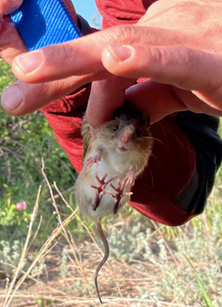
Preble’s meadow jumping mouse being PIT tagged
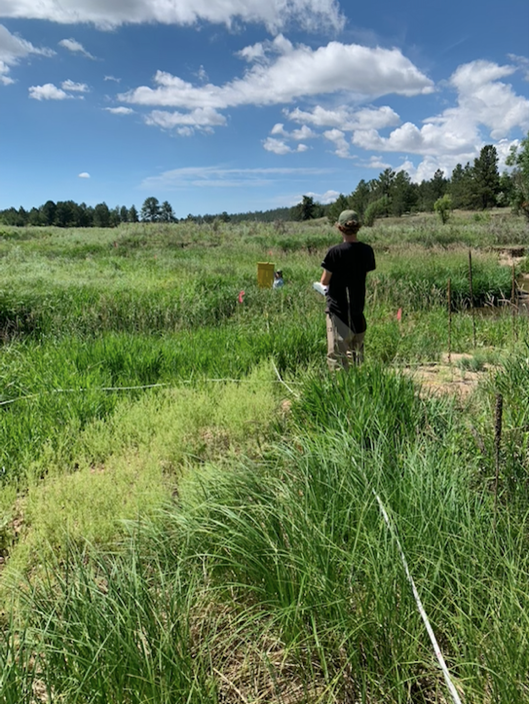
Vegetation sampling of PMJM habitat

As a part of this research, we were able to conduct vegetation sampling of the PMJM habitat along monument creek to identify the relationship between population characteristics and vegetation in these areas. I was able to set up transects and record data in this process, and I really enjoyed seeing the connection between small mammals and the vegetation in an area. This is something I have only ever learned about, but first-hand experience and knowledge of the ecology of this area was truly an eye-opening experience.

Preble’s meadow jumping mouse coming out of torpor

This data collection of the population characteristics of the PMJM population along monument creek will continue to provide insights into the diversity and growth of this species. It was an honor to be a part of a study that has been going on for so long and to see the changes we are making as conservationists. I feel incredibly privileged to have worked with Robert Schorr, a Zoologist with CNHP, as he taught me a lot about the value of dedicated science and data collection. Conservation is truly a multi-faceted challenge today, and I fully experienced the interconnectedness of the scientific process through this research.
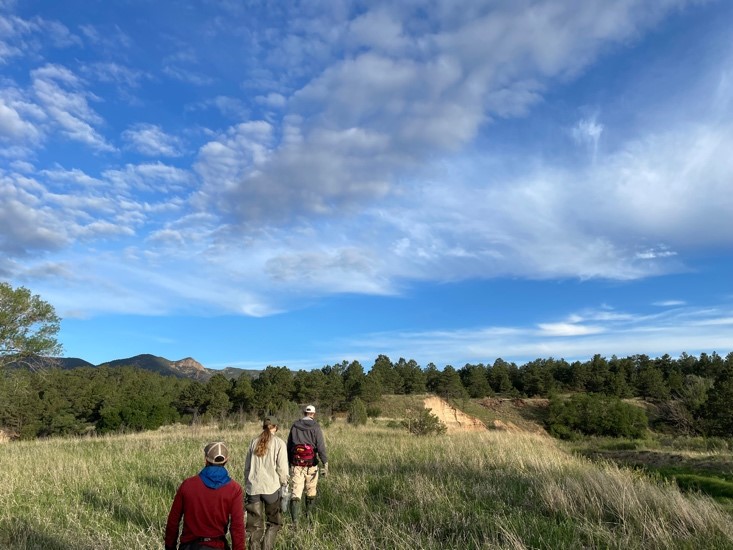
PMJM trapping crew at the Air Force Academy

Being a Siegele Intern this summer was one of the greatest experiences of my life, and I have truly obtained a new outlook on the world of conservation and ecology. CNHP is an amazing program with so many passionate and intelligent mentors that have helped me understand the importance of this work. I hope to take these experiences with me throughout my life and make a difference in the world any way that I can. Thank you!

Brock Linder

SHARE
FACEBOOK
TWITTER
LINKEDIN
REDDIT
EMAIL
Filed Under: About CNHP, CNHP, CNHP Interns, Colorado Natural Heritage Program, Conservation, Conservation Data Services, Database, Education, Field Techniques, Internships, Jobs, Natural Heritage Programs, Rare Plants, Students, Threatened and Endangered Species

Blog by CNHP Intern, Grace Evans
Peatland Seeps in Northwest Colorado by Grant McKown, CNHP Field Crew Lead

About Us

About Us
Conserving Biodiversity
Contact Us
Staff Directory
Careers
Employment
Internship
Volunteer
Meetings
The NatureServe Network
Partners

Our Work

Ecology
Wetlands
Plants
Animals
Climate Change
Education
Invasive Species

Blog Archive

Blog Categories

Web Projects

  • Rare Plant Guide Online
  • Colorado Wetland Info Center
  • COMaP - Colorado Protected Lands
  • Colorado Bat Working Group
  • STReaMS - Endangered Fishes Database

About Us

  • About Us
  • Conserving Biodiversity
  • Contact Us
  • Staff Directory
  • Careers
  • The NatureServe Network
  • Partners
  • Site Map
Warner College of Natural Resources Logo
  • Apply to CSU
  • Equal Opportunity
  • Disclaimer
  • Privacy Statement
  • Search CSU
  • CSU Land Acknowledgement
  • CSU Principles of Community
© 2026 Colorado Natural Heritage Program
Colorado State University Logo
  • About Us
    ▼
    • About Us
      ▼
      • Biennial Report
      • Strategic Plan
    • Conserving Biodiversity
    • Contact Us
    • Staff Directory
    • Careers
      ▼
      • Employment
      • Internship
      • Volunteer
    • Meetings
    • The NatureServe Network
    • Partners
  • Our Work
    ▼
    • Ecology
    • Wetlands
    • Plants
    • Animals
    • Climate Change
    • Education
    • Invasive Species
  • Our Services
    ▼
    • Database Development
    • GIS Analysis & Modeling
    • Mapping
    • Surveys & Inventories
    • Monitoring & Assessment
    • Conservation Planning
  • Our Data
    ▼
    • About CNHP Data
    • Request Data
    • Contribute Data
    • Download Data
    • Tracking Lists
    • PCA Reports
    • Help & Documentation
  • Maps
    ▼
    • CNHP Spatial Layers
    • Wetlands Mapper
    • COMaP
    • Conservation Environmental Review Tool
  • Library
    ▼
    • Reports
    • PCA Reports
    • Tracking Lists
    • Field Guides
      ▼
      • Rare Plant Guide
      • Colorado Wetland Field Guides
  • Blog
  • Donate Now