Colorado Natural Heritage Program Logo Colorado Natural Heritage Program Logo CNHP
  • About Us
    • About Us
      • Biennial Report
      • Strategic Plan
    • Conserving Biodiversity
    • Contact Us
    • Staff Directory
    • Careers
      • Employment
      • Internship
      • Volunteer
    • Meetings
    • The NatureServe Network
    • Partners
  • Our Work
    • Ecology
    • Wetlands
    • Plants
    • Animals
    • Climate Change
    • Education
    • Invasive Species
  • Our Services
    • Database Development
    • GIS Analysis & Modeling
    • Mapping
    • Surveys & Inventories
    • Monitoring & Assessment
    • Conservation Planning
  • Our Data
    • About CNHP Data
    • Request Data
    • Contribute Data
    • Download Data
    • Tracking Lists
    • PCA Reports
    • Help & Documentation
  • Maps
    • CNHP Spatial Layers
    • Wetlands Mapper
    • COMaP
    • Conservation Environmental Review Tool
  • Library
    • Reports
    • PCA Reports
    • Tracking Lists
    • Field Guides
      • Rare Plant Guide
      • Colorado Wetland Field Guides
  • Blog
  • Donate Now

Blog by CNHP Intern, Jack Czajka

September 22, 2021

This past Tuesday (7/27) Marin and I went on a hitch with the CN3 wetland team to survey some of Wyoming’s wetlands near the Pinedale area. We went to visit 4 different locations over the course of the week and one of which was even a location we’d have to backpack to; something I hadn’t done before. It was supposed to be rainy the whole week and Wyoming sure delivered on that promise!
We drove about 6 hours to our first site which was entirely off road and on the side of a valley near a chunk of property that we couldn’t enter so it was very hard to get to. I was working with the soil team that day and since the ground was very compacted from cattle that would occasionally pass through our assessment area, it was a little harder to dig and take soil samples than usual. The team lead and I finished the pit and hiked back up to the car, in order to ship out our samples, just in time for a rainstorm to roll in. We got soaked on the way to the car and the vegetation crew finished up working in the rain and we moved on to our next site.
After finishing up the first site, the next three were all contained within one of the entrances to the Bridger-Teton National Forest. For every site we did at this location, we carried bear spray with us for protection. For me, this was super cool because it meant that we were sharing space with creatures that inhabited very natural areas. Surveying these areas meant more diversity of native plant life, less touched hydric soils, and the chance to see some pretty awesome wildlife. My favorite part about working at sites 2 and 3 was the opportunity to refine my skills with plant life. I worked with the veg. team and learned all about native plants in the Wyoming area, what species were invasive, and even what berries were edible on some of the plants which was a cool treat. I never thought working with vegetation would be something that I would grow to really be interested in through this internship but it has been such a cool skill to work on developing. My personal favorite flower is Pedicularis groenlandica or elephant’s head!

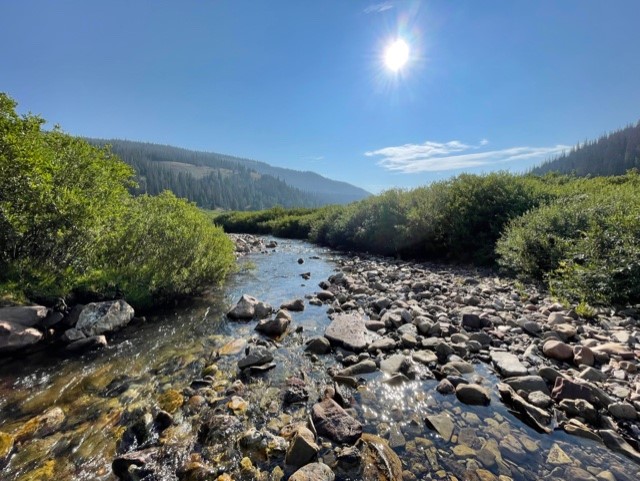
The last site we worked on was the anticipated backpacking site and dang if I didn’t expect my back to hurt so much! It was by far the most fun thing I have ever done for work though and the landscape was breathtaking. Our worksite was tucked into a stream system right near the beginning of a stream that later became a major river of the watershed we were working in. On the way in, we saw bear tracks, learning about types of plants in the carrot family that were accessible and edible, saw a few hawks, and overall worked our leg muscles quite a bit. Sampling water this clean was a first for the summer and the plant life was incredibly dense but very diverse. Our soil pit was incredibly rocky though so it took quite a bit of effort to dig and get to the required depth. Although it had been raining every day up to this point, our last day on a site was sunny and allowed us to dry off a bit before the hike out.


SHARE
FACEBOOK
TWITTER
LINKEDIN
REDDIT
EMAIL
Filed Under: About CNHP, CNHP, CNHP Interns, Conservation Data Services, Education, Siegele Conservation Science Internship, Students

Blog by CNHP Intern, Emma Thompson
Blog by CNHP Intern, Chris

About Us

About Us
Conserving Biodiversity
Contact Us
Staff Directory
Careers
Employment
Internship
Volunteer
Meetings
The NatureServe Network
Partners

Our Work

Ecology
Wetlands
Plants
Animals
Climate Change
Education
Invasive Species

Blog Archive

Blog Categories

Web Projects

  • Rare Plant Guide Online
  • Colorado Wetland Info Center
  • COMaP - Colorado Protected Lands
  • Colorado Bat Working Group
  • STReaMS - Endangered Fishes Database

About Us

  • About Us
  • Conserving Biodiversity
  • Contact Us
  • Staff Directory
  • Careers
  • The NatureServe Network
  • Partners
  • Site Map
Warner College of Natural Resources Logo
  • Apply to CSU
  • Equal Opportunity
  • Disclaimer
  • Privacy Statement
  • Search CSU
  • CSU Land Acknowledgement
  • CSU Principles of Community
© 2026 Colorado Natural Heritage Program
Colorado State University Logo
  • About Us
    ▼
    • About Us
      ▼
      • Biennial Report
      • Strategic Plan
    • Conserving Biodiversity
    • Contact Us
    • Staff Directory
    • Careers
      ▼
      • Employment
      • Internship
      • Volunteer
    • Meetings
    • The NatureServe Network
    • Partners
  • Our Work
    ▼
    • Ecology
    • Wetlands
    • Plants
    • Animals
    • Climate Change
    • Education
    • Invasive Species
  • Our Services
    ▼
    • Database Development
    • GIS Analysis & Modeling
    • Mapping
    • Surveys & Inventories
    • Monitoring & Assessment
    • Conservation Planning
  • Our Data
    ▼
    • About CNHP Data
    • Request Data
    • Contribute Data
    • Download Data
    • Tracking Lists
    • PCA Reports
    • Help & Documentation
  • Maps
    ▼
    • CNHP Spatial Layers
    • Wetlands Mapper
    • COMaP
    • Conservation Environmental Review Tool
  • Library
    ▼
    • Reports
    • PCA Reports
    • Tracking Lists
    • Field Guides
      ▼
      • Rare Plant Guide
      • Colorado Wetland Field Guides
  • Blog
  • Donate Now