Colorado Natural Heritage Program Logo Colorado Natural Heritage Program Logo CNHP
  • About Us
    • About Us
      • Biennial Report
      • Strategic Plan
    • Conserving Biodiversity
    • Contact Us
    • Staff Directory
    • Careers
      • Employment
      • Internship
      • Volunteer
    • Meetings
    • The NatureServe Network
    • Partners
  • Our Work
    • Ecology
    • Wetlands
    • Plants
    • Animals
    • Climate Change
    • Education
    • Invasive Species
  • Our Services
    • Database Development
    • GIS Analysis & Modeling
    • Mapping
    • Surveys & Inventories
    • Monitoring & Assessment
    • Conservation Planning
  • Our Data
    • About CNHP Data
    • Request Data
    • Contribute Data
    • Download Data
    • Tracking Lists
    • PCA Reports
    • Help & Documentation
  • Maps
    • CNHP Spatial Layers
    • Wetlands Mapper
    • COMaP
    • Conservation Environmental Review Tool
  • Library
    • Reports
    • PCA Reports
    • Tracking Lists
    • Field Guides
      • Rare Plant Guide
      • Colorado Wetland Field Guides
  • Blog
  • Donate Now

Adventures in Wetland Ecology

September 16, 2016

by Sarah Marshall

As the first few aspen leaves turned gold, and a fresh dusting of snow fell on the high peaks along the Continental Divide, our National Wetland Condition Assessment (NWCA) field crew wrapped up 3 months of field sampling in 28 Colorado wetlands. Our work was part of a long-term EPA study to evaluate the ecological condition of wetlands and other aquatic resources across the United States, and included evaluating the plant community, hydrology, soils, water quality, and stressors for each site we visited. Beginning in the playas of the Great Plains, and ending in snowmelt and groundwater-fed fens and beaver ponds in the mountains, we traveled over 5,000 miles to access study sites. Some of our more adventurous sites involved backpacking to high-elevation meadows in the Maroon Bells-Snowmass and Holy Cross wilderness areas, bison herds and a rattlesnake in our vegetation plots in the San Luis Valley, and a few surprise moose hunkered down in riparian willow thickets.  When we set out to sample our last site for the summer field season, a rough mountain 4WD road led us to a lovely willow carr… covered with several inches of fresh snow.

After visiting so many different types of wetlands around the state, I have a renewed commitment to better understand and protect Colorado’s wetlands, and all of the processes that sustain them–from beavers constructing dams to elevate the local water table to moose and elk creating gaps in the willow canopy for the herbaceous understory to thrive. It was also rewarding to meet ranchers, scientists, and other land managers who play an active role in conserving Colorado’s wetlands. With threats ranging from rising water temperatures and earlier snowmelt associated with climate change to groundwater withdrawals and invasive weeds, preserving the diverse assemblages of native plants and animals that inhabit Colorado wetlands requires partnerships across public and private land, and thinking about wetlands as part of the larger landscape. I hope that our work this summer, and all of the work done by the CNHP wetlands team, continues to support and inform wetland conservation and management decisions in Colorado, and improve our collective understanding of these remarkable ecosystems!
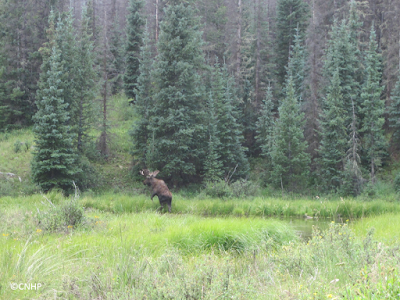
A moose leaps out of a fen near Creede, Colorado on the Rio Grande National Forest. 
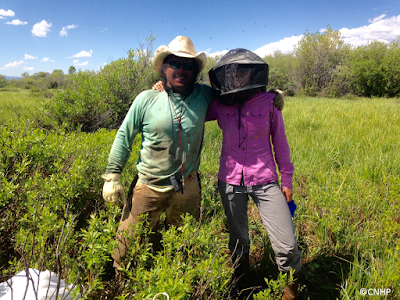
Scott Guinn and Sarah Marshall still smiling as the mosquitoes swarm in the Little Grizzly Creek drainage in Jackson County, Colorado.
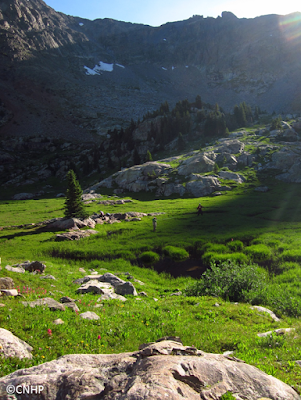
KristiLee Halpin and Tyler Stratman set up a wetland plot in the Holy Cross Wilderness near Gold Dust Peak.
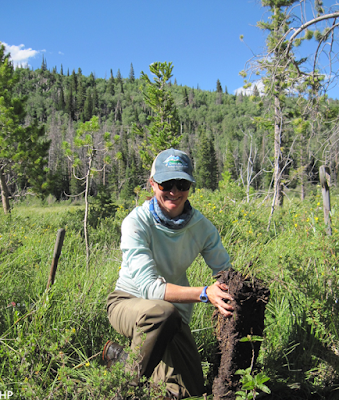
Sarah Marshall holds an impressive column of organic soil, known as peat, from a fen in the Routt National Forest near Livingston Park.

SHARE
FACEBOOK
TWITTER
LINKEDIN
REDDIT
EMAIL
Filed Under: Wetlands

Beer, Brats, and Bats: CNHP Partners with the Yampa Valley Land Trust and the Wildlife Society
Colorado Rare Plant Symposium and 40th Native Plant Society Meeting: Sept 23-25, 2016

About Us

About Us
Conserving Biodiversity
Contact Us
Staff Directory
Careers
Employment
Internship
Volunteer
Meetings
The NatureServe Network
Partners

Our Work

Ecology
Wetlands
Plants
Animals
Climate Change
Education
Invasive Species

Blog Archive

Blog Categories

Web Projects

  • Rare Plant Guide Online
  • Colorado Wetland Info Center
  • COMaP - Colorado Protected Lands
  • Colorado Bat Working Group
  • STReaMS - Endangered Fishes Database

About Us

  • About Us
  • Conserving Biodiversity
  • Contact Us
  • Staff Directory
  • Careers
  • The NatureServe Network
  • Partners
  • Site Map
Warner College of Natural Resources Logo
  • Apply to CSU
  • Equal Opportunity
  • Disclaimer
  • Privacy Statement
  • Search CSU
  • CSU Land Acknowledgement
  • CSU Principles of Community
© 2026 Colorado Natural Heritage Program
Colorado State University Logo
  • About Us
    ▼
    • About Us
      ▼
      • Biennial Report
      • Strategic Plan
    • Conserving Biodiversity
    • Contact Us
    • Staff Directory
    • Careers
      ▼
      • Employment
      • Internship
      • Volunteer
    • Meetings
    • The NatureServe Network
    • Partners
  • Our Work
    ▼
    • Ecology
    • Wetlands
    • Plants
    • Animals
    • Climate Change
    • Education
    • Invasive Species
  • Our Services
    ▼
    • Database Development
    • GIS Analysis & Modeling
    • Mapping
    • Surveys & Inventories
    • Monitoring & Assessment
    • Conservation Planning
  • Our Data
    ▼
    • About CNHP Data
    • Request Data
    • Contribute Data
    • Download Data
    • Tracking Lists
    • PCA Reports
    • Help & Documentation
  • Maps
    ▼
    • CNHP Spatial Layers
    • Wetlands Mapper
    • COMaP
    • Conservation Environmental Review Tool
  • Library
    ▼
    • Reports
    • PCA Reports
    • Tracking Lists
    • Field Guides
      ▼
      • Rare Plant Guide
      • Colorado Wetland Field Guides
  • Blog
  • Donate Now