Colorado Natural Heritage Program Logo Colorado Natural Heritage Program Logo CNHP
  • About Us
    • About Us
      • Biennial Report
      • Strategic Plan
    • Conserving Biodiversity
    • Contact Us
    • Staff Directory
    • Careers
      • Employment
      • Internship
      • Volunteer
    • Meetings
    • The NatureServe Network
    • Partners
  • Our Work
    • Ecology
    • Wetlands
    • Plants
    • Animals
    • Climate Change
    • Education
    • Invasive Species
  • Our Services
    • Database Development
    • GIS Analysis & Modeling
    • Mapping
    • Surveys & Inventories
    • Monitoring & Assessment
    • Conservation Planning
  • Our Data
    • About CNHP Data
    • Request Data
    • Contribute Data
    • Download Data
    • Tracking Lists
    • PCA Reports
    • Help & Documentation
  • Maps
    • CNHP Spatial Layers
    • Wetlands Mapper
    • COMaP
    • Conservation Environmental Review Tool
  • Library
    • Reports
    • PCA Reports
    • Tracking Lists
    • Field Guides
      • Rare Plant Guide
      • Colorado Wetland Field Guides
  • Blog
  • Donate Now

Using Rock Climber Observations to Find Bat Roosts

August 30, 2016

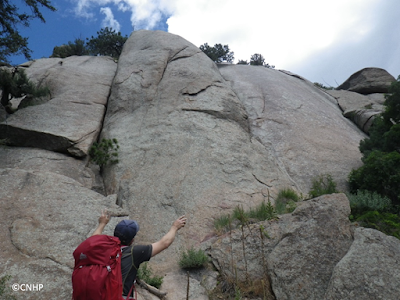
On a hot summer day above the South St. Vrain River, zoologists Rob Schorr and Andrew Reed stare up at a 50 foot slab of rock that has been carved by glaciers and rivers and time.They arrived at this particular location by the goodwill of Colorado’s rock climbing community.As part of a project that Schorr, botanist Bernadette Kuhn, and human dimensions specialist Shawn Davis developed several years ago called Climbers for Bat Conservation, Schorr and Reed are visiting this specific location because climbers have reported hearing or seeing bats in the cracks above. Reed, a rock climber,led the effort to look in the cracks and flakes for bats, guano, or insect parts, while Schorr watched enviously from below. After three hours of searching manually and with an ultrasonic acoustic detector they were unable to find any bats along the climb, and they were unable to find any guano on the rock walls or below the cracks. Schorr found a few insect parts below the climb, but it was unclear if they were the remnants of feeding bats. Although they did not stumble upon a large roost of bats, they were glad to follow leads provided by the Climbers for Bat Conservation partners. The CBC group is hoping to receive more observations of bats by rock climbers following a recent presentation to the International Rock Climbing Research Association given by Kuhn in Telluride, Colorado.
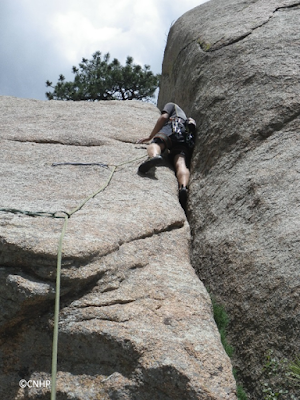
Andrew Reed looking in cracks for bats along the climbing route Panic in the Grey Room.

Andrew Reed pointing out the cracks, flakes, and crevices where bats could roost.

SHARE
FACEBOOK
TWITTER
LINKEDIN
REDDIT
EMAIL
Filed Under: Bats, Conservation, Zoology

Bioblitzes and Butterflies: An Intern's Summer
Remember This Summer-An Intern's View of a Summer Working at CNHP

About Us

About Us
Conserving Biodiversity
Contact Us
Staff Directory
Careers
Employment
Internship
Volunteer
Meetings
The NatureServe Network
Partners

Our Work

Ecology
Wetlands
Plants
Animals
Climate Change
Education
Invasive Species

Blog Archive

Blog Categories

Web Projects

  • Rare Plant Guide Online
  • Colorado Wetland Info Center
  • COMaP - Colorado Protected Lands
  • Colorado Bat Working Group
  • STReaMS - Endangered Fishes Database

About Us

  • About Us
  • Conserving Biodiversity
  • Contact Us
  • Staff Directory
  • Careers
  • The NatureServe Network
  • Partners
  • Site Map
Warner College of Natural Resources Logo
  • Apply to CSU
  • Equal Opportunity
  • Disclaimer
  • Privacy Statement
  • Search CSU
  • CSU Land Acknowledgement
  • CSU Principles of Community
© 2026 Colorado Natural Heritage Program
Colorado State University Logo
  • About Us
    ▼
    • About Us
      ▼
      • Biennial Report
      • Strategic Plan
    • Conserving Biodiversity
    • Contact Us
    • Staff Directory
    • Careers
      ▼
      • Employment
      • Internship
      • Volunteer
    • Meetings
    • The NatureServe Network
    • Partners
  • Our Work
    ▼
    • Ecology
    • Wetlands
    • Plants
    • Animals
    • Climate Change
    • Education
    • Invasive Species
  • Our Services
    ▼
    • Database Development
    • GIS Analysis & Modeling
    • Mapping
    • Surveys & Inventories
    • Monitoring & Assessment
    • Conservation Planning
  • Our Data
    ▼
    • About CNHP Data
    • Request Data
    • Contribute Data
    • Download Data
    • Tracking Lists
    • PCA Reports
    • Help & Documentation
  • Maps
    ▼
    • CNHP Spatial Layers
    • Wetlands Mapper
    • COMaP
    • Conservation Environmental Review Tool
  • Library
    ▼
    • Reports
    • PCA Reports
    • Tracking Lists
    • Field Guides
      ▼
      • Rare Plant Guide
      • Colorado Wetland Field Guides
  • Blog
  • Donate Now