Colorado Natural Heritage Program Logo Colorado Natural Heritage Program Logo CNHP
  • About Us
    • About Us
      • Biennial Report
      • Strategic Plan
    • Conserving Biodiversity
    • Contact Us
    • Staff Directory
    • Careers
      • Employment
      • Internship
      • Volunteer
    • Meetings
    • The NatureServe Network
    • Partners
  • Our Work
    • Ecology
    • Wetlands
    • Plants
    • Animals
    • Climate Change
    • Education
    • Invasive Species
  • Our Services
    • Database Development
    • GIS Analysis & Modeling
    • Mapping
    • Surveys & Inventories
    • Monitoring & Assessment
    • Conservation Planning
  • Our Data
    • About CNHP Data
    • Request Data
    • Contribute Data
    • Download Data
    • Tracking Lists
    • PCA Reports
    • Help & Documentation
  • Maps
    • CNHP Spatial Layers
    • Wetlands Mapper
    • COMaP
    • Conservation Environmental Review Tool
  • Library
    • Reports
    • PCA Reports
    • Tracking Lists
    • Field Guides
      • Rare Plant Guide
      • Colorado Wetland Field Guides
  • Blog
  • Donate Now

Black Bear Safety Tips

April 24, 2015

By Alyssa Meier, CSU Wildlife Biology Undergraduate and CNHP Student Intern

Spring is here, and with warming temperatures, black bears are emerging from winter hibernation. Black bears can spend up to twenty hours a day covering numerous miles of ground in searching for food, which can lead to some surprising encounters.
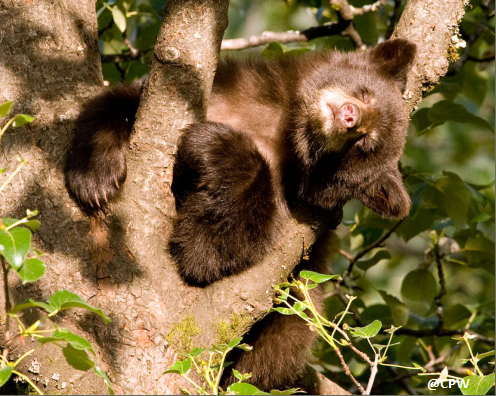
Young black bear snoozing in tree.

Here are some tips on what to do if you see a bear:

  • Stay calm. The bear is probably just as shocked as you are.
  • Stop and back away slowly. Sudden movements are often perceived as aggressive and can cause the bear to act defensively in response.
  • No eye contact. Directly looking at bears is seen as a challenge.
  • Speak quietly. Loud noises are perceived as aggressive.
  • Don’t run. Running triggers an automatic predator response in the bears and they will see you as some pretty slow prey.
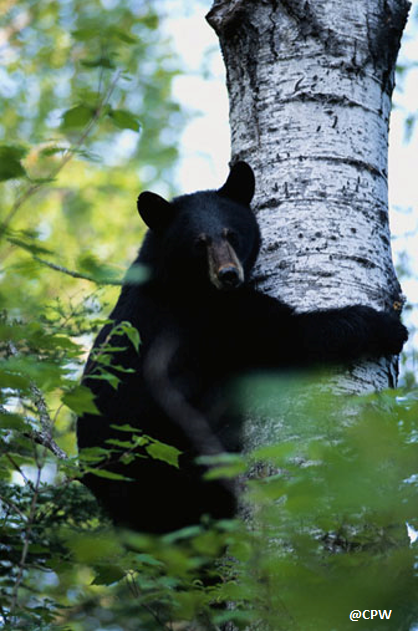
Bears are very capable climbers and often seek refuge from threats in trees.

Bears are naturally inquisitive creatures. Some encounters occur because the bear is just curious about what’s going on in the area. The behavior of the bear is indicative of the bear’s intentions.

Here are some common bear behaviors:

  • If a bear is sitting or moving away this is often a neutral behavior. Just go about your business.
  • If a bear is standing motionless or ignoring you, it is indicating that they just want to be left alone. As long as you don’t start toward them, the bear will leave you be.
  • Bears climb trees to show submission or seek safety. Mothers will often send their cubs up trees and sit beneath them when they encounter dangers. You’ve probably passed under a few bears hidden up in trees already. Just keep away from the tree and give the bears space and they’ll leave you alone. 
  • When a bear is spotted popping its jaw or huffing, it is a sign nervousness or apprehension. It’s a warning for you to back away and leave them alone.
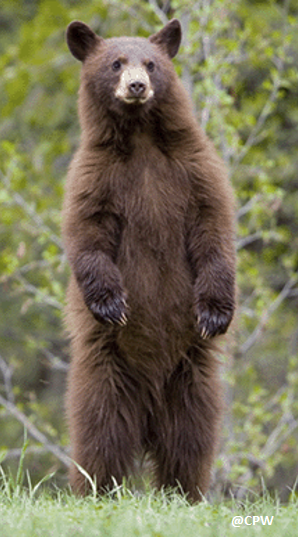
Curious bears often stand up in order to get a better look. This act in inherently non aggressive.

For more information on safely encountering bears, visit the Colorado Parks and Wildlife website.


SHARE
FACEBOOK
TWITTER
LINKEDIN
REDDIT
EMAIL
Filed Under: Uncategorized

Graduating CSU Seniors Reflect on Their Work Experiences at CNHP
Botany Essentials for the 2015 Field Season

About Us

About Us
Conserving Biodiversity
Contact Us
Staff Directory
Careers
Employment
Internship
Volunteer
Meetings
The NatureServe Network
Partners

Our Work

Ecology
Wetlands
Plants
Animals
Climate Change
Education
Invasive Species

Blog Archive

Blog Categories

Web Projects

  • Rare Plant Guide Online
  • Colorado Wetland Info Center
  • COMaP - Colorado Protected Lands
  • Colorado Bat Working Group
  • STReaMS - Endangered Fishes Database

About Us

  • About Us
  • Conserving Biodiversity
  • Contact Us
  • Staff Directory
  • Careers
  • The NatureServe Network
  • Partners
  • Site Map
Warner College of Natural Resources Logo
  • Apply to CSU
  • Equal Opportunity
  • Disclaimer
  • Privacy Statement
  • Search CSU
  • CSU Land Acknowledgement
  • CSU Principles of Community
© 2026 Colorado Natural Heritage Program
Colorado State University Logo
  • About Us
    ▼
    • About Us
      ▼
      • Biennial Report
      • Strategic Plan
    • Conserving Biodiversity
    • Contact Us
    • Staff Directory
    • Careers
      ▼
      • Employment
      • Internship
      • Volunteer
    • Meetings
    • The NatureServe Network
    • Partners
  • Our Work
    ▼
    • Ecology
    • Wetlands
    • Plants
    • Animals
    • Climate Change
    • Education
    • Invasive Species
  • Our Services
    ▼
    • Database Development
    • GIS Analysis & Modeling
    • Mapping
    • Surveys & Inventories
    • Monitoring & Assessment
    • Conservation Planning
  • Our Data
    ▼
    • About CNHP Data
    • Request Data
    • Contribute Data
    • Download Data
    • Tracking Lists
    • PCA Reports
    • Help & Documentation
  • Maps
    ▼
    • CNHP Spatial Layers
    • Wetlands Mapper
    • COMaP
    • Conservation Environmental Review Tool
  • Library
    ▼
    • Reports
    • PCA Reports
    • Tracking Lists
    • Field Guides
      ▼
      • Rare Plant Guide
      • Colorado Wetland Field Guides
  • Blog
  • Donate Now