Colorado Natural Heritage Program Logo Colorado Natural Heritage Program Logo CNHP
  • About Us
    • About Us
      • Biennial Report
      • Strategic Plan
    • Conserving Biodiversity
    • Contact Us
    • Staff Directory
    • Careers
      • Employment
      • Internship
      • Volunteer
    • Meetings
    • The NatureServe Network
    • Partners
  • Our Work
    • Ecology
    • Wetlands
    • Plants
    • Animals
    • Climate Change
    • Education
    • Invasive Species
  • Our Services
    • Database Development
    • GIS Analysis & Modeling
    • Mapping
    • Surveys & Inventories
    • Monitoring & Assessment
    • Conservation Planning
  • Our Data
    • About CNHP Data
    • Request Data
    • Contribute Data
    • Download Data
    • Tracking Lists
    • PCA Reports
    • Help & Documentation
  • Maps
    • CNHP Spatial Layers
    • Wetlands Mapper
    • COMaP
    • Conservation Environmental Review Tool
  • Library
    • Reports
    • PCA Reports
    • Tracking Lists
    • Field Guides
      • Rare Plant Guide
      • Colorado Wetland Field Guides
  • Blog
  • Donate Now

CNHP studies little brown bats to understand stability of populations in Colorado

September 2, 2014

by Rob Schorr and Jeremy Siemers, CNHP Biologists

In 2006, a new disease called White Nose Syndrome (WNS) appeared in New York that decimated bat populations.  This disease, caused by a cold-loving fungus, appears as a white dusting on the nose of bats has progressed westward as far as Missouri, and there is fear that it will continue its deadly march through to Colorado.  Yet, if it did, would we know? The nocturnal and secretive nature of bats makes monitoring their populations challenging.  That, in addition to the fact we have little knowledge of where many bats overwinter in Colorado, would make detection of a WNS-induced decline would be all but impossible to identify. There may be an alternative, however.  We may be able to monitoring summer (breeding) populations of bats to identify population-level declines.
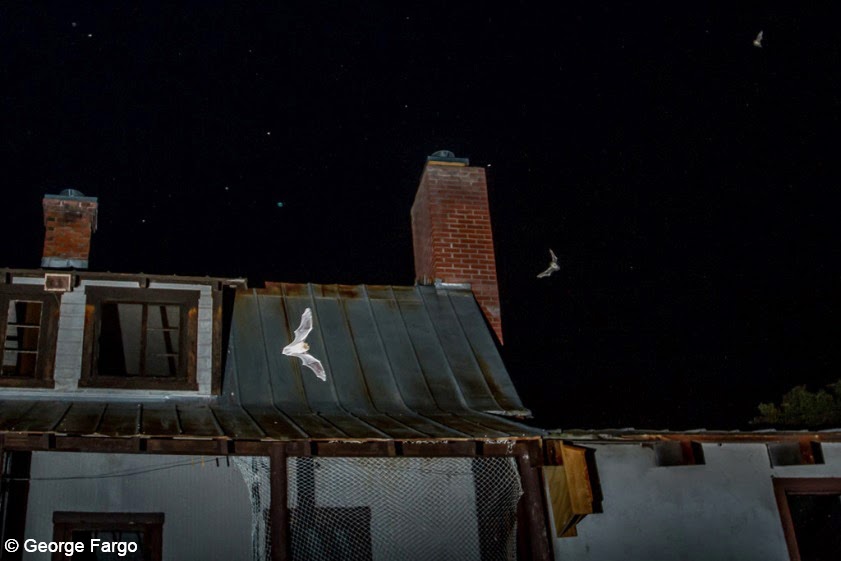
Bats in flight around ranch house on a star-filled night
(Photo by George Fargo)

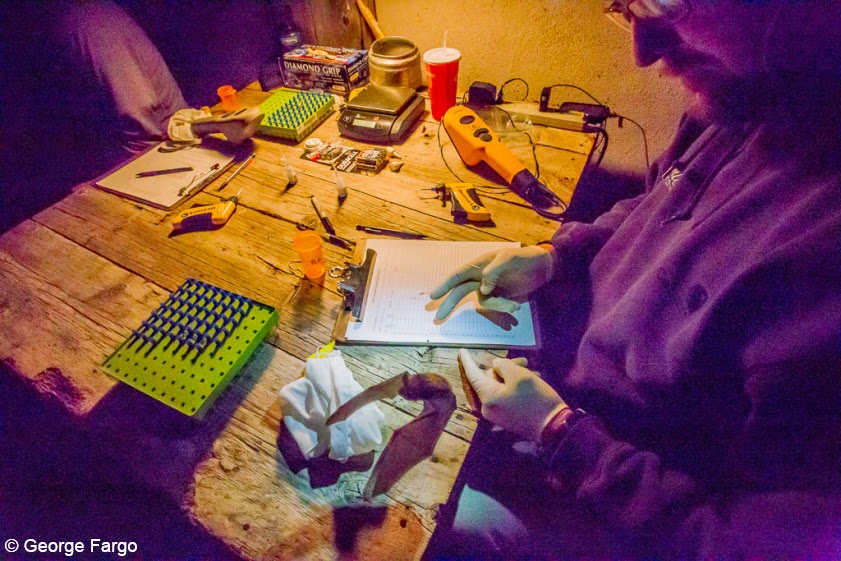
CNHP biologists, Rob Schorr and Jeremy Siemers are collaborating with Colorado Parks and Wildlife, the Yampa Valley Land Trust, and The Nature Conservancy to monitor little brown bat (Myotis lucifugus) populations at 2 ranches in the Yampa Valley.  This summer Schorr and Siemers marked nearly 600 bats with passive integrated transponder (PIT) tags and will return in 2015 to determine how many of the bats return and use the area annually.  This level of monitoring will provide insights into population stability for a healthy population of little brown bats in Colorado.
Schorr releases a female little brown bat after marking (Photo by George Fargo)

Jeremy Siemers and Rob Schorr assembling a 12-foot-tall harp trap
for capturing bats (Photo by Paul Cryan)

SHARE
FACEBOOK
TWITTER
LINKEDIN
REDDIT
EMAIL
Filed Under: Field Techniques, Zoology

Celebrating National Bat Week in Steamboat Springs
CNHP Director’s Adventures in India – Part 4

About Us

About Us
Conserving Biodiversity
Contact Us
Staff Directory
Careers
Employment
Internship
Volunteer
Meetings
The NatureServe Network
Partners

Our Work

Ecology
Wetlands
Plants
Animals
Climate Change
Education
Invasive Species

Blog Archive

Blog Categories

Web Projects

  • Rare Plant Guide Online
  • Colorado Wetland Info Center
  • COMaP - Colorado Protected Lands
  • Colorado Bat Working Group
  • STReaMS - Endangered Fishes Database

About Us

  • About Us
  • Conserving Biodiversity
  • Contact Us
  • Staff Directory
  • Careers
  • The NatureServe Network
  • Partners
  • Site Map
Warner College of Natural Resources Logo
  • Apply to CSU
  • Equal Opportunity
  • Disclaimer
  • Privacy Statement
  • Search CSU
  • CSU Land Acknowledgement
  • CSU Principles of Community
© 2026 Colorado Natural Heritage Program
Colorado State University Logo
  • About Us
    ▼
    • About Us
      ▼
      • Biennial Report
      • Strategic Plan
    • Conserving Biodiversity
    • Contact Us
    • Staff Directory
    • Careers
      ▼
      • Employment
      • Internship
      • Volunteer
    • Meetings
    • The NatureServe Network
    • Partners
  • Our Work
    ▼
    • Ecology
    • Wetlands
    • Plants
    • Animals
    • Climate Change
    • Education
    • Invasive Species
  • Our Services
    ▼
    • Database Development
    • GIS Analysis & Modeling
    • Mapping
    • Surveys & Inventories
    • Monitoring & Assessment
    • Conservation Planning
  • Our Data
    ▼
    • About CNHP Data
    • Request Data
    • Contribute Data
    • Download Data
    • Tracking Lists
    • PCA Reports
    • Help & Documentation
  • Maps
    ▼
    • CNHP Spatial Layers
    • Wetlands Mapper
    • COMaP
    • Conservation Environmental Review Tool
  • Library
    ▼
    • Reports
    • PCA Reports
    • Tracking Lists
    • Field Guides
      ▼
      • Rare Plant Guide
      • Colorado Wetland Field Guides
  • Blog
  • Donate Now