Colorado Natural Heritage Program Logo Colorado Natural Heritage Program Logo CNHP
  • About Us
    • About Us
      • Biennial Report
      • Strategic Plan
    • Conserving Biodiversity
    • Contact Us
    • Staff Directory
    • Careers
      • Employment
      • Internship
      • Volunteer
    • Meetings
    • The NatureServe Network
    • Partners
  • Our Work
    • Ecology
    • Wetlands
    • Plants
    • Animals
    • Climate Change
    • Education
    • Invasive Species
  • Our Services
    • Database Development
    • GIS Analysis & Modeling
    • Mapping
    • Surveys & Inventories
    • Monitoring & Assessment
    • Conservation Planning
  • Our Data
    • About CNHP Data
    • Request Data
    • Contribute Data
    • Download Data
    • Tracking Lists
    • PCA Reports
    • Help & Documentation
  • Maps
    • CNHP Spatial Layers
    • Wetlands Mapper
    • COMaP
    • Conservation Environmental Review Tool
  • Library
    • Reports
    • PCA Reports
    • Tracking Lists
    • Field Guides
      • Rare Plant Guide
      • Colorado Wetland Field Guides
  • Blog
  • Donate Now

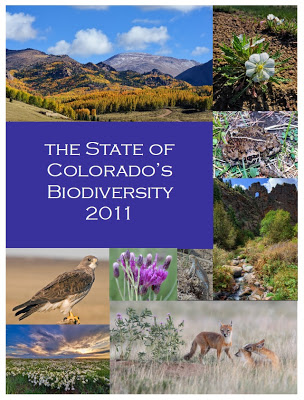
The State of Colorado’s Biodiversity

January 4, 2013

For the first time in Colorado, scientists and land managers have access to a comprehensive report that measures conservation progress during the past 40+ years. The Nature Conservancy and the Colorado Natural Heritage Program at Colorado State University recently released a report on the state State of Colorado’s biodiversity which ranks the state’s natural heritage as “in relatively good condition” or “restorable.” The report identifies progress on many plant and animal species but notes that significant challenges remain.

The report documents a “scorecard” evaluation using the best available collective data to evaluate lands, animals and plants under the three broad categories of rarity,threats, and protection.

Key findings include:

  • Colorado’s major habitat types are all important for at-risk species and are relatively intact with at least 70% scoring good or very good based on size, condition, and the surrounding conditions.
  • About 40% of all fish and amphibians are inadequately conserved, an indicator of the condition of Colorado’s streams, rivers, and wetlands.
  • Colorado’s prairies are the most highly altered and least protected natural systems and support the most at-risk animals.
  • Many of Colorado’s rarest plants are effectively conserved; others are at risk in the path of energy and urban development
  • Lower elevation forests (especially pinyon-juniper and ponderosa pine) are in the poorest condition, are significantly under-conserved and present a high risk of severe fire.

The Nature Conservancy developed the concept, made final reviews and provided funding. The Colorado Natural Heritage Program provided project guidance and conducted the research. The findings create a formal benchmark for gauging the degree to which Colorado’s natural diversity has remained intact for our children.

To read the complete report, click here.

Early reviews from our partners have been favorable:

“The type of information this report contains has been invaluable to the Gates Family Foundation. We have been investors in conservation in Colorado for decades. But until recently, it has been hard to find data that allows the conservation community to keep score in any comprehensive fashion. This data has played a central role in our decision to increase our investment in conservation of Colorado’s grasslands and management and protection of Colorado rivers and streams.”

–Tom Gougeon
President, Gates Family Foundation

“This report tells us we’re doing a good job of conserving birds thanks to private and public land managers. Through cooperative partnerships we can keep moving the conservation needle forward so Coloradoans and people throughout the West enjoy beautiful birds for generations to come.”

–Tammy VerCauteren
Executive Director, Rocky Mountain Bird Observatory.

SHARE
FACEBOOK
TWITTER
LINKEDIN
REDDIT
EMAIL
Filed Under: Biodiversity Scorecard, Collaborations

New CNHP employee: Jeremy Sueltenfuss
NEW GEOSPATIAL DATASET ONLINE: Terrestrial Ecological System Patches

About Us

About Us
Conserving Biodiversity
Contact Us
Staff Directory
Careers
Employment
Internship
Volunteer
Meetings
The NatureServe Network
Partners

Our Work

Ecology
Wetlands
Plants
Animals
Climate Change
Education
Invasive Species

Blog Archive

Blog Categories

Web Projects

  • Rare Plant Guide Online
  • Colorado Wetland Info Center
  • COMaP - Colorado Protected Lands
  • Colorado Bat Working Group
  • STReaMS - Endangered Fishes Database

About Us

  • About Us
  • Conserving Biodiversity
  • Contact Us
  • Staff Directory
  • Careers
  • The NatureServe Network
  • Partners
  • Site Map
Warner College of Natural Resources Logo
  • Apply to CSU
  • Equal Opportunity
  • Disclaimer
  • Privacy Statement
  • Search CSU
  • CSU Land Acknowledgement
  • CSU Principles of Community
© 2026 Colorado Natural Heritage Program
Colorado State University Logo
  • About Us
    ▼
    • About Us
      ▼
      • Biennial Report
      • Strategic Plan
    • Conserving Biodiversity
    • Contact Us
    • Staff Directory
    • Careers
      ▼
      • Employment
      • Internship
      • Volunteer
    • Meetings
    • The NatureServe Network
    • Partners
  • Our Work
    ▼
    • Ecology
    • Wetlands
    • Plants
    • Animals
    • Climate Change
    • Education
    • Invasive Species
  • Our Services
    ▼
    • Database Development
    • GIS Analysis & Modeling
    • Mapping
    • Surveys & Inventories
    • Monitoring & Assessment
    • Conservation Planning
  • Our Data
    ▼
    • About CNHP Data
    • Request Data
    • Contribute Data
    • Download Data
    • Tracking Lists
    • PCA Reports
    • Help & Documentation
  • Maps
    ▼
    • CNHP Spatial Layers
    • Wetlands Mapper
    • COMaP
    • Conservation Environmental Review Tool
  • Library
    ▼
    • Reports
    • PCA Reports
    • Tracking Lists
    • Field Guides
      ▼
      • Rare Plant Guide
      • Colorado Wetland Field Guides
  • Blog
  • Donate Now