Colorado Natural Heritage Program Logo Colorado Natural Heritage Program Logo CNHP
  • About Us
    • About Us
      • Biennial Report
      • Strategic Plan
    • Conserving Biodiversity
    • Contact Us
    • Staff Directory
    • Careers
      • Employment
      • Internship
      • Volunteer
    • Meetings
    • The NatureServe Network
    • Partners
  • Our Work
    • Ecology
    • Wetlands
    • Plants
    • Animals
    • Climate Change
    • Education
    • Invasive Species
  • Our Services
    • Database Development
    • GIS Analysis & Modeling
    • Mapping
    • Surveys & Inventories
    • Monitoring & Assessment
    • Conservation Planning
  • Our Data
    • About CNHP Data
    • Request Data
    • Contribute Data
    • Download Data
    • Tracking Lists
    • PCA Reports
    • Help & Documentation
  • Maps
    • CNHP Spatial Layers
    • Wetlands Mapper
    • COMaP
    • Conservation Environmental Review Tool
  • Library
    • Reports
    • PCA Reports
    • Tracking Lists
    • Field Guides
      • Rare Plant Guide
      • Colorado Wetland Field Guides
  • Blog
  • Donate Now

Botany A to Z: Draba

February 22, 2012

By Karin Decker

is for Draba
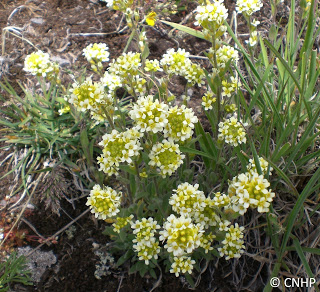
Drabas belong to the Mustard family (Brassicaceae), and in fact, Draba is the largest genus in the family, both worldwide and in North America.  There are currently 121 recognized Draba species in the Flora of North America, with the greatest concentration of species in the western United States. Most species of Draba are found at high elevations or high latitudes, and endemism in local mountain ranges is frequent in the genus.
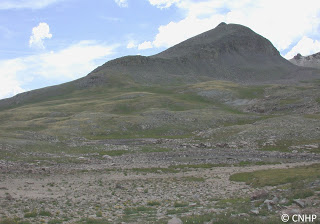
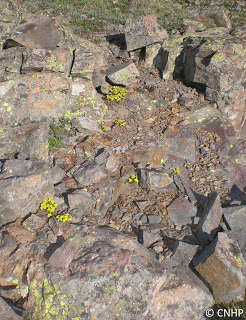
High elevation habitat beloved by Draba crassa and D. streptobrachia.
 
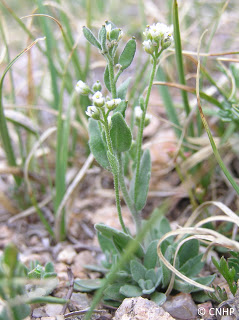
 Draba graminea in tough habitat – small but durable!
The original Greek name was applied to a type of cress. The common name of whitlow-grass apparently got attached to Draba verna because it was a plant believed to cure whitlows (look it up – eew!).
Are Drabas drab? Not when they are flowering – look at Draba borealis!
Oh, well, Draba fladnazensis is a little shy and retiring.
As a genus, Draba hasn’t really settled on a single reproductive method – different species may reproduce via apomixis (various forms of asexual reproduction), autogamy (self-pollination), or outcrossing (exchanging pollen with other individuals). All of this can make taxonomic classification of the various species difficult to work out, since the plants don’t easily fit into the biological species concept, where the units of classification are interbreeding populations.
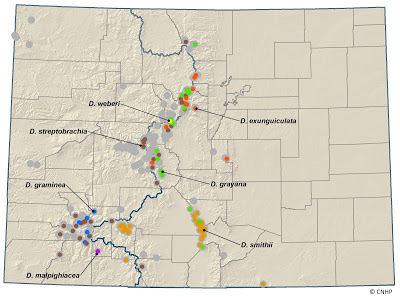
There are more than 2 dozen species of Draba reported from Colorado, and seven of them are endemic to the state. CNHP tracks 16 species:
 
Documented locations of rare Draba species in Colorado. Endemic species are colored and labeled, non-endemic are gray.


SHARE
FACEBOOK
TWITTER
LINKEDIN
REDDIT
EMAIL
Filed Under: Botany

The Wildlife Society Chapter Service Award
Job Opening: Wetland Ecology Field Technicians

About Us

About Us
Conserving Biodiversity
Contact Us
Staff Directory
Careers
Employment
Internship
Volunteer
Meetings
The NatureServe Network
Partners

Our Work

Ecology
Wetlands
Plants
Animals
Climate Change
Education
Invasive Species

Blog Archive

Blog Categories

Web Projects

  • Rare Plant Guide Online
  • Colorado Wetland Info Center
  • COMaP - Colorado Protected Lands
  • Colorado Bat Working Group
  • STReaMS - Endangered Fishes Database

About Us

  • About Us
  • Conserving Biodiversity
  • Contact Us
  • Staff Directory
  • Careers
  • The NatureServe Network
  • Partners
  • Site Map
Warner College of Natural Resources Logo
  • Apply to CSU
  • Equal Opportunity
  • Disclaimer
  • Privacy Statement
  • Search CSU
  • CSU Land Acknowledgement
  • CSU Principles of Community
© 2026 Colorado Natural Heritage Program
Colorado State University Logo
  • About Us
    ▼
    • About Us
      ▼
      • Biennial Report
      • Strategic Plan
    • Conserving Biodiversity
    • Contact Us
    • Staff Directory
    • Careers
      ▼
      • Employment
      • Internship
      • Volunteer
    • Meetings
    • The NatureServe Network
    • Partners
  • Our Work
    ▼
    • Ecology
    • Wetlands
    • Plants
    • Animals
    • Climate Change
    • Education
    • Invasive Species
  • Our Services
    ▼
    • Database Development
    • GIS Analysis & Modeling
    • Mapping
    • Surveys & Inventories
    • Monitoring & Assessment
    • Conservation Planning
  • Our Data
    ▼
    • About CNHP Data
    • Request Data
    • Contribute Data
    • Download Data
    • Tracking Lists
    • PCA Reports
    • Help & Documentation
  • Maps
    ▼
    • CNHP Spatial Layers
    • Wetlands Mapper
    • COMaP
    • Conservation Environmental Review Tool
  • Library
    ▼
    • Reports
    • PCA Reports
    • Tracking Lists
    • Field Guides
      ▼
      • Rare Plant Guide
      • Colorado Wetland Field Guides
  • Blog
  • Donate Now