by Amber Provinzano
The summer is over and I am out of the field and back in the classroom for my final semester as an undergraduate student. I’m continuing to work for CNHP in the same data processor position I had last year. Though the time in the field is over, the experience, lessons and memories are far from forgotten. As I’ve said before and can say again after more experience, the field season is a great component of working in natural resources and I am happy with my decision to pursue a degree in wildlife biology.
My 2011 field season experience kicked off at Willhite Ranch in southeastern Colorado with Renée Rondeau, as previously reported.
Mesa Verde and Schmoll’s Milkvetch
In June, along with CNHP’s director, Dave Anderson, and CNHP field botanist Bernadette Kuhn, I ventured to Mesa Verde National Park for 10 days to assist with setting up and revisiting permanent plots used in monitoring the rare Schmoll’s Milkvetch (Astragalus schmolliae), recently made a Candidate Species for listing under the Endangered Species Act. The park’s Natural Resource staff was wonderful: they were eager to help us, providing a few supplies but more importantly extra people on the ground to get the work done.
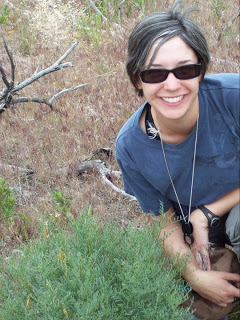
Amber with a fruiting Astragalus schmolliae (Schmoll’s Milkvetch) and encroaching weeds in the background.
A most memorable experience was the hike to Park Mesa with veg crew member Kyle Doherty to reevaluate a demography plot for the Schmoll’s Milkvetch originally set up in 2001 by Dave Anderson. Kyle and I made our way down and back up the walls of Soda Canyon, catching glimpses of cliff dwellings, and across Park Mesa where the ancient pinyon-juniper forests meet the weed-infested fields now growing on the site of where large fires occurred in 2002.
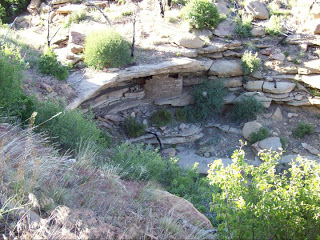
Small dwelling, we guessed it was used to store food.
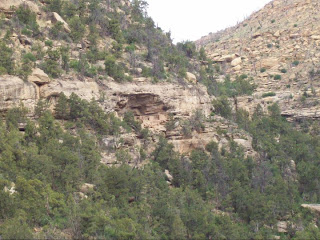
A large dwelling in the side of the canyon. Blends in, doesn’t it?
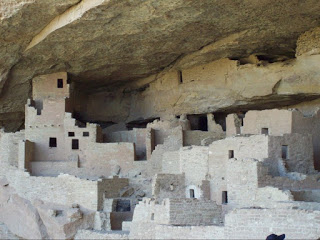
The photo everyone takes of Cliff Palace at Mesa Verde National Park.
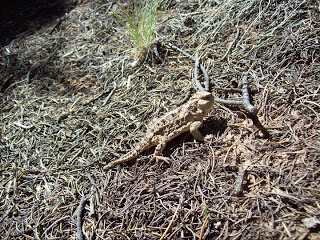
Short-Horned Lizard (Phrynosoma douglassi)
Despite living in Colorado my entire life, I had yet to see as much of the state as I did on the 10 hour drive to Mesa Verde (we took the scenic route, at my request). And even with 9-12+ hour work days I was able to break away from work for an hour to take the Cliff Palace tour. I am very thankful to have been able to join Dave and Bernadette in this project.
Rare Plants in Jefferson County
CNHP field botanist Pam Smith recruited me to assist her in surveying Jefferson County wetlands for a few weeks in July and August. On my first day out I was lucky enough to see Colorado’s rarest orchid, Malaxis brachypoda (white adder’s-mouth). We also hiked up to see Telesonix jamesii (James’ telesonix), seeing other rare plants tracked by CNHP along the way. Pam also took me to several Jefferson County Open Space parks, and I will definitely be going back for fun. Colorado residents, especially those in and near Jefferson County, should take advantage of these gorgeous natural areas set aside by the county for our enjoyment.
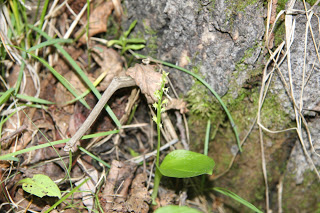
Malaxis brachypoda. Photo by Scotty Smith.
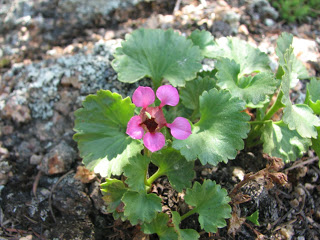
Telesonix jamesii. Photo by Pam Smith.
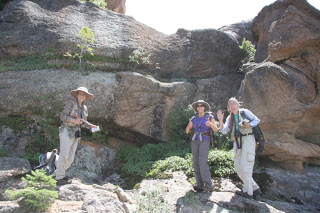
From the left, orchid expert and CNHP volunteer Denise Wilson, Amber Provinzano, and Pam Smith at a Telesonix jamesii occurrence. Photo by Scotty Smith.
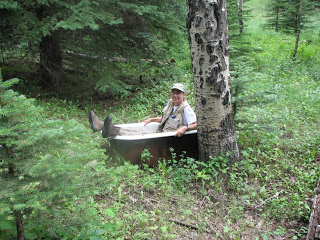
Rub-a-dub-dub, Pam in a tub. While it’s a cute photo-op, who leaves a bathtub in the woods? Photo by Amber Provinzano.
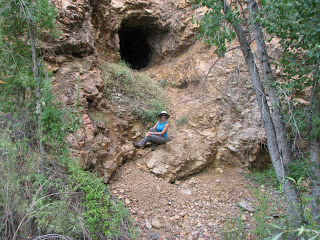
My new home! (Assuming the bears don’t come back. Oh wait, maybe that was their bathtub.) Photo by Pam Smith.
To be continued…