Colorado Natural Heritage Program Logo Colorado Natural Heritage Program Logo CNHP
  • About Us
    • About Us
      • Biennial Report
      • Strategic Plan
    • Conserving Biodiversity
    • Contact Us
    • Staff Directory
    • Careers
      • Employment
      • Internship
      • Volunteer
    • Meetings
    • The NatureServe Network
    • Partners
  • Our Work
    • Ecology
    • Wetlands
    • Plants
    • Animals
    • Climate Change
    • Education
    • Invasive Species
  • Our Services
    • Database Development
    • GIS Analysis & Modeling
    • Mapping
    • Surveys & Inventories
    • Monitoring & Assessment
    • Conservation Planning
  • Our Data
    • About CNHP Data
    • Request Data
    • Contribute Data
    • Download Data
    • Tracking Lists
    • PCA Reports
    • Help & Documentation
  • Maps
    • CNHP Spatial Layers
    • Wetlands Mapper
    • COMaP
    • Conservation Environmental Review Tool
  • Library
    • Reports
    • PCA Reports
    • Tracking Lists
    • Field Guides
      • Rare Plant Guide
      • Colorado Wetland Field Guides
  • Blog
  • Donate Now

Red Top Ranch monitoring

May 9, 2011

By Katie Dykgreve

Located just outside of the city of Pueblo, this beautiful shortgrass prairie ranch quickly became a research haven for ecologist Renée Rondeau, conservation planner Lee Grunau, and me, work-study Katie Dykgreve. This is the seventh year of monitoring on a 20,000 acre conservation easement set aside for mountain plovers, black tailed prairie dogs, Cassin’s sparrows, horned lizards, loggerhead shrikes, and many other grassland species.

Quiet, serene mornings and stormy afternoons welcomed us as we loaded into our field vehicle and visited upwards of 25 monitoring sites a day. Observations centered around suitable habitat for mountain plovers. Fritz Knopf, retired USGS researcher and mountain plover expert joined us in the field for a day. His vast knowledge about mountain plovers was frantically absorbed by the three of us due the mystery of some ideal habitat but a curious lack of the bird. Despite the fact that there were no eye-witness accounts of this elusive avian, plenty of other flora and fauna made appearances. Out on the prairie, coyotes, prairie dogs, and burrowing owls frolicked among blue grama, three-awned grass, and galleta grass.
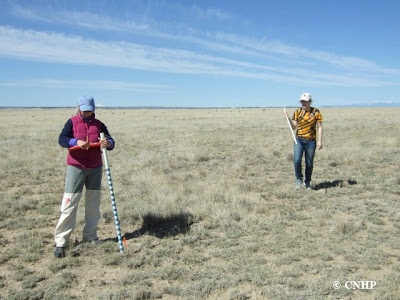
Lee and Katie measure vegetation density at a monitoring plot.

Although I’ve had my encounters with prickly pear cactus on the prairies of Montana, I hastily developed respect for cholla. After getting severely poked a few times, I quickly drew the conclusion to avoid this prickly plant by all means necessary! Thick with three inch spines, cholla easily wards off herbivores, as well as freshman work-studies.

Tarantulas and lesser earless lizards also showed themselves periodically across the ranch. The high population of lesser earless lizards deemed 2011 the year of the lizard.

Holbrookia maculata
A perspective-bending snap of a lesser earless lizard (Holbrookia maculata) at Red Top.

After a long day out in the field, it was always a pleasure to mingle with the cowboys, including ranch manager Davy and brother Johnny. The ranch dogs also won Lee and my hearts as we played with puppies and older dogs alike.
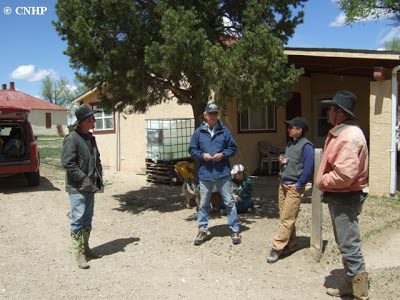
From left to right: Davy, Fritz, Renée, and Johnny. Katie is behind Fritz, playing with the dogs.

Also, site-seeing became a highlight of the trip after going through a couple canyons and witnessing elk and mule deer.

Overall, Red Top Ranch is the perfect place to start of a field season: comfortable, warm beds and a full refrigerator included! The chance to go learn at the feet of the masters, Lee and Renée, will never be forgotten. I look forward to many more adventures to come.


SHARE
FACEBOOK
TWITTER
LINKEDIN
REDDIT
EMAIL
Filed Under: Ecology

New Report – Year 6 Weed Monitoring at the Air Force Academy
Application Deadline extended for Team Leader/Database Developer

About Us

About Us
Conserving Biodiversity
Contact Us
Staff Directory
Careers
Employment
Internship
Volunteer
Meetings
The NatureServe Network
Partners

Our Work

Ecology
Wetlands
Plants
Animals
Climate Change
Education
Invasive Species

Blog Archive

Blog Categories

Web Projects

  • Rare Plant Guide Online
  • Colorado Wetland Info Center
  • COMaP - Colorado Protected Lands
  • Colorado Bat Working Group
  • STReaMS - Endangered Fishes Database

About Us

  • About Us
  • Conserving Biodiversity
  • Contact Us
  • Staff Directory
  • Careers
  • The NatureServe Network
  • Partners
  • Site Map
Warner College of Natural Resources Logo
  • Apply to CSU
  • Equal Opportunity
  • Disclaimer
  • Privacy Statement
  • Search CSU
  • CSU Land Acknowledgement
  • CSU Principles of Community
© 2026 Colorado Natural Heritage Program
Colorado State University Logo
  • About Us
    ▼
    • About Us
      ▼
      • Biennial Report
      • Strategic Plan
    • Conserving Biodiversity
    • Contact Us
    • Staff Directory
    • Careers
      ▼
      • Employment
      • Internship
      • Volunteer
    • Meetings
    • The NatureServe Network
    • Partners
  • Our Work
    ▼
    • Ecology
    • Wetlands
    • Plants
    • Animals
    • Climate Change
    • Education
    • Invasive Species
  • Our Services
    ▼
    • Database Development
    • GIS Analysis & Modeling
    • Mapping
    • Surveys & Inventories
    • Monitoring & Assessment
    • Conservation Planning
  • Our Data
    ▼
    • About CNHP Data
    • Request Data
    • Contribute Data
    • Download Data
    • Tracking Lists
    • PCA Reports
    • Help & Documentation
  • Maps
    ▼
    • CNHP Spatial Layers
    • Wetlands Mapper
    • COMaP
    • Conservation Environmental Review Tool
  • Library
    ▼
    • Reports
    • PCA Reports
    • Tracking Lists
    • Field Guides
      ▼
      • Rare Plant Guide
      • Colorado Wetland Field Guides
  • Blog
  • Donate Now