Colorado Natural Heritage Program Logo Colorado Natural Heritage Program Logo CNHP
  • About Us
    • About Us
      • Biennial Report
      • Strategic Plan
    • Conserving Biodiversity
    • Contact Us
    • Staff Directory
    • Careers
      • Employment
      • Internship
      • Volunteer
    • Meetings
    • The NatureServe Network
    • Partners
  • Our Work
    • Ecology
    • Wetlands
    • Plants
    • Animals
    • Climate Change
    • Education
    • Invasive Species
  • Our Services
    • Database Development
    • GIS Analysis & Modeling
    • Mapping
    • Surveys & Inventories
    • Monitoring & Assessment
    • Conservation Planning
  • Our Data
    • About CNHP Data
    • Request Data
    • Contribute Data
    • Download Data
    • Tracking Lists
    • PCA Reports
    • Help & Documentation
  • Maps
    • CNHP Spatial Layers
    • Wetlands Mapper
    • COMaP
    • Conservation Environmental Review Tool
  • Library
    • Reports
    • PCA Reports
    • Tracking Lists
    • Field Guides
      • Rare Plant Guide
      • Colorado Wetland Field Guides
  • Blog
  • Donate Now

Rare Plant Conservation Initiative CAP meeting: Dolores and San Miguel Counties

June 1, 2010

By Bernadette Kuhn, CNHP Botanist

Our group walked gingerly over the lichen-encrusted soil to get a closer look at a plant species known only from gypsum outcrops in Mesa, Montrose and San Miguel counties. Cryptantha gypsophila (Gypsum Valley cat’s-eye), a species described in 2006, dotted the low hills of Big Gypsum Valley, one of the field trip sites for the latest in a series of Conservation Action Planning (CAP) meetings. Our timing was impeccable – the plants were in full bloom.

Cryptantha gypsophila
Cryptantha gypsophila (Gypsum Valley cat’s-eye), with a ring for scale.

Photo by Bernadette Kuhn.

The CAP workshop and field trip, held May 4-6, convened in the town of Norwood, with field trips to the Big Gypsum Valley and Dan Noble State Wildlife Area. A CAP workshop is an iterative and adaptive process that looks at conservation targets at multiple spatial scales in order to be as effective as possible with the knowledge and resources available. The participants for this meeting consisted of county officials, land managers, land trust representatives, botanists, and planners. Susan Spackman Panjabi (CNHP), Betsy Neely (The Nature Conservancy) and Peggy Lyon (CNHP) led the workshop.

Betsy Neely
Betsy Neely of The Nature Conservancy photographing the Gypsum Valley cat’s-eye and unusual lichens growing in Big Gypsum Valley.

Photo by Bernadette Kuhn.

The priority action areas for the workshop are Big Gypsum Valley, Miramonte Reservoir, and Lone Mesa State Park. These areas are ranked by CNHP as having Outstanding Biodiversity Significance (B1). The following rare plant species are found at these sites: Cryptantha gypsophila (Gypsum Valley cat’s-eye), Gutierrezia elegans (Lone Mesa snakeweed), Physaria pulvinata (cushion bladderpod), Puccinellia parishii (Parish’s alkali grass) and Sporobolus neallyi (Neally’s dropseed).
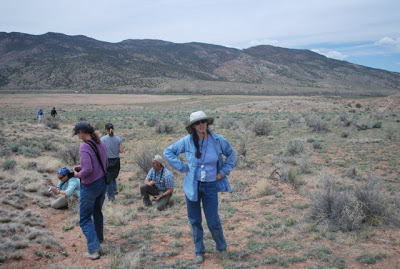
group shot
Workshop participants on field trip to Big Gypsum Valley: Carol English (purple shirt), Cara MacMillan (striking a pose), Dave Schneck (kneeling), Susan Spackman Panjabi (bandana, camera), Alicia Langton (grey shirt), Al Schneider and Bernadette Kuhn (background). Photo by Betsy Neely, The Nature Conservancy (used with permission).

Our group worked together to identify stresses to the rare plants (current, future and potential), then developed strategies to address them. We also identified the knowledge gaps and monitoring needs for the rare plant species.

vehicle tracks
Gypsum hills that provide habitat for Cryptantha gypsophila showing signs off-highway vehicle use. During the CAP meeting, we developed a strategy to communicate with the off-highway vehicle community and explore ways of working together to minimize impacts on the plants and their habitats.

Photo by Betsy Neely, The Nature Conservancy (used with permission).

This is the sixth CAP meeting held by the Rare Plant Conservation Initiative. Future meetings are slated for the following locations: Gateway, North Park, Middle Park, the Middle Arkansas Valley, Piceance Basin, and Pagosa Springs.

SHARE
FACEBOOK
TWITTER
LINKEDIN
REDDIT
EMAIL
Filed Under: Botany, Collaborations, Conservation Planning

The blog is 1 year old!
Site profile: Mee Canyon, Mesa County

About Us

About Us
Conserving Biodiversity
Contact Us
Staff Directory
Careers
Employment
Internship
Volunteer
Meetings
The NatureServe Network
Partners

Our Work

Ecology
Wetlands
Plants
Animals
Climate Change
Education
Invasive Species

Blog Archive

Blog Categories

Web Projects

  • Rare Plant Guide Online
  • Colorado Wetland Info Center
  • COMaP - Colorado Protected Lands
  • Colorado Bat Working Group
  • STReaMS - Endangered Fishes Database

About Us

  • About Us
  • Conserving Biodiversity
  • Contact Us
  • Staff Directory
  • Careers
  • The NatureServe Network
  • Partners
  • Site Map
Warner College of Natural Resources Logo
  • Apply to CSU
  • Equal Opportunity
  • Disclaimer
  • Privacy Statement
  • Search CSU
  • CSU Land Acknowledgement
  • CSU Principles of Community
© 2025 Colorado Natural Heritage Program
Colorado State University Logo
  • About Us
    ▼
    • About Us
      ▼
      • Biennial Report
      • Strategic Plan
    • Conserving Biodiversity
    • Contact Us
    • Staff Directory
    • Careers
      ▼
      • Employment
      • Internship
      • Volunteer
    • Meetings
    • The NatureServe Network
    • Partners
  • Our Work
    ▼
    • Ecology
    • Wetlands
    • Plants
    • Animals
    • Climate Change
    • Education
    • Invasive Species
  • Our Services
    ▼
    • Database Development
    • GIS Analysis & Modeling
    • Mapping
    • Surveys & Inventories
    • Monitoring & Assessment
    • Conservation Planning
  • Our Data
    ▼
    • About CNHP Data
    • Request Data
    • Contribute Data
    • Download Data
    • Tracking Lists
    • PCA Reports
    • Help & Documentation
  • Maps
    ▼
    • CNHP Spatial Layers
    • Wetlands Mapper
    • COMaP
    • Conservation Environmental Review Tool
  • Library
    ▼
    • Reports
    • PCA Reports
    • Tracking Lists
    • Field Guides
      ▼
      • Rare Plant Guide
      • Colorado Wetland Field Guides
  • Blog
  • Donate Now