

Scientific Name : Trifolium anemophilum
Author : Greene NatureServe Explorer
Common Name : Laramie Hills Clover
 Current Research Activities
☰ Click link below for details.
Taxonomy
Fabaceae (pea family)
Weber and Wittmann (2012) list this taxon as T. dasyphyllum ssp. anemophilum and state it occurs on the High Plains in southeastern Wyoming and northeastern Colorado. Ackerfield (2015, 2022) lists this as Trifolium anemophilum.
Ranks and Status
State Rank : S1
State Rank Reason : Trifolium anemophilum is known from one occurrence in Weld County, Colorado, USA, where wind energy development may impact the habitat. This species is also considered to be extremely vulnerable to the effects of climate change.
U.S. Endangered Species Act : none
Colorado Threatened and Endangered List : none
Other Statuses : SWAP SGIN
Description and Phenology
General Description:
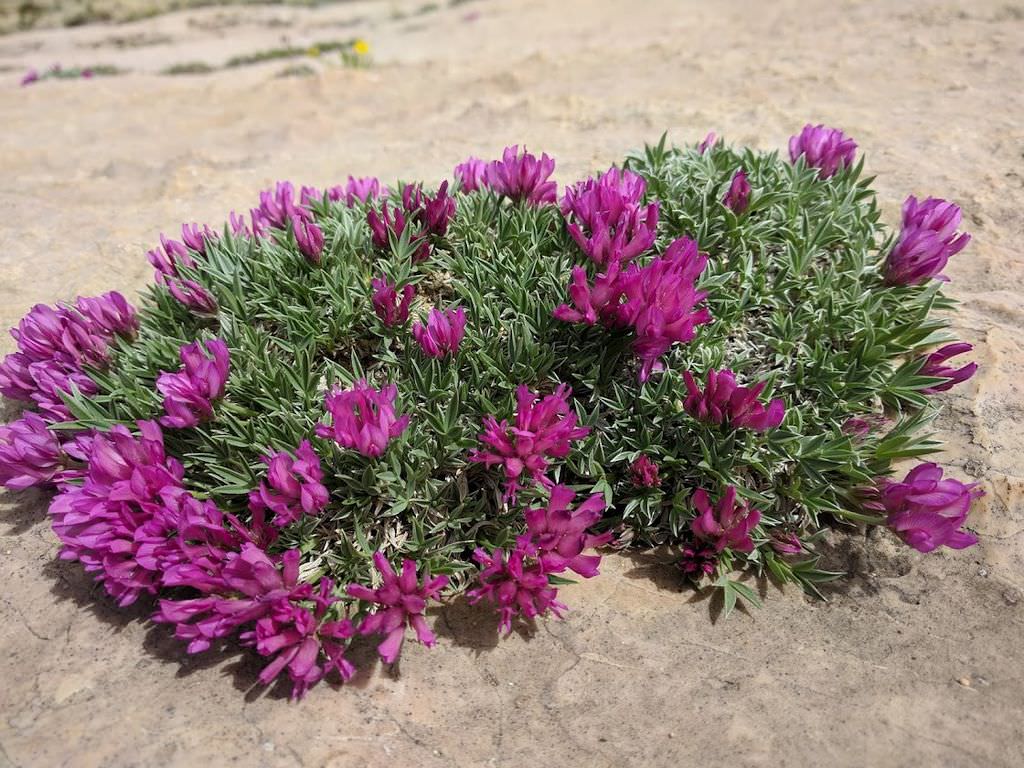
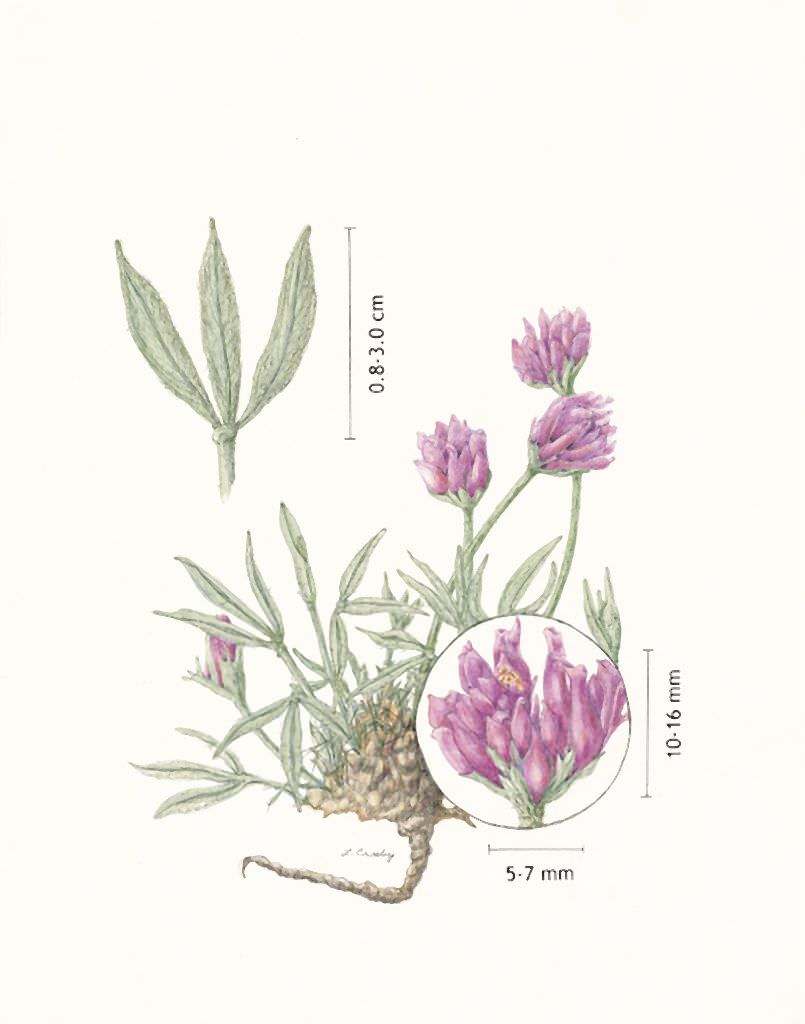
Subaculescent perennials, 1-5 cm; leaflets obovate to narrowly lanceolate, often folded, (0.6) 0.8- 3 cm long, the margins subentire, silvery-strigose above and below; heads with 5-15 (20) asending flowers; calyx 5-7 (10) mm long, hariy; flowers bicolored with purple wings and keel, the banner whitish-lavender, 10-16 mm long; legumes 4-6 mm long, hairy (Ackerfield 2015).
Look Alikes:
Distinguished from other Trifolium in the area by its silky-silvery appearance from close white hairs on both leaf surfaces (Ackerfield 2015). Trifolium dasyphyllum ssp. dasyphyllum can have hairs on both leaf surfaces, but the plants appear green, not silvery.
Phenology:
Flowers May-June (Ackerfield 2015).
 |
Habitat
Rocky slopes and in rocky crevices (Ackerfield 2015). Associated species have not been reported.
Elevation Range:
5,323 - 5,494 feet (1,622 - 1,675 meters)
Distribution
Colorado Endemic:
No
Range:
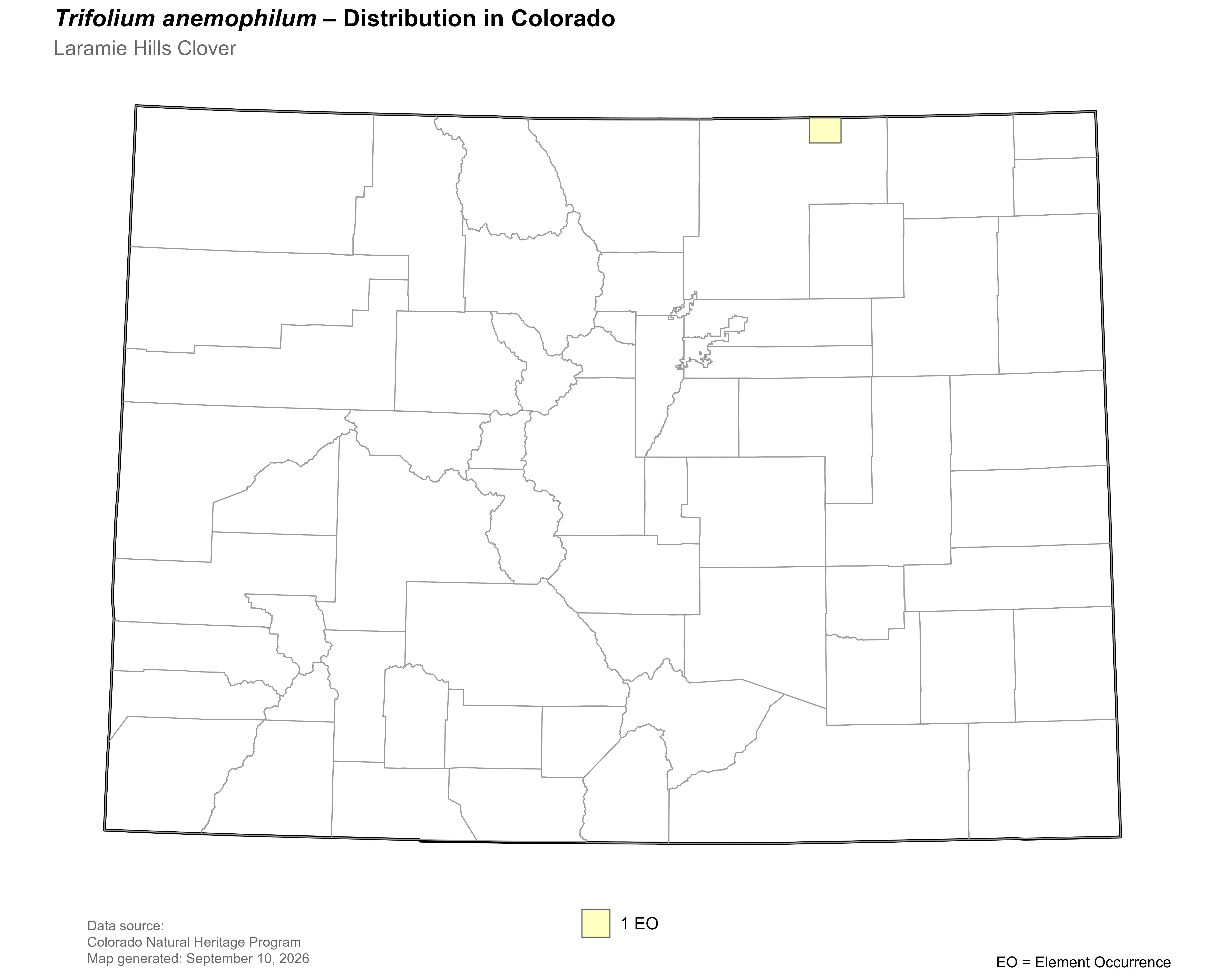
Trifolium anemophilum is known from Weld County, Colorado, USA. This taxon is also known from Wyoming, USA.
Click on map to enlarge |
Threats and Management Issues
The lone Colorado occurrence occurs on a bluff where wind turbines have been placed. The current status of the site is unknown. This species is considered to be extremely vulnerable to climate change (Handwerk et al. 2015).
References
- Ackerfield, J. 2015. Flora of Colorado. BRIT Press, Botanical Research Institute of Texas, Fort Worth, TX. 818 pp.
- Ackerfield, Jennifer. 2022. Flora of Colorado. Second Edition. Bot. Misc. 60. BRIT Press, Fort Worth Botanic Garden/Botanical Research Institute of Texas, U.S.A. 861 pp.
- Barneby, R.C. 1989. Fabales. In A. Cronquist, A.H. Holmgren, N.H. Holmgren, J.L. Reveal, and P.K. Holmgren (eds.). Intermountain flora: Vascular plants of the Intermountain West, U.S.A. Vol. 3, Part B. New York Botanical Garden, Bronx. 279 pp.
- Colorado Natural Heritage Program (CNHP). 2022. Biodiversity Tracking and Conservation System (Biotics 5). Colorado Natural Heritage Program, Colorado State University, Fort Collins.
- Colorado Natural Heritage Program (CNHP). 2023. Biodiversity Tracking and Conservation System (Biotics 5). Colorado Natural Heritage Program, Colorado State University, Fort Collins.
- Handwerk, J., L. Grunau, and S. Panjabi. 2015. Colorado Wildlife Action Plan: 2015 Rare Plant Addendum. Colorado Natural Heritage Program, Colorado State University, Fort Collins, Colorado, USA.
- Isely, D. 1998. Native and naturalized Leguminosae (Fabaceae) of the United States (exclusive of Alaska and Hawaii). Monte L. Bean Life Science Museum, Brigham Young University; MLBM Press, Provo, Utah. 1007 pp.
- Weber, W. A. and R. C. Wittmann. 2012. Colorado Flora, Eastern Slope, A Field Guide to the Vascular Plants, Fourth Edition. Boulder, Colorado. 555 pp.