


Scientific Name : Sullivantia hapemanii var. purpusii
Author : (Brand) Soltis NatureServe Explorer
Common Name : Hanging Garden Sullivantia
 Current Research Activities
 1997 profile
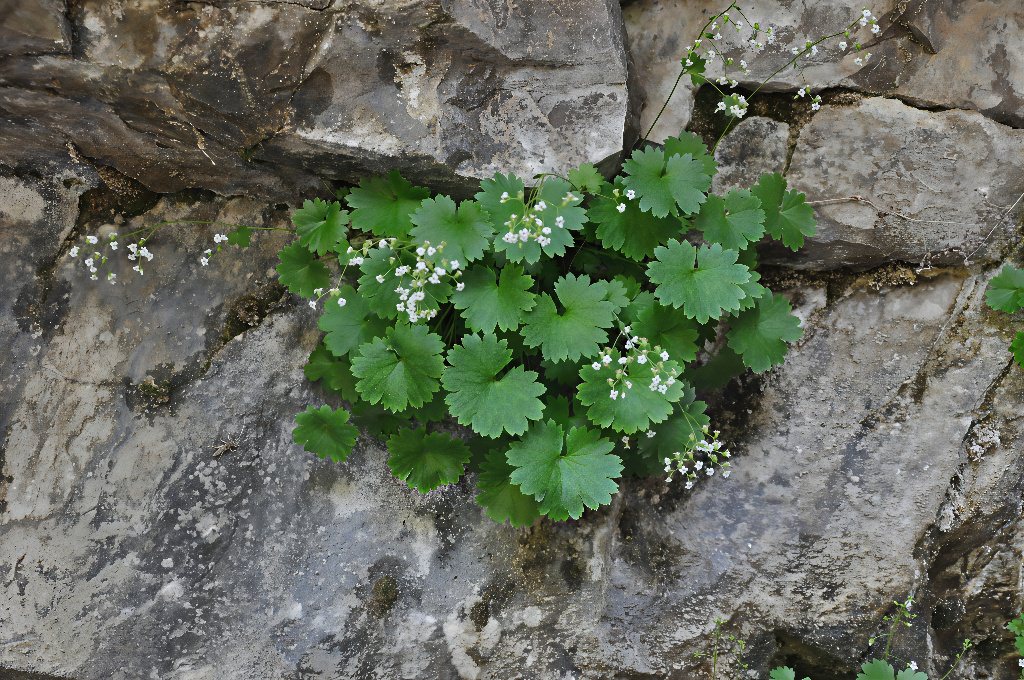
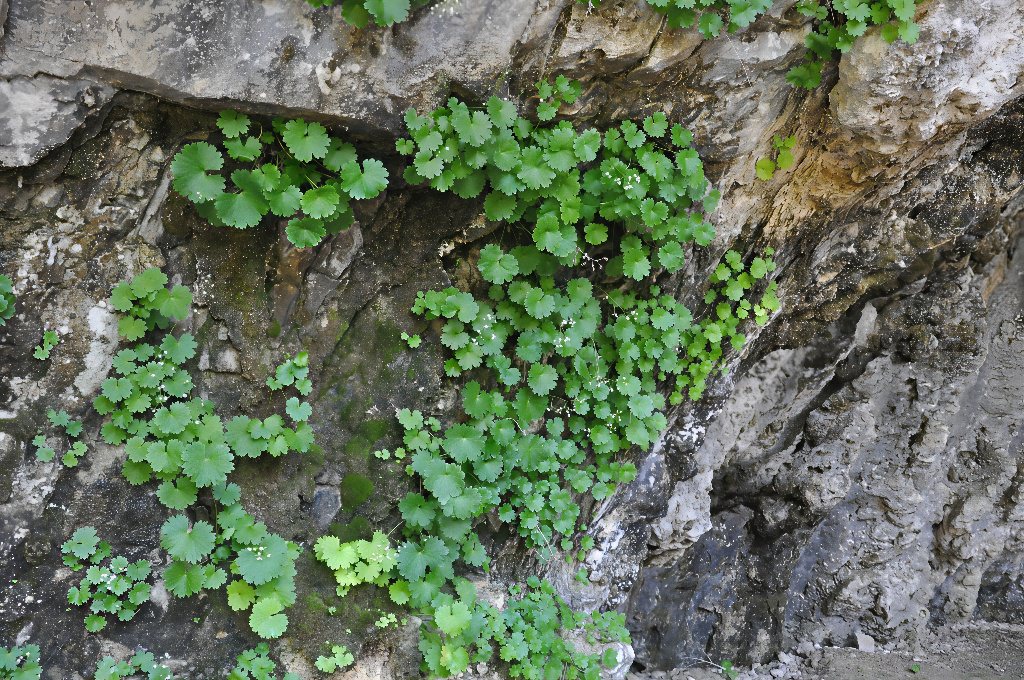
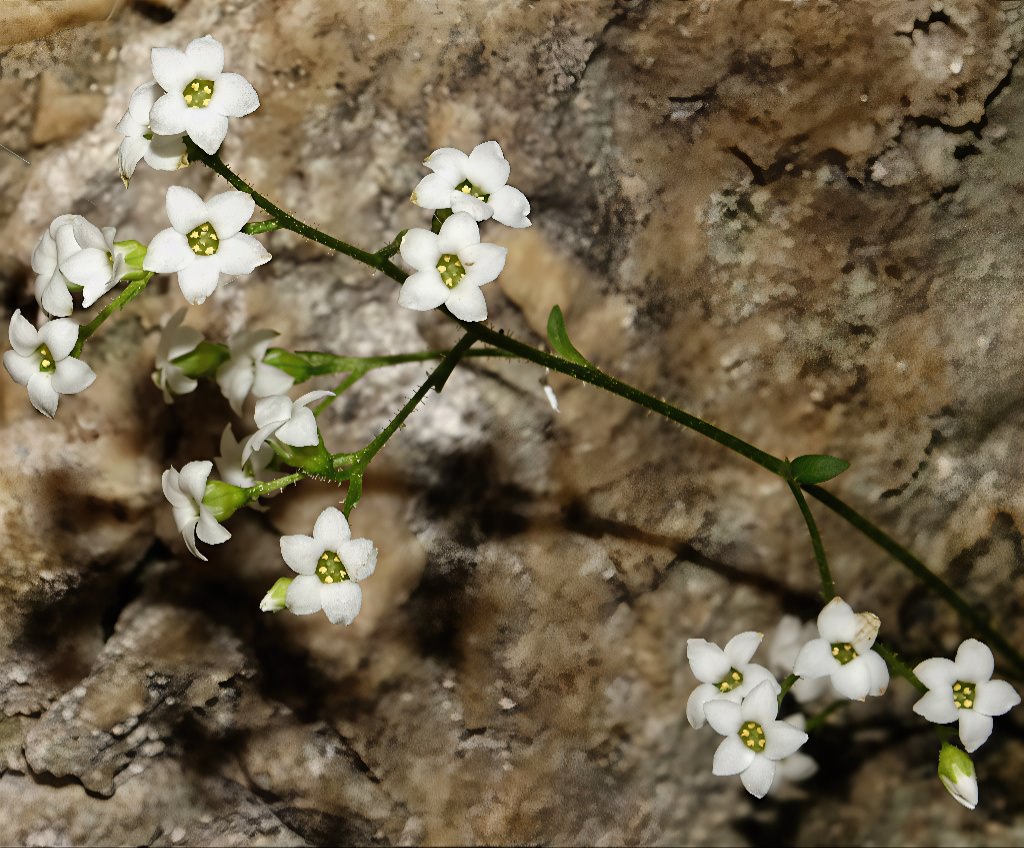


☰ Click link below for details.
Taxonomy
Saxifragaceae (saxifrage family)
Considered a distinct variety in the Flora of North America Vol. 8 (2009) and the Flora of Colorado (Ackerfield 2022).
Ranks and Status
State Rank : S3
State Rank Reason : Sullivantia hapemanii var. purpusii is endemic to Colorado, USA, where there are over 50 documented occurrences and approximately 40,000 individuals; however over half of the occurrences have not been visited in over 20 years and are ranked as historical. Recent forest fires and ongoing drought within the species area of occupancy are a concern for future viability of the species. In general, the relatively inaccessible habitat affords the species natural protection from human disturbances. However, some locations are potentially threatened by recreational activities including rock climbing, incompatible livestock grazing, competition from invasive plant species, oil and gas development and hydrologic alterations. Sullivantia hapemanii var. purpusii is is considered to have moderately low adaptive capacity and is expected to be moderately vulnerable to the effects of climate change.
U.S. Endangered Species Act : none
Colorado Threatened and Endangered List : none
Other Statuses : SWAP Tier 2, USFS GMUG
Description and Phenology
General Description:
Herbaceous perennial, not stoloniferous. Flowering stems 5-40 cm. Leaves in a basal rosette, cauline, leaf blades 1- 4 (10) cm wide, reniform to orbiculate, 5-12 lobed, sharply toothed. Inflorescence a paniculate cyme, glandular; sepals triangular, 3-4 mm long; petals white, 3-4 mm long, ovate gradually narrowed into claw; stamens 5. Fruit a narrow cylindric capsule 4-8mm long (Ackerfield 2022, FNA Vol. 8, 2009).
Look Alikes:
Only species in this genus in Colorado. Other Colorado species in Saxifragaceae have 10 stamens and are not typically cliff dwelling (Spackman et al 1997).
Phenology:
Flowering period from mid June to late July; fruiting from July to August (Spackman et al. 1997).
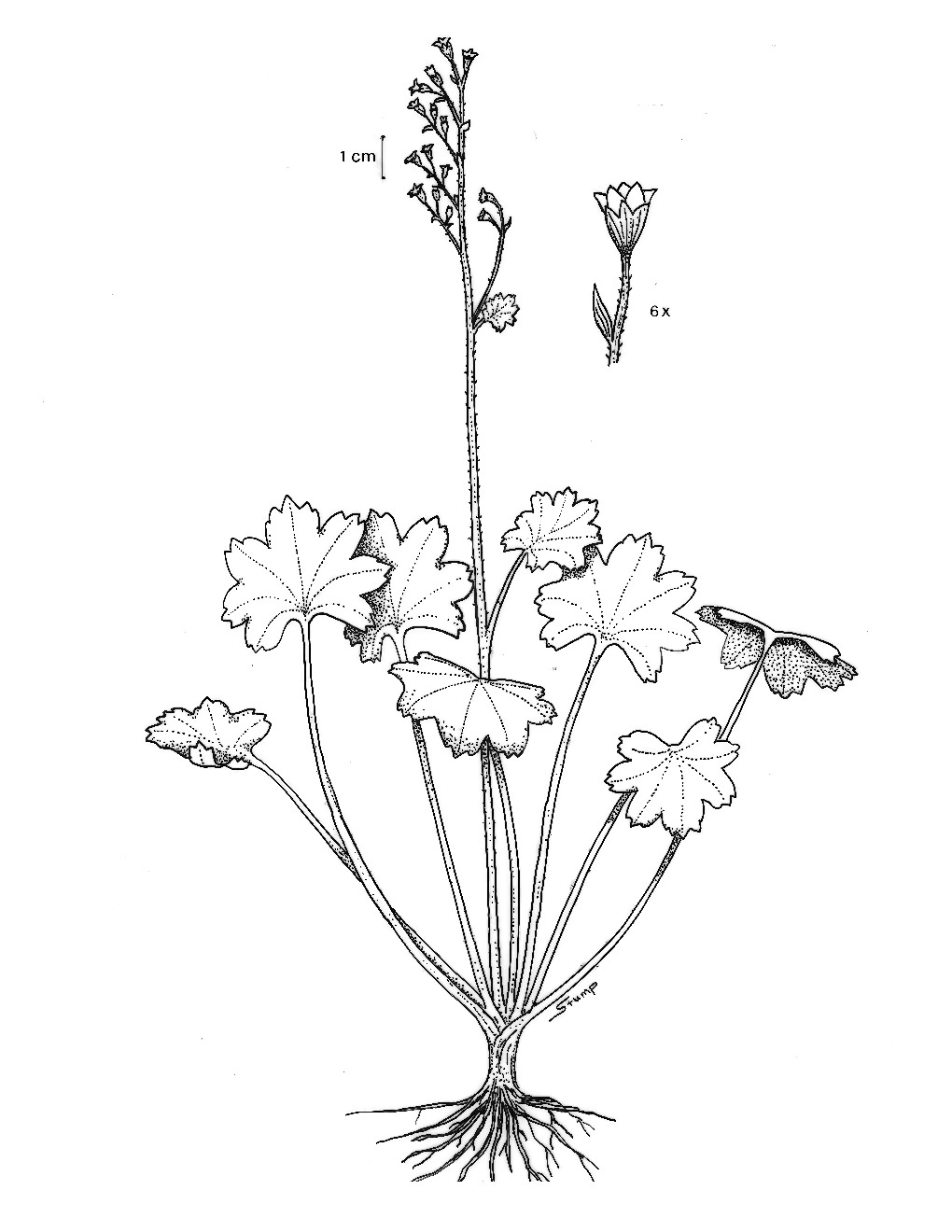 |
Habitat
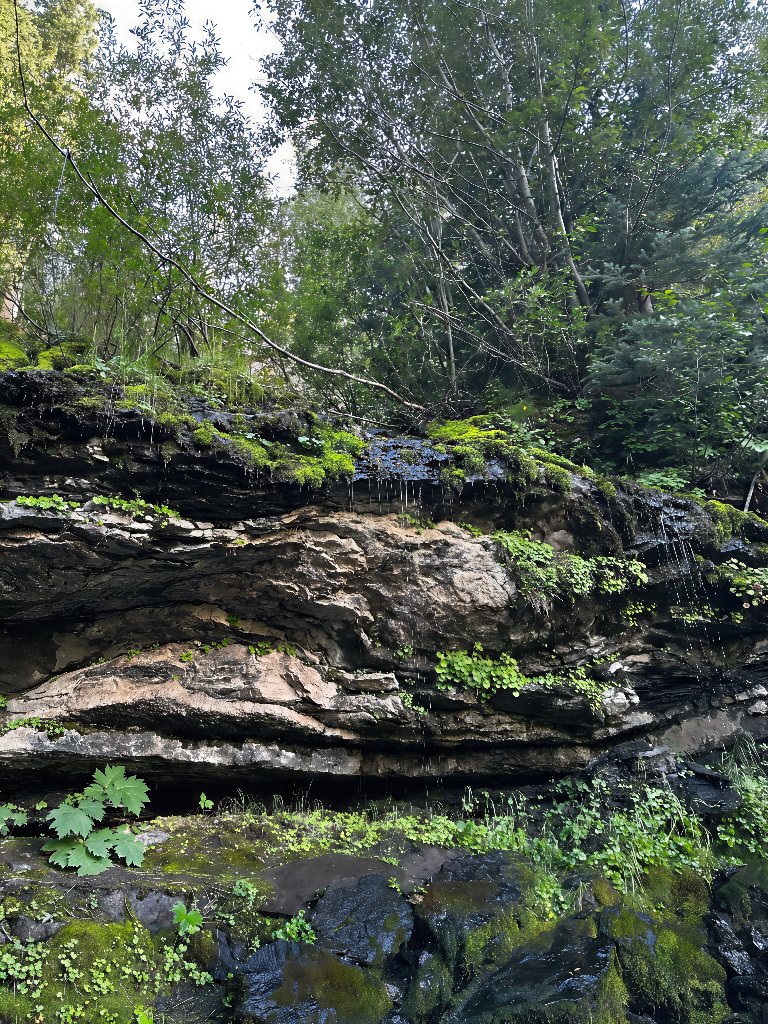
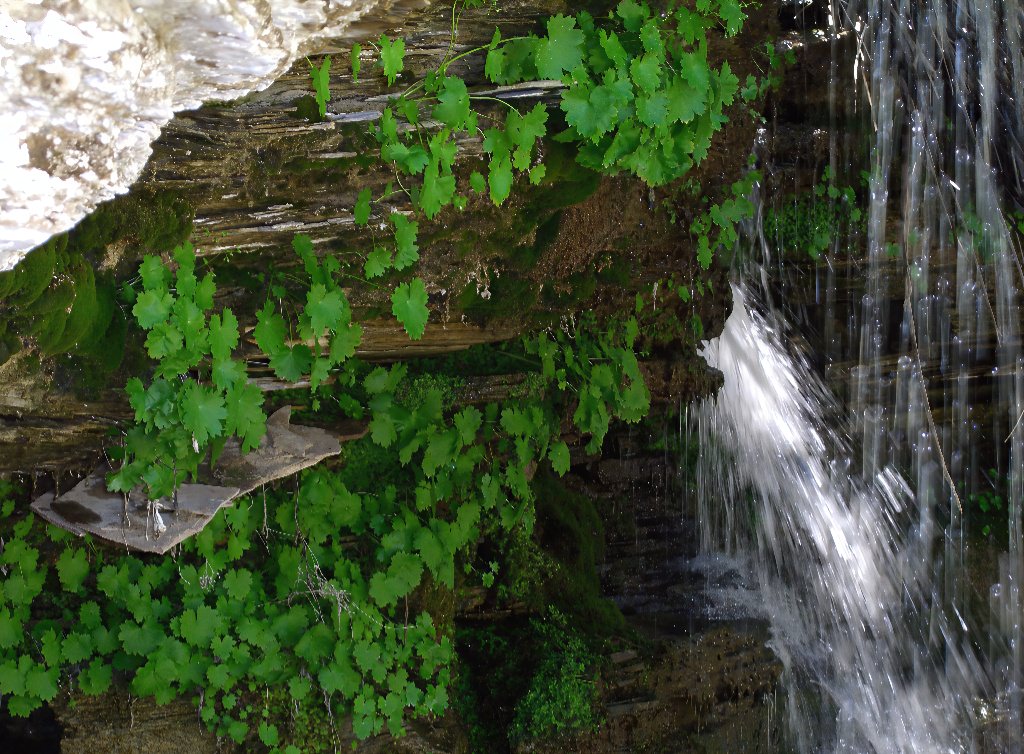
This taxon grows in "hanging gardens of moist canyon walls and wet cliffs (sometimes at high elevations), often near waterfalls, water in suitable habitats often highly charged with calcium carbonate" (FNA 2009). Sullivantia is often the dominant species but occurs with other hanging garden species including Aquilegia barnebyi, on wet cliffs of various geology including limestone, shale (Green River Formation), and Quartzite. (Spackman et al. 1997). Additional associated species include Cardamine cordifolia, Cystopteris fragilis, Epilobium lactiflorum, Heuchera parvifolia, Erythranthe guttata (Mimulus guttatus) and Sambucus racemosa (CNHP 2026).
click on image to enlarge
 |
 |
Elevation Range:
5,568 - 12,628 feet (1,697 - 3,849 meters)
Distribution
Colorado Endemic:
Yes
Range:
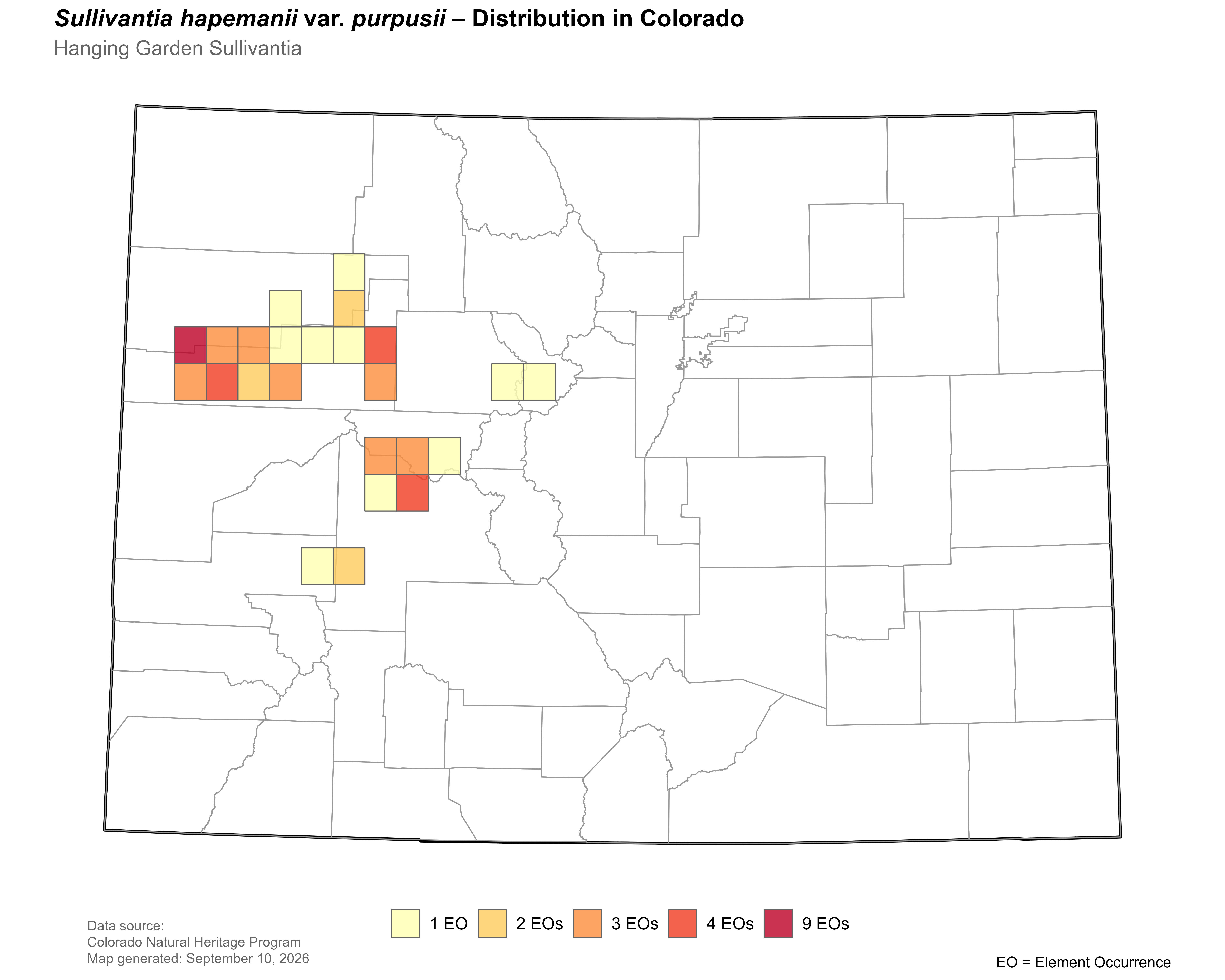
Sullivantia hapemanii var. purpusii is a Colorado endemic known from seven counties in western Colorado, USA (CNHP 2026). Estimated range extent in Colorado of 21,675 square kilometers was calculated in GeoCAT using occurrence data provided by the Colorado Natural Heritage Program (2026).
Click on map to enlarge |
Threats and Management Issues
Although this species is somewhat naturally protected by its inaccessible hanging garden habitat, management concerns regarding site conditions have been documented at half of the occurrences. Rock climbing and other recreational activities that may disturb or destroy individuals have been reported from nearly a quarter of the locations. Livestock impacts and invasive species including Cynoglossum officinale, Cirsium arvense, and Cirsium vulgare have been noted at 15% of occurrences, and oil and gas development at 11% of occurrences. Several sites are near roads or pipelines, a rock slide has occurred at one location and at least three sites are impacted by water diversions. Intact hydrology is needed to maintain the habitat that supports Sullivantia hapemanii var. purpusii, and long-term drought within the species range is an ongoing concern (CNHP 2022). Additionally large fires occurred within in its range in 2020, and the effects on the individual occurrences are not known. This species is considered to have moderately low adaptive capacity and is expected to be moderately vulnerable to climate change under both RCP 4.5 and 8.5 scenarios, as assessed for the 2025 Colorado State Wildlife Action Plan (CNHP 2025).
References
- Ackerfield, Jennifer. 2022. Flora of Colorado. Second Edition. Bot. Misc. 60. BRIT Press, Fort Worth Botanic Garden/Botanical Research Institute of Texas, U.S.A. 861 pp.
- Colorado Natural Heritage Program (CNHP). 2022. Biodiversity Tracking and Conservation System (Biotics 5). Colorado Natural Heritage Program, Colorado State University, Fort Collins.
- Colorado Natural Heritage Program (CNHP). 2025. Climate Change Vulnerability Assessment of Colorado Tier 1 and Tier 2 Plant Species of Greatest Conservation Need (SCGN) for the 2025 Colorado State Wildlife Action Plan. Colorado Natural Heritage Program, Colorado State University, Fort Collins, CO.
- Colorado Natural Heritage Program (CNHP). 2026. Biodiversity Tracking and Conservation System (Biotics 5). Colorado Natural Heritage Program, Colorado State University, Fort Collins.
- Flora of North America Editorial Committee (FNA). 2009. Flora of North America north of Mexico. Vol. 8. Magnoliophyta: Paeoniaceae to Ericaceae. Oxford University Press, New York. xxiv + 585 pp.
- Spackman, S., B. Jennings, J. Coles, C. Dawson, M. Minton, A. Kratz, and C. Spurrier. 1997. Colorado rare plant field guide. Prepared for Bureau of Land Management, U.S. Forest Service and U.S. Fish and Wildlife Service by Colorado Natural Heritage Program.
Biotics Export Date : September, 2026