

Scientific Name : Sclerocactus mesae - verdae
Author : (Boissevain ex Boissevain & C. Davids.) L. Benson NatureServe Explorer
Common Name : Mesa Verde Cactus
 Current Research Activities
 1997 profile


☰ Click link below for details.
Taxonomy
Cactaceae (cactus family)
Ranks and Status
State Rank : S1S2
State Rank Reason : Sclerocactus mesae-verdae has only been documented in Montezuma County in Colorado (USA). The majority of the Colorado occurrences are known from historical observations. Potential threats include insect herbivory, plant collection, energy development, off-road vehicles, and trampling by livestock. This species is also considered to be highly vulnerable to the effects of climate change.
U.S. Endangered Species Act : ESA Threatened
Colorado Threatened and Endangered List : none
Other Statuses : SWAP Tier 1
Description and Phenology
General Description:
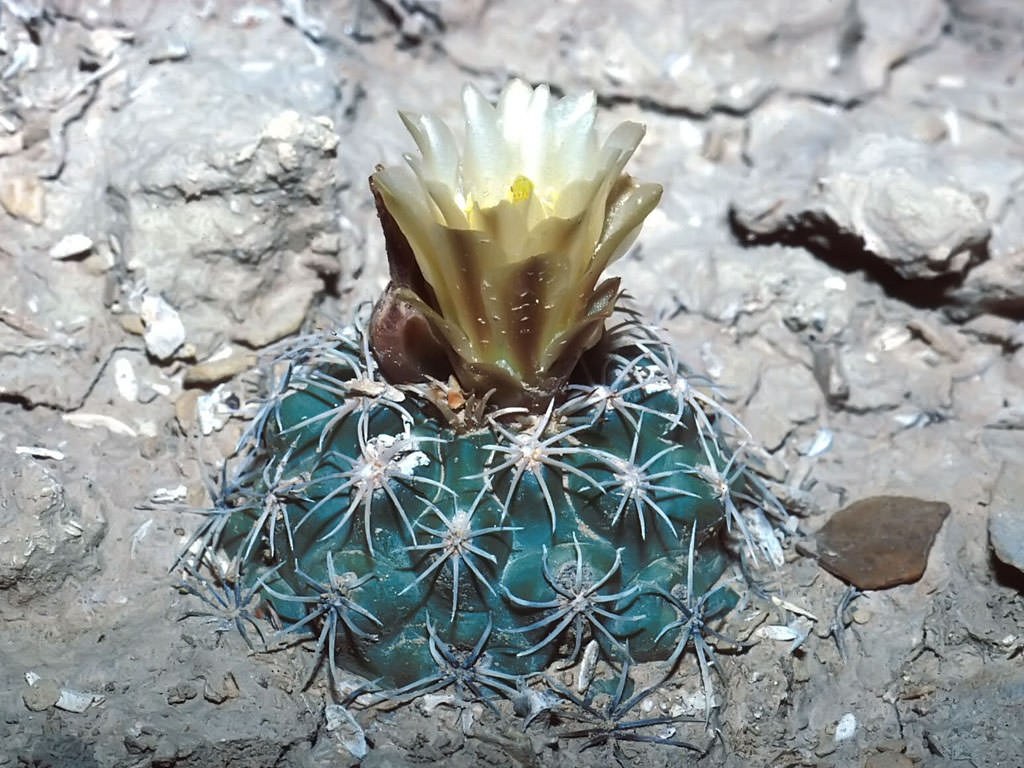
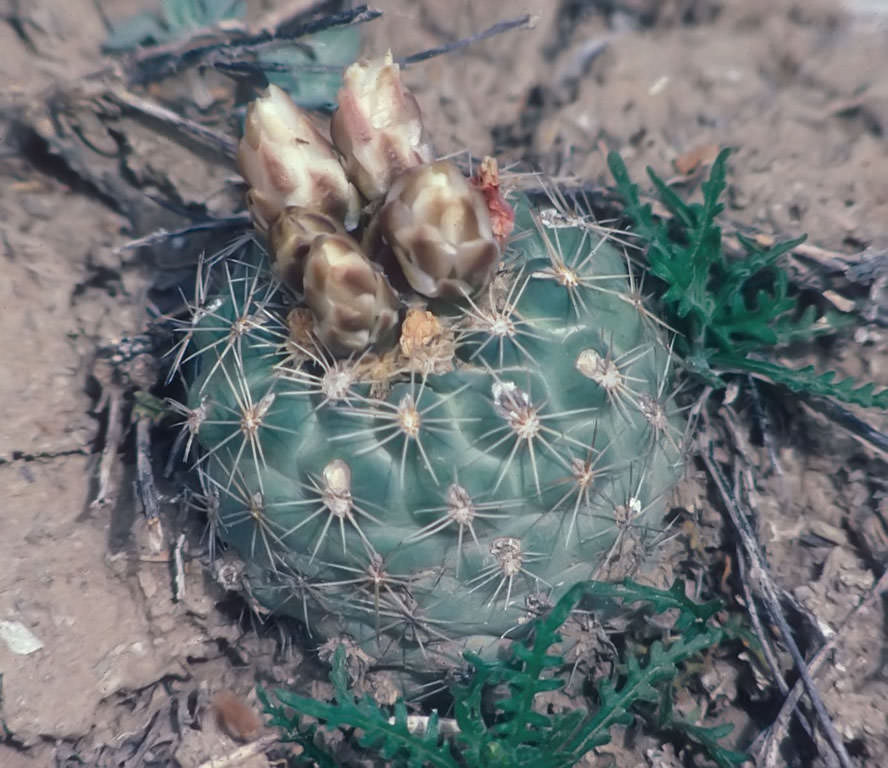
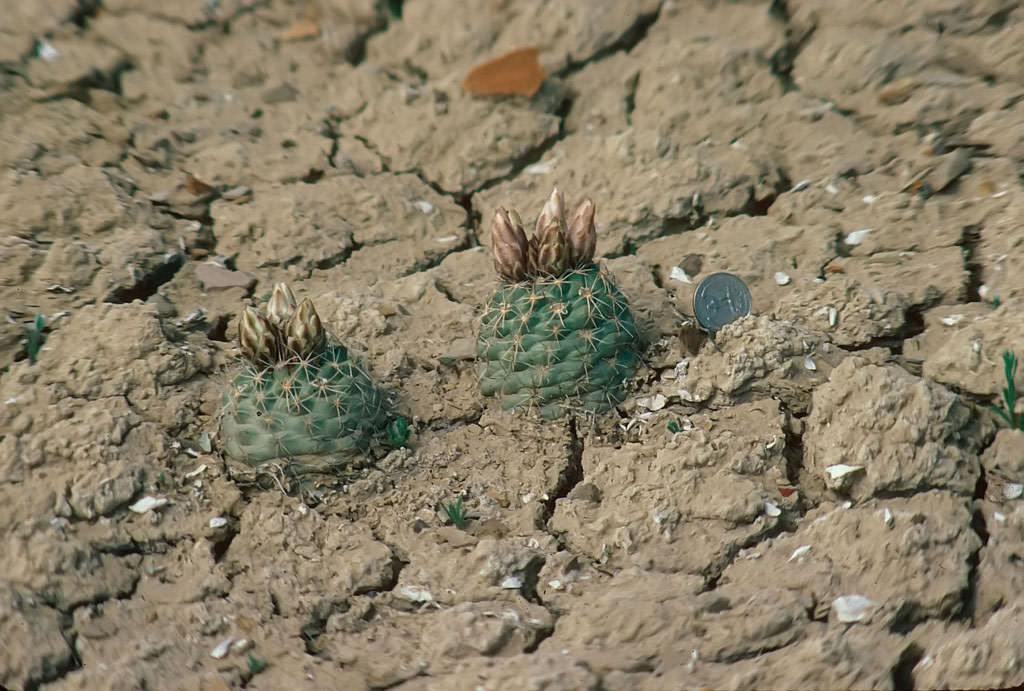
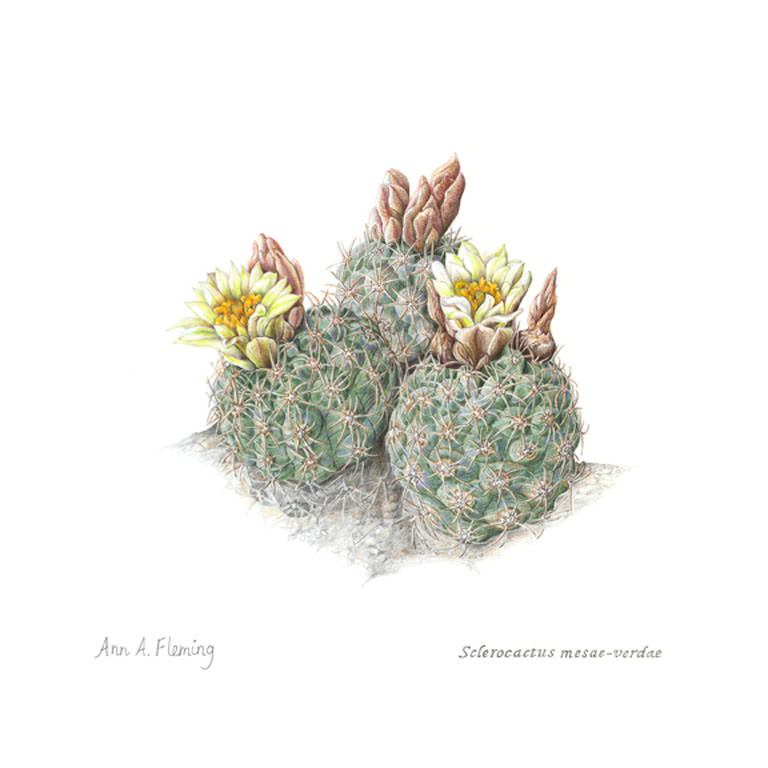
Stems pale green or gray-green, nearly globose in outline, usually occurring singly, but sometimes in clumps of up to 10 individuals; single plants mostly 3.8-6.2 cm high, some 17.5 cm high; usually 8-10 small radial spines at tops of conical tubercles; at maturity, tubercles coalesce into 13-17 ribs; flowers and fruit at top of plants; flowers yellow to cream, 2.5-3.1 cm in diameter; fruit green, becoming tan, 4.5-5 mm long, dehiscent irregularly transverse above middle; seeds 2 mm long, 3 mm broad.
Look Alikes:
Not likely to be confused with other taxa in the area (Spackman et al. 1997).
Phenology:
Flowers mid-April through mid-May; fruit May-June (Spackman et al. 1997).
 |
Habitat
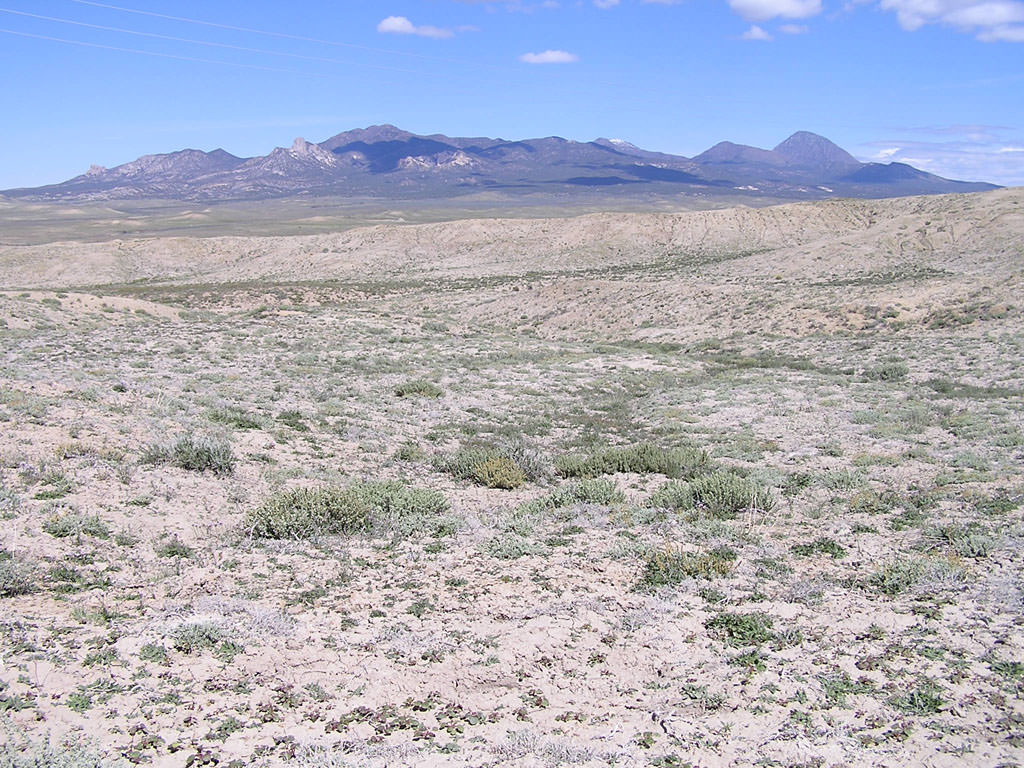
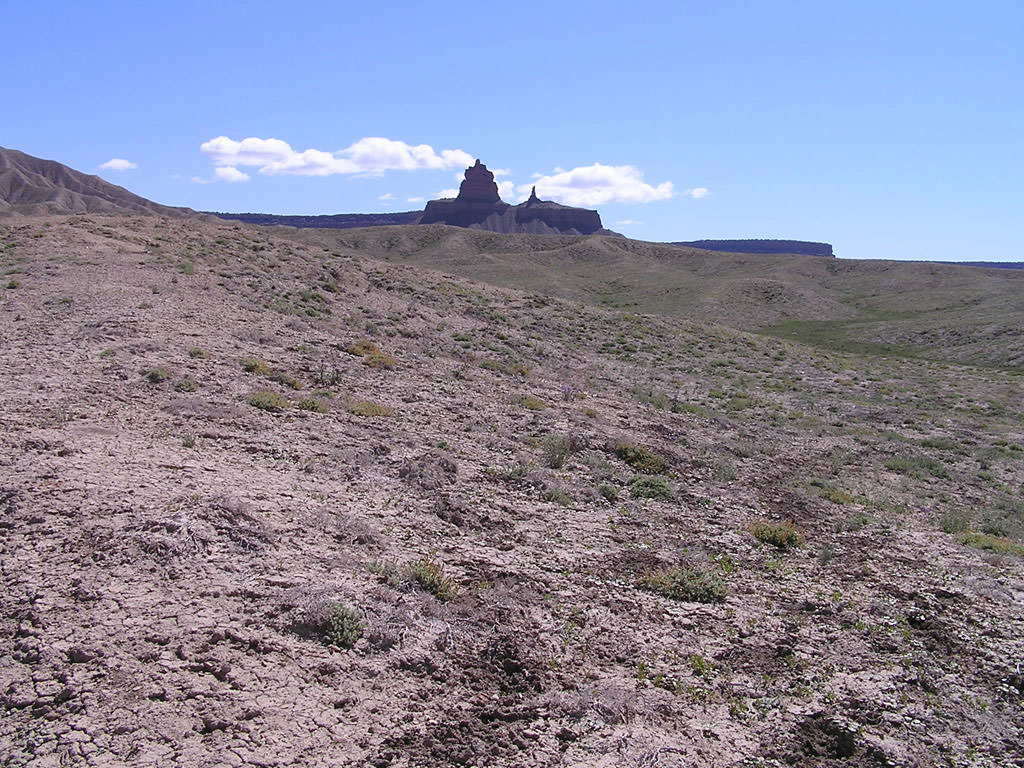
Dry, exposed hillsides of Mancos/Fruitland adobe clay badlands; usually on gentle slopes, badlands. SW side of hills in adobe soil. Occurs only on alkaline soil (O'Kane 1987). Often occurs with Atriplex corrugata, A. gardneri, Eriogonum inflatum, Stanleya pinnata, and Phacelia splendens (Colorado Natural Heritage Program).
click on image to enlarge
 |
 |
Elevation Range:
5,045 - 5,844 feet (1,538 - 1,781 meters)
Distribution
Colorado Endemic:
No
Range:
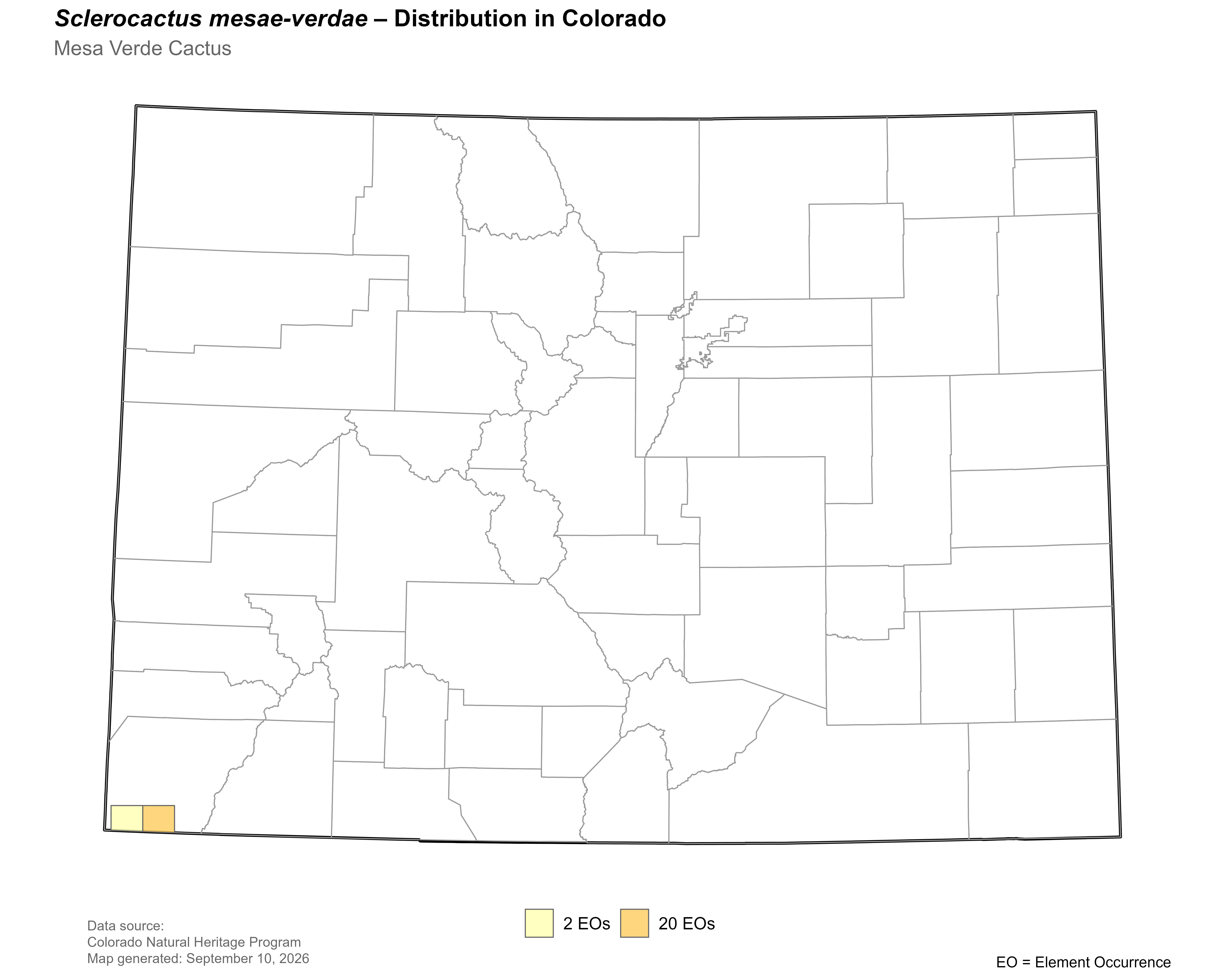
Sclerocactus mesae-verdae is known from Montezuma County in Colorado. The estimated range extent in Colorado of 82 square kilometers was calculated in GeoCAT using occurrence data provided by the Colorado Natural Heritage Program (2023). It is also known from the Navajo Nation and New Mexico, USA.
Click on map to enlarge |
Threats and Management Issues
Drought is a major concern for Sclerocactus mesae-verdae, and since 2000, there have been four instances of exceptional drought conditions in portions of Colorado and New Mexico, which were once considered to be 25-50 year recurrence events (USFWS 2023). Drought was attributed to causing large population declines in the early 2000s, and an increase in drought severity and frequency is a severe threat to this species (USFWS 2011). Off-road vehicle use is pervasive throughout this species' range, and continues to be its most significant human-caused threat both on a local and landscape level (USFWS 2023). Energy development (oil and gas), pipeline construction, and utility line construction and maintenance have all impacted Scleroacatus mesae-verdae in the past and will continue to do so in the future (USFWS 2023). Large scale renewable energy development projects, such as solar arrays, are also proposed within this species' habitat and will likely impact cacti both directly and indirectly, by altering suitable habitat and affecting pollinators and nurse plants. Direct livestock impacts to cacti from cows and feral horses have been documented at demography sites by all land management agencies, and livestock can also degrade habitat by compacting soil and displacing native vegetation. Illegal collecting of this species for trade appears to have decreased since the publication of the Recovery Plan in 1984, and it is now believed to be a minor threat. Insect predation by the native longhorn cactus beetle and the army cutworm have both heavily impacted cacti, especially during the 2002-2003 period of drought, and have the potential to cause serious mortality with periodic atypical population eruptions. Rodent predation is also a concern for Sclerocactus mesae-verdae (USFWS 2023), and it has been linked to declines at several monitoring sites. The non-native invasive plant Halogeton glomeratus co-occurs with S. mesae-verdae and is potentially a threat to this species due to its ability to alter soil chemistry, though the impact of this and other invasive plants to this species is largely unknown. This species is considered to have low adaptive capacity and is expected to be highly vulnerable to climate change under both RCP 4.5 and 8.5 scenarios, as assessed for the 2025 Colorado State Wildlife Action Plan (CNHP 2025).
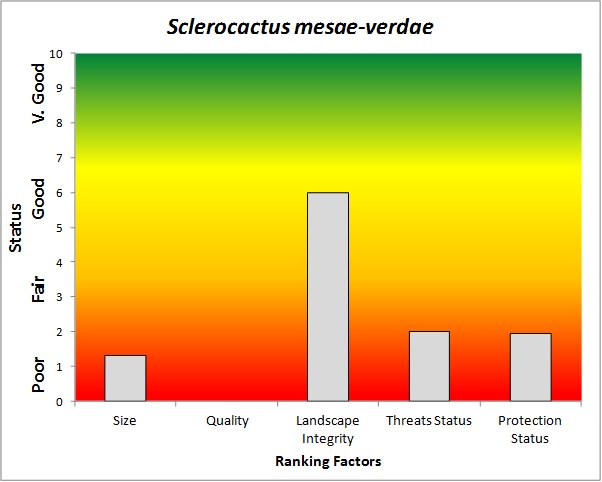
Summary results of an analysis of the status of Sclerocactus mesae-verdae based on several ranking factors. This species was concluded to be "under conserved. From Rondeau et al. 2011. |
References
- Ackerfield, J. 2012. The Flora of Colorado. Colorado State University Herbarium. 433 pp.
- Benson, L. 1982. The Cacti of the United States and Canada. Stanford University Press, Stanford, California. 1044 pp.
- Benson. L. 1966. A revision of Sclerocactus. Cactus and Succulent Jouranl of America 38:54-55
- Biosystems Analysis, Inc. 1981. Biological assessments of the black-footed ferret and the mesa-verde cactus in connection with the Ute Mountain Ute Strip Coal Mine. San Fransisco, ca 94105.
- Boissevain, C. and C. Davidson. 1940. Colorado Cacti: An Illustrated Guide Describing All of the Native Colorado Cacti. Abbey Garden Press, Pasadena, CA.
- Coles, J.J, K.L. Decker, and T.S. Naumann. 2010. Ecology and Population Dynamics of Sclerocactus mesae-verdae (Boissev. & C.Davidson) L.D. Benson. Western North American Naturalist 72(3), 2012, pp. 311-322.
- Colorado Natural Heritage Program (CNHP). 2025. Climate Change Vulnerability Assessment of Colorado Tier 1 and Tier 2 Plant Species of Greatest Conservation Need (SCGN) for the 2025 Colorado State Wildlife Action Plan. Colorado Natural Heritage Program, Colorado State University, Fort Collins.
- Handwerk, J., L. Grunau, and S. Panjabi. 2015. Colorado Wildlife Action Plan: 2015 Rare Plant Addendum. Colorado Natural Heritage Program, Colorado State University, Fort Collins, Colorado, USA.
- Neely, B., S. Panjabi, E. Lane, P. Lewis, C. Dawson, A. Kratz, B. Kurzel, T. Hogan, J. Handwerk, S. Krishnan, J. Neale, and N. Ripley. 2009. Colorado Rare Plant Conservation Strategy, Developed by the Colorado Rare Plant conservation Initiative. The Nature Conservancy, Boulder, Colorado, 117 pp.
- O'Kane, S. L. 1988. Colorado's Rare Flora. Great Basin Naturalist. 48(4):434-484.
- O'Kane, S.L. 1987. Population biology of Sclerocactus mesae-verde. Unpublished report.
- Rocky Mountain Society of Botanical Artists. 2009. RARE Imperiled Plants of Colorado, a traveling art exhibition. Exhibition catalogue developed by the Denver Botanic Gardens and Steamboat Art Museum.
- Rondeau, R., K. Decker, J. Handwerk, J. Siemers, L. Grunau, and C. Pague. 2011. The state of Colorado's biodiversity 2011. Prepared for The Nature Conservancy. Colorado Natural Heritage Program, Colorado State University, Fort Collins, Colorado.
- Schneider, A. 2013. Wildflowers, Ferns, and Trees of the Four Corners Regions of Colorado, New Mexico, Arizona, and Utah. Accessed on-line at http://www.swcoloradowildflowers.com.
- Sivinski, R., and K. Lightfoot, eds. 1995. Inventory of rare and endangered plants of New Mexico. 3rd edition. Miscellaneous Publication No. 4, Forestry Division, New Mexico Energy, Minerals and Natural Resources Dept., Santa Fe.
- Spackman, S., B. Jennings, J. Coles, C. Dawson, M. Minton, A. Kratz, and C. Spurrier. 1997. Colorado rare plant field guide. Prepared for Bureau of Land Management, U.S. Forest Service and U.S. Fish and Wildlife Service by Colorado Natural Heritage Program.
- U. S. Fish and Wildlife Service. 1984. Mesa Verde Cactus Recovery Plan. U. S. Fish and Wildlife Service, Albuquerque, New Mexico 63 pp.
- USDA, NRCS. 2022. The PLANTS Database. National Plant Data Team, Greensboro, NC 27401-4901 USA.
- Weber, W. A. and R. C. Wittmann. 2012. Colorado Flora, Western Slope, A Field Guide to the Vascular Plants, Fourth Edition. Boulder, Colorado. 532 pp.