


Scientific Name : Sclerocactus glaucus
Author : (J.A. Purpus ex K. Schum.) L. Benson NatureServe Explorer
Common Name : Colorado Hookless Cactus
 Current Research Activities
 1997 profile
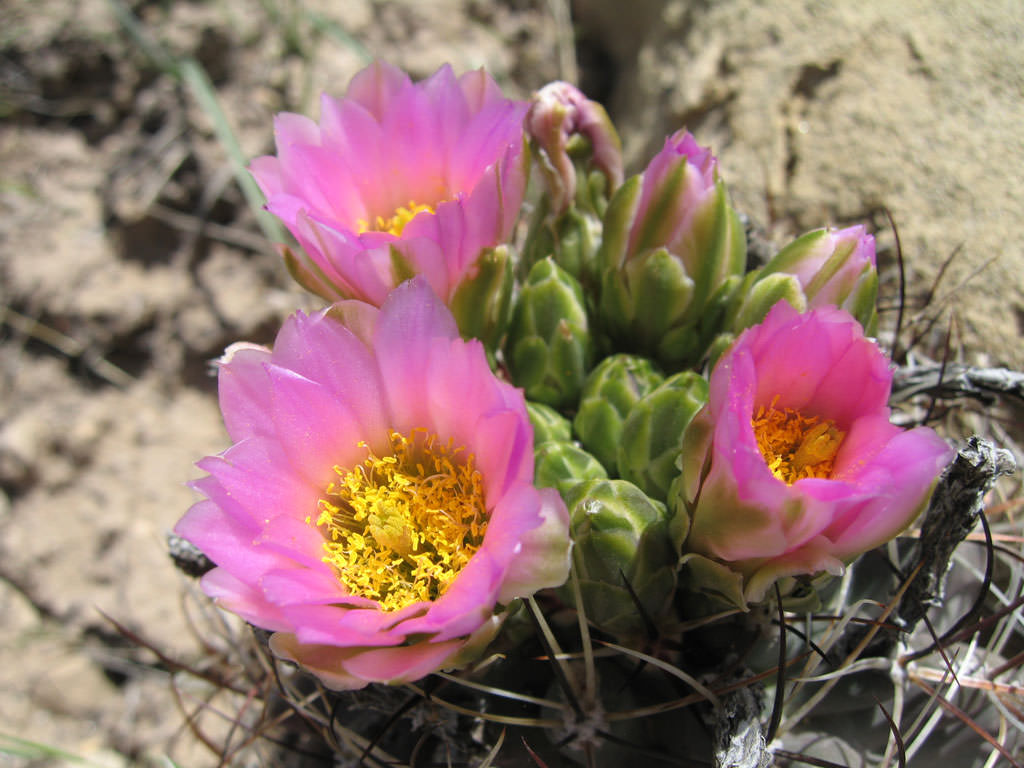
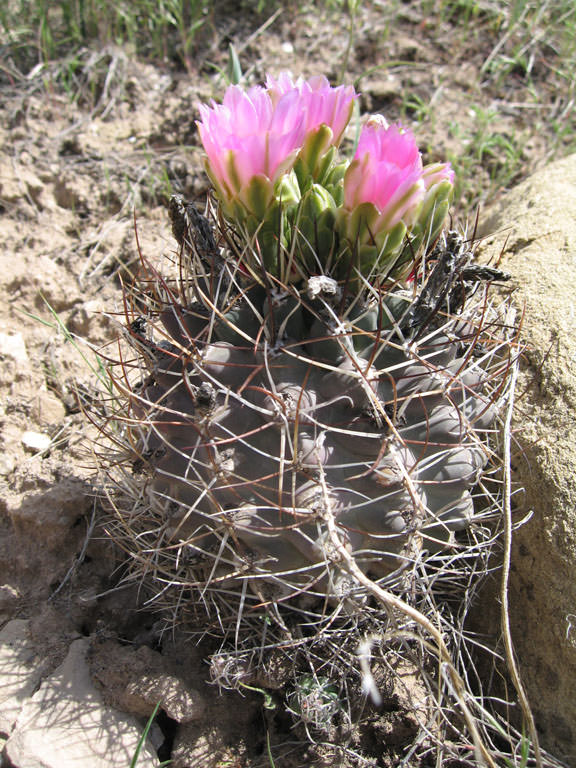
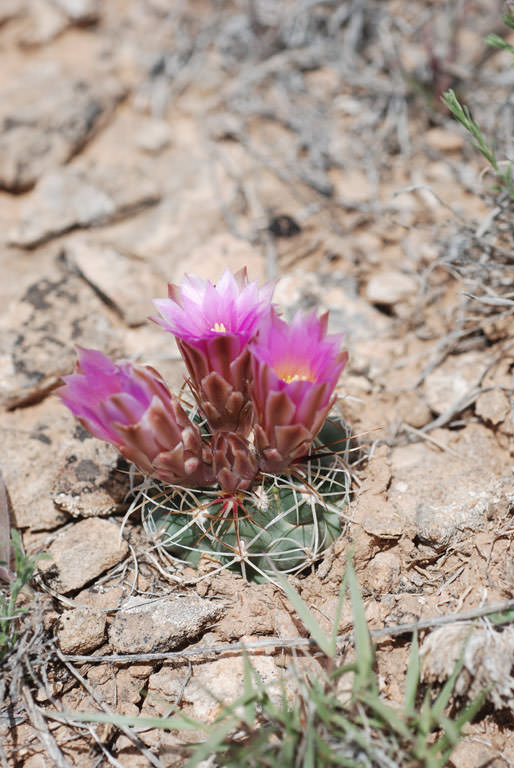


☰ Click link below for details.
Taxonomy
Cactaceae (cactus family)
In 2017, genetic studies identified three distinct regional groups of S. glaucus in Colorado: the Northern, Grand Valley, and Gunnison River groups (Schwabe et al. 2015; McGlaughlin and Ramp-Neale 2017). The most recent genetic analyses, determined that the Northern group should be recognized as a distinct species, hereinafter Sclerocactus dawsoniae (McGlaughlin and Naibauer 2021, 2023). The Grand Valley and Gunnison River groups share connectivity and form a genetically cohesive group, which represents a second distinct species, hereinafter collectively referred to as Sclerocactus glaucus (McGlaughlin and Naibauer 2021; USFWS 2021b). Colorado Natural Heritage Program began tracking S. glaucus and S. dawsoniae as separate taxa in December 2023.
Ranks and Status
State Rank : S2S3
State Rank Reason : Sclerocactus glaucus is endemic to Delta, Mesa, and Montrose counties in western Colorado, USA. Threats to Sclerocactus glaucus and its habitat include inappropriate livestock use, competition from invasive plant species, damage from herbicide application, oil and gas development activities, off-highway vehicle (OHV) recreational use, predation and herbivory by cactus beetles and small mammals, development and maintenance of utility corridors, and the effects of global climate change.
U.S. Endangered Species Act :
Colorado Threatened and Endangered List : none
Other Statuses : BLM, SWAP Tier 1
Description and Phenology
General Description:
A squat, globular, spiny succulent. Each mature stem is 3-12 cm tall, 4-9 cm wide; the largest observed was 24 cm tall x 14 cm wide (DeYoung 2010). However, during the driest part of the year the stem may shrink to below ground-level. Central spines are straight (hookless). The plants are inconspicuous except when in flower (April-May), when showy, fragrant, pink to magenta flowers appear at the top of the stem.
Look Alikes:
Distinguished from Sclerocactus parviflorus by the absence of a strongly hooked central spine (Weber and Wittmann 2012).
Phenology:
Plants are readily visible when flowering, usually late April and early May. After flowering, their dull greyish green color makes them difficult to see. During extended dry periods the stems may shrink to below ground level. Fall rains may cause them to swell up again and become easier to see (Spackman et al. 1997).
Habitat
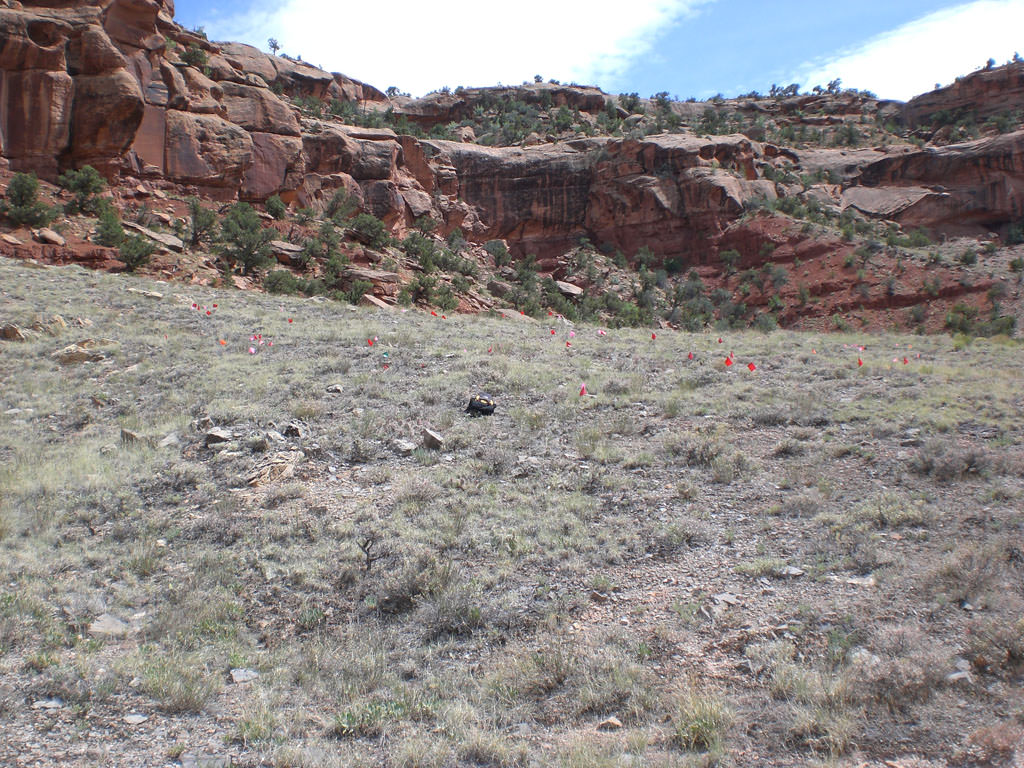
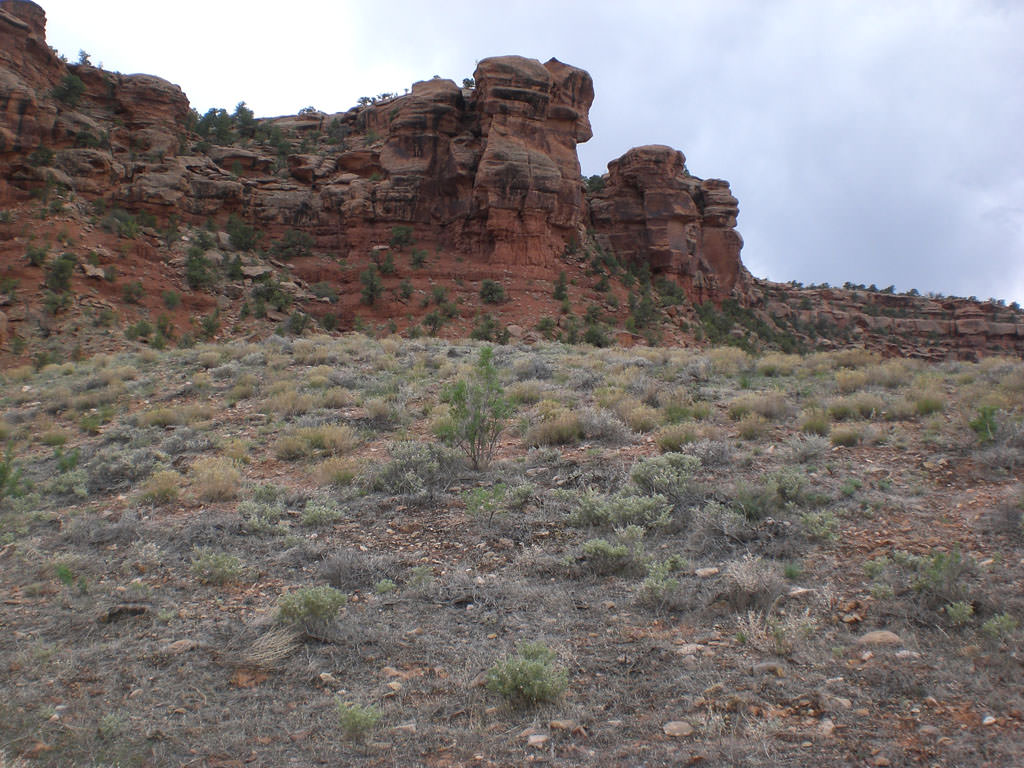
Populations occur primarily on alluvial benches along the Colorado and Gunnison Rivers and their tributaries. Sclerocactus glaucus generally occurs on gravelly, or rocky surfaces on river terrace deposits and lower mesa slopes. Exposures vary, but S. glaucus is more abundant on south-facing slopes. Soils are usually coarse, gravelly river alluvium above the river flood plains usually consisting of Mancos shale with volcanic cobbles and pebbles on the surface. Associated vegetation is typically desert scrub dominated by shadscale (Atriplex confertifolia), galleta (Hilaria jamesii), black-sage (Artemisia nova), and Indian rice grass (Stipa hymenoides). Other important species include two similar spherical or cylindrical cactus species, strawberry hedgehog cactus ( Echinocereus triglochidiatus var. melanacanthus) and Simpson's pincushion cactus (Pediocactus simpsonii). Other important species in the plant community include the prickly pear cactus (Opuntia polyacantha), winterfat (Krascheninnikovia lanata), yucca (Yucca harrimaniae), snakeweed (Gutierrezia sarothrae), low rabbitbrush (Chrysothamnus viscidiflorus), sand dropseed (Sporobolus cryptandrus), and Salina wildrye (Elymus salinus) (USFWS 1990, Scheck 1994). Fire is not typically characteristic of S. glaucus habitat, but areas with large infestations of cheatgrass (Bromus tectorum) may build up sufficient fuel to carry fire into S. glaucus populations.
click on image to enlarge
 |
 |
Elevation Range:
4,603 - 7,152 feet (1,403 - 2,180 meters)
Distribution
Colorado Endemic:
Yes
Range:
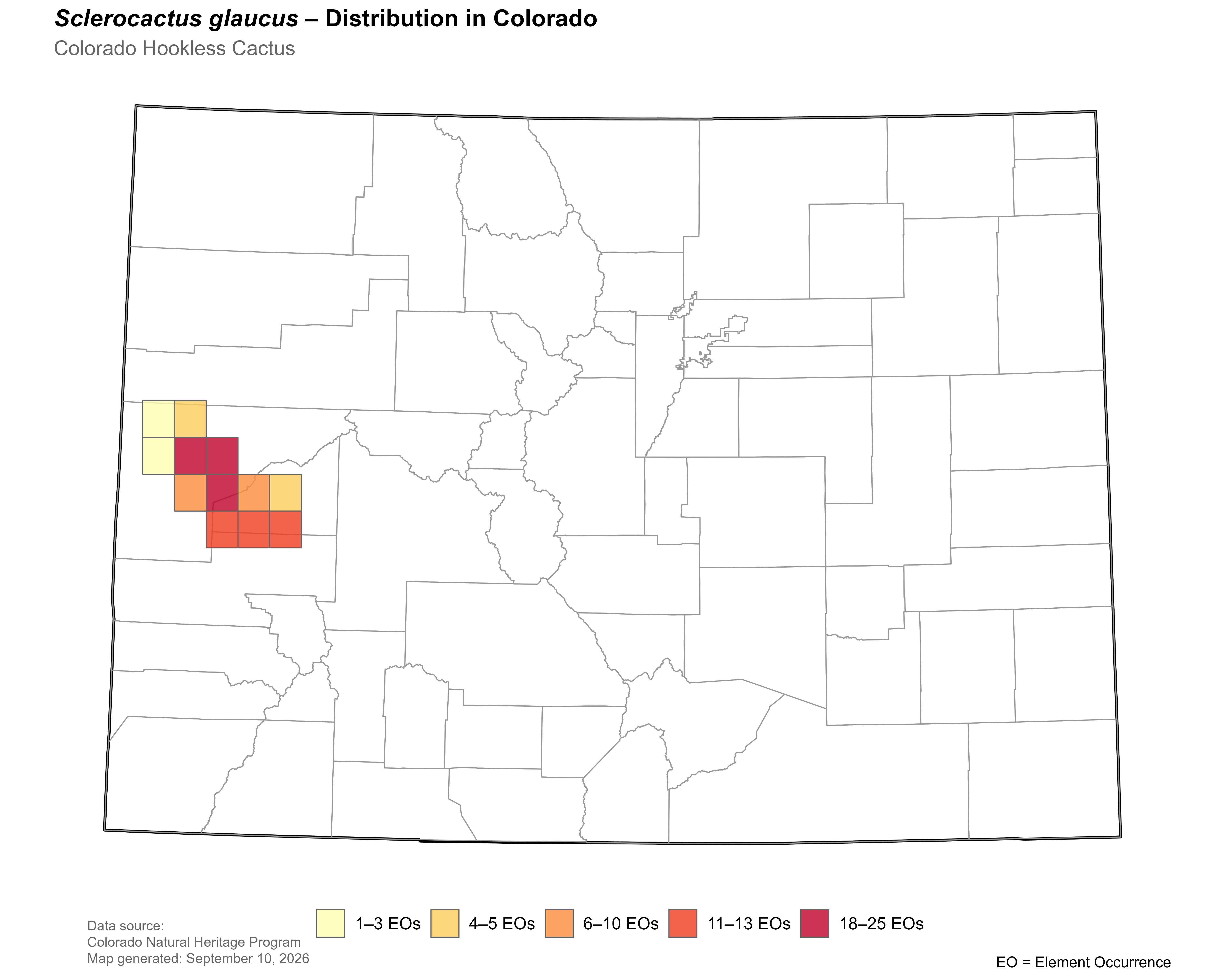
Sclerocactus glaucus is endemic to Colorado, USA, where it is known from Delta, Mesa, and Montrose counties. The range was previously understood to include Garfield County, Colorado. The Sclerocactus previously considered S. glaucus in Garfield County is currently considered S. dawsoniae, a genetically distinct taxon (McGlaughlin and Neibauer 2023). Estimated range extent in Colorado of 3,256 square kilometers was calculated in GeoCAT using occurrence data provided by the Colorado Natural Heritage Program (2026).
Click on map to enlarge |
Threats and Management Issues
Threats to Sclerocactus glaucus and its habitat include inappropriate livestock use, competition from invasive plant species, oil and gas development, off-highway vehicle (OHV) recreational use, predation, development and maintenance of utility corridors, the effects of global climate change, herbicide and pesticide application, and collection and commercial trade (USFWS 2021a & 2021b). Livestock grazing, by both sheep and cattle, occurs throughout the range of S. glaucus and can impact plants by direct trampling, trailing and compaction of soils, and alteration of vegetation structure and composition within the species habitat. Nearly 70% of S. glaucus habitat occurs on BLM land (USFWS 2021b) that is coincidental with livestock grazing and significant negative impacts to vegetation and overall land health have been documented in association with improper grazing practices (BLM 2020). Further, localized extirpation of cactus occurrences have occurred from concentrated use of S. glaucus habitat by sheep - no similar impacts associated with cattle have been observed (BLM 2020). The invasive plant species Bromus tectorum (cheatgrass) is widespread on Colorado?s western slope and has been reported from nearly half of the S. glaucus occurrences (CNHP 2022). Non-native invasive plants like cheatgrass can aggressively outcompete native vegetation, especially following surface disturbance. A suite of introduced annual forbs such as Chorispora tanella (blue mustard), and Halogeton glomeratus (saltlover) also inhabit localized disturbed sites throughout the region (BLM 2020). Routine application of herbicide treatments to combat the spread of non-native invasive plant species may result in the mortality of S. glaucus individuals or occurrences. However, treatments are generally localized in nature and permitting is required prior to herbicide application (BLM 2020). Oil and gas development is extensive in S. glaucus habitat and remains a meaningful threat to the species and its habitat due to the severity of the impacts associated with the loss of plants and habitat from the development of infrastructure including well pads and roads (BLM 2020). Off-highway vehicle (OHV) recreation is reported to be common in S. glaucus habitat and has the potential to damage or destroy individual plants by crushing and fragmenting occupied habitat, however, there have been few documented reports of these impacts (BLM 2020). Utility corridor right-of-ways (ROWs) for transmission lines can result in the damage or loss of individual plants and in some cases plants have been transplanted to mitigate the damage associated with transmission line construction (BLM 2020). Predation of S.glaucus is also of concern and has been documented in two forms: (1) herbivory associated with the foraging activities of small ground dwelling mammals, and; (2) parasitism by the Opuntia-borer beetle (Moneilema semipunctatum). Parasitism by the Opuntia-borer beetle (Moneilema semipunctatum), while present, appears to be isolated occurring in a small percentage of the total population; leading to the conclusion that it is not a major threat to the long term persistence of Colorado hookless cactus in the wild. Herbivory by small mammals was the highest attributable cause of cactus mortality in demographic monitoring studies from 2011-2017, comprising 22.5% of the cases of attributable mortality (BLM 2020). Once thought to be a primary concern, collection of cactus plants and seeds does not appear to be more than a very minor and localized threat (BLM 2020, USFWS 2021b). Recent climate change vulnerability assessments conducted for Sclerocactus glaucus indicate that it may not be as vulnerable to climate change as once thought, with no significant range-contractions predicted (BLM 2020). This species is considered to have moderate adaptive capacity and is expected to be moderately to highly vulnerable to climate change under both RCP 4.5 and 8.5 scenarios, as assessed for the 2025 Colorado State Wildlife Action Plan (CNHP 2025).
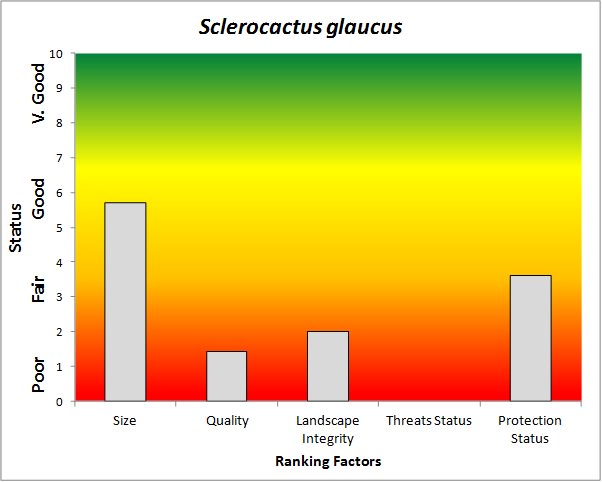
Summary results of an analysis of the status of Sclerocactus glaucus based on several ranking factors. This species was concluded to be "weakly conserved. From Rondeau et al. 2011. |
References
- Ackerfield, J. 2012. The Flora of Colorado. Colorado State University Herbarium. 433 pp.
- Benson, L. 1982. The Cacti of the United States and Canada. Stanford University Press, Stanford, California. 1044 pp.
- Bureau of Land Management (BLM), Colorado State Office. 2020. Colorado Hookless Cactus (Sclerocactus glaucus) Technical Assessment.
- Colorado Natural Heritage Program (CNHP). 2022. Biodiversity Tracking and Conservation System (Biotics 5). Colorado Natural Heritage Program, Colorado State University, Fort Collins.
- Colorado Natural Heritage Program (CNHP). 2023. Biodiversity Tracking and Conservation System (Biotics 5). Colorado Natural Heritage Program, Colorado State University, Fort Collins.
- Colorado Natural Heritage Program (CNHP). 2025. Climate Change Vulnerability Assessment of Colorado Tier 1 and Tier 2 Plant Species of Greatest Conservation Need (SCGN) for the 2025 Colorado State Wildlife Action Plan. Colorado Natural Heritage Program, Colorado State University, Fort Collins, CO.
- Colorado Natural Heritage Program (CNHP). 2026. Biodiversity Tracking and Conservation System (Biotics 5). Colorado Natural Heritage Program, Colorado State University, Fort Collins.
- Denver Botanic Gardens (DBG). 2021. Demographic monitoring of Sclerocactus glaucus, an endemic species of western Colorado; population monitoring 2007 to 2021. Technical Report to Bureau of Land Management, U.S. Department of Interior. Prepared by Denver Botanic Gardens Research and Conservation Department. December, 2021.
- Elliott, B. A., S. Spackman Panjabi, B. Kurzel, B. Neely, R. Rondeau, M. Ewing. 2009. Recommended Best Management Practices for Plants of Concern. Practices developed to reduce the impacts of oil and gas development activities to plants of concern. Unpublished report prepared by the Rare Plant Conservation Initiative for the National Fish and Wildlife Foundation.
- Handwerk, J., L. Grunau, and S. Panjabi. 2015. Colorado Wildlife Action Plan: 2015 Rare Plant Addendum. Colorado Natural Heritage Program, Colorado State University, Fort Collins, Colorado, USA.
- Heil, K.D., and J.M. Porter. 1994. Sclerocactus (Cactaceae): A revision. Haseltonia 2:20-46.
- Hochstatter, F. 1997. The genus Sclerocactus (Cactaceae) - Part 4. Cact. Succ. J. Gr. Brit. 15: 74-81.
- Krening, P. and M. DePrenger-Levin. 2023. Colorado Hookless Cactus (Sclerocactus glaucus) Monitoring Summary and Status Report. Bureau of Land Management unpublished report.
- Krening, P., and M. DePrenger-Levin. 2022. Colorado hookless cactus (Sclerocactus glaucus and S. dawsonii) 202s Monitoring Summary and Status Report. Bureau of Land Management (BLM), U.S. Department of the Interior.
- Krening, P., C. A. Dawson, K. W. Holsinger, and J. W. Willoughby. 2021a. A sampling-based approach to estimating the minimum population size of the federally threatened Colorado hookless cactus (Sclerocactus glaucus). Natural Areas Journal 41:4-10.
- Krening, P., K. Holsinger, C. Dawson. 2021b. Colorado hookless cactus (Sclerocactus glaucus and S. dawsonii) 2021 Monitoring Summary and Status Report. Bureau of Land Management (BLM), U.S. Department of the Interior.
- Krening, Phil. 2025. BLM - Colorado 2025 Special Status Plant Species Population Trend Monitoring Report, Colorado State Office, Denver Federal Center, Lakewood, CO.
- McGlaughlin, M. and S. Naibauer. 2021. Evolutionary groups within Sclerocactus glaucus. University of Northern Colorado, Status Report –February 19, 2021.
- McGlaughlin, M., and J. Ramp-Neale. 2017. Genetic structure of Sclerocactus glaucus (Colorado hookless cactus) in western Colorado. November 2017 Status Report.
- McGlaughlin, M.E., and S.K. Naibauer. 2023. Conservation genetics of Sclerocactus in Colorado: the importance of accurate taxonomy to conservation. Frontiers in Conservation Science, 14 December 2023, Sec. Conservation Genetics and Genomics Volume 4 - 2023. https://doi.org/10.3389/fcosc.2023.1310985
- Neale, J.R. and M. DePrenger-Levin. 2010. Demographic monitoring of Sclerocactus glaucus,an endemic species of western Colorado. Population Monitoring 2007-2010Technical Report to Bureau of Land Management, U.S. Department of Interior. Prepared by Denver Botanic Gardens.
- Neely, B., S. Panjabi, E. Lane, P. Lewis, C. Dawson, A. Kratz, B. Kurzel, T. Hogan, J. Handwerk, S. Krishnan, J. Neale, and N. Ripley. 2009. Colorado Rare Plant Conservation Strategy, Developed by the Colorado Rare Plant conservation Initiative. The Nature Conservancy, Boulder, Colorado, 117 pp.
- O'Kane, S. L. 1988. Colorado's Rare Flora. Great Basin Naturalist. 48(4):434-484.
- Porter, J. M., M. S. Kinney, and K. D. Heil. 2000. Relationships between Sclerocactus and Toumeya (Cactaceae) based on chloroplast trnL-trnF sequences. Haseltonia 7: 8-23.
- Rocky Mountain Society of Botanical Artists. 2009. RARE Imperiled Plants of Colorado, a traveling art exhibition. Exhibition catalogue developed by the Denver Botanic Gardens and Steamboat Art Museum.
- Schneider, A. 2013. Wildflowers, Ferns, and Trees of the Four Corners Regions of Colorado, New Mexico, Arizona, and Utah. Accessed on-line at http://www.swcoloradowildflowers.com.
- Schwabe, A. L., J.R. Neale, & M.E. McGlaughlin. 2015. Examining the genetic integrity of a rare endemic Colorado cactus (Sclerocactus glaucus) in the face of hybridization threats from a close and widespread congener (Sclerocactus parviflorus). Conservation Genetics, 16(2), 443-457.
- Spackman, S., B. Jennings, J. Coles, C. Dawson, M. Minton, A. Kratz, and C. Spurrier. 1997. Colorado rare plant field guide. Prepared for Bureau of Land Management, U.S. Forest Service and U.S. Fish and Wildlife Service by Colorado Natural Heritage Program.
- U.S. Fish and Wildlife Service (USFWS). 2007. Endangered and Threatened Wildlife and Plants; 12-month Finding on a Petition To List Sclerocactus brevispinus (Pariette cactus) as an Endangered or Threatened Species; Taxonomic Change From Sclerocactus glaucus to Sclerocactus brevispinus, S. glaucus, and S. wetlandicus. Federal Register 72(180): 53211-53222.
- U.S. Fish and Wildlife Service (USFWS). 2009. Endangered and Threatened Wildlife and Plants; Taxonomic Change of Sclerocactus Glaucus to Three Separate Species. Federal Register 74(177): 47112-47117.
- U.S. Fish and Wildlife Service (USFWS). 2012. Biological opinion for livestock grazing program effects on three listed plants in the Bureau of Land Management Grand Junction, Colorado River Valley, and Uncompahgre field offices. Western Colorado Ecological Services Field Office, Grand Junction, Colorado.
- U.S. Fish and Wildlife Service (USFWS). 2021a. Species status assessment report for Colorado hookless cactus (Sclerocactus glaucus and Sclerocactus dawsonii). Lakewood, Colorado. Online: https://ecos.fws.gov/ecp/species/2280#ssa
- U.S. Fish and Wildlife Service (USFWS). 2021b. Colorado hookless cactus (Sclerocactus glaucus and Sclerocactus dawsonii) 5-year Status review: summary and evaluation. Upper Colorado Basin Region, Denver, CO. Online: https://ecos.fws.gov/docs/tess/species_nonpublish/3416.pdf
- U.S. Fish and Wildlife Service (USFWS). 2023. Removal of the Colorado Hookless Cactus From the Federal List of Endangered and Threatened Wildlife. Proposed rule; availability of draft post-delisting monitoring plan. Federal Register 88(69): 21582-21600.
- USDA, NRCS. 2013. The PLANTS Database. National Plant Data Team, Greensboro, NC 27401-4901 USA.
- USDA, NRCS. 2022. The PLANTS Database. National Plant Data Team, Greensboro, NC 27401-4901 USA.
- Weber, W. A. and R. C. Wittmann. 2012. Colorado Flora, Western Slope, A Field Guide to the Vascular Plants, Fourth Edition. Boulder, Colorado. 532 pp.


