

Scientific Name : Sclerocactus dawsoniae
Author : McGlaughlin & Naibauer NatureServe Explorer
Common Name : Dawson's Hookless Cactus
 Current Research Activities


☰ Click link below for details.
Taxonomy
Cactaceae (cactus family)
Sclerocactus dawsoniae was described by McGlaughlin and Naibauer (2024). "Our results indicate that S. glaucus contains two distinct evolutionary lineages that warrant recognition at the level of species, with what was previously described as S. glaucus North being recognized as a new species" (McGlaughlin and Naibauer 2023). Sclerocactus dawsoniae is segregated from S. glaucus (K. Schum.) L. D. Benson, differing by having a smaller overall size, fewer spines per areole, an allopatric distribution, and substantial genetic differentiation (McGlaughlin and Naibauer 2024). Sclerocactus dawsoniae is recognized by Ackerfield (2022) in Flora of Colorado, 2nd Edition.
Ranks and Status
State Rank : S2
State Rank Reason : Sclerocactus dawsoniae is endemic to Garfield and Mesa counties in western Colorado, USA. Threats to Sclerocactus dawsoniae and its habitat include inappropriate livestock use, competition from invasive plant species, damage from herbicide application, oil and gas development activities, off-highway vehicle (OHV) recreational use, predation and herbivory by cactus beetles and small mammals, development and maintenance of utility corridors, and the effects of long term drought. This species is considered to have low adaptive capacity and is expected to be highly vulnerable to climate change.
U.S. Endangered Species Act : none
Colorado Threatened and Endangered List : none
Other Statuses : SWAP Tier 1
Description and Phenology
General Description:
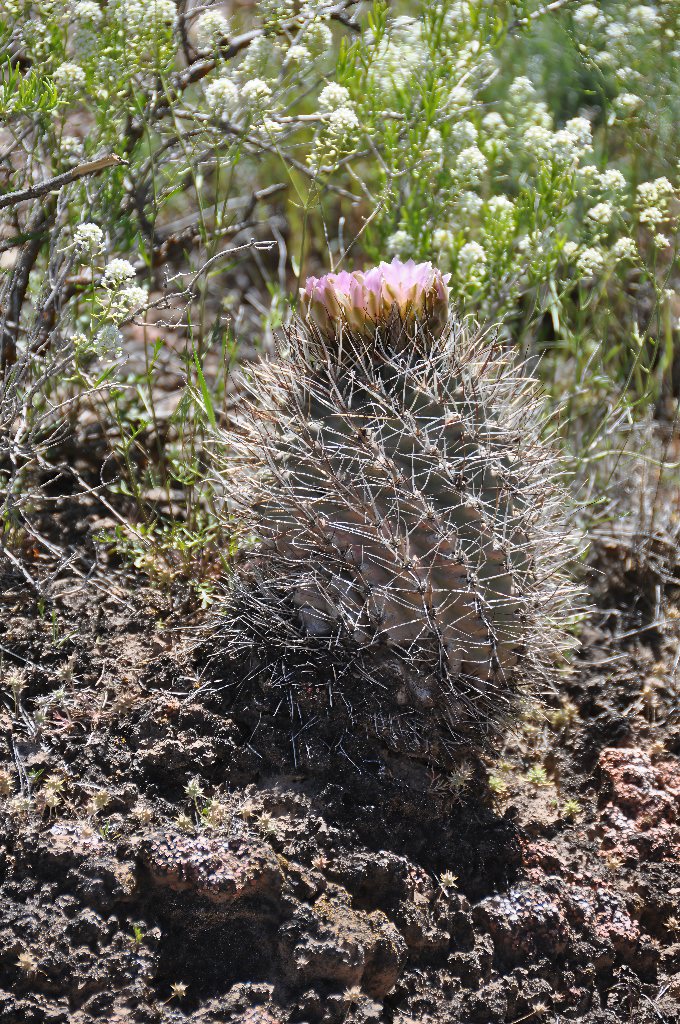
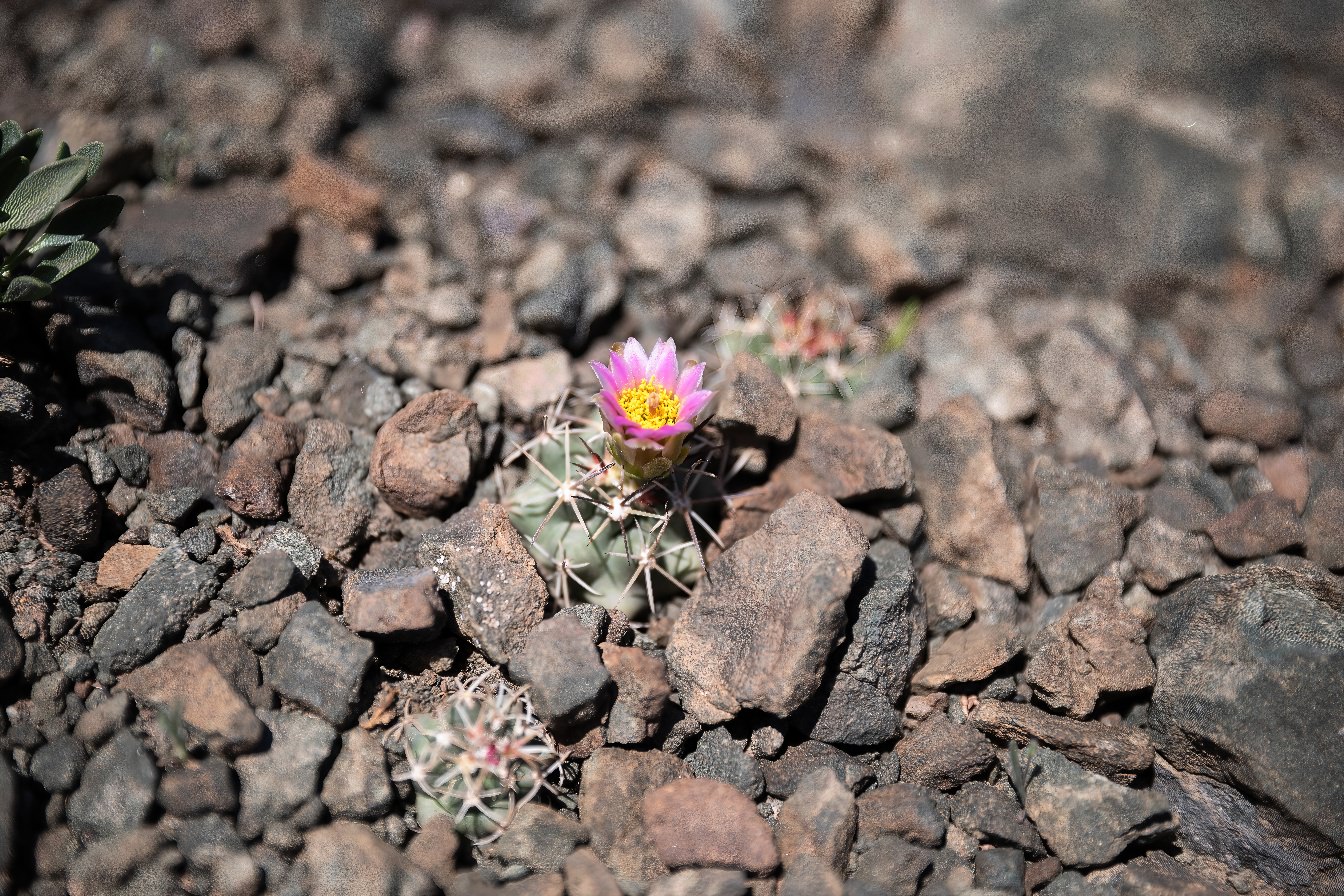
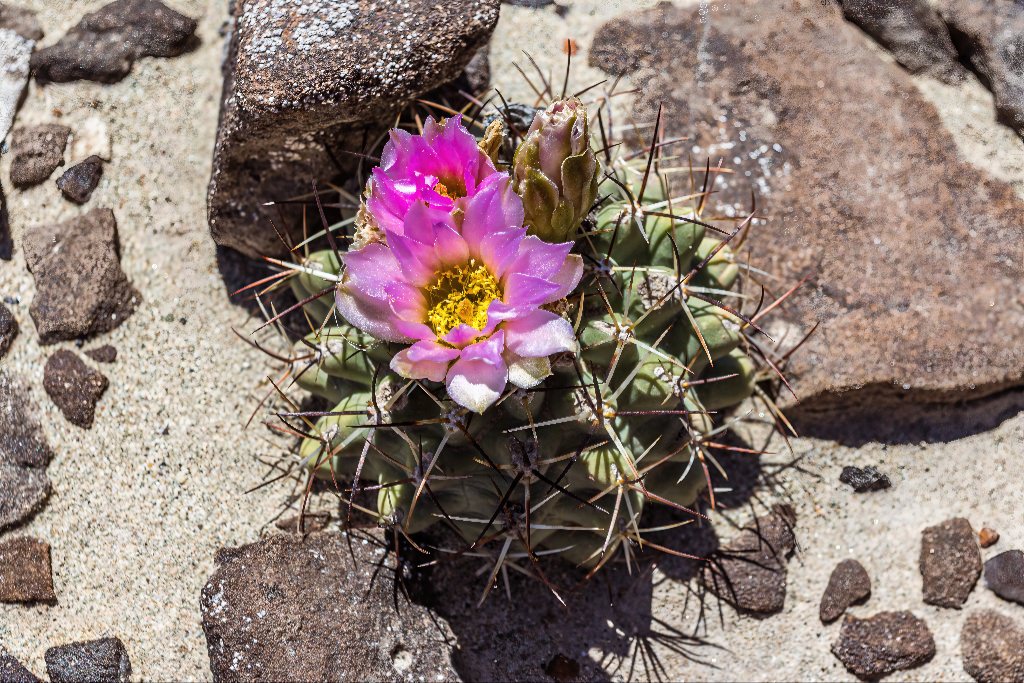
Perennial. Stems 1(to 2), cylindrical, bluish-green, 3â10 cm long à 2â9 cm wide; ribs generally 11 to 12; spines 7 to 9 per areole, white-brown, up to 3.3 cm, generally not hooked at tip. Flowers 2â5 à 0.5â 1.5 cm; outer tepals with greenish-brown mid-stripe and pink to white margins; inner tepals pink to magenta; filaments green or white; anthers yellow; style green. Fruit cylindrical berry, 9â22 à 8â12 mm; seeds black, 1.5 à 2.5 mm (McGlaughlin and Naibauer 2024).
Look Alikes:
Sclerocactus dawsoniae is differentiated from S. glaucus by having a smaller size (average of 7.42 cm tall x 5.07 cm wide v.s. 10.8 cm tall x 7.7 cm wide) and fewer spines per areole (average of 7.9 vs. 10.6). It has an allopatric distribution and therefore does not overlap geographically with S. glaucus or S. parviflorus (McGlaughlin and Naibauer 2023, Krening and Dawson 2025).
Phenology:
Flowers from mid April-May (Ackerfield 2022).
Habitat
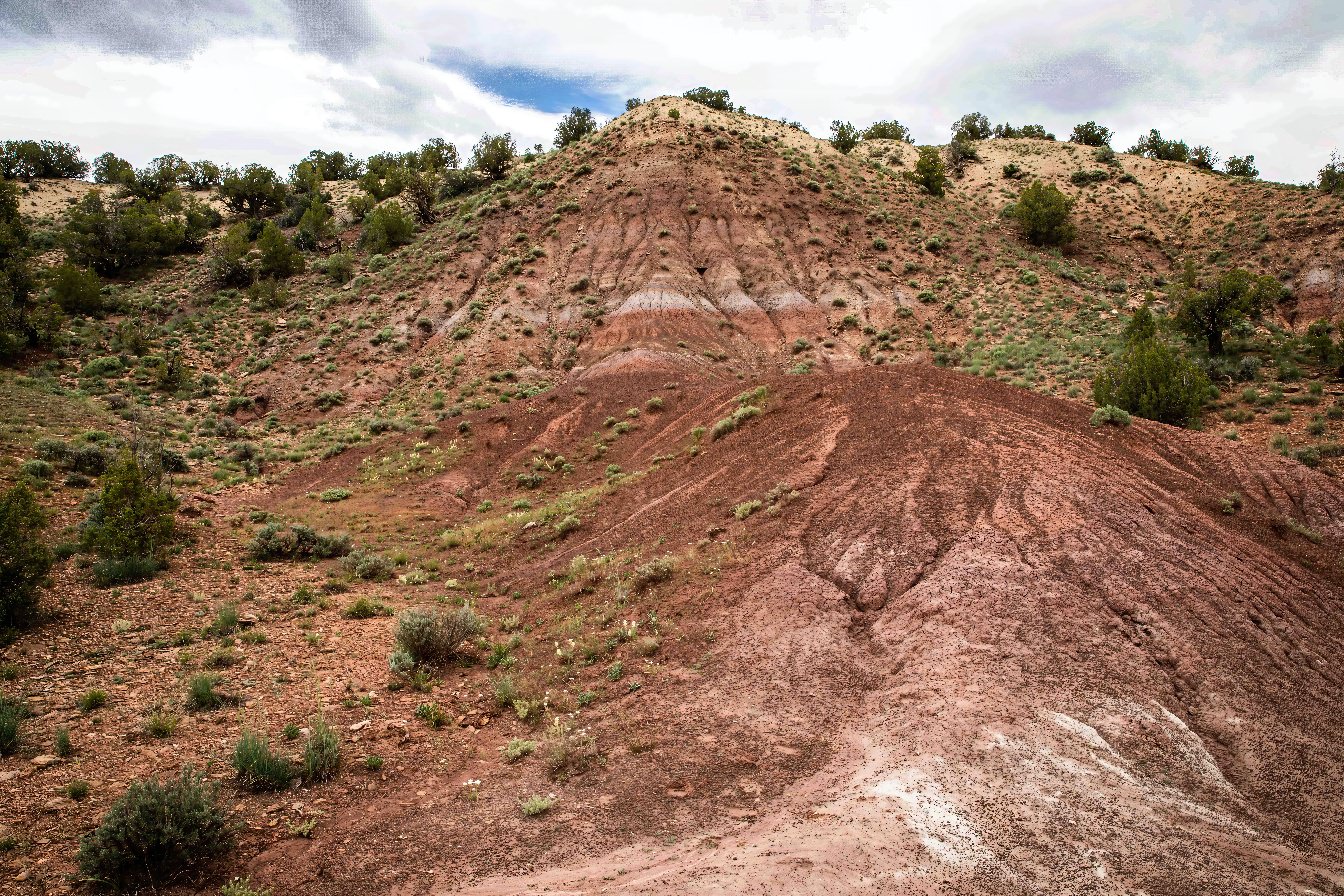
Habitat is primarily desert shrubland and occasionally sagebrush shrublands or pinyon-juniper woodlands. It is found on stony outwashes at the toe of steep outcrops of exposed Watsatch Formation on brown, tan and gray clay soils derived from Shire and Atwell Gulch members. Associated species include Atriplex confertifolia, Chrysothamnus depressus, Allium textile, Cymopterus bulbosus, Echinocereus triglochidiatus, Hilaria jamesii, Opuntia spp., Phlox hoodii and Townsendia incana (Krening and Holsinger 2024).
click on image to enlarge
 |
Elevation Range:
4,500 - 6,000 feet (1,372 - 1,829 meters)
Distribution
Colorado Endemic:
Yes
Range:
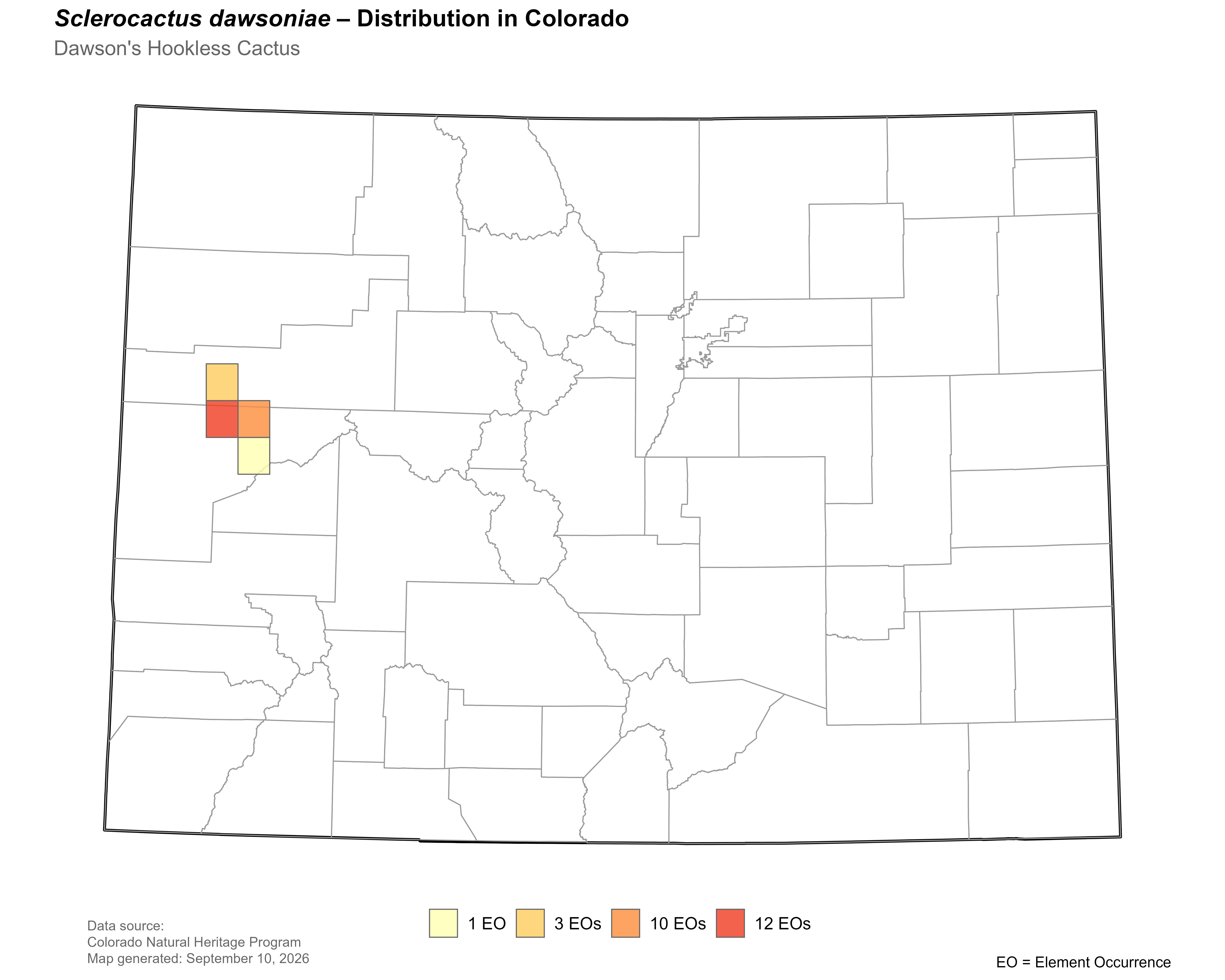
Sclerocactus dawsoniae is endemic to Colorado, USA, where it is known from Garfield and Mesa counties. This taxon was previously considered as Sclerocactus glaucus; genetic work by McGlaughlin and Neibauer (2023, 2024) shows that S. dawsoniae is a genetically distinct taxon. Estimated range extent in Colorado of 605 square kilometers was calculated in GeoCAT using occurrence data provided by the Colorado Natural Heritage Program (2026).
Click on map to enlarge |
Threats and Management Issues
Primary threats to Sclerocactus dawsoniae and its habitat include inappropriate livestock use, competition from invasive plant species, oil and gas development, off-highway vehicle (OHV) recreation, and development and maintenance of roads and utility corridors. Plants of this species are almost exclusively observed in areas where the soil surface is durable, resistant to erosion, or with intact biological soil crusts or in protected areas, such as under shrub canopies, suggesting land uses which result in soil disturbance and erosion are likely incompatible with the proliferation of the species (Krening and Holsinger 2024). Livestock grazing, by both sheep and cattle, occurs throughout the range of S. dawsoniae and can impact plants by direct trampling, trailing and compaction of soils, and alteration of vegetation structure and composition within the species habitat. The invasive plant species Bromus tectorum (cheatgrass) is widespread on Colorado?s western slope and has been reported from nearly half of the S. dawsoniae occurrences (CNHP 2025). Non-native invasive plants like cheatgrass can aggressively outcompete native vegetation, especially following surface disturbance. A suite of introduced annual forbs such as Chorispora tanella (blue mustard), and Halogeton glomeratus (saltlover) also inhabit localized disturbed sites throughout the region (BLM 2020). Routine application of herbicide treatments to combat the spread of non-native invasive plant species may result in the mortality of S. dawsoniae individuals or occurrences. However, treatments are generally localized in nature and permitting is required prior to herbicide application (BLM 2020). Oil and gas development is extensive in S. dawsoniae habitat and remains a meaningful threat to the species and its habitat due to the severity of the impacts associated with the loss of plants and habitat from the development of infrastructure including well pads and roads (BLM 2020). Off-highway vehicle (OHV) recreation is reported from a third of the occurrences and has the potential to damage or destroy individual plants by crushing and fragmenting occupied habitat. Utility corridor right-of-ways (ROWs) for transmission lines can result in the damage or loss of individual plants (BLM 2020). Predation of S. dawsoniae is also of concern and has been documented in two forms: (1) herbivory associated with the foraging activities of small ground dwelling mammals, and; (2) parasitism by the Opuntia-borer beetle (Moneilema semipunctatum). Beetle parasitism appears to be isolated occurring in a small percentage of the total population, however, herbivory by small mammals was the highest attributable cause of cactus mortality in demographic monitoring studies from 2011-2017, comprising 22.5% of the cases of attributable mortality (BLM 2020). Once thought to be a primary concern, collection of cactus plants and seeds does not appear to be more than a very minor and localized threat (BLM 2020, USFWS 2021b). Further, long term drought is occurring throughout this species range. S. dawsoniae is considered to have low adaptive capacity and is expected to be highly vulnerable to climate change under both RCP 4.5 and 8.5 scenarios, as assessed for the 2025 Colorado State Wildlife Action Plan (CNHP 2025). However, other recent climate change vulnerability assessments conducted for the closely related S. glaucus indicate that it may not be as vulnerable to climate change as once thought, with no significant range-contractions predicted (BLM 2020).
References
- Ackerfield, Jennifer. 2022. Flora of Colorado. Second Edition. Bot. Misc. 60. BRIT Press, Fort Worth Botanic Garden/Botanical Research Institute of Texas, U.S.A. 861 pp.
- Colorado Natural Heritage Program (CNHP). 2025. Climate Change Vulnerability Assessment of Colorado Tier 1 and Tier 2 Plant Species of Greatest Conservation Need (SCGN) for the 2025 Colorado State Wildlife Action Plan. Colorado Natural Heritage Program, Colorado State University, Fort Collins, CO.
- Colorado Natural Heritage Program (CNHP). 2026. Biodiversity Tracking and Conservation System (Biotics 5). Colorado Natural Heritage Program, Colorado State University, Fort Collins.
- Krening, P. and K. Holsinger. 2024. Estimating the Minimum Population Size of Dawson's Hookless Cactus (Sclerocactus dawsoniae). Technical Note 460. U.S. Department of Interior, Bureau of Land Management, National Operations Center, Denver. CO.
- Krening, Phil. 2025. BLM - Colorado 2025 Special Status Plant Species Population Trend Monitoring Report, Colorado State Office, Denver Federal Center, Lakewood, CO.
- McGlaughlin, M.E., and S.K. Naibauer. 2023. Conservation genetics of Sclerocactus in Colorado: the importance of accurate taxonomy to conservation. Frontiers in Conservation Science, 14 December 2023, Sec. Conservation Genetics and Genomics Volume 4 - 2023. https://doi.org/10.3389/fcosc.2023.1310985
- McGlaughlin, M.E., and S.K. Naibauer. 2024. Sclerocactus dawsoniae (Cactaceae), a new species from western Colorado, U.S.A. Novon 32: 79-83.