

Scientific Name : Ptilagrostis porteri
Author : (Rydb.) W.A. Weber NatureServe Explorer
Common Name : Porter Feathergrass
 Current Research Activities
 1997 profile


☰ Click link below for details.
Taxonomy
Poaceae (grass family)
Ranks and Status
State Rank : S2
State Rank Reason : Ptilagrostis porteri is known from a restricted range in central Colorado (USA), where it occurs in a specific wetland habitat that is sensitive to disturbances. There are 38 documented occurrences but 18 are known only from historical observations. The primary threats to the species are alterations to local hydrology from peat mining and ditching of bogs for water diversions. Other potential threats include unregulated recreation (motorized and non-motorized) and livestock grazing. Ptilagrostis porteri is considered to be slightly to moderately vulnerable to the effects of climate change.
U.S. Endangered Species Act : none
Colorado Threatened and Endangered List : none
Other Statuses : SWAP Tier 1, USFS
Description and Phenology
General Description:
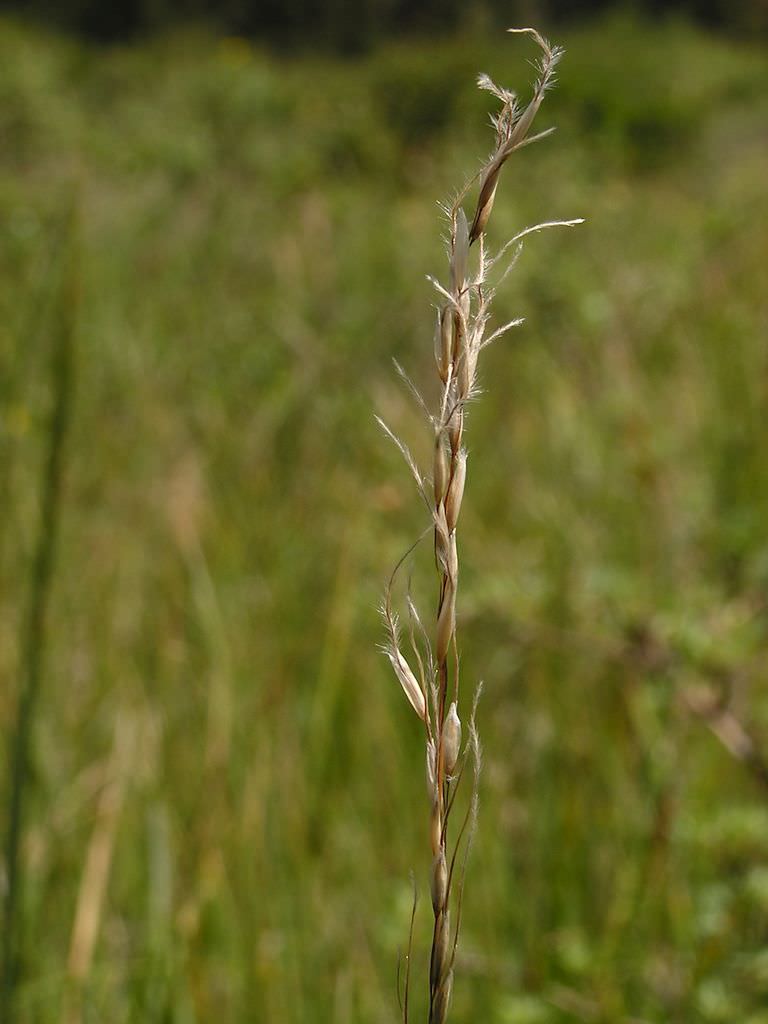
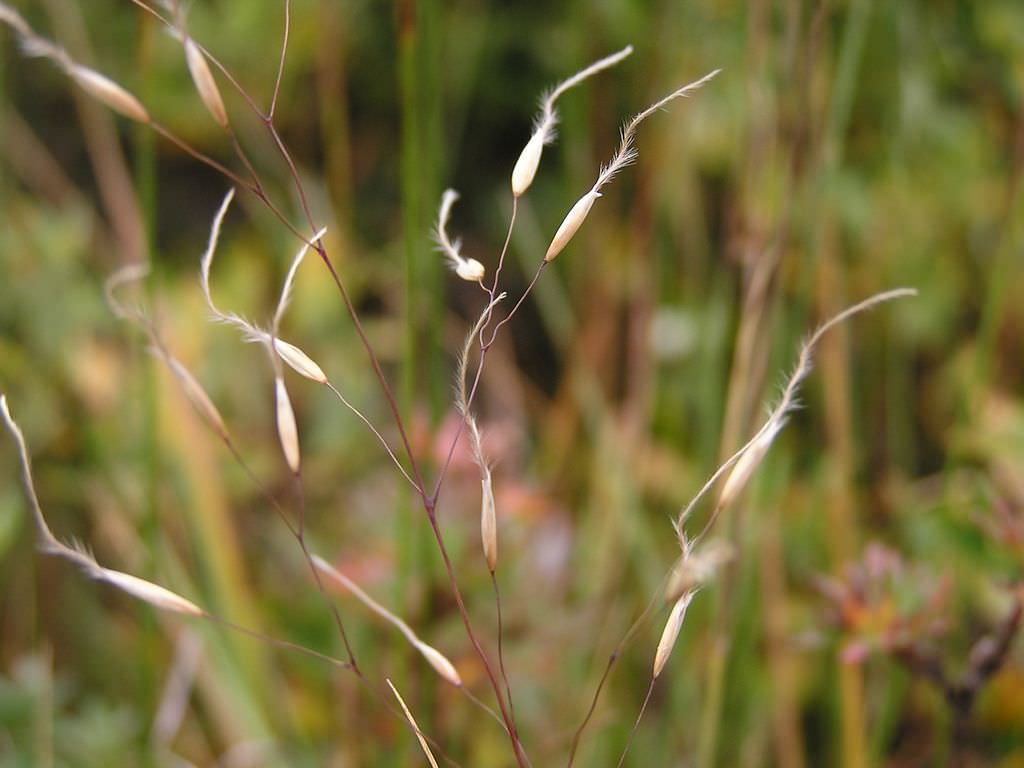
Ptilagrostis porteri is a perennial bunchgrass. Its leaves are filiform (thread-like) up to 12cm (4.7 inches) long. Flowering culms (stems) are 23 to 50cm (9 to 19.7 inches) tall. The panicle is 6 to 10cm (2.4 to 3.9 inches) long, and may be open or tightly closed. Each floret has plumose awns from 1.2 to 2.5 cm (0.5 to 4.9 inches) long (Johnston 2006).
Look Alikes:
Stipa species that may occur in the same areas lack conspicuous feathery awns and do not grow in wetlands. There are no grasses that can easily be confused with Ptilagrostis porteri in this habitat, especially when mature fruit are present.
Phenology:
Ptilagrostis porteri flowers in August. Fruits are apparent from mid-August through mid-September (Johnston 2006).
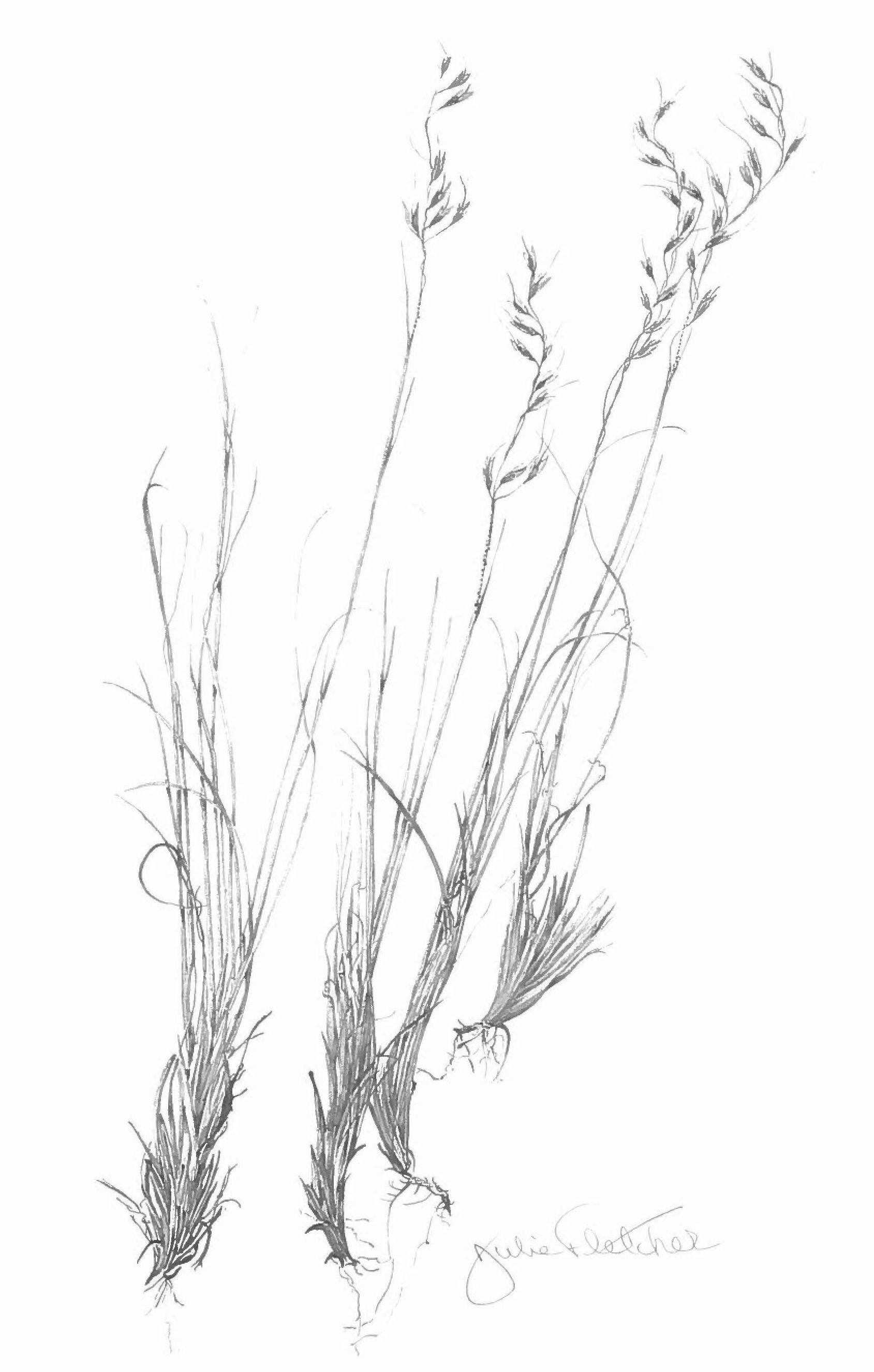 | 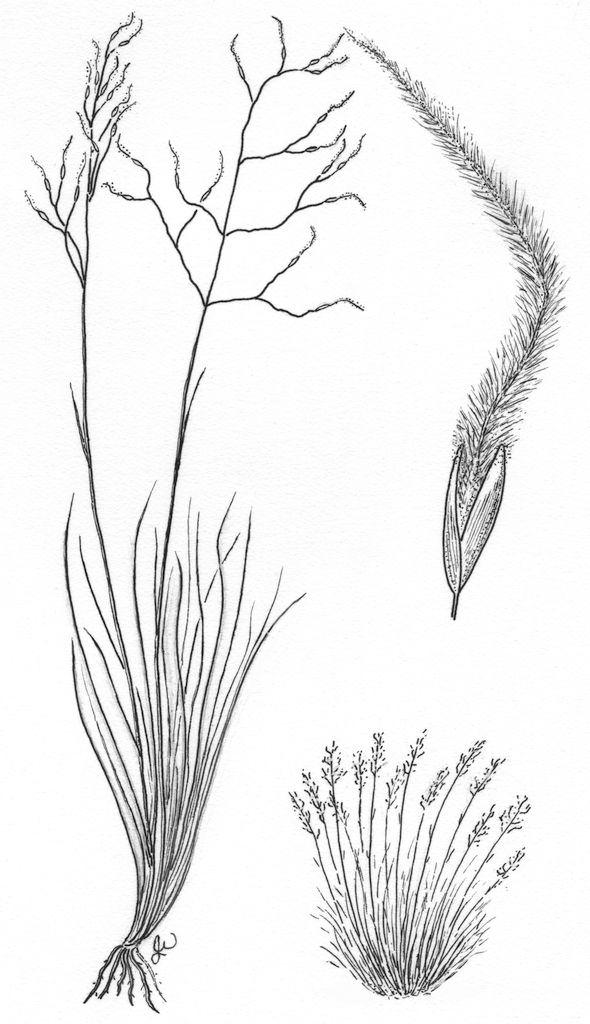 |
Habitat
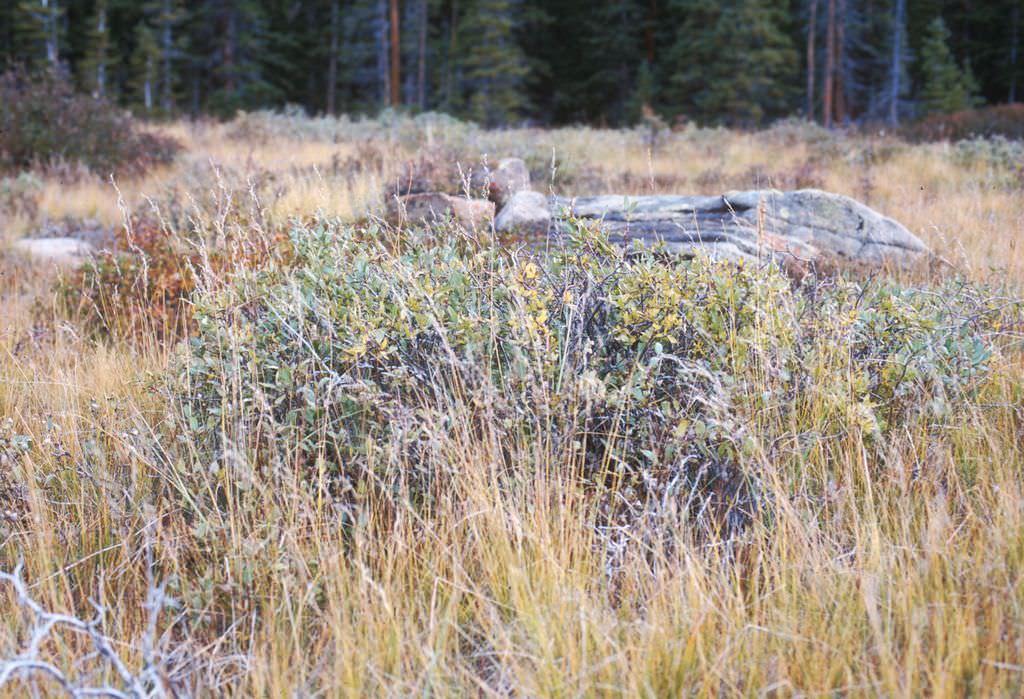
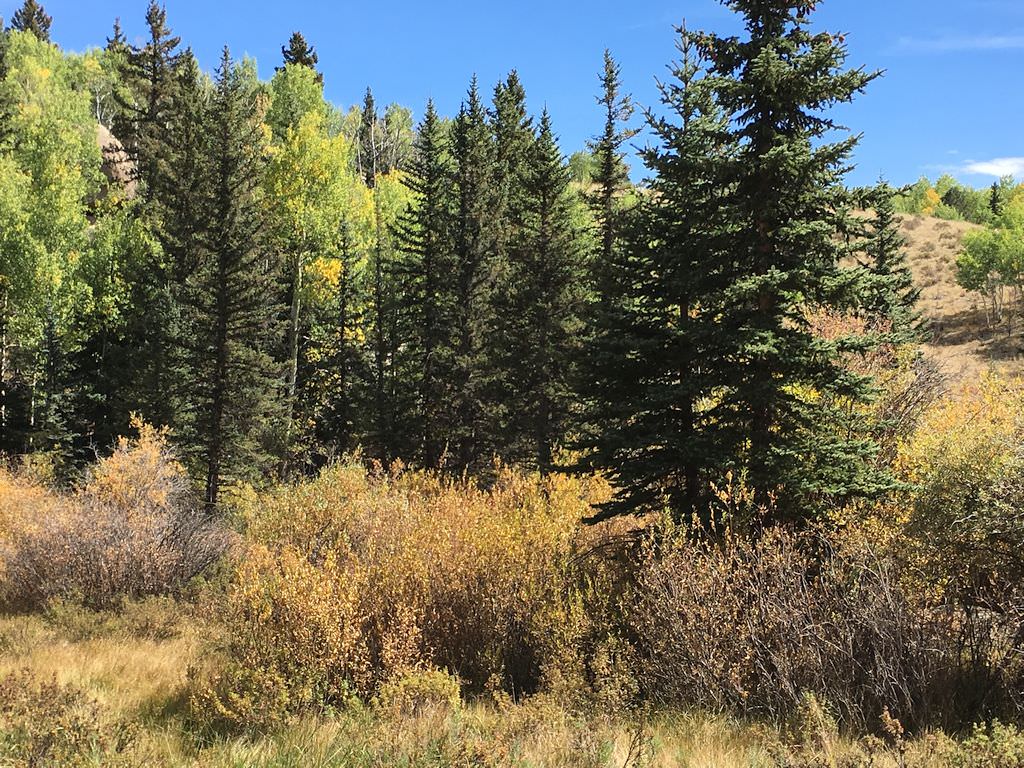
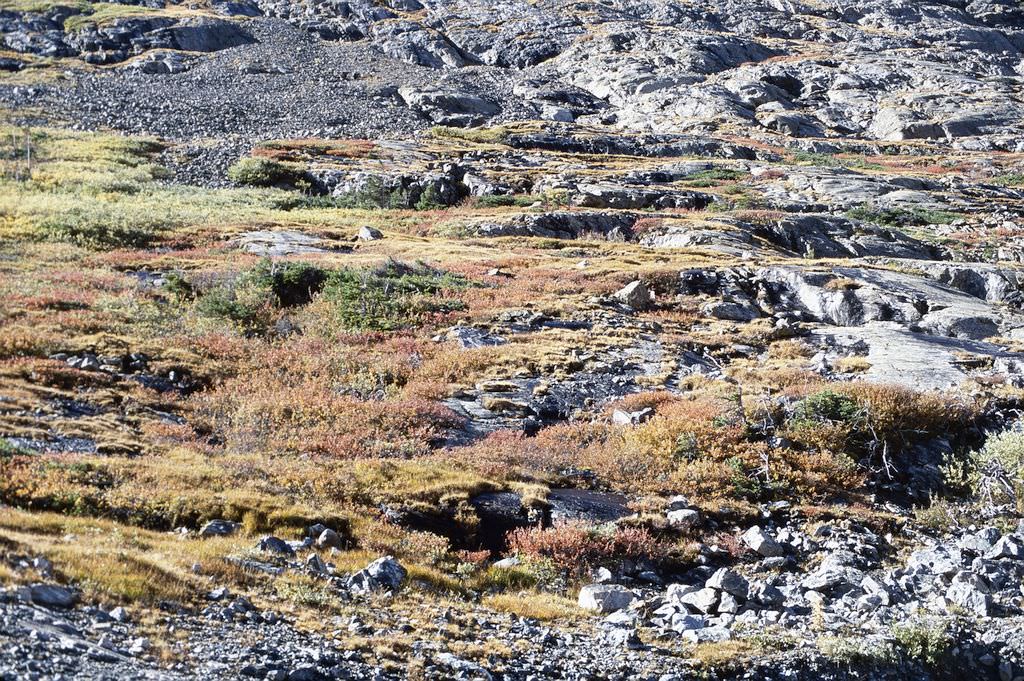
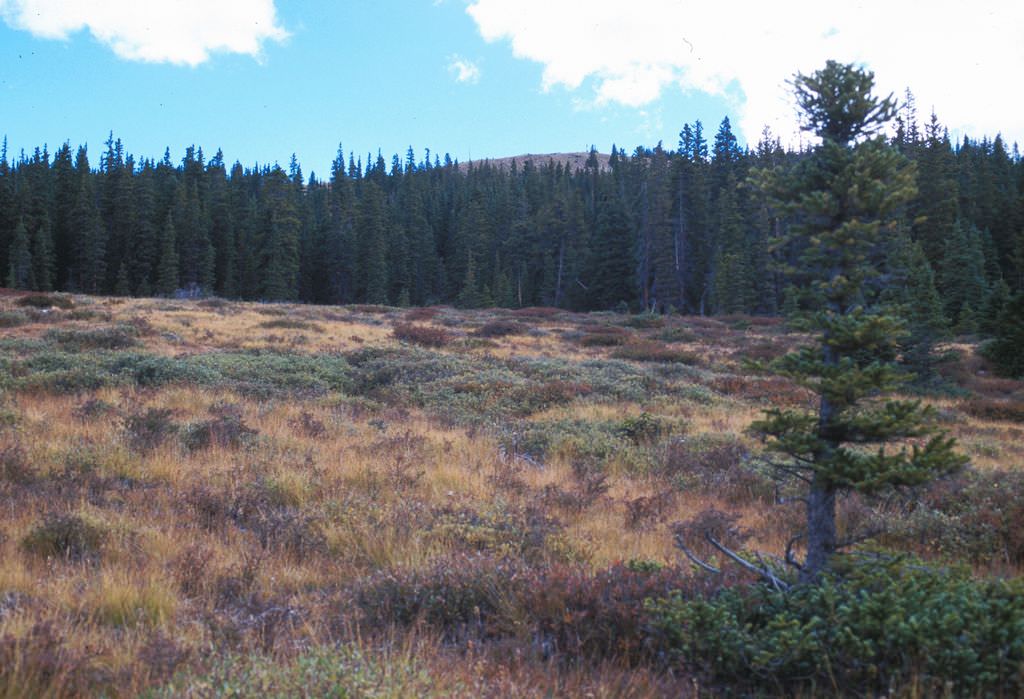
Ptilagrostis porteri is found on tops of hummocks in peat-dominated wetlands (particularly extreme rich fens) and willow carrs (Johnston 2006). Soils are usually described as Cryaquolls, Cryoborolls, and Histosols (Johnston 2006). Frequently associated species include Deschampsia caespitosa, Kobresia myosuroides, Dasiphora fruticosa ssp. floribunda, Betula glandulosa, Salix geyeri, Carex aquatilis, Calamagrostis canadensis, and Salix planifolia. Species tracked by CNHP that may also be found in association with Ptilagrostis include Trichophorum pumilum, Salix candida, Carex livida, Eriophorum gracile, Kobresia simpliciuscula, and Rubus arcticus ssp. acaulis (Johnston 2006).
click on image to enlarge
 |
 |
 |
Elevation Range:
9,076 - 12,469 feet (2,766 - 3,801 meters)
Distribution
Colorado Endemic:
No
Range:
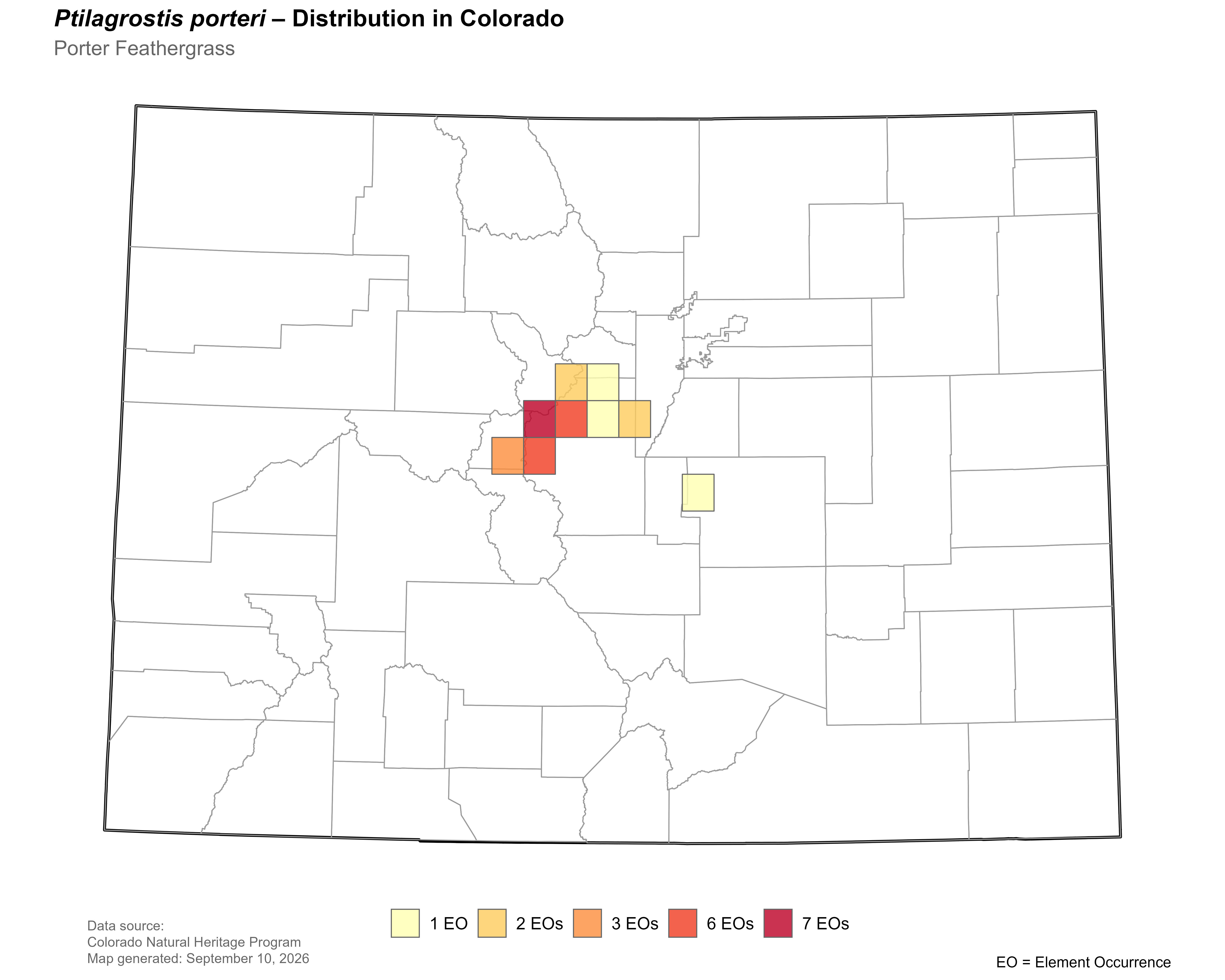
Ptilagrostis porteri is known from central Colorado and north central New Mexico, USA. Within Colorado it occurs primarily in South Park (Park County) but is also found in Summit, Lake and El Paso counties.
Click on map to enlarge |
Threats and Management Issues
Threats to Ptilagrostis porteri include unregulated recreation (motorized and non-motorized), peat and gold mining, livestock grazing, and ditching of bogs for water diversion all resulting in alterations to local hydrology (Johnston 2006, Olson 2012). At least one population has been extirpated from these activities. The full effects of livestock trampling are not currently known, but trampling may seriously disrupt this species specialized microhabitat. Other localized threats include residential and commercial development and mowing and haying operations. Ptilagrostis porteri is considered to have moderate adaptive capacity and is expected to be slightly to moderately vulnerable to climate change under both RCP 4.5 and 8.5 scenarios, as assessed for the 2025 Colorado State Wildlife Action Plan (CNHP 2025).
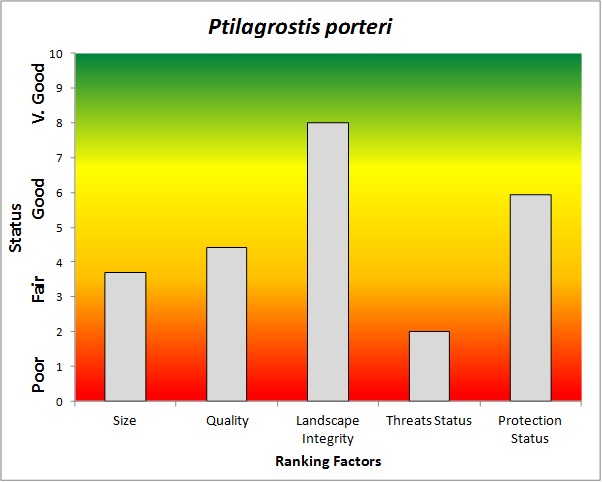
Summary results of an analysis of the status of Ptilagrostis porterii based on several ranking factors. This species was concluded to be Moderately Conserved. From Rondeau et al. 2011. |
References
- Ackerfield, J. 2015. Flora of Colorado. BRIT Press, Botanical Research Institute of Texas, Fort Worth, TX. 818 pp.
- Barkworth, M. E. 1983. Ptilagrostis in North America and Its Relationship to Other Stipeae (Gramineae). Systematic Botany, 8(4): 395-419.
- Colorado Natural Heritage Program (CNHP). 2023. Biodiversity Tracking and Conservation System (Biotics 5). Colorado Natural Heritage Program, Colorado State University, Fort Collins.
- Colorado Natural Heritage Program (CNHP). 2025. Climate Change Vulnerability Assessment of Colorado Tier 1 and Tier 2 Plant Species of Greatest Conservation Need (SCGN) for the 2025 Colorado State Wildlife Action Plan. Colorado Natural Heritage Program, Colorado State University, Fort Collins.
- Cooper, D. J. 1990. Ecological Studies of Wetlands in South Park, Colorado: Classification, Functional Analysis, Rare Species Inventory, and the Effects of Removing Irrigation. Report prepared for: Park County and U.S. EPA Region VIII. Boulder Co. 94pp.
- Culver, D.R. and J.M. Lemly. 2013. Field Guide to Colorado's Wetland Plants; Identification, Ecology and Conservation. Colorado Natural Heritage Program, Colorado State University, Fort Collins, 694 pp.
- Flora of North America Editorial Committee, ed. (FNA). 1993+. Flora of North America North of Mexico. Oxford Univ. Press, New York, Oxford.
- Handwerk, J., L. Grunau, and S. Panjabi. 2015. Colorado Wildlife Action Plan: 2015 Rare Plant Addendum. Colorado Natural Heritage Program, Colorado State University, Fort Collins, Colorado, USA.
- Johnston, B. 2004. Unpublished report on Ptilagrostis porteri.
- Johnston, B.C. (2006, May 3). Ptilagrostis porteri (Rydb.) W.A. Weber (Porter's false needlegrass): a technical conservation assessment. [Online]. USDA Forest Service, Rocky Mountain Region. Available: http://www.fs.fed.us/r2/projects/scp/assessments/ptilagrostisporteri.pdf [January 2007].
- Neely, B., S. Panjabi, E. Lane, P. Lewis, C. Dawson, A. Kratz, B. Kurzel, T. Hogan, J. Handwerk, S. Krishnan, J. Neale, and N. Ripley. 2009. Colorado Rare Plant Conservation Strategy, Developed by the Colorado Rare Plant conservation Initiative. The Nature Conservancy, Boulder, Colorado, 117 pp.
- O'Kane, S. L. 1988. Colorado's Rare Flora. Great Basin Naturalist. 48(4):434-484.
- Ryke, N., D. Winters, L. McMartin and S. Vest. 1994. Threatened, Endangered and Sensitive Species of the Pike and San Isabel National Forests and Comanche and Cimarron National Grasslands. May 25, 1994.
- Spackman, S., B. Jennings, J. Coles, C. Dawson, M. Minton, A. Kratz, and C. Spurrier. 1997. Colorado rare plant field guide. Prepared for Bureau of Land Management, U.S. Forest Service and U.S. Fish and Wildlife Service by Colorado Natural Heritage Program.
- USDA, NRCS. 2022. The PLANTS Database. National Plant Data Team, Greensboro, NC 27401-4901 USA.
- Von Ahlefeldt, J. 1989. High Elevation Riparian Area Evaluation for Known and Potential Porter's Needlegrass, Ptilagrostis porteri Habitat: History, Remote Sensing Relationships, and Management.
- Weber, W. A. and R. C. Wittmann. 2012. Colorado Flora, Eastern Slope, A Field Guide to the Vascular Plants, Fourth Edition. Boulder, Colorado. 555 pp.
- Weber, W. A. and R. C. Wittmann. 2012. Colorado Flora, Western Slope, A Field Guide to the Vascular Plants, Fourth Edition. Boulder, Colorado. 532 pp.