


Scientific Name : Potentilla ambigens
Author : Greene NatureServe Explorer
Common Name : Southern Rocky Mountain Cinquefoil
 Current Research Activities


☰ Click link below for details.
Taxonomy
Rosaceae (rose family)
Ranks and Status
State Rank : S3
State Rank Reason : Potentilla ambigens is known from approximately 20 occurrences in central Colorado. Potential threats threats include off-road vehicle and other recreational use; residential and commercial development, incompatible livestock grazing, fragmentation from roads and road maintenance, and competition from non-native plant species. Potentilla ambigens is expected to be slightly to moderately vulnerable to the effects of climate change, such as long-term drought. Further, because many occurrences are represented by few individuals, they may also be threatened by the effects of small population size and stochastic events.
U.S. Endangered Species Act : none
Colorado Threatened and Endangered List : none
Other Statuses : SWAP Tier 2, USFS RGNF
Description and Phenology
General Description:
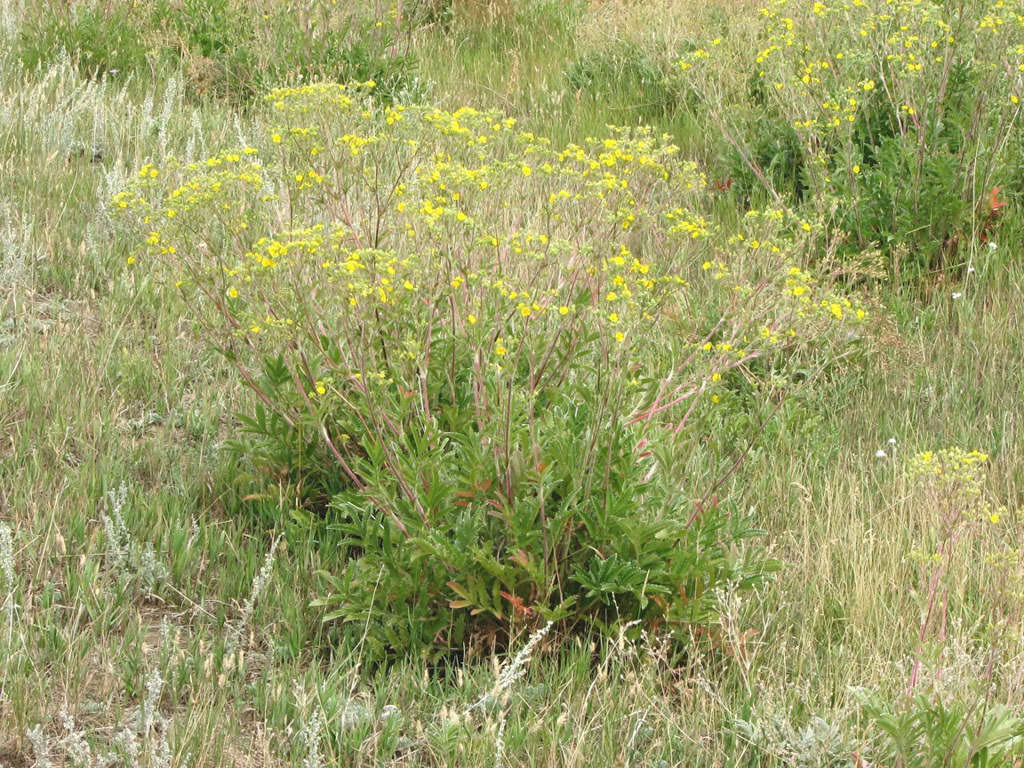
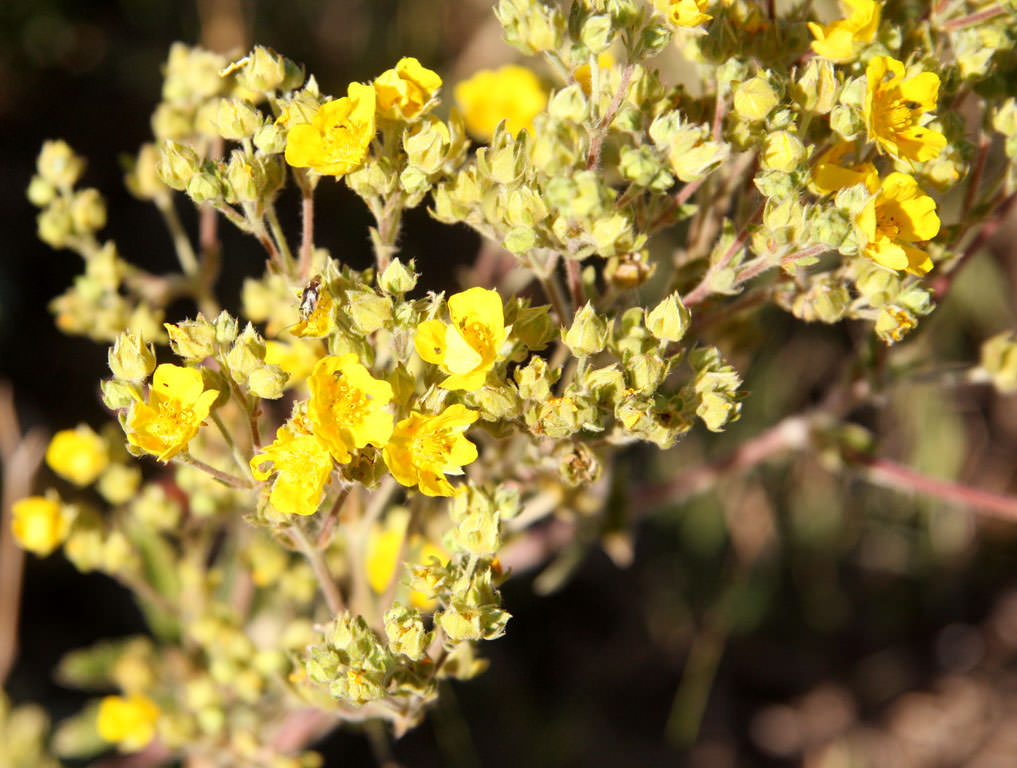
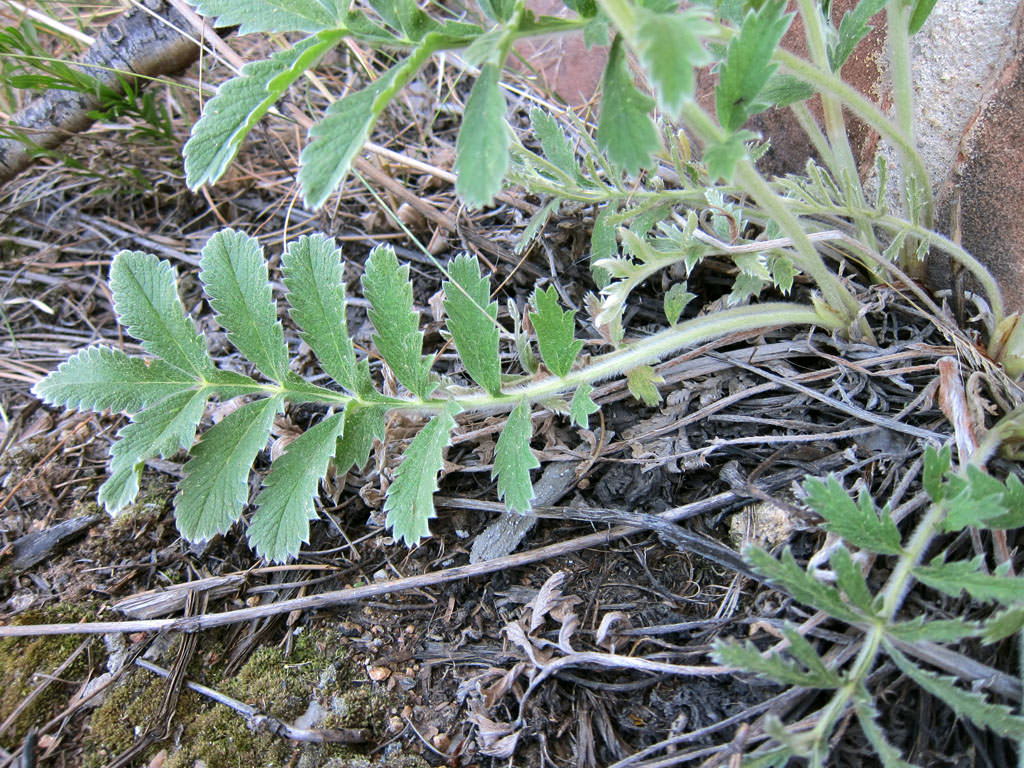
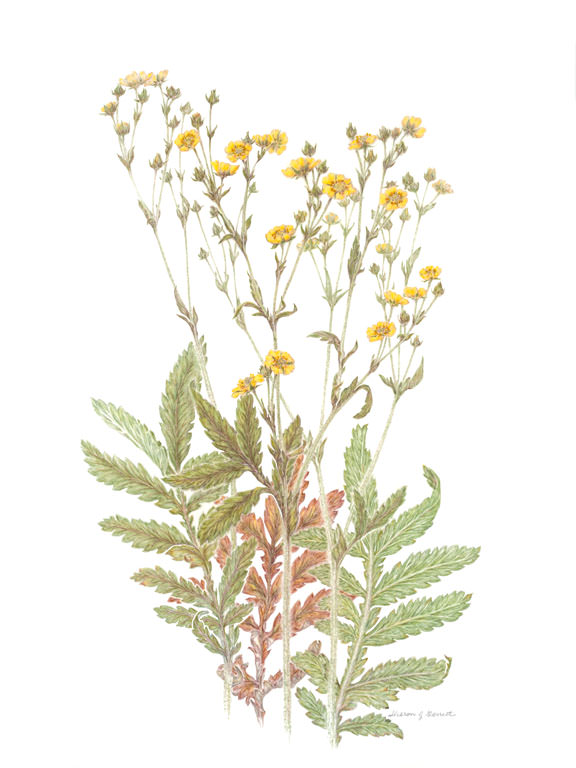
Potentilla ambigens is a taprooted perennial with several stems emerging from a stout rootstock. Potentilla ambigens has large leaves that are borne basally and on the stems. The leaves are two or more decimeters in length and have 9 to 15 leaflets. It has flowers (that are not numerous) with yellow petals that are slightly longer than the sepals, as is typical in Potentilla (Anderson 2006; Colorado Native Plant Society 1997).
Look Alikes:
Potentilla ambigens is most commonly mistaken for P. hippiana. The two species are found in similar habitats and have been documented together in Colorado. Potentilla ambigens is taller and more stout, reaching up to 70 cm. in height (Weber and Wittmann 2012, Anderson 2006, Harrington 1954). Potentilla ambigens also differs from P. hippiana in having a densely pilose leaf rachis (pers. comm. Rich Scully).
Phenology:
Flowers in June to late July, produces fruits in August (Anderson 2006, Colorado Natural Heritage Program 2012).
 |
Habitat
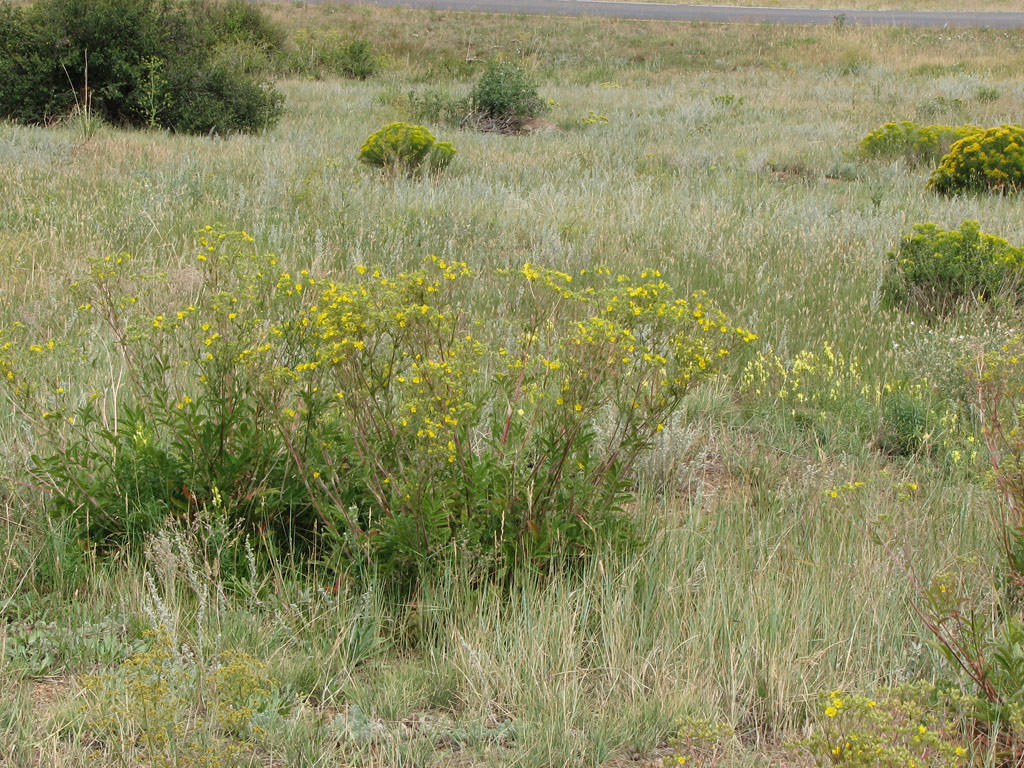
Most Colorado occurrences are on grassy or colluvial slopes, but it may also occur in montane woods. Some sites where Potentilla ambigens is found have been heavily altered by human activities, such as roadsides. Potentilla ambigens is often reported from ecotonal sites at the edges of relatively discrete vegetation types. It is commonly near, but not in, forests dominated by Pinus ponderosa (ponderosa pine). These sites are typically open or in partial shade. However, most reports are from sites where plants are in full sun such as meadows or grasslands. Potentilla ambigens has been reported mainly from flat sites, but it may also grow on gentle hillsides and slopes with up to 30 percent gradient. If on a slope, the site usually has a source of water upslope that increases soil moisture. Potentilla ambigens is not endemic to a particular geologic stratum. Potentilla ambigens is typically found in soils that are either alluvial or colluvial. All reports of soil texture where P. ambigens is found note the presence of coarse-textured, often gravelly soils. Potentilla ambigens is associated with several coniferous forest types. These include ponderosa pine woodlands, ponderosa pine savannas, and mixed coniferous forests (Anderson 2006, Colorado Natural Heritage Program 2012).
click on image to enlarge
 |
Elevation Range:
6,467 - 10,024 feet (1,971 - 3,055 meters)
Distribution
Colorado Endemic:
No
Range:
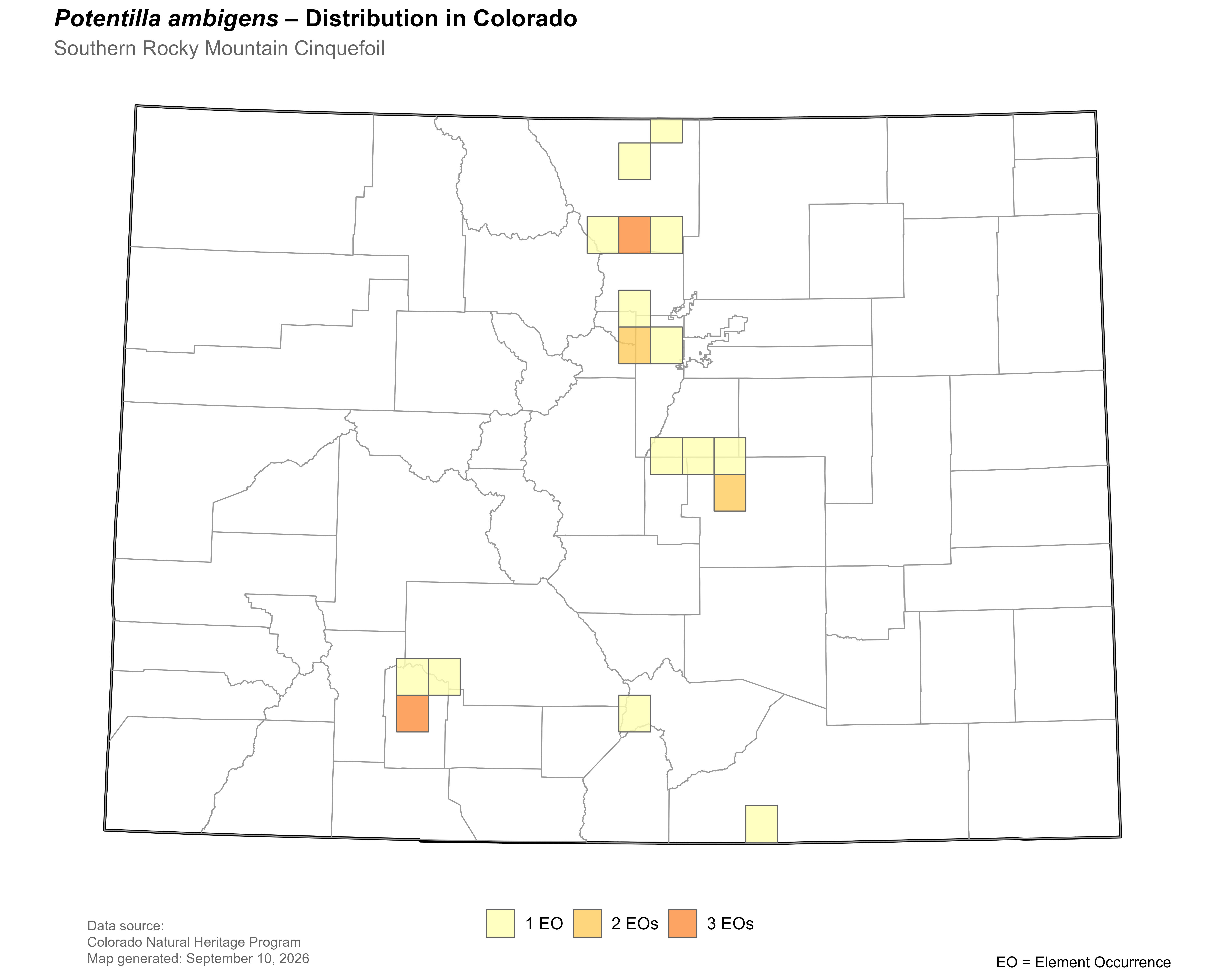
In Colorado, USA, Potentilla ambigens is known from eight counties: Douglas, El Paso, Jefferson, Larimer, Las Animas, Mineral, Saguache and Teller. Estimated range extent in Colorado of 50,088 square kilometers was calculated in GeoCAT using occurrence data provided by the Colorado Natural Heritage Program (2023). This species is also known from New Mexico, USA. and is thought to be extirpated in Wyoming, USA.
Click on map to enlarge |
Threats and Management Issues
Observations and quantitative data indicate several threats to the persistence of Potentilla ambigens. These threats include off-road vehicle and other recreational use, residential and commercial development, incompatible livestock grazing, fragmentation from roads and road maintenance, and competition from non-native plant species. Invasive plant species including Poa pratensis, Bromus inermis, Cirsium arvense and many others have been documented at 64% of the occurrences. Other localized threats include hybridization with other Potentilla sp. and heavy deer and elk use of occupied habitat. Further, because many occurrences are represented by few individuals, they may also be threatened by the effects of small population size and stochastic events (Anderson 2006). This species is considered to have moderate adaptive capacity and is expected to be slightly to moderately vulnerable to climate change under both RCP 4.5 and 8.5 scenarios, as assessed for the 2025 Colorado State Wildlife Action Plan (CNHP 2025).
References
- Ackerfield, J. 2012. The Flora of Colorado. Colorado State University Herbarium. 433 pp.
- Colorado Natural Heritage Program (CNHP). 2025. Climate Change Vulnerability Assessment of Colorado Tier 1 and Tier 2 Plant Species of Greatest Conservation Need (SCGN) for the 2025 Colorado State Wildlife Action Plan. Colorado Natural Heritage Program, Colorado State University, Fort Collins, CO.
- Colorado Natural Heritage Program. 2012. Biodiversity Tracking and Conservation System. Colorado State University, Fort Collins, CO.
- Flora of North America Editorial Committee, ed. (FNA). 1993+. Flora of North America North of Mexico. Oxford Univ. Press, New York, Oxford.
- Harrington, H.D. 1954. Manual of the plants of Colorado. Sage Press, Chicago. 666 pp.
- Heil, K.D., S.L. O'Kane Jr., L.M. Reeves, and A. Clifford, 2013. Flora of the Four Corners Region, Vascular Plants of the San Juan River Drainage; Arizona, Colorado, New Mexico, and Utah. Missouri Botanical Garden Press, St. Louis, Missouri. 1098 pp.
- Johnston, B.C. 1980. Studies of population variability leading to a new classification of Potentilla sect. Multijugae (Rosaceae). MS Thesis, University of Colorado, Boulder, CO.
- Lavender, A.E., M.M. Fink, S.E. Linn, D.M. Theobald. 2011. Colorado Ownership, Management, and Protection v9 Database. Colorado Natural Heritage Program and Geospatial Centroid, Colorado State University, Fort Collins, CO. (30 September).
- USDA, NRCS. 2022. The PLANTS Database. National Plant Data Team, Greensboro, NC 27401-4901 USA.
- Weber, W. A. and R. C. Wittmann. 2012. Colorado Flora, Eastern Slope, A Field Guide to the Vascular Plants, Fourth Edition. Boulder, Colorado. 555 pp.


