

Scientific Name : Platanthera zothecina
Author : (Higgins & Welsh) Kartesz & Gandhi NatureServe Explorer
Common Name : Alcove Bog- orchid
 Current Research Activities
 1997 profile


☰ Click link below for details.
Taxonomy
Orchidaceae (orchid family)
Weber and Wittmann (2012) consider this as Limnorchis zothecina.
Ranks and Status
State Rank : S1S2
State Rank Reason : Platanthera zothecina is known only from Moffat County in northwest Colorado, USA. The primary threat to the species is considered to be hydrologic alteration, and it is considered to be extremely vulnerable to the effects of climate change.
U.S. Endangered Species Act : none
Colorado Threatened and Endangered List : none
Other Statuses : none
Description and Phenology
General Description:
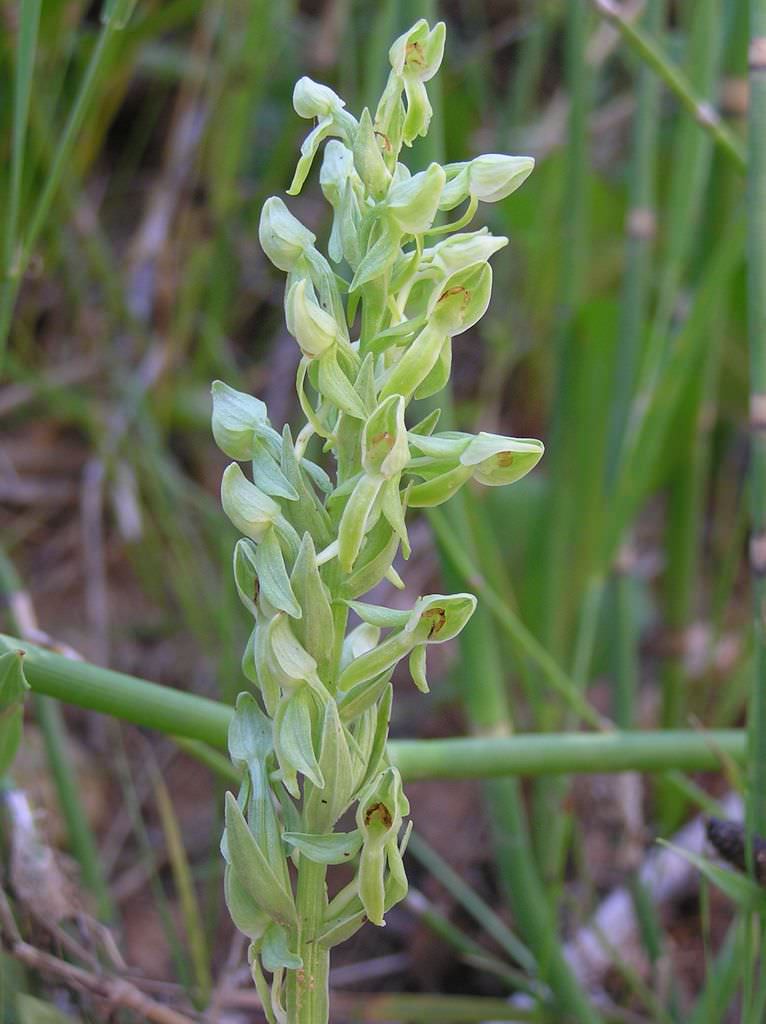
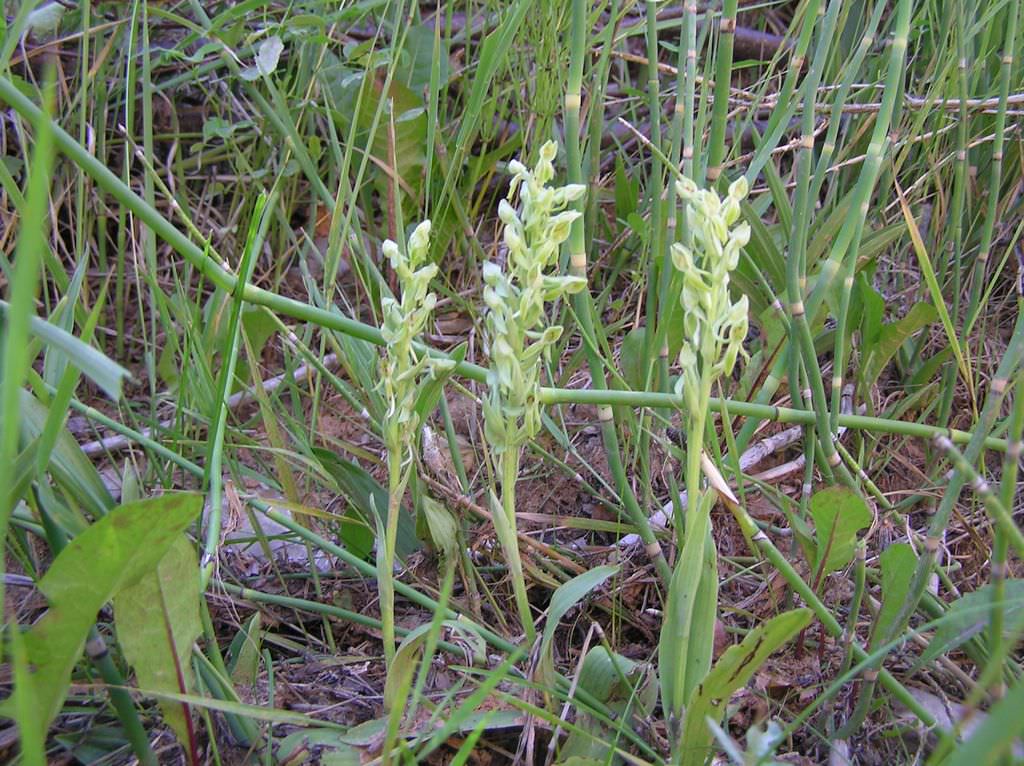
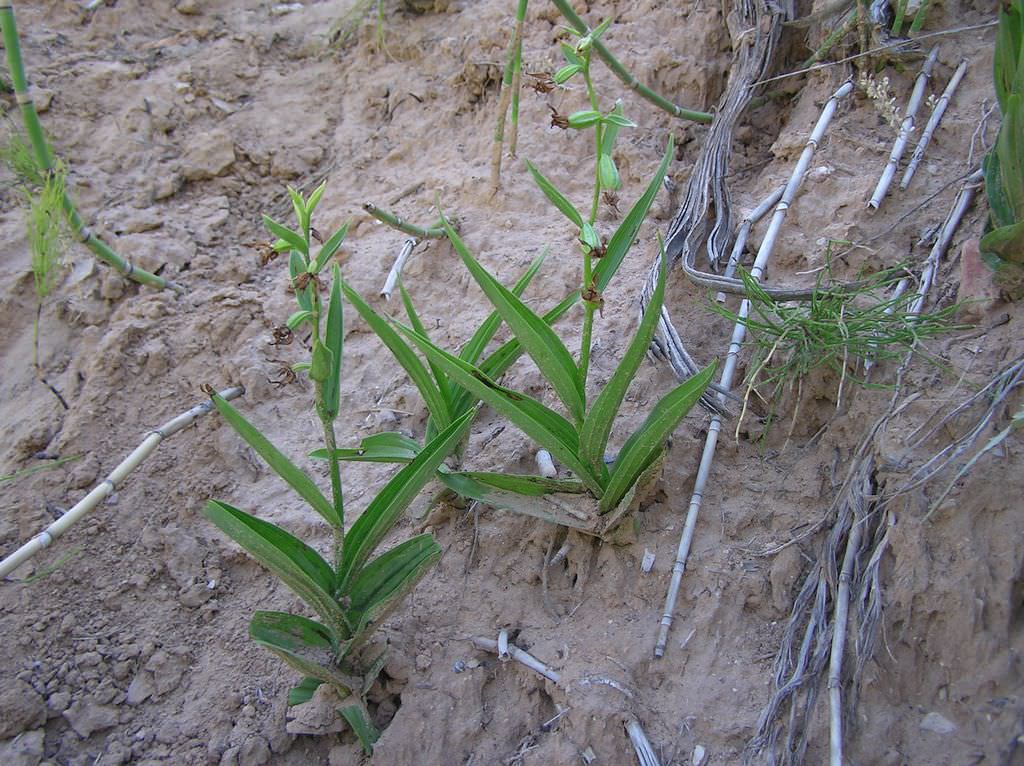
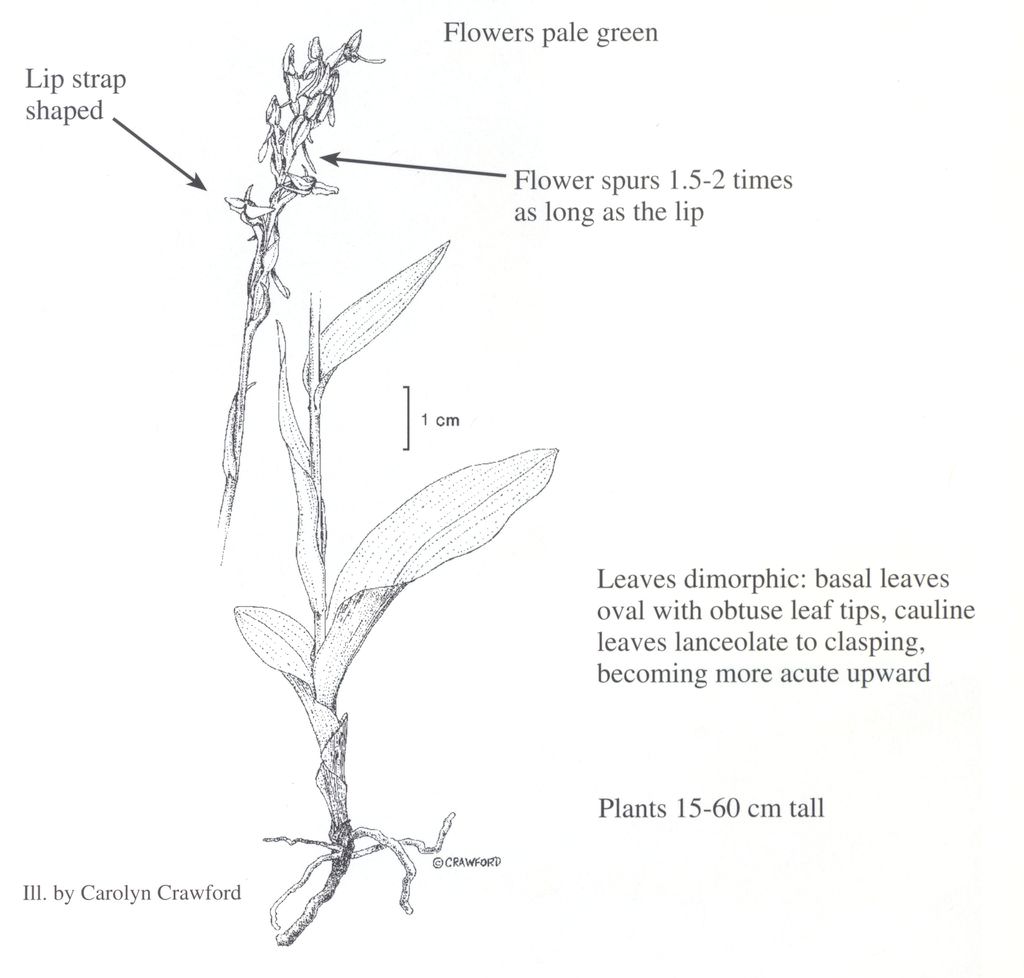
Platanthera zothecina is a perennial forb with glabrous oblanceolate to elliptic basal and cauline leaves that clasp the stem; the flowering stalk is erect with a terminal infloresence of yellowish green to green flowers (Ackerfield 2015).
Look Alikes:
Distinct from other species by the spur length which is 1.5-2 times as long as the lip (Atwood 1991).
Phenology:
Flowers June through August and produces fruits in late August into September.
 |
Habitat
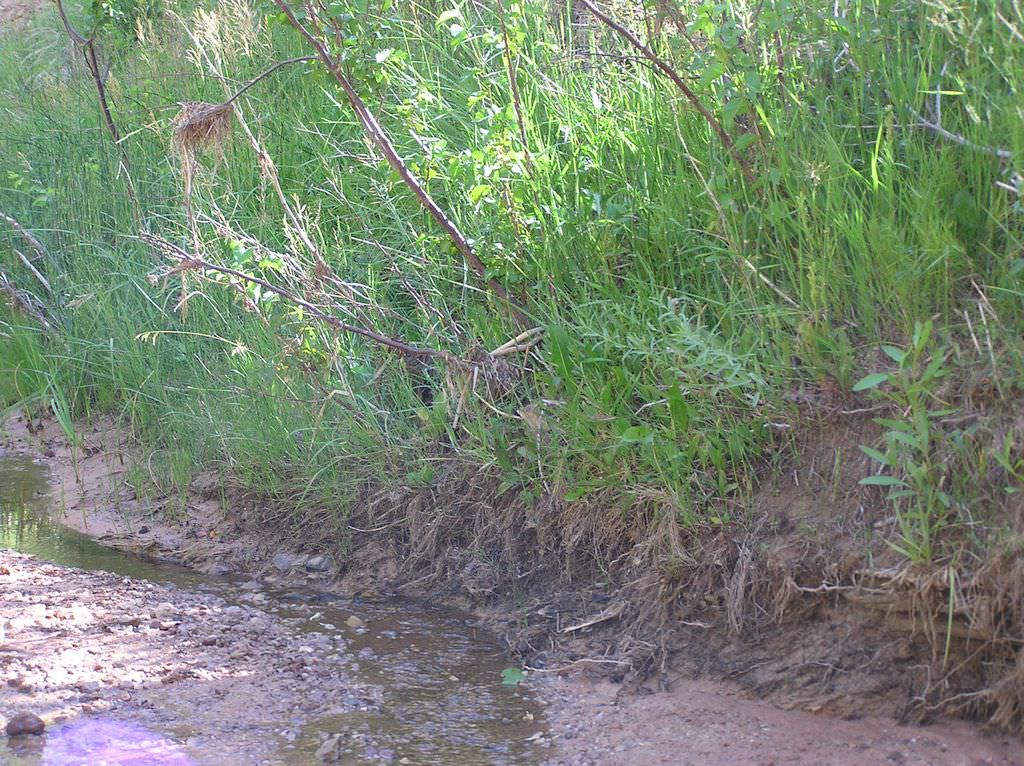
Occurs in seeps, hanging gardens, and moist stream areas from the desert shrub to oak brush communities with species such as Betula, Acer negundo, and Cornus stolonifera (Atwood 1991). Occurs in several microsites in hanging garden communities: 1) at bases of alcove face-walls with flowing drip-line or with seepage down wall, 2) in protection of dense vegetation or under rock debris of alcove foot slope , 3) shaded sites along streams, and 4) shaded seeps. Typical sites are shaded for most of the day; those facing south and receiving light through much of the day support few if any plants. Commonly associated species: Aquilegia micrantha, Toxicodendron rydbergii, Cirsium rydbergii, Epipactis gigantea, Panicum virgatum, and Primula specuicola. Other associated species include: Betula occidentalis, Muhlenbergia thurberi, Rhamnus betulifolia, Carex aurea, Equisetum hyemale, Mimulus eastwoodiae, Adiantum capillus-veneris, Typha sp., Salix exigua, Apocynum cannabinum, Clematis ligusticifolia, Oenothera longissima, Quercus gambelii, Mahonia fremontii, Zygadenus vaginatus and Smilicina stellata (Colorado Natural Heritage Program 2022).
click on image to enlarge
 |
Elevation Range:
5,219 - 5,908 feet (1,591 - 1,801 meters)
Distribution
Colorado Endemic:
No
Range:
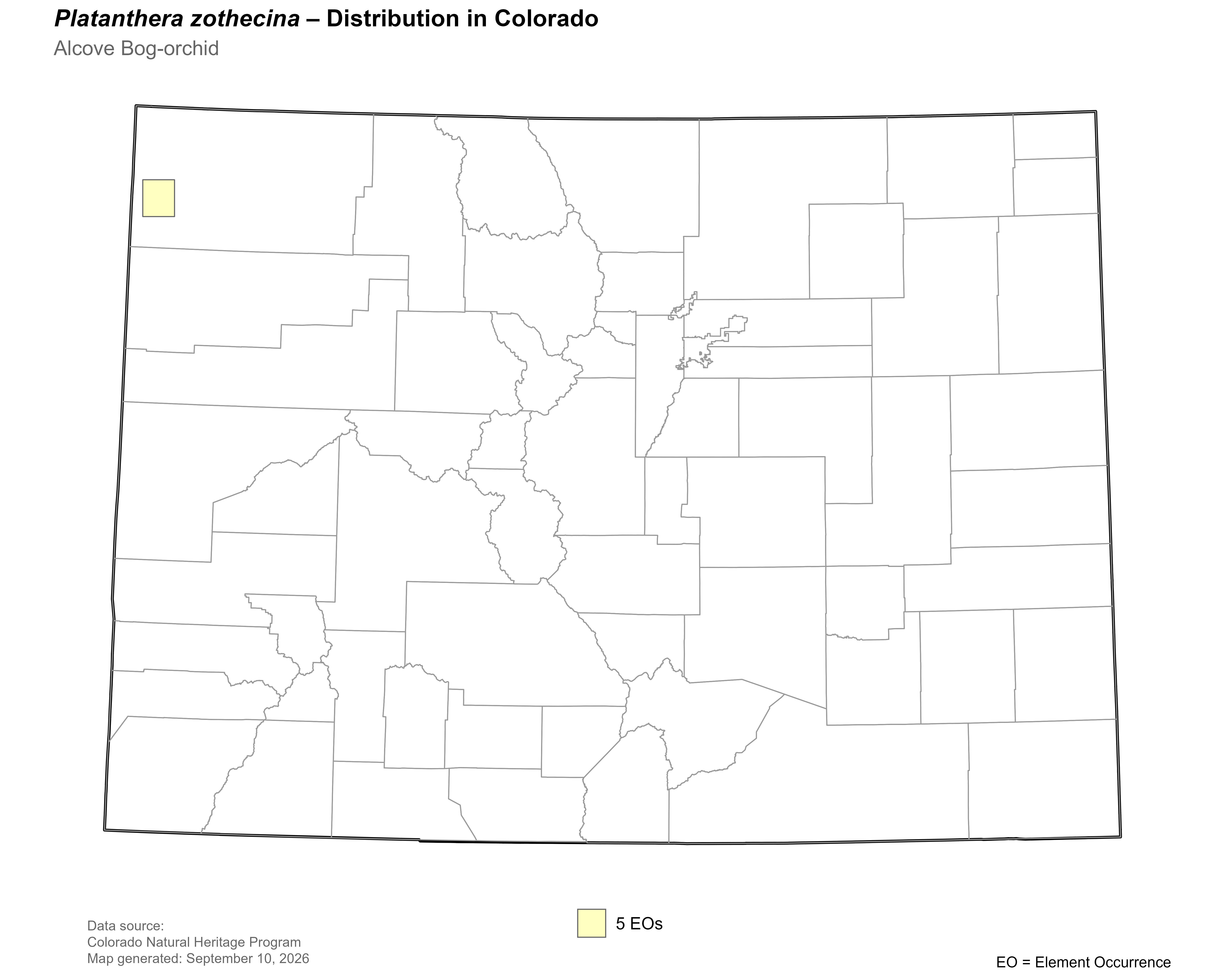
Platanthera zothecina is known from Dinosaur National Monument (Moffat County) in Colorado, USA. The estimated range extent in Colorado of 6 square kilometers was calculated in GeoCAT using occurrence data provided by the Colorado Natural Heritage Program (2022). This species can also be found in Arizona, Navajo Nation, and Utah.
Click on map to enlarge |
Threats and Management Issues
The primary threat is considered to be hydrologic alteration (Rondeau et al. 2011). It is not known if all of the occurrences are or are not threatened by these activities. The plants occur in hanging garden communities which are dependent on seeps and springs on the cliff faces; diversion of the mesa top springs and streams to other uses would disrupt this hydrologic system. This species is considered to be extremely vulnerable to climate change (Handwerk et al. 2015).
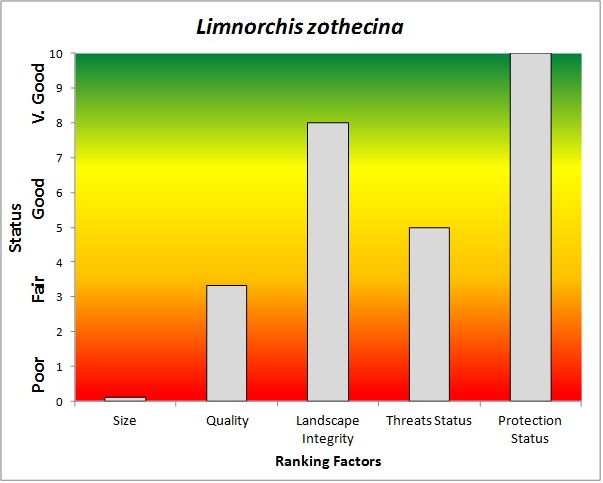
Summary results of an analysis of the status of Limnorchis zothecina based on several ranking factors. This species was concluded to be Moderately Conserved. From Rondeau et al. 2011. |
References
- Ackerfield, J. 2015. Flora of Colorado. BRIT Press, Botanical Research Institute of Texas, Fort Worth, TX. 818 pp.
- Atwood, D., J. Holland, R. Bolander, B. Frnaklin, D. E. House, L. Armstrong, K. Thorne, and L. England. 1991. Utah Threatened, Endangered, and Sensitive Plant Field Guide. US Forest Service Intermountain Region, National Park Service, Bureau of Land Management, Utah Natural Heritage Program, US Fish and Wildlife Service, Environmental Protection Agency, Navajo Nation, and Skull Valley Goshute Tribe.
- Colorado Natural Areas Program. 1990. Final Report -- Inventory of plant species of special concern and the general flora of Dinosaur Natioanl Monument 1987-1989.
- Colorado Natural Heritage Program (CNHP). 2022. Biodiversity Tracking and Conservation System (Biotics 5). Colorado Natural Heritage Program, Colorado State University, Fort Collins.
- Flora of North America Editorial Committee, ed. (FNA). 1993+. Flora of North America North of Mexico. Oxford Univ. Press, New York, Oxford.
- Handwerk, J., L. Grunau, and S. Panjabi. 2015. Colorado Wildlife Action Plan: 2015 Rare Plant Addendum. Colorado Natural Heritage Program, Colorado State University, Fort Collins, Colorado, USA.
- Neely, B., S. Panjabi, E. Lane, P. Lewis, C. Dawson, A. Kratz, B. Kurzel, T. Hogan, J. Handwerk, S. Krishnan, J. Neale, and N. Ripley. 2009. Colorado Rare Plant Conservation Strategy, Developed by the Colorado Rare Plant conservation Initiative. The Nature Conservancy, Boulder, Colorado, 117 pp.
- Rondeau, R., K. Decker, J. Handwerk, J. Siemers, L. Grunau, and C. Pague. 2011. The state of Colorado's biodiversity 2011. Prepared for The Nature Conservancy. Colorado Natural Heritage Program, Colorado State University, Fort Collins, Colorado.
- Spackman, S., B. Jennings, J. Coles, C. Dawson, M. Minton, A. Kratz, and C. Spurrier. 1997. Colorado rare plant field guide. Prepared for Bureau of Land Management, U.S. Forest Service and U.S. Fish and Wildlife Service by Colorado Natural Heritage Program.
- USDA, NRCS. 2022. The PLANTS Database. National Plant Data Team, Greensboro, NC 27401-4901 USA.
- Weber, W. A. and R. C. Wittmann. 2012. Colorado Flora, Western Slope, A Field Guide to the Vascular Plants, Fourth Edition. Boulder, Colorado. 532 pp.
- Welsh, S.L. 1986. New taxa and combinations in the Utah flora. Great Basin Naturalist 46 (2):254-260.
- Welsh, S.L., N.D. Atwood, S. Goodrich, and L.C. Higgins (eds.) 1993. A Utah flora. 2nd edition. Brigham Young Univ., Provo, Utah. 986 pp.