

Scientific Name : Physaria vicina
Author : (J.L. Anderson, Reveal, & Rollins) O'Kane & Al-Shehbaz NatureServe Explorer
Common Name : Montrose Bladderpod
 Current Research Activities
☰ Click link below for details.
Taxonomy
Brassicaceae (mustard family)
Physaria vicina (J.L. Anderson, Reveal, & Rollins) O'Kane & Al-Shehbaz is endemic to western Colorado, USA. It was first described in 1997, and is most closely related to P. rectipes (Anderson et al. 1997, Kartesz 1999). Physaria vicina differs from P. rectipes in color and by having broader basal leaves. This plant was previously known as Lesquerella vicina J.L. Anderson, Reveal & Rollins (Al-Shehbaz and O'Kane 2002, Flora of North America Editorial Committee 2010)..
Ranks and Status
State Rank : S2
State Rank Reason : Physaria vicina is endemic to southwestern Colorado, USA, where it is known from 24 occurrences, many of which have not been revisited in over 20 years. Potential threats include livestock grazing, competition from invasive non-native plant species, powerline maintenance and various recreation activities. Physaria vicina is also expected to be extremely vulnerable to the effects of climate change.
U.S. Endangered Species Act : none
Colorado Threatened and Endangered List : none
Other Statuses : BLM, SWAP Tier 1
Description and Phenology
General Description:
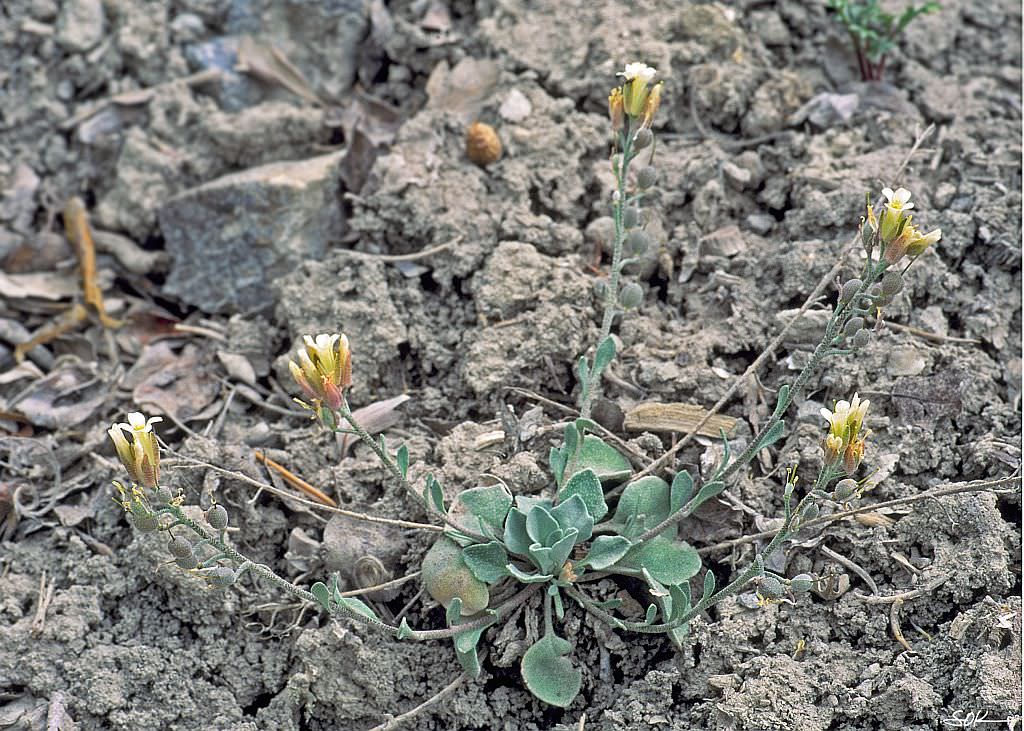
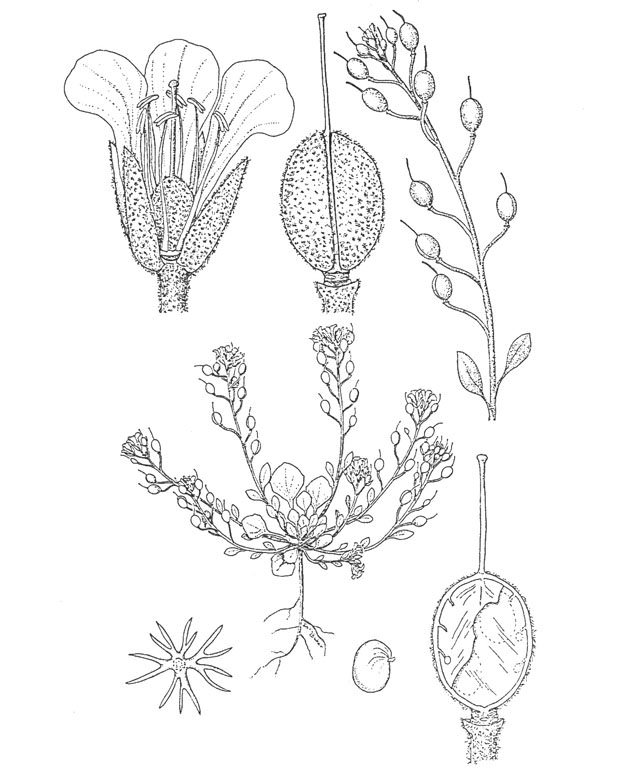
Flower petals 6-10 mm/0.2-0.4 in long, white with a yellow base; flower stalks may be sigmoid (S-shaped) or curved, sometimes straight. Siliques (fruit) are erect, and stellate-pubescent; stems 1-2.5 dm/4-10 in long, ascending (in flower) or nearly prostrate (in fruit); perennial.
Look Alikes:
No other species of Physaria in this area have white flower petals.
Phenology:
Flowering and fruiting in April and May.
 |
Habitat
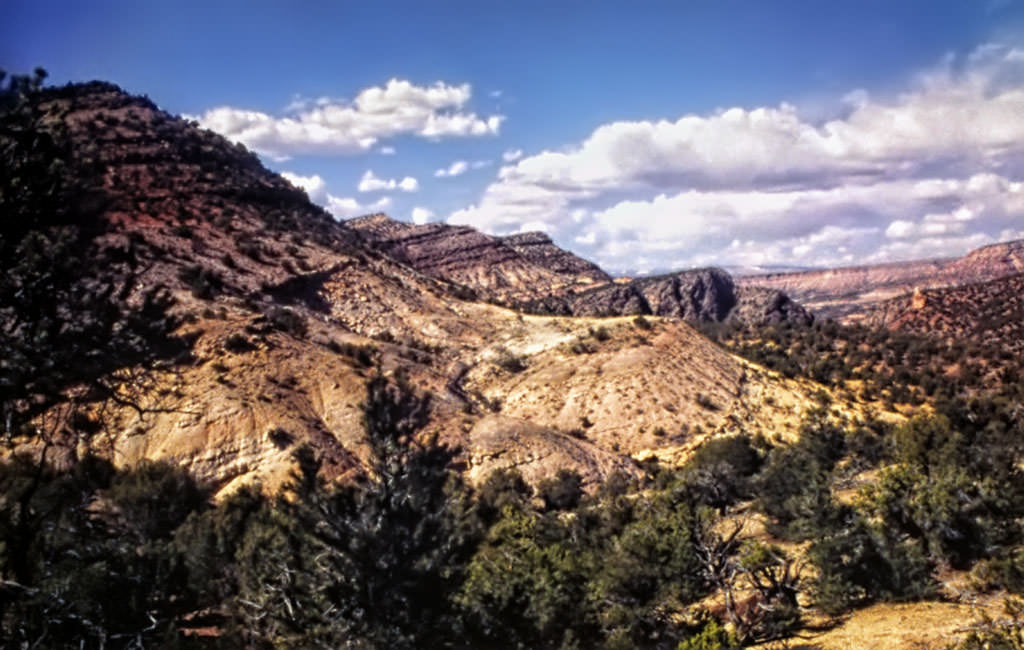
This species grows on Mancos shale at the ecotone between pinyon-juniper woodland and salt desert scrub (Anderson et al. 1997). It also has been found in sandy soils derived from Jurassic sandstones and in sagebrush steppe. It is often found in disturbed areas, including old road beds and cattle trails. Associated species include Juniperus osteosperma, Forsellesia meionandra, Cercocarpus montanus, Yucca harrimanniae, Ephedra viridis, Leymus salinus, Stanleya pinnata, Townsendia incana, Heterotheca villosa, Gutierrezia sarothrae, Eriogonum microthecum, Noccaea montana, Cymopterus fendleri, Opuntia polyacantha, Echinocereus triglochidiatus, Achnatherum hymenoides, Stanleya albescens, Erysimum capitatum, Phlox hoodii, Draba reptans, and Stenotus armerioides (Colorado Natural Heritage Program 2012).
click on image to enlarge
 |
Elevation Range:
5,703 - 7,538 feet (1,738 - 2,298 meters)
Distribution
Colorado Endemic:
Yes
Range:
Physaria vicina is endemic to Delta, Garfield, Montrose and Ouray counties, in western Colorado, USA. The estimated range extent in Colorado of 5023 square kilometers was calculated in GeoCAT using occurrence data provided by the Colorado Natural Heritage Program (2025).
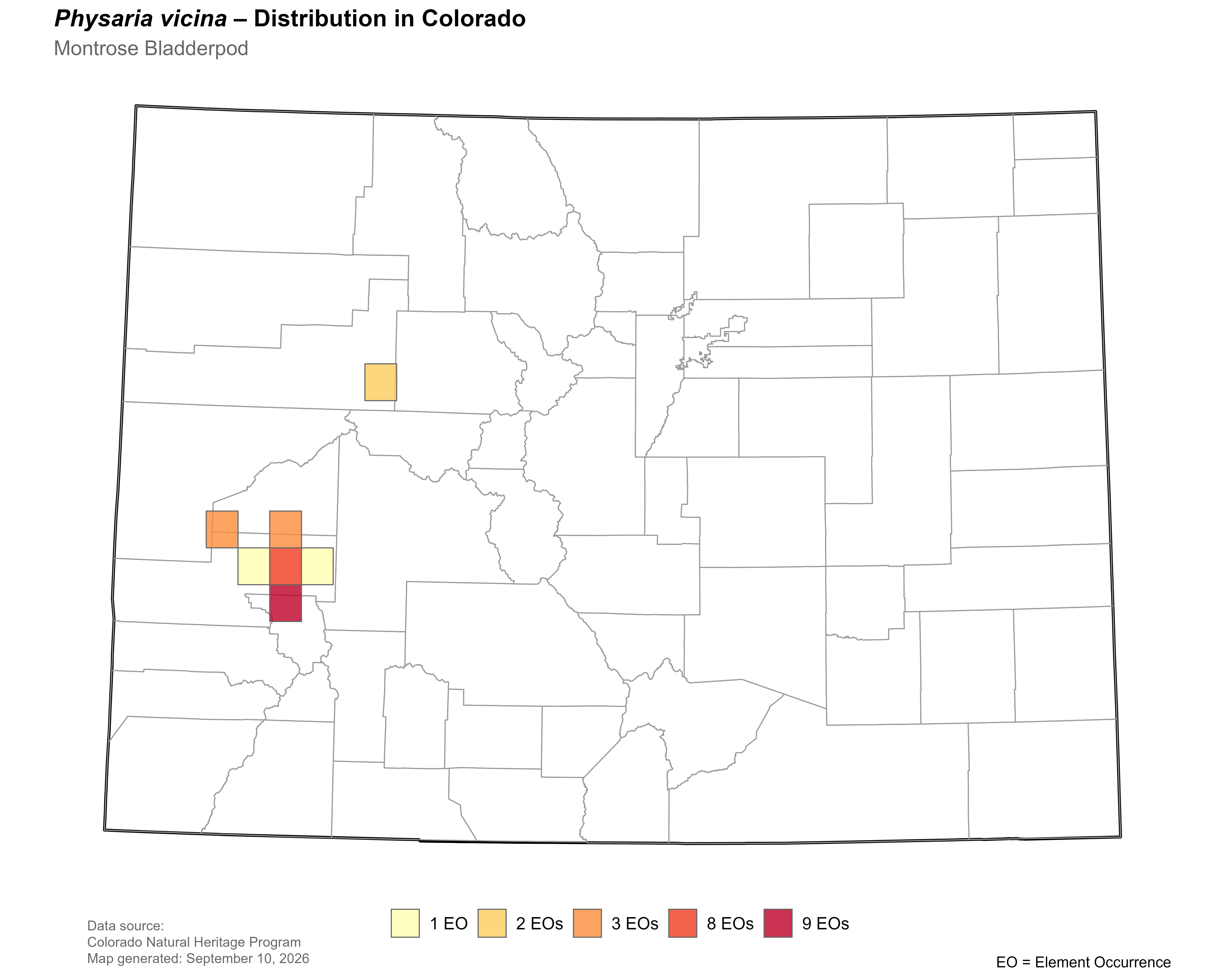
Click on map to enlarge |
Threats and Management Issues
Threats and management concerns have only been reported for half of the Physaria vicina occurrences, but of those that do document management concerns livestock grazing, competition from invasive non-native plant species, powerline maintenance and various recreation activities are mentioned as threats. Cattle and sheep grazing has been observed in five of the occurrences where threats are noted, trampling plants, and compacting soils and altering the vegetation composition (CNHP 2022). Several occurrences are within a transmission line right-of-way and could be impacted by powerline maintenance. Invasive plants species, including cheatgrass (Bromus tectorum) and yellow sweet clover (Melilotus officinale) have been reported from six occurrences and may outcompete P. vicina (CNHP 2022). At least 3 sites are utilized by hunters and the habitat is managed for wildlife rather than rare plants (CNHP 2022). This species is considered to have low adaptive capacity and is expected to be extremely vulnerable to climate change under both RCP 4.5 and 8.5 scenarios, as assessed for the 2025 Colorado State Wildlife Action Plan (CNHP 2025).
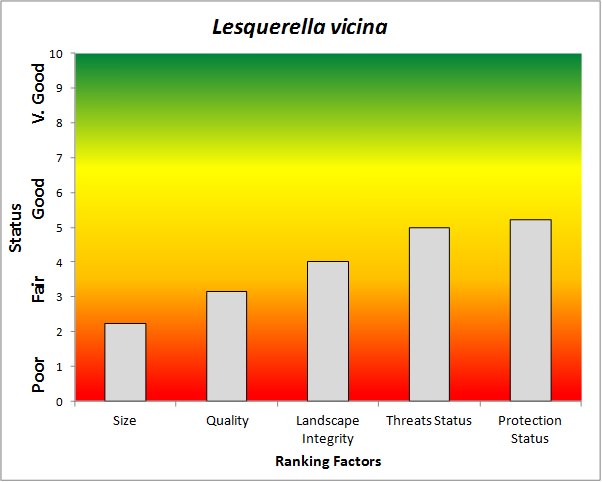
Summary results of an analysis of the status of Physaria vicina based on several ranking factors. This species was concluded to be Moderately Conserved. From Rondeau et al. 2011. |
References
- Ackerfield, J. 2015. Flora of Colorado. BRIT Press, Botanical Research Institute of Texas, Fort Worth, TX. 818 pp.
- Al-Shehbaz, I. A., and S. L. O'Kane. 2002. Lesquerella is united with Physaria (Brassicaceae). Novon 12:319-329.
- Anderson, J.L., J.L. Reveal, R.C. Rollins. 1997. Lesquerella vicina (Brassicaceae), a new species from the Uncompahgre River Valley in western Colorado. Novon 7:9-12.
- Colorado Natural Heritage Program (CNHP). 2022. Biodiversity Tracking and Conservation System (Biotics 5). Colorado Natural Heritage Program, Colorado State University, Fort Collins.
- Colorado Natural Heritage Program (CNHP). 2025. Climate Change Vulnerability Assessment of Colorado Tier 1 and Tier 2 Plant Species of Greatest Conservation Need (SCGN) for the 2025 Colorado State Wildlife Action Plan. Colorado Natural Heritage Program, Colorado State University, Fort Collins.
- Flora of North America Editorial Committee (FNA). 2010. Flora of North America north of Mexico. Vol. 7. Magnoliophyta: Salicaceae to Brassicaceae. Oxford University Press, New York. xxii + 797 pp.
- Handwerk, J., L. Grunau, and S. Panjabi. 2015. Colorado Wildlife Action Plan: 2015 Rare Plant Addendum. Colorado Natural Heritage Program, Colorado State University, Fort Collins, Colorado, USA.
- Lavender, A.E., M.M. Fink, S.E. Linn, D.M. Theobald. 2011. Colorado Ownership, Management, and Protection v9 Database. Colorado Natural Heritage Program and Geospatial Centroid, Colorado State University, Fort Collins, CO. (30 September).
- Neely, B., S. Panjabi, E. Lane, P. Lewis, C. Dawson, A. Kratz, B. Kurzel, T. Hogan, J. Handwerk, S. Krishnan, J. Neale, and N. Ripley. 2009. Colorado Rare Plant Conservation Strategy, Developed by the Colorado Rare Plant conservation Initiative. The Nature Conservancy, Boulder, Colorado, 117 pp.
- Rondeau, R., K. Decker, J. Handwerk, J. Siemers, L. Grunau, and C. Pague. 2011. The state of Colorado's biodiversity 2011. Prepared for The Nature Conservancy. Colorado Natural Heritage Program, Colorado State University, Fort Collins, Colorado.
- Southwest Environmental Information Network (SEINet). 2022. Collections Databases. Online. Available: https://swbiodiversity.org/seinet/collections/index.php (accessed 2022).
- USDA, NRCS. 2022. The PLANTS Database. National Plant Data Team, Greensboro, NC 27401-4901 USA.
- Weber, W. A. and R. C. Wittmann. 2012. Colorado Flora, Eastern Slope, A Field Guide to the Vascular Plants, Fourth Edition. Boulder, Colorado. 555 pp.
- Weber, W. A. and R. C. Wittmann. 2012. Colorado Flora, Western Slope, A Field Guide to the Vascular Plants, Fourth Edition. Boulder, Colorado. 532 pp.