

Scientific Name : Physaria congesta
Author : (Rollins) O'Kane & Al-Shehbaz NatureServe Explorer
Common Name : Dudley Bluffs Bladderpod
 Current Research Activities
 1997 profile


☰ Click link below for details.
Taxonomy
Brassicaceae (mustard family)
=Lesquerella congesta
Ranks and Status
State Rank : S1
State Rank Reason : Physaria congesta is a narrow endemic of the Piceance Basin in Rio Blanco County in northwestern Colorado, USA. There are 8 known occurrences, all within an 86 square kilometer range. Threats to Physaria congesta include oil and gas development and mineral extraction, incompatible livestock grazing, trampling by wild horses, and long term drought. This species is expected to be extremely vulnerable to climate change.
U.S. Endangered Species Act : ESA Threatened
Colorado Threatened and Endangered List : none
Other Statuses : SWAP Tier 1
Description and Phenology
General Description:
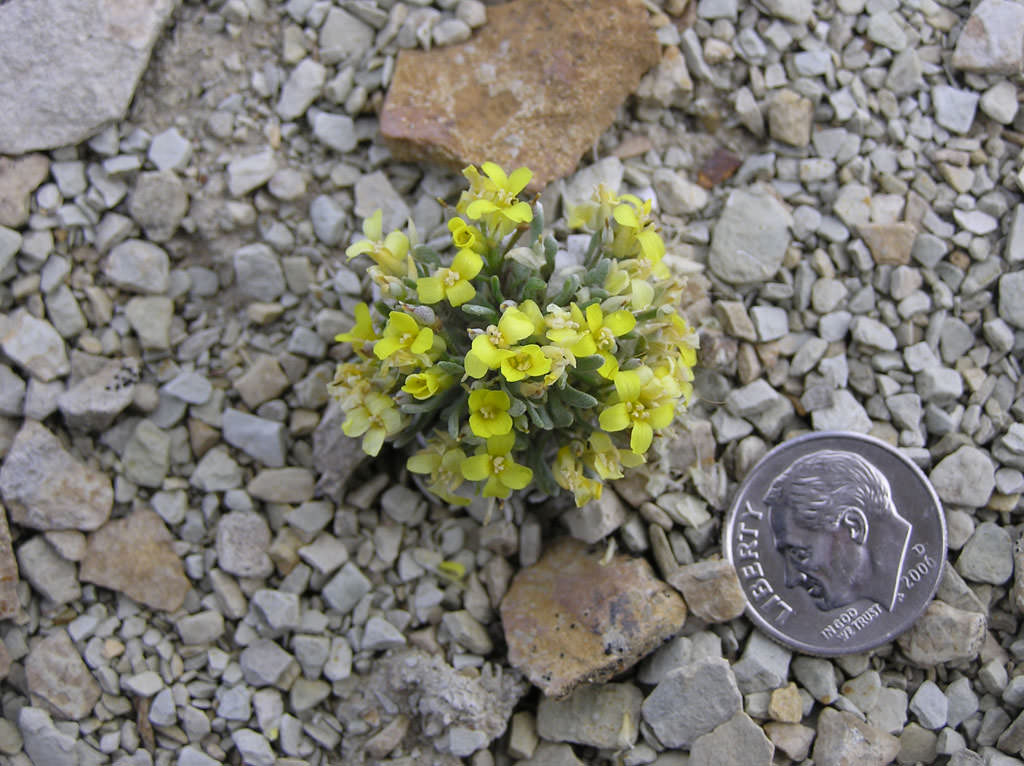
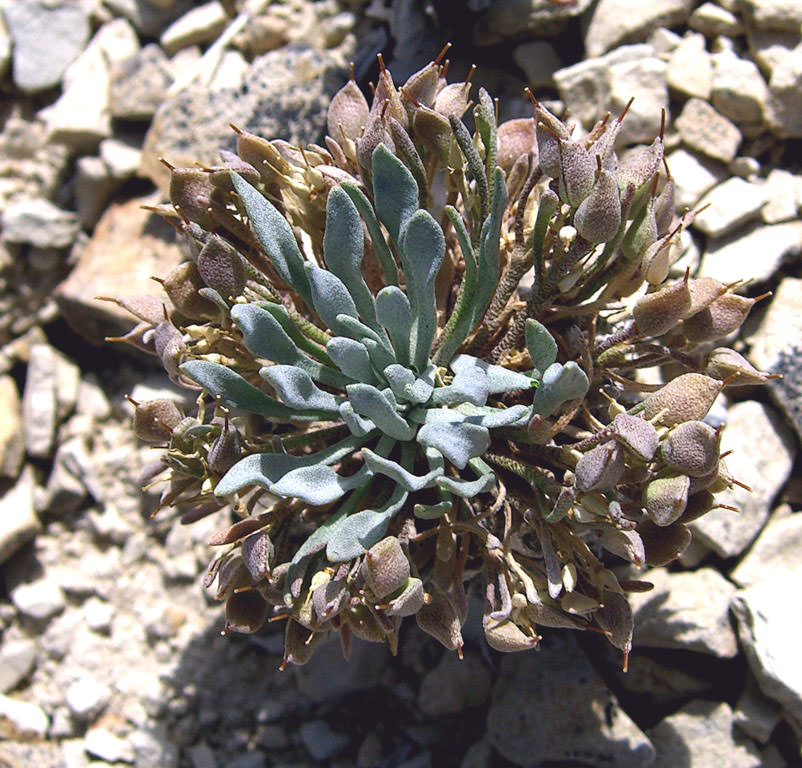
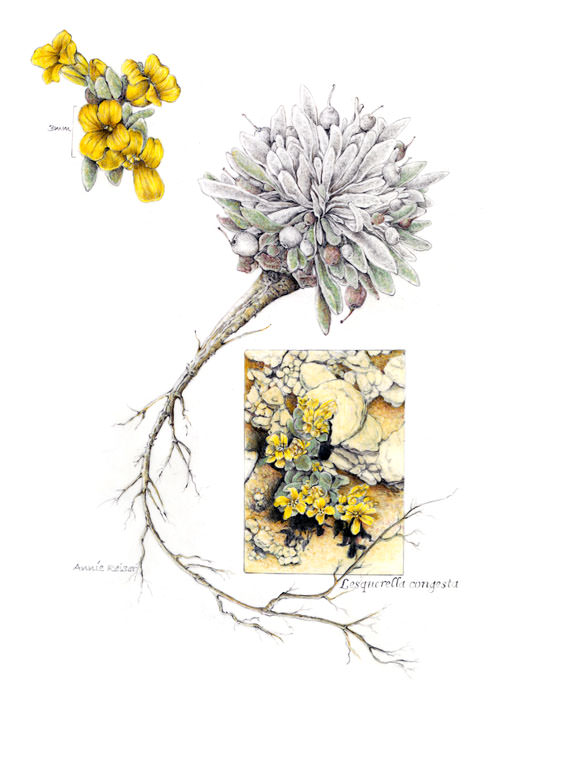
Very small, densely tufted perennial, usually less than 2 cm across. Yellow flowers are in umbelliform racemes that barely exceed the basal leaves in height; the pedicels curved or sigmoid. Basal and cauline leaves are similar, spatulate, 1-5 mm wide, with no distinction between the blade and the petiole. Fruit are almost spherical. Plants have stellate hairs throughout. Very long, thin taproot (Spackman et al. 1997).
Look Alikes:
The caudices of Lesquerella congesta are extremely short or non-existent; plants form a single tight and dense crown. The caudices of L. alpina are several; plants form a loose crown (Spackman et al. 1997.
Phenology:
Floweris early April-May; fruiting late May-June.
 |
Habitat
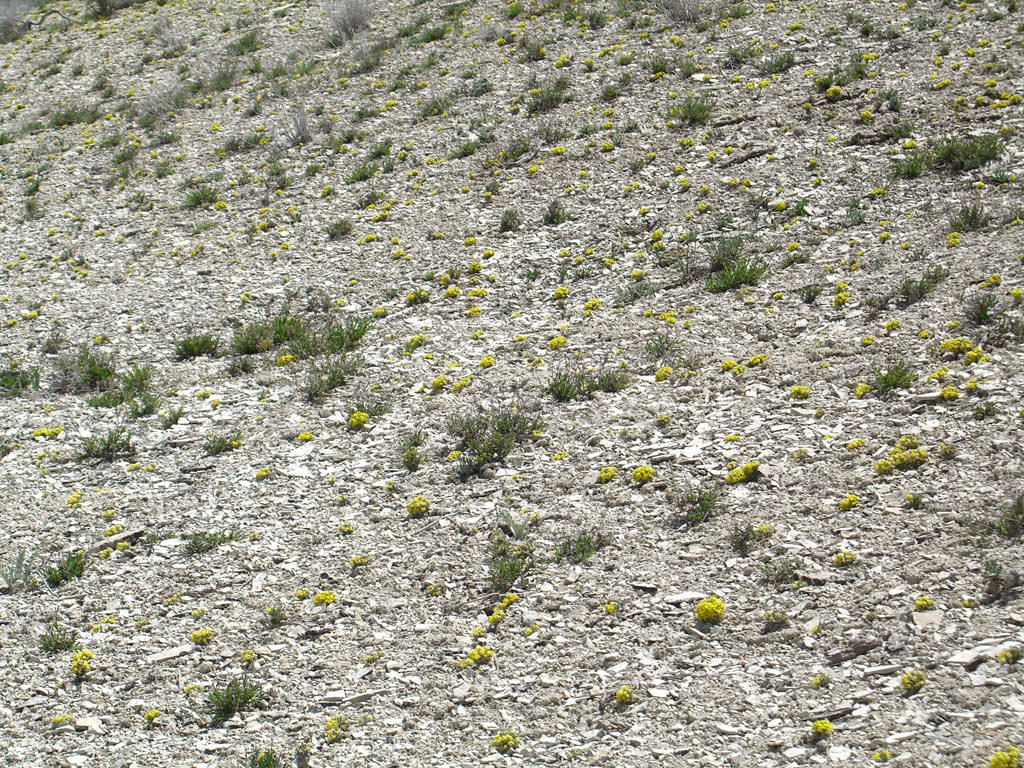
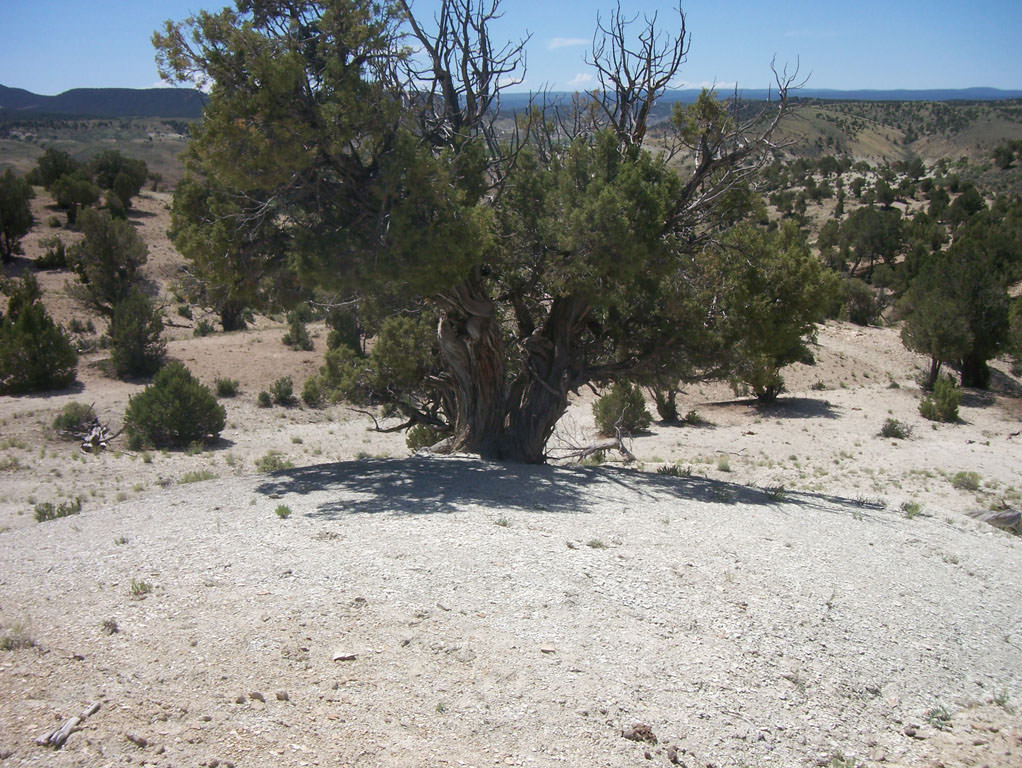
Barren, white shale outcrops of the Green River and Uinta Formations. Outcrops are exposed along drainages through erosion from downcutting of streams (Spackman et al. 1997). Dominant associated plant community is Pinyon-Juniper woodland. Other associated taxa include: Purshia tridentata, Cercocarpus montanus, Gutierrezia sarothrae, and Achnatherum hymenoides.
click on image to enlarge
 |
 |
Elevation Range:
6,121 - 6,556 feet (1,866 - 1,998 meters)
Distribution
Colorado Endemic:
Yes
Range:
Physaria congesta is endemic to Rio Blanco County, Colorado, USA; it is found only along the Piceance and Yellow Creek drainages. Estimated range extent in Colorado of 86 square kilometers was calculated in GeoCAT using occurrence data provided by the Colorado Natural Heritage Program (2022).
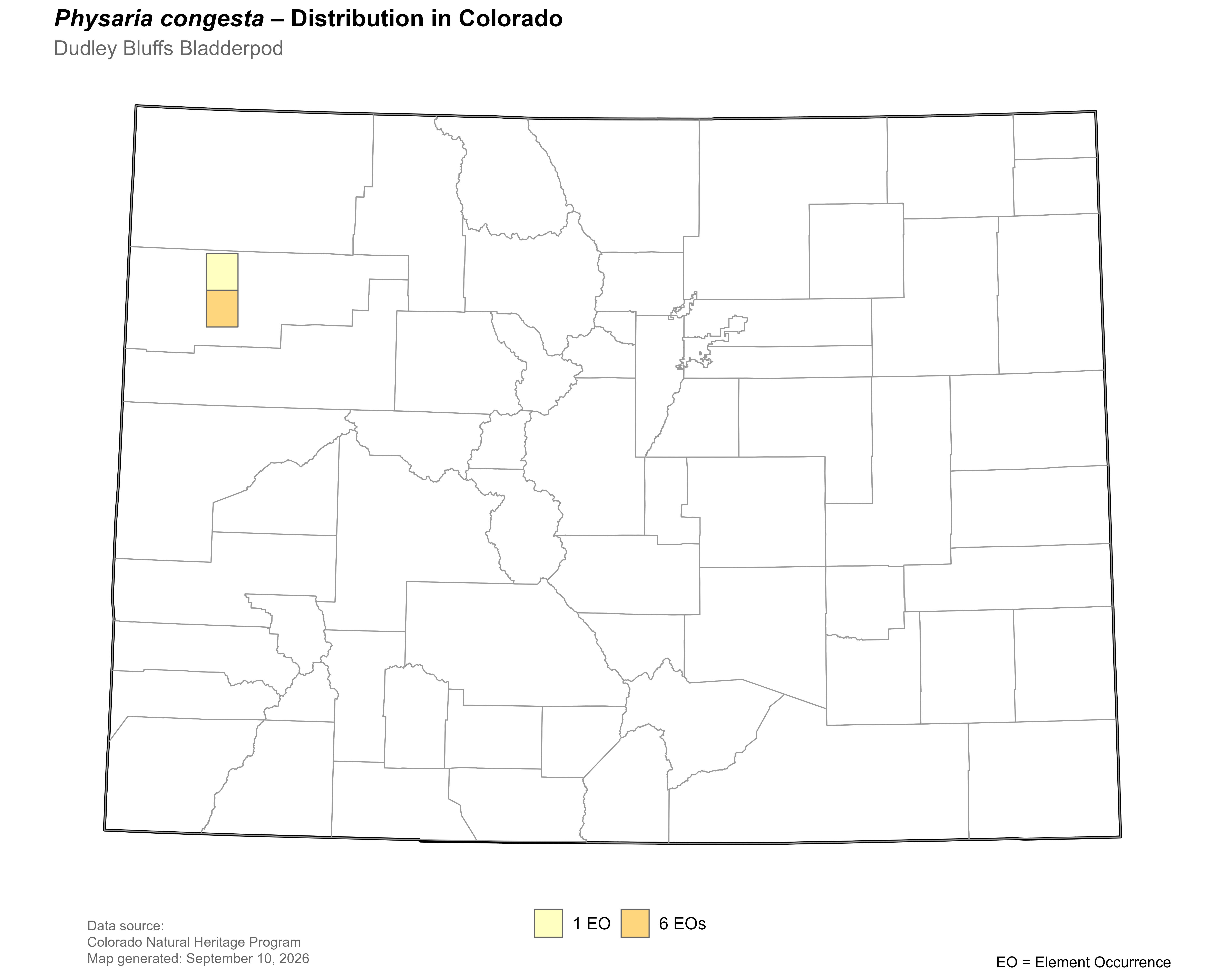
Click on map to enlarge |
Threats and Management Issues
Disturbance due to mining and oil and gas development and related actions are considered to be the primary threats to the species (Rondeau et al. 2011, USFWS 2020a). Mining of oil shale and/or nahcolite solution could impact up to 100% of the occupied habitat. A nahcolite plant was built in 2000 within the species range. Other threats include livestock grazing and trampling by wild horses and competition from invasive plant species (USFWS 2020b; Krening 2023). ORV's can cause severe damage if access is allowed into the habitat. This species is considered to have low adaptive capacity and is expected to be extremely vulnerable to climate change under both RCP 4.5 and 8.5 scenarios, as assessed for the 2025 Colorado State Wildlife Action Plan (CNHP 2025).
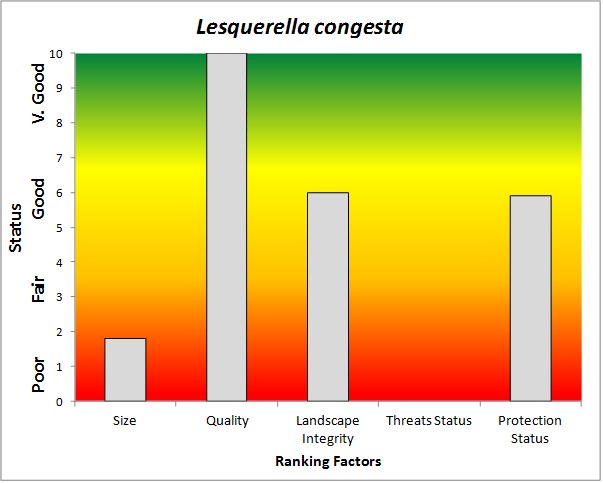
Summary results of an analysis of the status of Physaria congesta based on several ranking factors. This species was concluded to be "weakly conserved. From Rondeau et al. 2011. |
References
- Ackerfield, J. 2012. The Flora of Colorado. Colorado State University Herbarium. 433 pp.
- Al-Shehbaz, I. A., and S. L. O'Kane. 2002. Lesquerella is united with Physaria (Brassicaceae). Novon 12:319-329.
- Colorado Native Plant Society. 1989. Rare plants of Colorado. Rocky Mountain Nature Association, Colorado Native Plant Society, Estes Park, Colorado. 73 pp.
- Colorado Natural Heritage Program (CNHP). 2022. Biodiversity Tracking and Conservation System (Biotics 5). Colorado Natural Heritage Program, Colorado State University, Fort Collins.
- Colorado Natural Heritage Program (CNHP). 2025. Climate Change Vulnerability Assessment of Colorado Tier 1 and Tier 2 Plant Species of Greatest Conservation Need (SCGN) for the 2025 Colorado State Wildlife Action Plan. Colorado Natural Heritage Program, Colorado State University, Fort Collins.
- Elliott, B. A., S. Spackman Panjabi, B. Kurzel, B. Neely, R. Rondeau, M. Ewing. 2009. Recommended Best Management Practices for Plants of Concern. Practices developed to reduce the impacts of oil and gas development activities to plants of concern. Unpublished report prepared by the Rare Plant Conservation Initiative for the National Fish and Wildlife Foundation.
- Flora of North America Editorial Committee (FNA). 2010. Flora of North America north of Mexico. Vol. 7. Magnoliophyta: Salicaceae to Brassicaceae. Oxford University Press, New York. xxii + 797 pp.
- Goodrich, S., and E. Neese. 1986. Uinta Basin flora. U.S. Forest Service, Intermountain Region, Ogden, Utah. 320 pp.
- Handwerk, J., L. Grunau, and S. Panjabi. 2015. Colorado Wildlife Action Plan: 2015 Rare Plant Addendum. Colorado Natural Heritage Program, Colorado State University, Fort Collins, Colorado, USA.
- Krening, P. 2021. Dudley Bluffs bladderpod and twinpod (Physaria congesta and Physaria obcordata) Population trend monitoring summary – 2021. Prepared for the Colorado State Office - Bureau of Land Management, U.S. Department of the Interior.
- Krening, P. 2022. Dudley Bluffs bladderpod and twinpod (Physaria congesta and Physaria obcordata) Population trend monitoring summary – 2022. Prepared for the Colorado State Office - Bureau of Land Management, U.S. Department of the Interior.
- Krening, P. 2023. Dudley Bluffs bladderpod and twinpod (Physaria congesta and Physaria obcordata) Population Trend Monitoring Summary. Bureau of Land Management unpublished report.
- Neely, B., S. Panjabi, E. Lane, P. Lewis, C. Dawson, A. Kratz, B. Kurzel, T. Hogan, J. Handwerk, S. Krishnan, J. Neale, and N. Ripley. 2009. Colorado Rare Plant Conservation Strategy, Developed by the Colorado Rare Plant conservation Initiative. The Nature Conservancy, Boulder, Colorado, 117 pp.
- O'Kane, S. L. 1988. Colorado's Rare Flora. Great Basin Naturalist. 48(4):434-484.
- Rocky Mountain Society of Botanical Artists. 2009. RARE Imperiled Plants of Colorado, a traveling art exhibition. Exhibition catalogue developed by the Denver Botanic Gardens and Steamboat Art Museum.
- Rondeau, R., K. Decker, J. Handwerk, J. Siemers, L. Grunau, and C. Pague. 2011. The state of Colorado's biodiversity 2011. Prepared for The Nature Conservancy. Colorado Natural Heritage Program, Colorado State University, Fort Collins, Colorado.
- Spackman, S., B. Jennings, J. Coles, C. Dawson, M. Minton, A. Kratz, and C. Spurrier. 1997. Colorado rare plant field guide. Prepared for Bureau of Land Management, U.S. Forest Service and U.S. Fish and Wildlife Service by Colorado Natural Heritage Program.
- U.S. Fish and Wildlife Service (USFWS). 2020a. Final Recovery plan for the Dudley Bluff Bladderpod (Physaria congesta) and Dudley Bluffs Twinpod (Physaria obcordata). March 2020. U.S. Fish and Wildlife Service, Western Colorado Ecological Services Field Office Grand Junction, Colorado. Online. Available: https://ecos.fws.gov/docs/recovery_plan/Dudley%20Bluffs_Final%20RP_signed_1.pdf (Accessed 2022).
- U.S. Fish and Wildlife Service (USFWS). 2020b. 5-YEAR REVIEW Dudley Bluffs bladderpod (Physaria (Lesquerella) congesta) and Dudley Bluffs twinpod (Physaria obcordata) Western Colorado Ecological Services Field Office, Grand Junction, Colorado. https://ecos.fws.gov/docs/five_year_review/doc6424.pdf
- U.S. Fish and Wildlife Service. 1990. Endangered and threatened wildlife and plants: final rule to determine Lesquerella congesta and Physaria obcordata to be threatened species.
- U.S. Fish and Wildlife Service. 1993. Dudley Bluffs bladderpod and Dudley Bluffs twinpod recovery plan. Denver, Colorado.
- USDA, NRCS. 2022. The PLANTS Database. National Plant Data Team, Greensboro, NC 27401-4901 USA.
- Weber, W. A. and R. C. Wittmann. 2012. Colorado Flora, Western Slope, A Field Guide to the Vascular Plants, Fourth Edition. Boulder, Colorado. 532 pp.