

Scientific Name : Phacelia gina - glenneae
Author : N.D. Atwood & S.L. Welsh NatureServe Explorer
Common Name : Troublesome Phacelia
 Current Research Activities


☰ Click link below for details.
Taxonomy
Hydrophyllaceae (waterleaf family)
Phacelia gina-glenneae was described as a new species in 2013 (Atwood and Welsh 2013). Subsequent genetic analyses by Neale et al. (2014) supported the hypothesis of three Phacelia species in north central, Colorado: P. gina-glenneae in Grand County, P. formosula in Jackson County, and P. "scullyi" (not published) in Larimer County. Since that time genetic and morphologic research of the Phacelia populations has been on-going with the most recent research indicating that taxonomic separation of the three Phacelia groups in Larimer, Jackson, and Grand counties is not warranted and that P. gina-glenneae and P. "scullyi" should be subsumed into Phacelia formosula (Naibauer and McGlaughlin 2022). We consider the concept of P. formosula to include the Larimer and Jackson county populations and maintain the concept of P. gina-glenneae until recent research has been published; upon publication it will be subsumed into the P. formosula concept (CNHP 2022).
Ranks and Status
State Rank : S1
State Rank Reason : Phacelia gina-glenneae is known from one location in Grand County, Colorado (USA), where it is restricted to the Troublesome Formation. Potential threats include incompatible livestock grazing, competition from invasive plants species and habitat shifting and alteration associated with climate change.
U.S. Endangered Species Act : none
Colorado Threatened and Endangered List : none
Other Statuses : BLM
Description and Phenology
General Description:
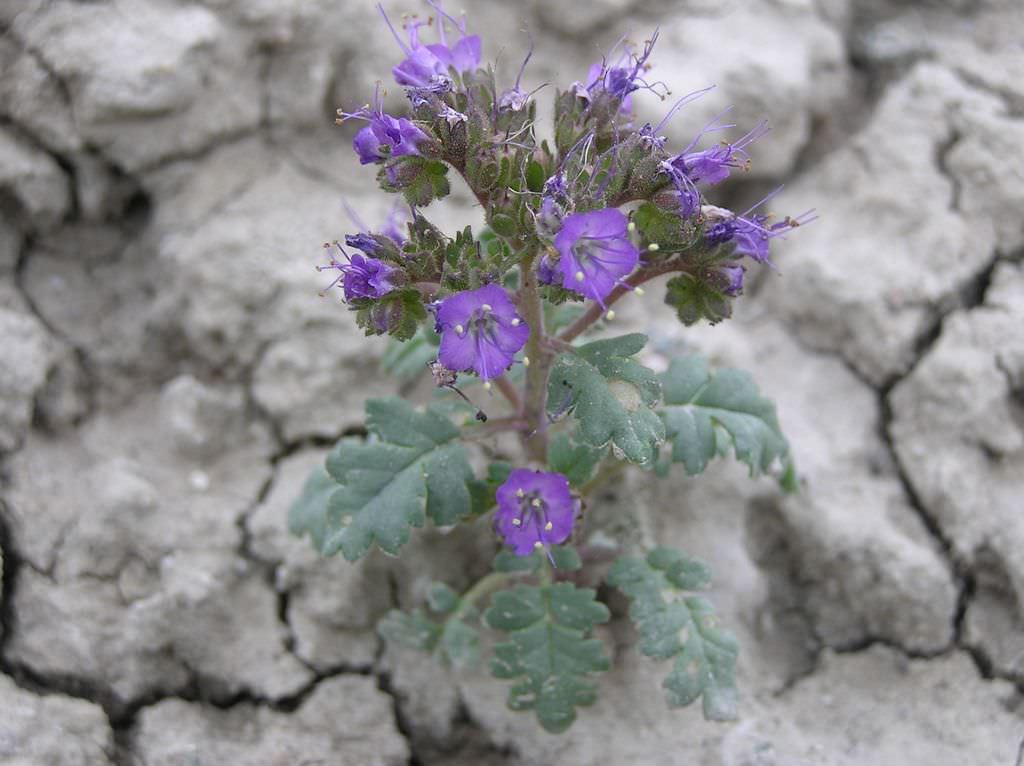
Annuals, 0.5-1.2 (1.6) dm; stems usually solitary or with 2-6 lateral branches from the base, glandular; leaves irregularly lobed to pinnatifid; calyx 4.2-5.5 mm long; corolla ca. 4.5 mm long; seeds 2.6-3.3 mm long, reddish-brown, pitted, excavated on either side of the ventral ridge, the margins entire (Ackerfield 2015).
Look Alikes:
Distinguished from other Phacelias in the area by it's annual habit, few-branched, slender stems, purple flowers, exserted stamens, and reddish-brown seeds.
Phenology:
Flowers in August, fruiting in August-September.
Habitat
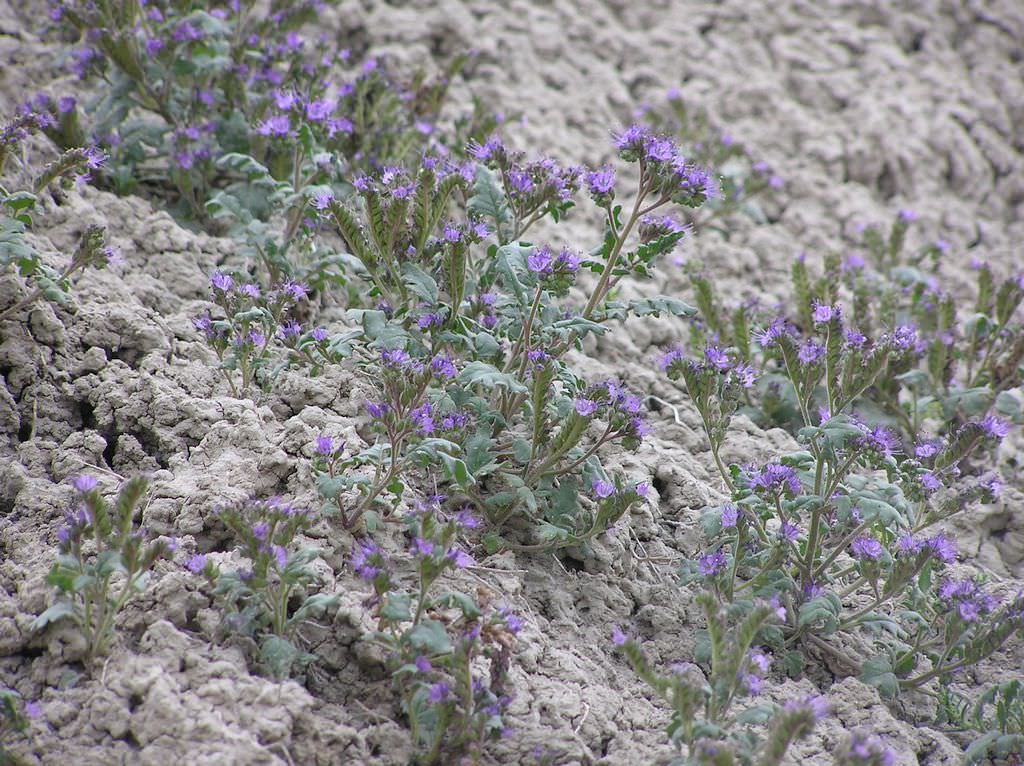
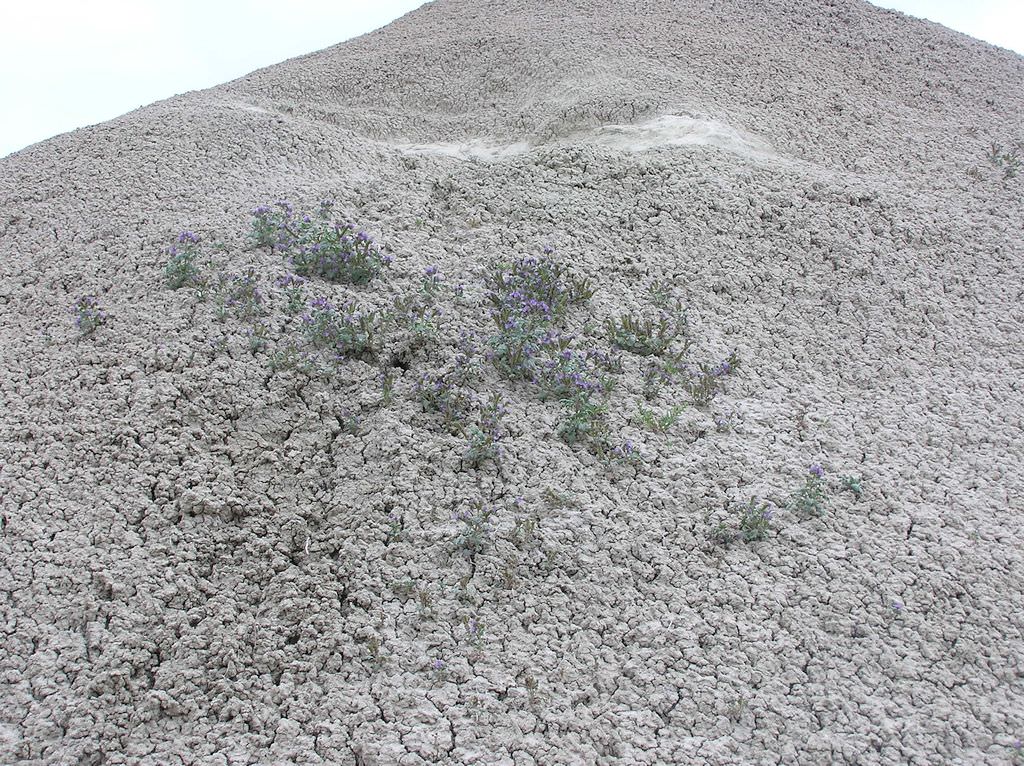
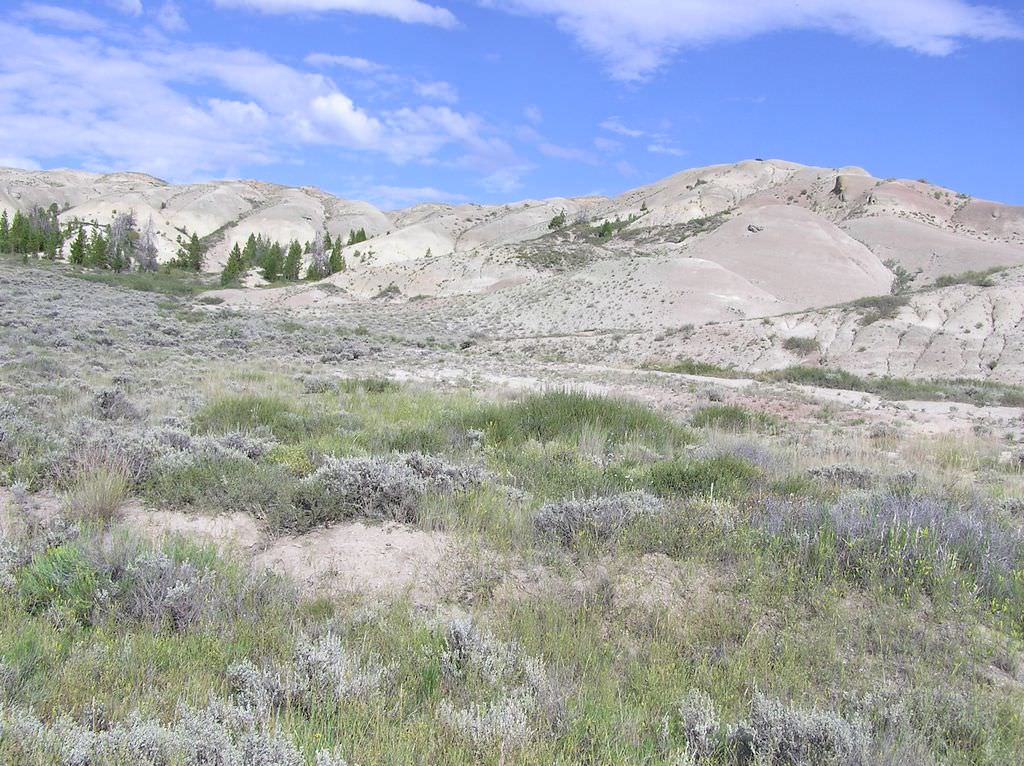
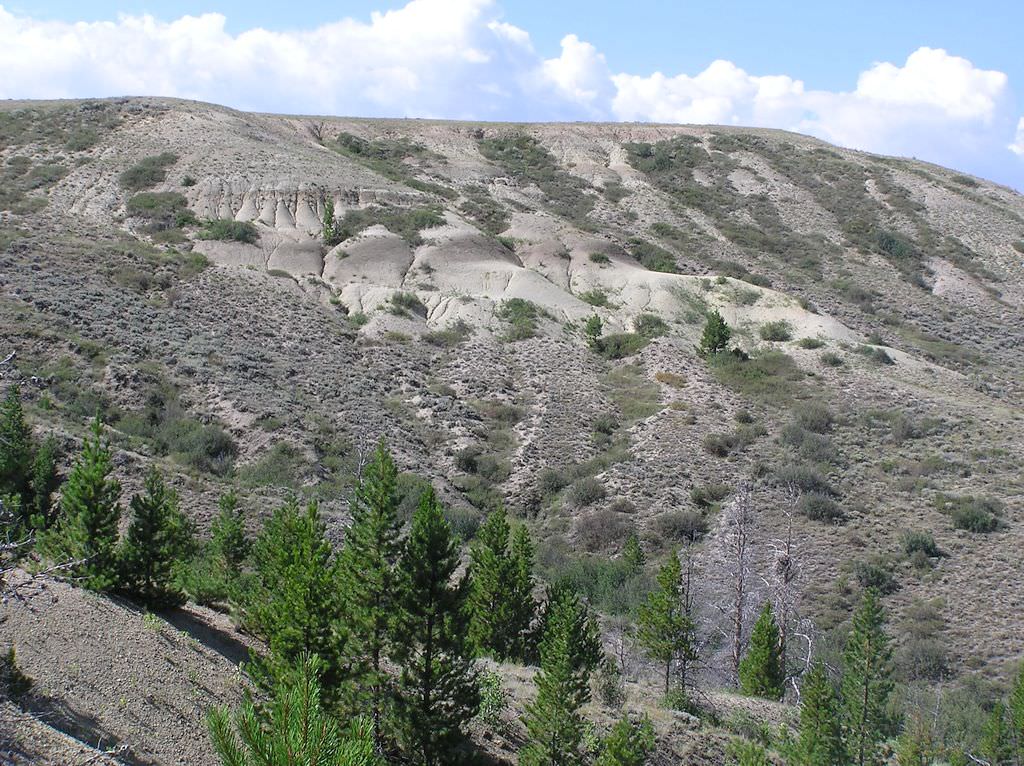
Found on barren, clay or sandy outcropping of the Troublesome Creek Formation. Associated species include Astragalus kentrophyta, Ericameria nauseosa, Artemisia tridentata, Purshia tridentata, Monolepis nuttaliana, lichen species.
click on image to enlarge
 |
 |
 |
Elevation Range:
7,512 - 7,689 feet (2,290 - 2,344 meters)
Distribution
Colorado Endemic:
Yes
Range:
Phacelia gina-glenneae is endemic to Grand County in north central Colorado (USA), where it is found on the Troublesome Formation. The estimated range extent in Colorado of 0.324 square kilometers was calculated in GeoCAT using occurrence data provided by the Colorado Natural Heritage Program (2022).
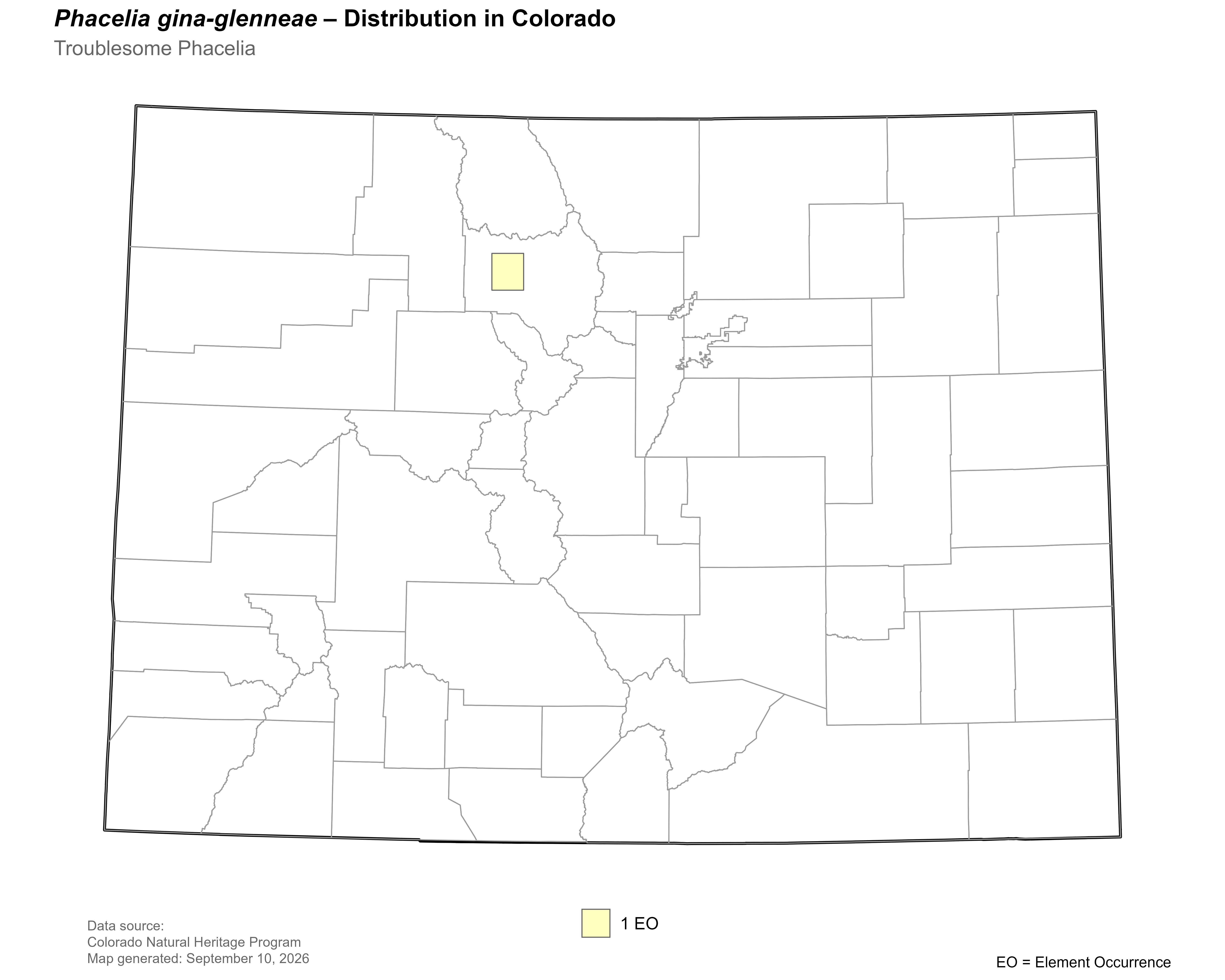
Click on map to enlarge |
Threats and Management Issues
This species could be threatened by incompatible grazing, competition from invasive plant species and potential development pressures. In 2015, two small infestations of weeds were observed growing on the barren soils with Phacelia; Chenopodium album and Euphorbia prostrata (CNHP 2022). Energy development, as well as drought, and habitat shifting and alteration due to climate change are listed as threats in Appendix A of the Colorado State Wildlife Action Plan (Handwerk et al. 2015).
References
- Ackerfield, J. 2015. Flora of Colorado. BRIT Press, Botanical Research Institute of Texas, Fort Worth, TX. 818 pp.
- Atwood, N.D. and S.L. Welsh. 2013. New plant taxa from Colorado, New Mexico, and Arizona. Western North American Naturalist 73(1): 113-115.
- Colorado Natural Heritage Program (CNHP). 2022. Biodiversity Tracking and Conservation System (Biotics 5). Colorado Natural Heritage Program, Colorado State University, Fort Collins.
- Neale, J., A. Schwabe, M. Islam, M. DePrenger-Levin, and D. Atwood. 2014. Phacelia formosula: Surveys, Population Assessment, and Assessment of Genetic Diversity. US Fish and Wildlife Final Report. Denver Botanic Gardens and Brigham Young University.
- SEINet. 2022. Southwest Environmental Information Network; Regional Herbaria Network Collections Database. http://swbiodiversity.org/seinet/collections/index.php?catid=2 (accessed 28 Feb., 2022).
- USDA, NRCS. 2022. The PLANTS Database. National Plant Data Team, Greensboro, NC 27401-4901 USA.