

Scientific Name : Penstemon degeneri
Author : Crosswhite NatureServe Explorer
Common Name : Degener Beardtongue
 Current Research Activities
 1997 profile


☰ Click link below for details.
Taxonomy
Plantaginaceae (plantain family)
Ackerfield (2015, 2022) places this genus in the Plantaginaceae family.
Ranks and Status
State Rank : S2S3
State Rank Reason : Penstemon degeneri is a narrow endemic, known from 26 occurrences in and around the Arkansas River Canyon in Colorado, USA. Threats to the species include motorized and non-motorized recreation, competition from non-native invasive plants, livestock grazing and trampling, and prolonged drought and habitat alteration due to climate change.
U.S. Endangered Species Act : none
Colorado Threatened and Endangered List : none
Other Statuses : BLM, SWAP Tier 1, USFS
Description and Phenology
General Description:
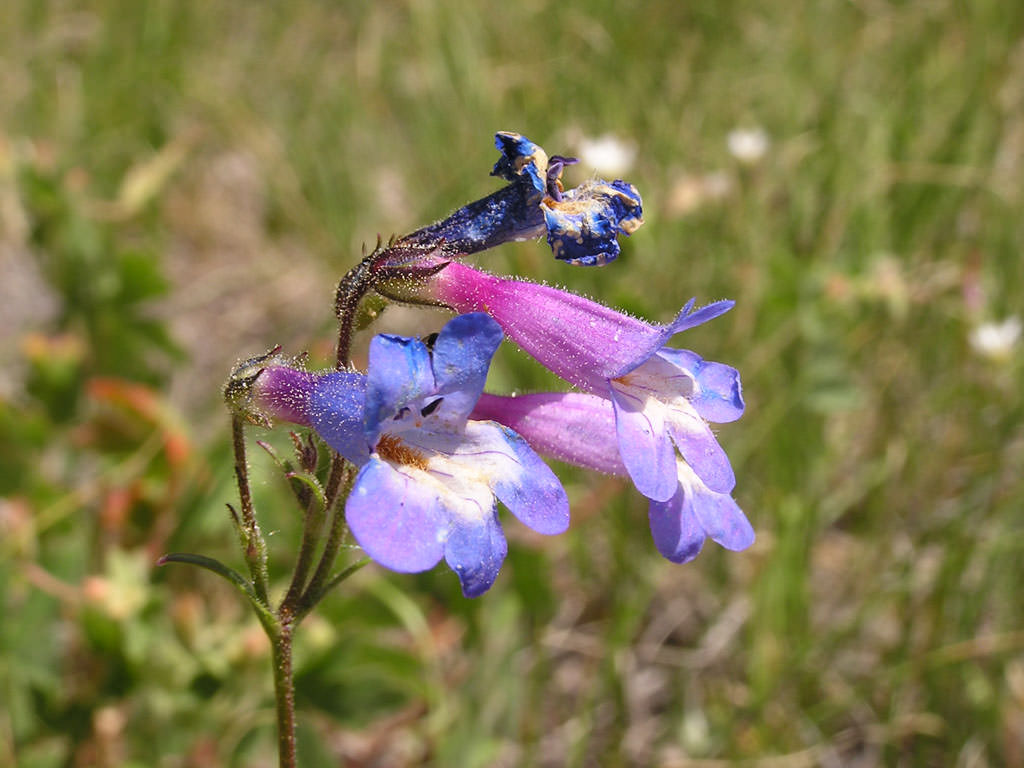
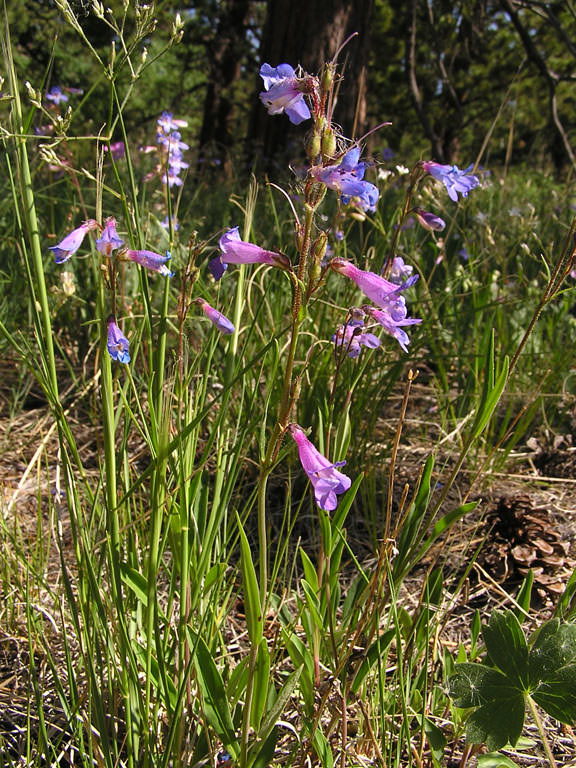
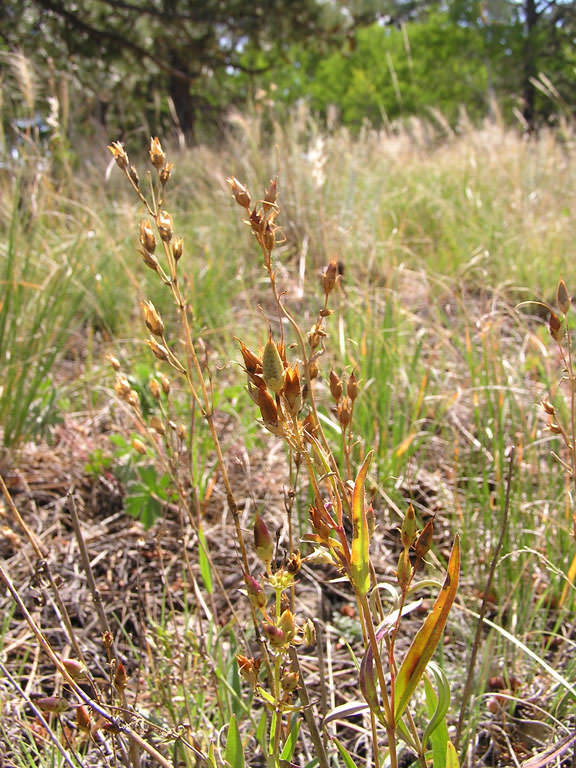
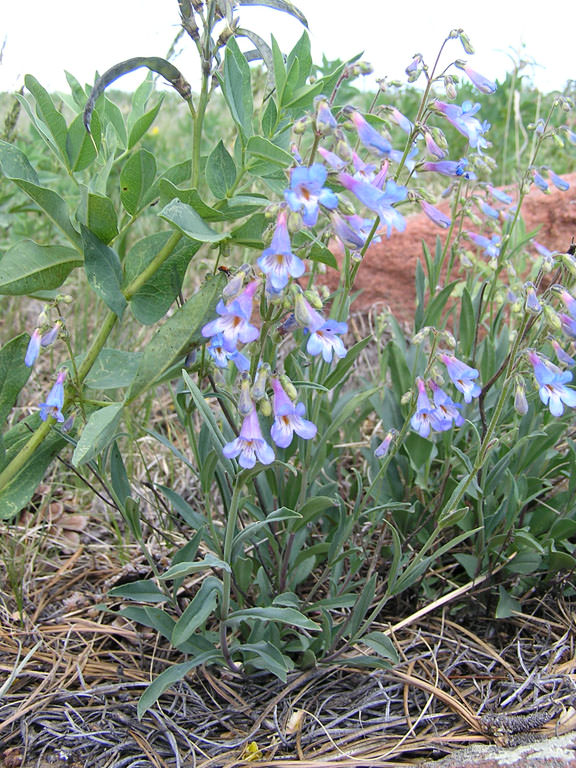
Penstemon degeneri is a perennial herb from 25 to 40 cm tall with five or more, slender (1.0 to 2.5 mm diameter at base), leafy, short-pubescent stems and a suffrutescent caudex. The basal leaves are lanceolate, entire, and up to 6 cm long and 16 mm wide (Spackman et al. 1997). The cauline leaves are more linear, more pubescent, and more sessile. The unleafy, sparingly glandular inflorescence is 3 to 10 cm high, with 2 to 10 tubular flowers at the ends of the stems. The dark blue to violet corolla of the flower is gradually inflated, 14 to 19 mm long and 4 to 5 mm wide at the mouth. The corollas are slightly two-ridged on the floor and have straight, reddish guidelines and sparse yellow hairs in the corolla throat. The staminode is also bearded with sparse golden hairs for about half its length. The anther sacs are 2.0 mm across the connective and are longer than wide. The papery calyx is persistent and the dehisced capsules are 7 to 9 mm long, with small, dark brown, irregularly angled seeds (Beatty et al. 2004).
Look Alikes:
Penstemon degeneri is similar to P. radicosus in appearance, though P. radicosus is limited to Jackson County in north central, Colorado, and P. degeneri is found in south central Colorado. Penstemon griffinii is the only relative in the alliance in Colorado. It is characterized by having a deeply 2-ridged corolla and a dense covering of long, golden hairs on the floor and opening of the corolla and staminode. Penstemon degeneri has a less strongly ridged corolla and an opening with a few hairs and a glabrous floor. The staminode has an orange beard (Peterson and Harmon 1981). Penstemon griffinii has a basal rosette through the flowering period, and smaller, linear stem leaves (2-3 cm long, 2 mm wide), while Penstemon degeneri lacks a basal rosette at flowering time, and has longer and wider stem leaves (up to 6 cm long and 16 mm wide, Spackman et al. 1997). Penstemon griffinii has dense golden hairs in its corolla throat, while P. degeneri has sparser white to light yellow hairs. (Caution: both species have dense golden yellow hairs on the staminode which may be confused with hairs on the corolla itself).
Phenology:
Flowering occurs June through mid July, and fruits set late July (Spackman et al. 1997).
Habitat
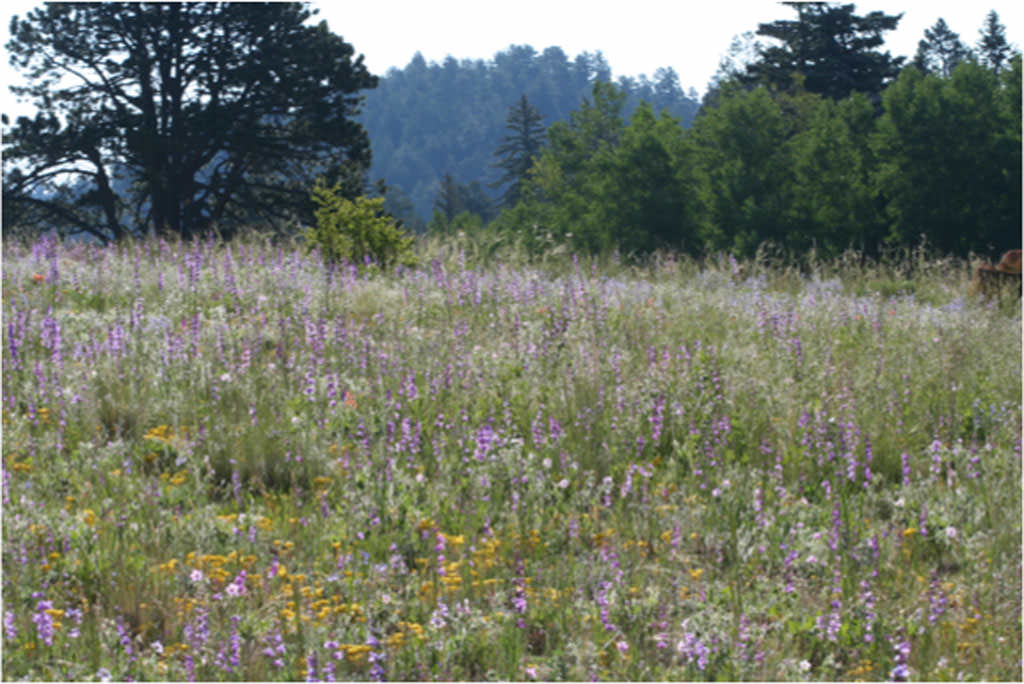
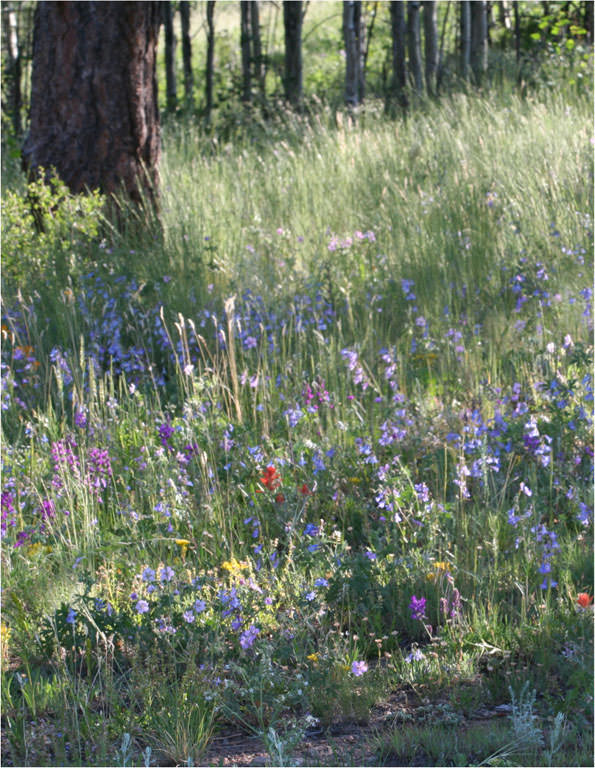
This species is found in open pinyon-juniper woodlands and montane grasslands, in rocky soils with igneous bedrock. The plants grow mainly near the rim of canyons, and also in cracks of large rock slabs, in full sun or shade. Associated species include Quercus gambelii, Sitanion longifolium, Verbena bacteata, Lesquerella montana, Grindelia squarrosa, Heterotheca horrida, Artemisia frigida, Carex stenophylla, Eriogonum jamesii, Opuntia phaeacantha, Atriplex canescens, Pinus edulis, and Juniperus monosperma (Peterson and Harmon 1981).
click on image to enlarge
 |
 |
Elevation Range:
6,222 - 9,447 feet (1,896 - 2,879 meters)
Distribution
Colorado Endemic:
Yes
Range:
Penstemon degeneri is endemic to Fremont County and adjacent portions of Custer, Park, and Teller counties in south central Colorado, USA. The estimated range extent in Colorado of 1192 square kilometers was calculated in GeoCAT using occurrence data provided by the Colorado Natural Heritage Program (2022).
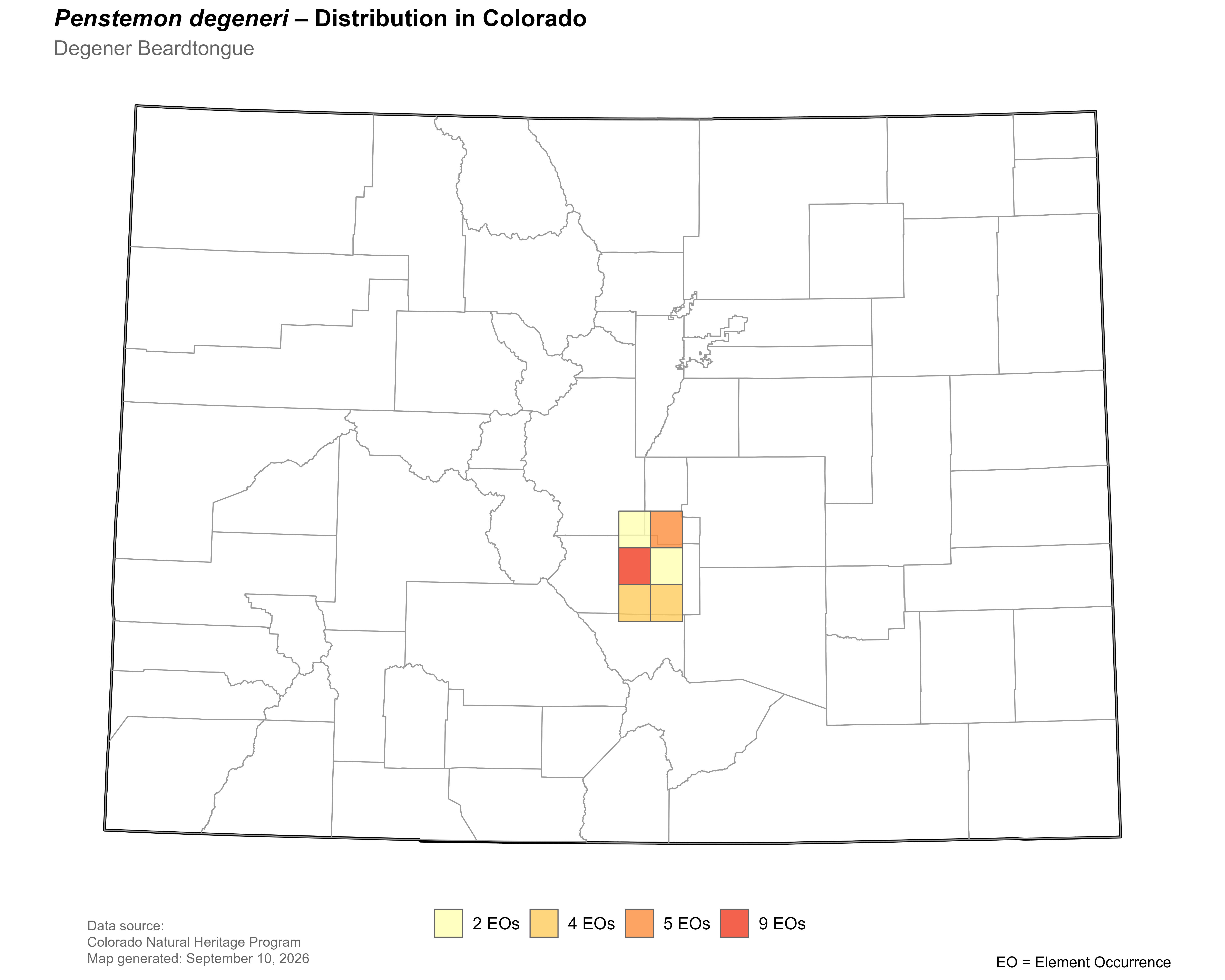
Click on map to enlarge |
Threats and Management Issues
Recreation, both motorized and non-motorized, is considered to be the primary threat to Penstemon degeneri (Rondeau et al. 2011, CNHP 2022). Additional threats to the species includes non-native plant invasion, livestock grazing and trampling, and prolonged drought and related climate change effects. Approximately 25% of the occurrences report habitat fragmentation and trampling from recreational activities, although these impacts may be more widespread than is reported given that threats and disturbances to individual occurrences have only been documented at twelve of the known sites (CNHP 2022). Populations near roads, trails, or campgrounds are at higher risk for the detrimental effects of road or trail associated activities and non-native plant invasion (Beatty et al. 2004). Competition from non-native invasive plant species has been documented in four locations, and grazing impacts have been noted at several sites. This species is considered to have moderate adaptive capacity and is expected to be moderately vulnerable to climate change under both RCP 4.5 and 8.5 scenarios, as assessed for the 2025 Colorado State Wildlife Action Plan (CNHP 2025).
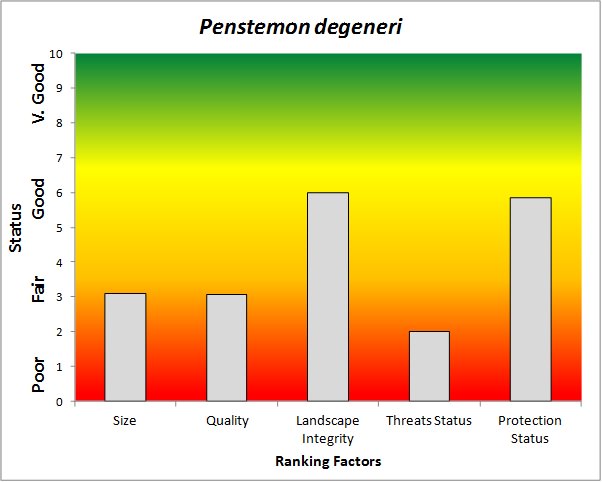
Summary results of an analysis of the status of Penstemon degeneri based on several ranking factors. This species was concluded to be moderately conserved. From Rondeau et al. 2011. |
References
- Ackerfield, J. 2015. Flora of Colorado. BRIT Press, Botanical Research Institute of Texas, Fort Worth, TX. 818 pp.
- Ackerfield, J. 2022. Flora of Colorado. Second Edition. Bot. Misc. 60. BRIT Press, Fort Worth Botanic Garden/Botanical Research Institute of Texas, U.S.A. 861 pp.
- Beatty, B.L., W.F. Jennings, and R.C. Rawlinson (2004, February 23). Penstemon degeneri Crosswhite (Degeners beardtongue): a technical conservation assessment. [Online]. USDA Forest Service, Rocky Mountain Region. Available: http://www.fs.fed.us/r2/projects/scp/assessments/penstemondegeneri.pdf.
- Cash, E. 2021. Demographic Monitoring of Degener’s Beardtongue (Penstemon degeneri) in the Bureau of Land Management-Royal Gorge Field Office.
- Colorado Native Plant Society. 1989. Rare plants of Colorado. Rocky Mountain Nature Association, Colorado Native Plant Society, Estes Park, Colorado. 73 pp.
- Colorado Natural Heritage Program (CNHP). 2022. Biodiversity Tracking and Conservation System (Biotics 5). Colorado Natural Heritage Program, Colorado State University, Fort Collins.
- Colorado Natural Heritage Program (CNHP). 2025. Climate Change Vulnerability Assessment of Colorado Tier 1 and Tier 2 Plant Species of Greatest Conservation Need (SCGN) for the 2025 Colorado State Wildlife Action Plan. Colorado Natural Heritage Program, Colorado State University, Fort Collins.
- Crosswhite, F.S. 1965. Revision of Penstemon section Penstemon (Scrophulariaceae) II. A western alliance in series Graciles. American Midland Naturalist 74:429.
- Handwerk, J., L. Grunau, and S. Panjabi. 2015. Colorado Wildlife Action Plan: 2015 Rare Plant Addendum. Colorado Natural Heritage Program, Colorado State University, Fort Collins, Colorado, USA.
- Neely, B., S. Panjabi, E. Lane, P. Lewis, C. Dawson, A. Kratz, B. Kurzel, T. Hogan, J. Handwerk, S. Krishnan, J. Neale, and N. Ripley. 2009. Colorado Rare Plant Conservation Strategy, Developed by the Colorado Rare Plant conservation Initiative. The Nature Conservancy, Boulder, Colorado, 117 pp.
- Peterson, J.S. and W. Harmon. 1981. Status report on Penstemon degeneri. Unpublished report prepared for the Colorado Natural Areas Program, Denver, CO.
- Rondeau, R., K. Decker, J. Handwerk, J. Siemers, L. Grunau, and C. Pague. 2011. The state of Colorado's biodiversity 2011. Prepared for The Nature Conservancy. Colorado Natural Heritage Program, Colorado State University, Fort Collins, Colorado.
- Spackman, S., B. Jennings, J. Coles, C. Dawson, M. Minton, A. Kratz, and C. Spurrier. 1997. Colorado rare plant field guide. Prepared for Bureau of Land Management, U.S. Forest Service and U.S. Fish and Wildlife Service by Colorado Natural Heritage Program.
- USDA, NRCS. 2022. The PLANTS Database. National Plant Data Team, Greensboro, NC 27401-4901 USA.
- Weber, W. A. and R. C. Wittmann. 2012. Colorado Flora, Eastern Slope, A Field Guide to the Vascular Plants, Fourth Edition. Boulder, Colorado. 555 pp.