


Scientific Name : Parthenium tetraneuris
Author : Barneby NatureServe Explorer
Common Name : Barneby's Feverfew
 Current Research Activities
 1997 profile


☰ Click link below for details.
Taxonomy
Asteraceae (sunflower family)
Listed as Parthenium tetraneuris Barneby in Ackerfield (2022) and Parthenium alpinum (Nutt.) A. Gray var. tetraneuris (Barneby) Rollins in Ackerfield (2015). Listed as Bolophyta tetraneuris (Barneby) W.A. Weber in Weber and Wittmann (2012). It is treated as a synonym of P. alpinum in The Flora of North America Vol. 21 (2006). Plants of the World Online accepts the name P. tetraneuris following Roskov et al. (2018).
Ranks and Status
State Rank : S2S3
State Rank Reason : Though Parthenium tetraneuris is abundant within its range, its overall geographic distribution is very small. A Colorado endemic, it is restricted to a specialized habitat. Where it is most abundant it is also most at risk because of habitat modification. Given its restricted distribution and its current vulnerability to human activity (housing and recreational developments, as well as mining for cement production), this species warrants close attention and protective action. In addition, this species is considered to have low adaptive capacity and is expected to be extremely vulnerable to climate change.
U.S. Endangered Species Act : none
Colorado Threatened and Endangered List : none
Other Statuses : SWAP Tier 2
Description and Phenology
General Description:
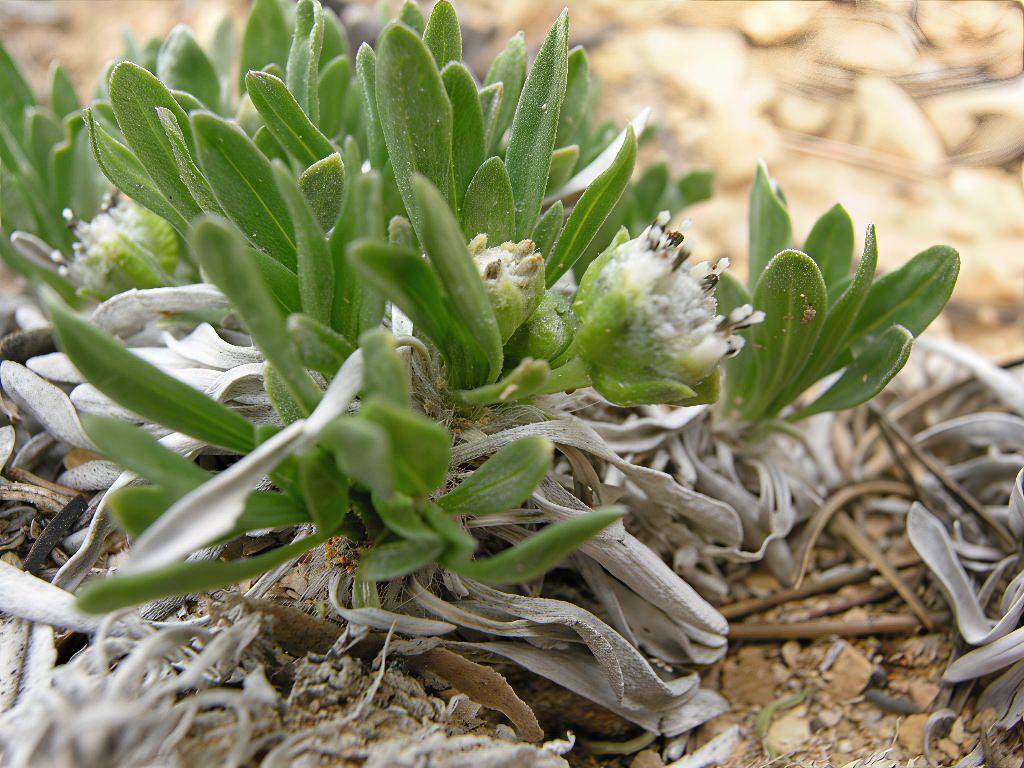
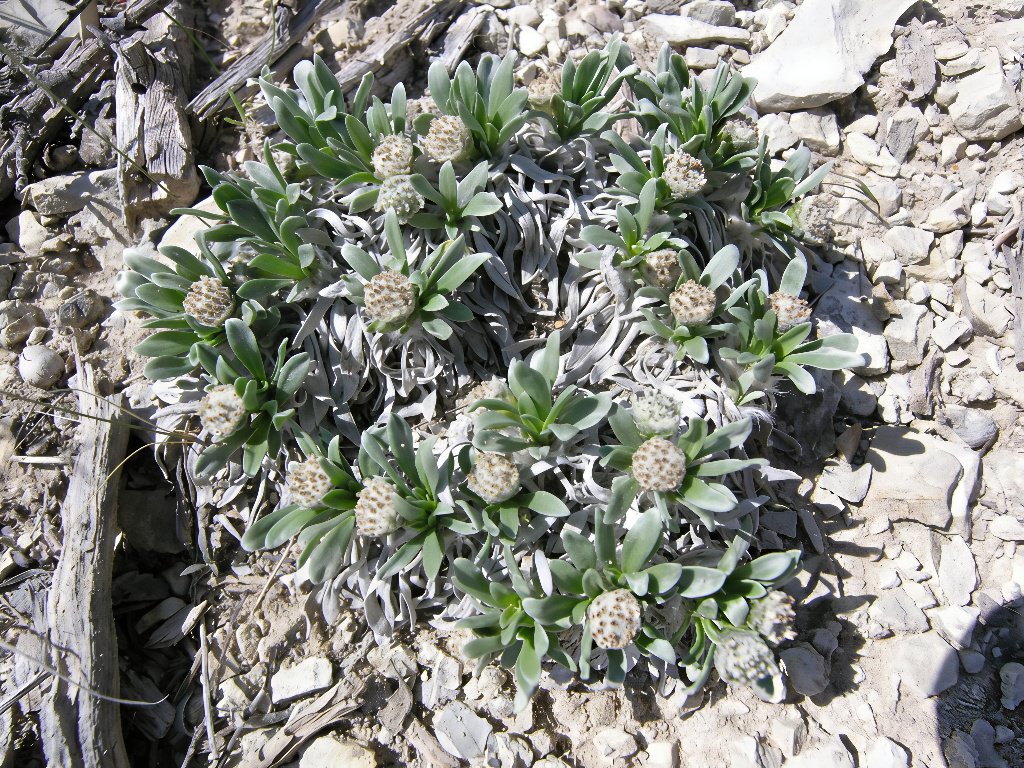
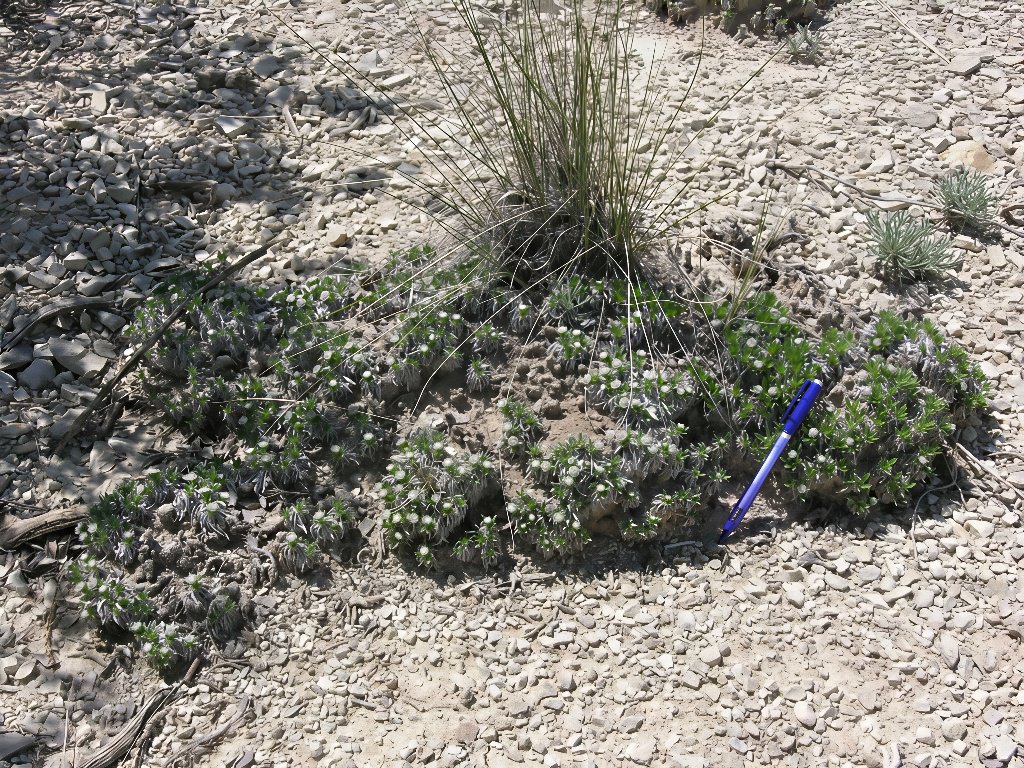
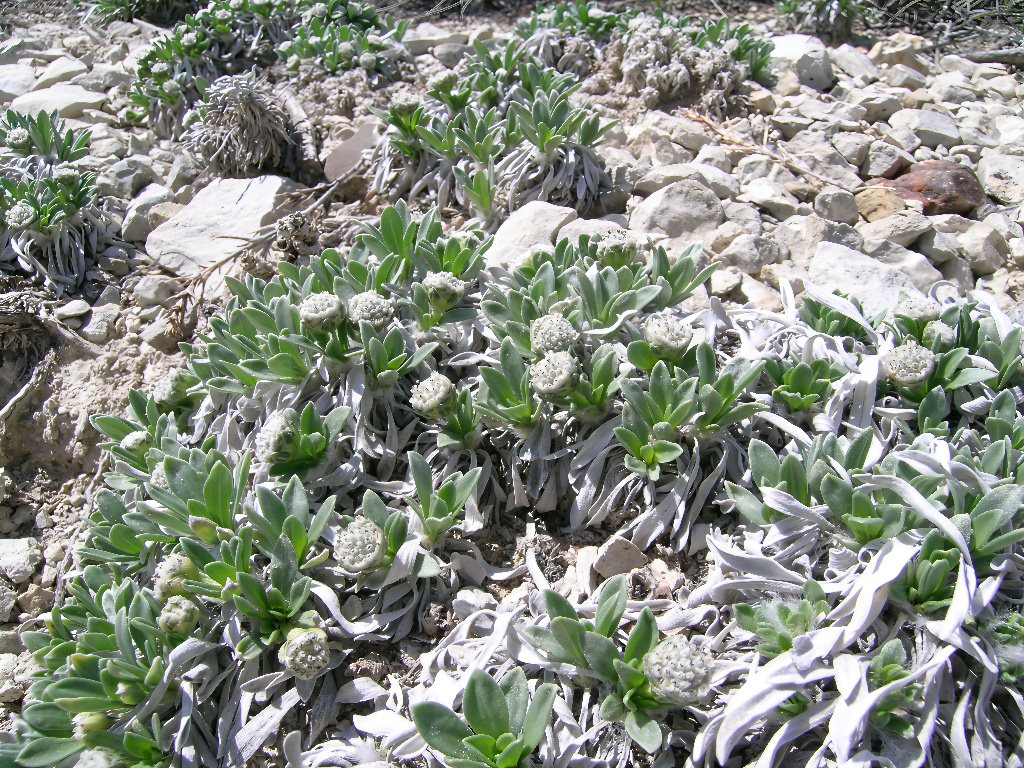
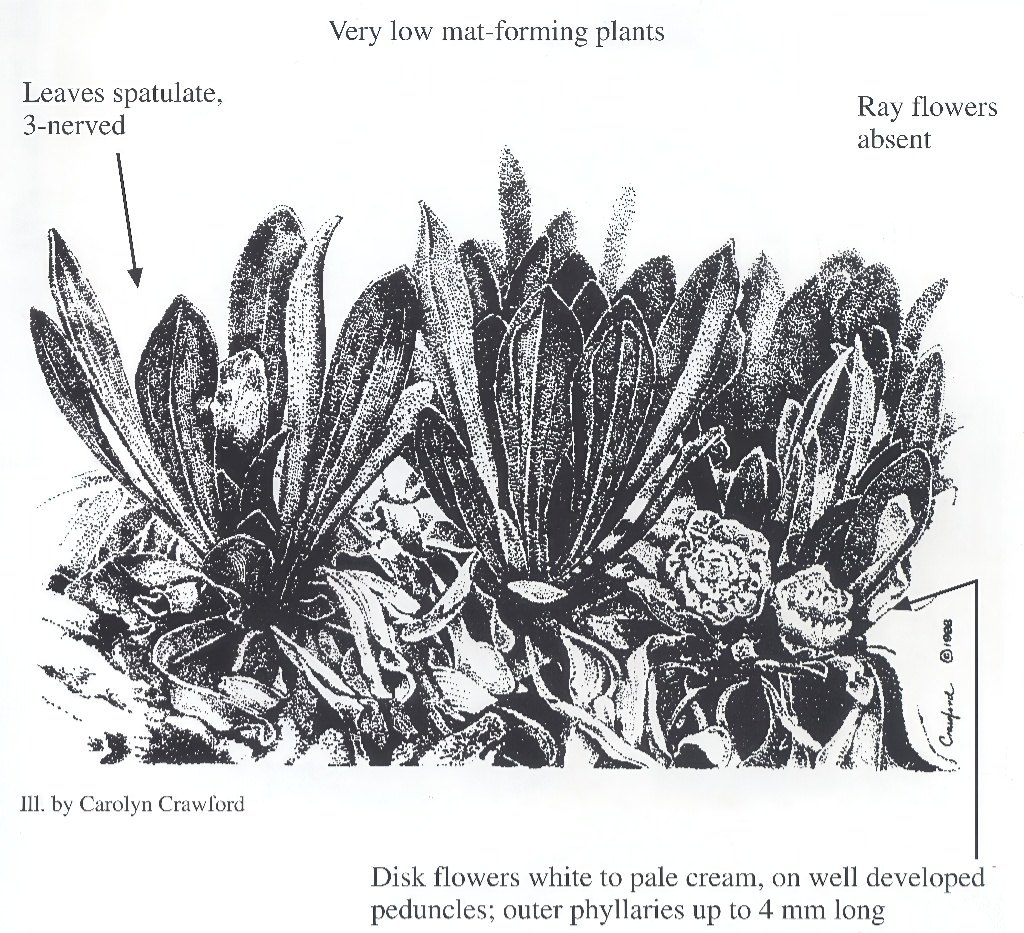
Perennial; 1-2 cm tall, plants cespitose, forming mats several inches to a foot across; leaves spatulate to oblanceolate, 3-nerved, 0.6-2 (3.5) cm long, closely sericeous (gray) and obscurely gland-dotted. Inflorescence heads disciform, borne singly on well developed peduncles 1-3 cm long, disk flowers white to pale creme; outer phyllaries linear up to 4 mm long, inner phyllaries orbiculate, 4-5 mm long (Ackerfield 2022, FNA 2006, Spackman et al. 1997).
Look Alikes:
This species is not likely to be confused with any other species in its habitat when they are in flower. However, in its vegetative state it is difficult to distinguish from Eriogonum lachnogynum and Tetraneuris acaulis but can be distinguished by the three veins in its leaves (Spackman et al. 1997).
Phenology:
Flowers in April-May, fruits in late May and June (Spackman et al. 1997).
 |
Habitat
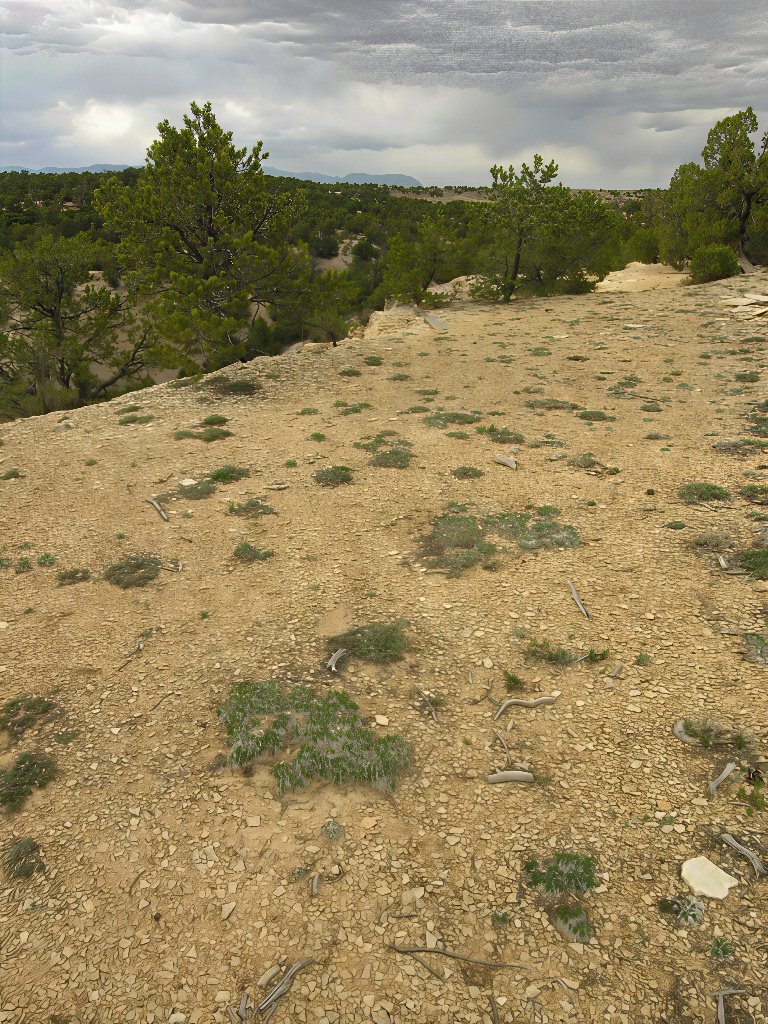
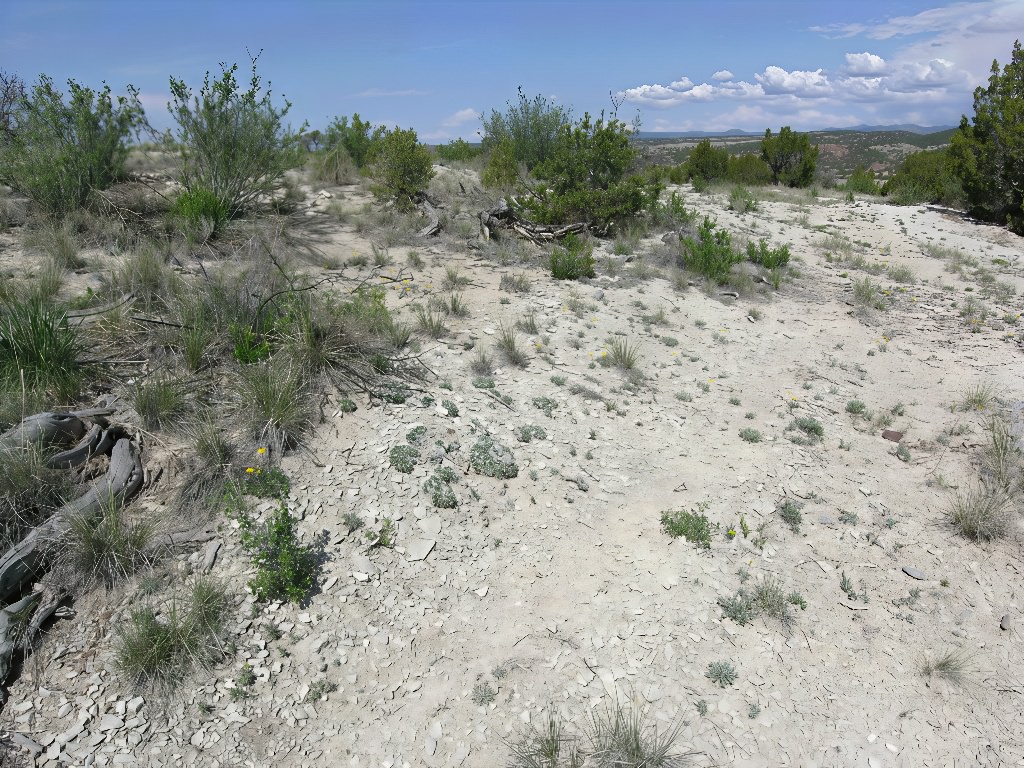
Parthenium tetraneuris is found on the tops of limestone and shale cliffs and bluffs, and in open pinon-juniper stands with very sparse ground-vegetation (Peterson 1983). The limestone and shale, on which it grows, is derived from the Niobrara Formation. This habitat is composed of various mixtures of Pinus edulis, Juniperus osteosperma, Cercocarpus montanus, Artemisia bigelovii and Frankenia jamesii. Additional associated species include Ericoma hymenoides, Hesperostipa neomexicana, Hilaria jamesii, Cymopterus acaulis, Eriogonum effusum, E. lachnogynum, Eremogone hookeri, Lesquerella calcicola, Oenothera lavandulifolia, Penstemon angustifolia and Tetraneuris acaulis (CNHP 2026).
click on image to enlarge
 |
 |
Elevation Range:
4,764 - 7,372 feet (1,452 - 2,247 meters)
Distribution
Colorado Endemic:
Yes
Range:
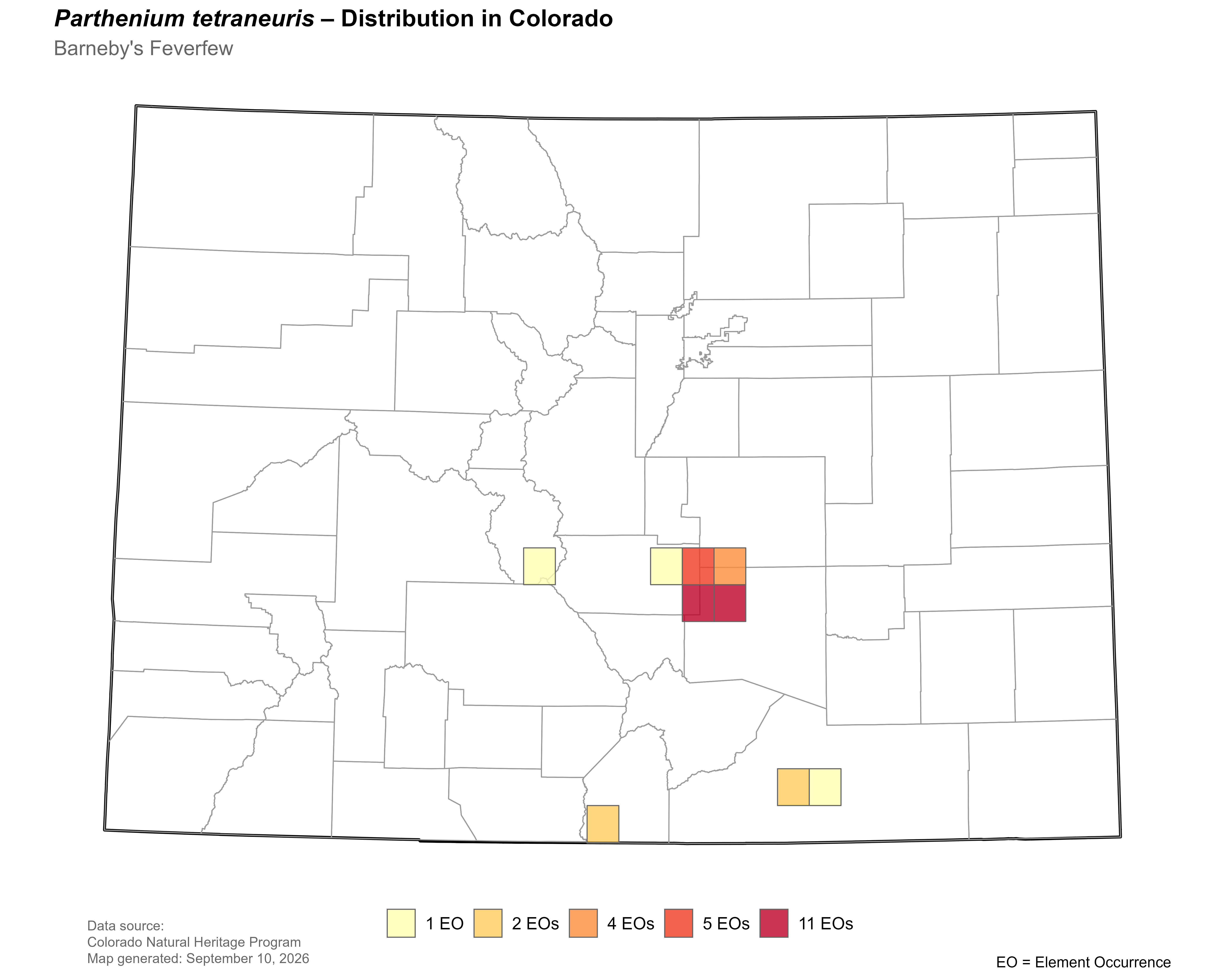
Parthenium tetraneuris is a Colorado, USA, endemic confined to exposures of gypsiferous shale (5,400 to 5,750 feet). It is currently known from five counties in Colorado (Chaffee, Costilla, Fremont, Las Animas, and Pueblo). Most occurrences are from Pueblo and Fremont counties. Estimated range extent in Colorado of 19,929 square kilometers was calculated in GeoCAT using occurrence data provided by the Colorado Natural Heritage Program (2026).
Click on map to enlarge |
Threats and Management Issues
Observations from the element occurrence records indicate this species may be threatened by urban development, incompatible livestock grazing, competition from non-native plants and motorized recreation. Development of housing, resorts and a golf course are fragmenting the species' habitat and affect nearly 30% of the occurrences. Livestock grazing has been documented at nearly 20% of the occurrences. Approximately 20% of occurrences report motorized and non-motorized recreation within the species habitat, and fragmentation of habitat by roads, railroads or pipelines has been noted at 19% of occurrences. Competition from non-native invasive plants including Salsola tragus and Bromus tectorum has been documented at 37% of the occurrences. Other low level threats include fragmentation of habitat by mining and quarrying or military training activities. Long-term drought throughout the species range is also a concern. This species is considered to have low adaptive capacity and is expected to be extremely vulnerable to climate change under both RCP 4.5 and 8.5 scenarios, as assessed for the 2025 Colorado State Wildlife Action Plan (CNHP 2025).
References
- Ackerfield, J. 2015. Flora of Colorado. BRIT Press, Botanical Research Institute of Texas, Fort Worth, TX. 818 pp.
- Ackerfield, Jennifer. 2022. Flora of Colorado. Second Edition. Bot. Misc. 60. BRIT Press, Fort Worth Botanic Garden/Botanical Research Institute of Texas, U.S.A. 861 pp.
- Colorado Natural Heritage Program (CNHP). 2025. Climate Change Vulnerability Assessment of Colorado Tier 1 and Tier 2 Plant Species of Greatest Conservation Need (SCGN) for the 2025 Colorado State Wildlife Action Plan. Colorado Natural Heritage Program, Colorado State University, Fort Collins, CO.
- Colorado Natural Heritage Program (CNHP). 2026. Biodiversity Tracking and Conservation System (Biotics 5). Colorado Natural Heritage Program, Colorado State University, Fort Collins.
- Flora of North America Editorial Committee (FNA). 2006c. Flora of North America north of Mexico. Vol. 21. Magnoliophyta: Asteridae, part 8: Asteraceae, part 3. Oxford Univ. Press, New York. xxii + 616 pp.
- Peterson, J.S. 1983. Status report on Parthenium tetraneuris. Unpublished report prepared for the Colorado Natural Areas Program, CO.
- Plants of the World Online (POWO). 2026. Plants of the World Online. Facilitated by the Royal Botanic Gardens, Kew. Published on the Internet; http://www.plantsoftheworldonline.org/ (accessed 2026).
- Roskov, YR et al. 2018. Species 2000 & ITIS Catalogue of Life Naturalis, Leiden, the Netherlands.
- Spackman, S., B. Jennings, J. Coles, C. Dawson, M. Minton, A. Kratz, and C. Spurrier. 1997. Colorado Rare Plant Field Guide. Prepared for the Bureau of Land Management, the U.S. Forest Service and the U.S. Fish and Wildlife Service by the Colorado Natural Heritage Program.


