

Scientific Name : Parthenium ligulatum
Author : (M.E. Jones) Barneby NatureServe Explorer
Common Name : Ligulate Feverfew
 Current Research Activities
 1997 profile


☰ Click link below for details.
Taxonomy
Asteraceae (sunflower family)
Listed as Bolophyta ligulata (Jones) W.A. Weber in Weber and Wittmann (2012).
Ranks and Status
State Rank : S1S2
State Rank Reason : Parthenium ligulatum has a limited distribution in northwest Colorado, USA. It is known from 11 occurrences in 2 counties. Threats include habitat loss from oil and gas development, incompatible livestock grazing, competition from non-native plants and motorized recreation. Long-term drought throughout the species range is also a concern; Parthenium ligulatum is expected to be extremely vulnerable to the effects of climate change.
U.S. Endangered Species Act : none
Colorado Threatened and Endangered List : none
Other Statuses : BLM, SWAP Tier 2
Description and Phenology
General Description:
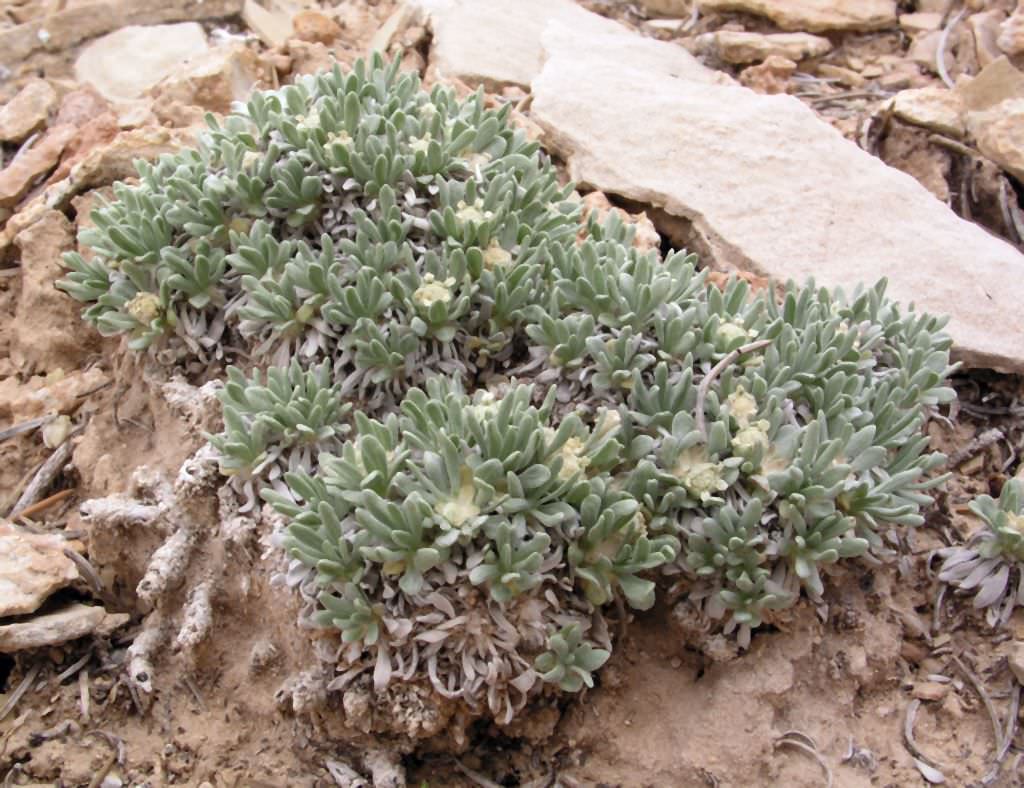
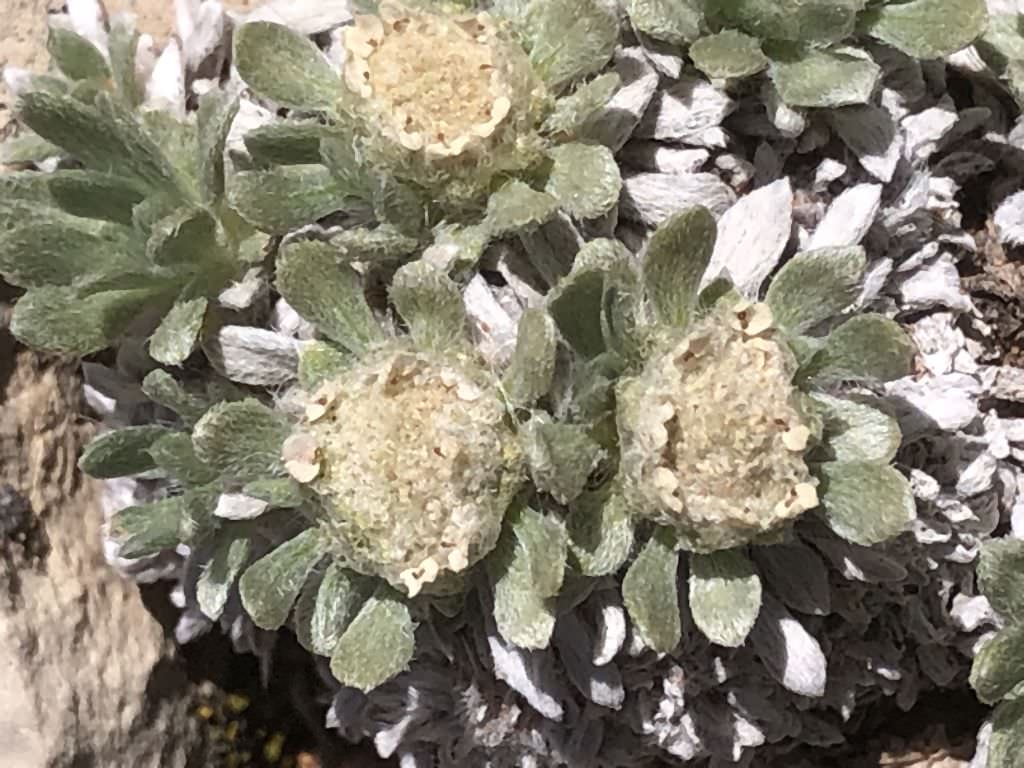
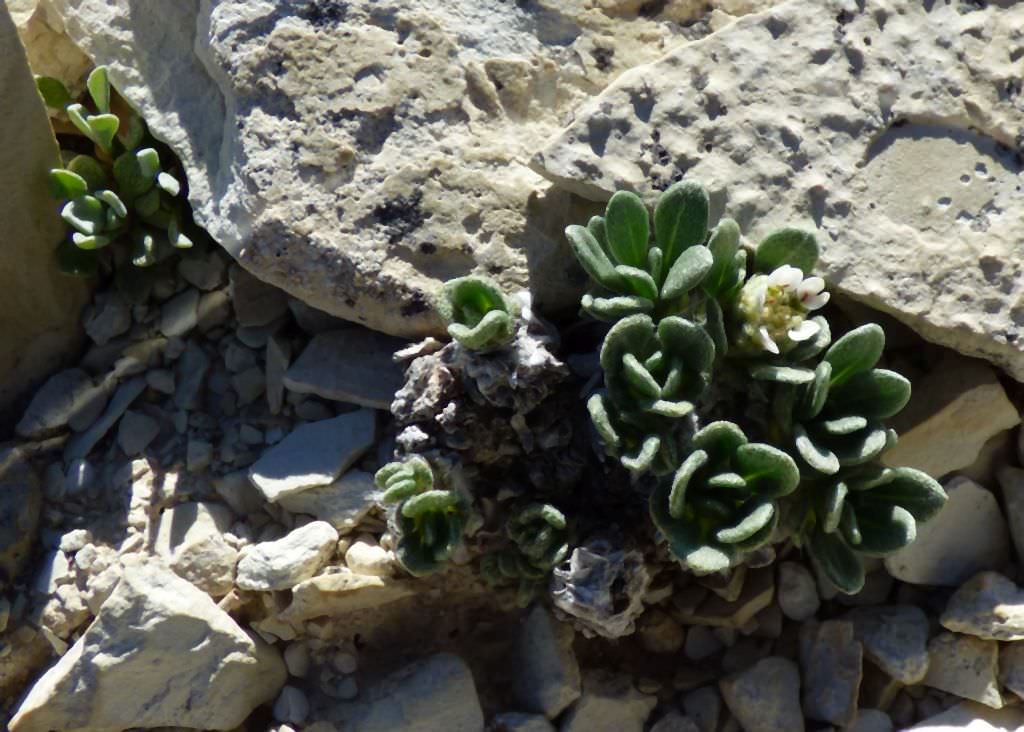
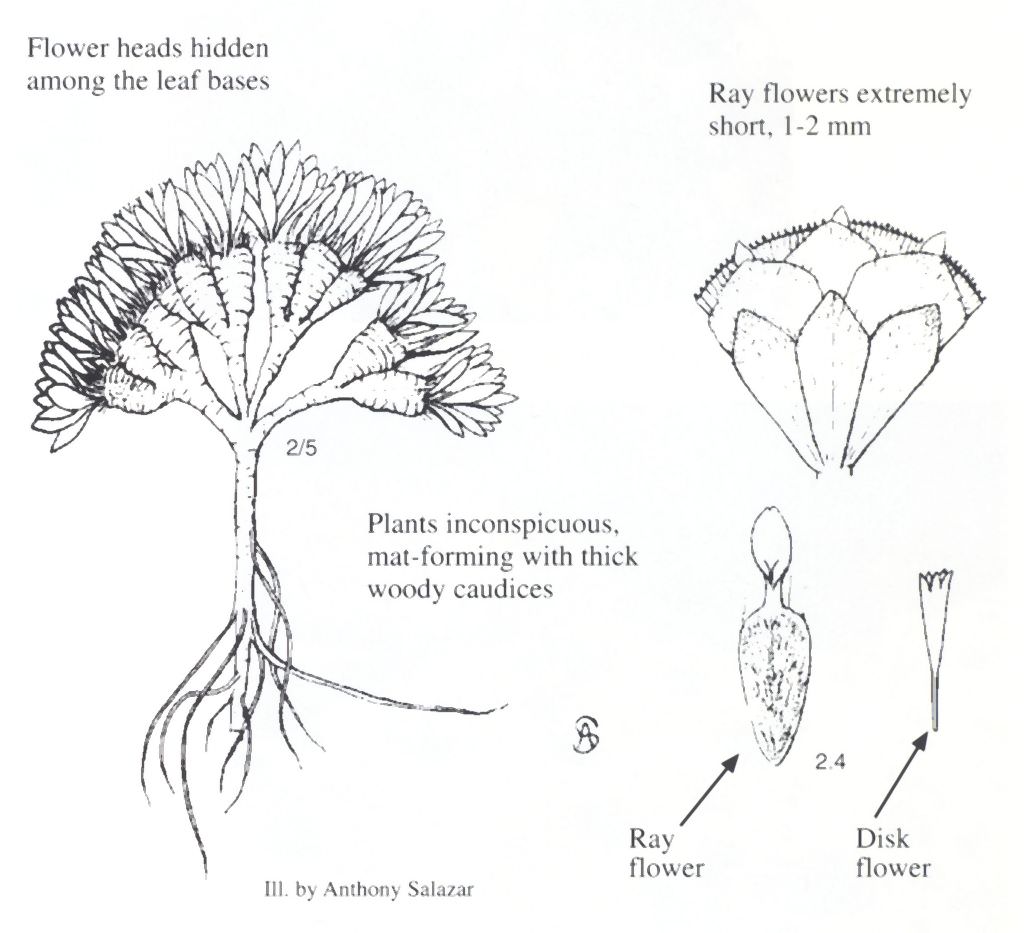
Perennials, 1-2 cm (underground caudices 2-5+ cm, branched; plants cespitose or forming mats). Leaf blades oblanceolate to spatulate, 5-18+ Ã 1-2(-4+) mm, margins entire, faces strigilloso-sericeous (gray) and obscurely gland-dotted. Heads radiate, borne singly. Peduncles 0-4 mm. Phyllaries: outer 5 -± ovate, 2.5-3 mm, inner 5 -± orbiculate, 3-4+ mm. Pistillate florets 5; corolla laminae oval to elliptic, 1-2 mm, retuse. Disc florets 15-25+. Cypselae oblanceoloid to pyriform, 3.5-4 mm; pappus-like enations 2, erect to spreading, -± subulate, 0.5-1 mm (a third, -± subulate element sometimes at apex of adaxial face), (Flora of North America 1993+).
Look Alikes:
Not likely to be confused with other species in the same habitat (Spackman et al. 1997).
Phenology:
Flowers early to late May; fruiting late May to early June.
 |
Habitat
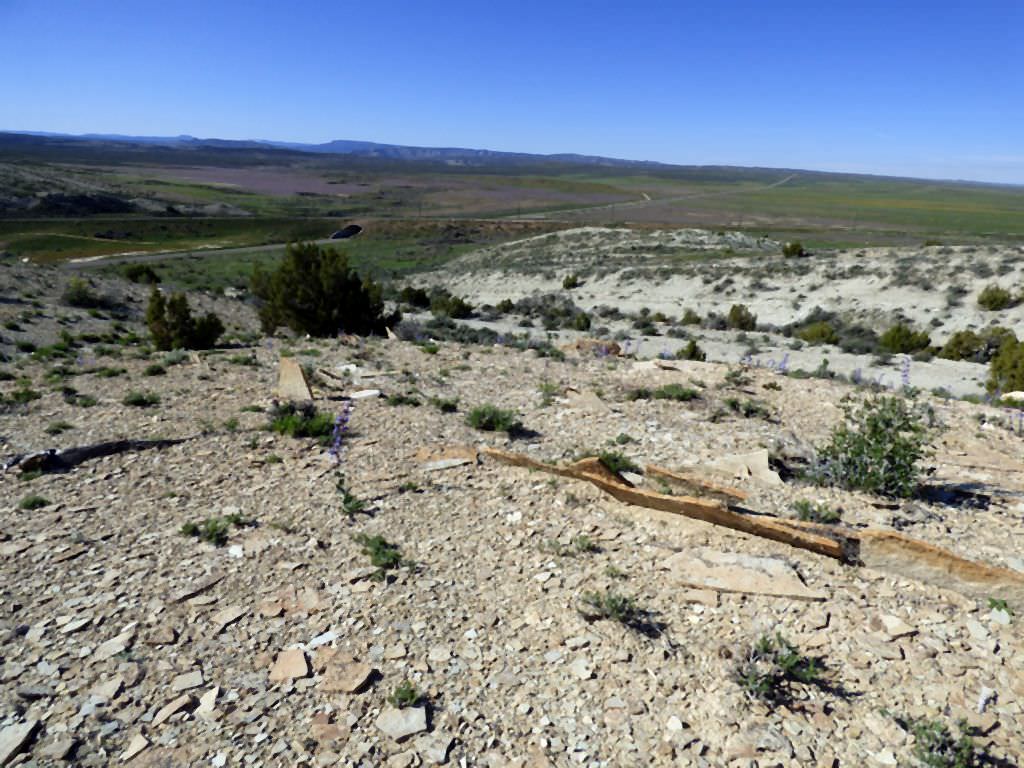
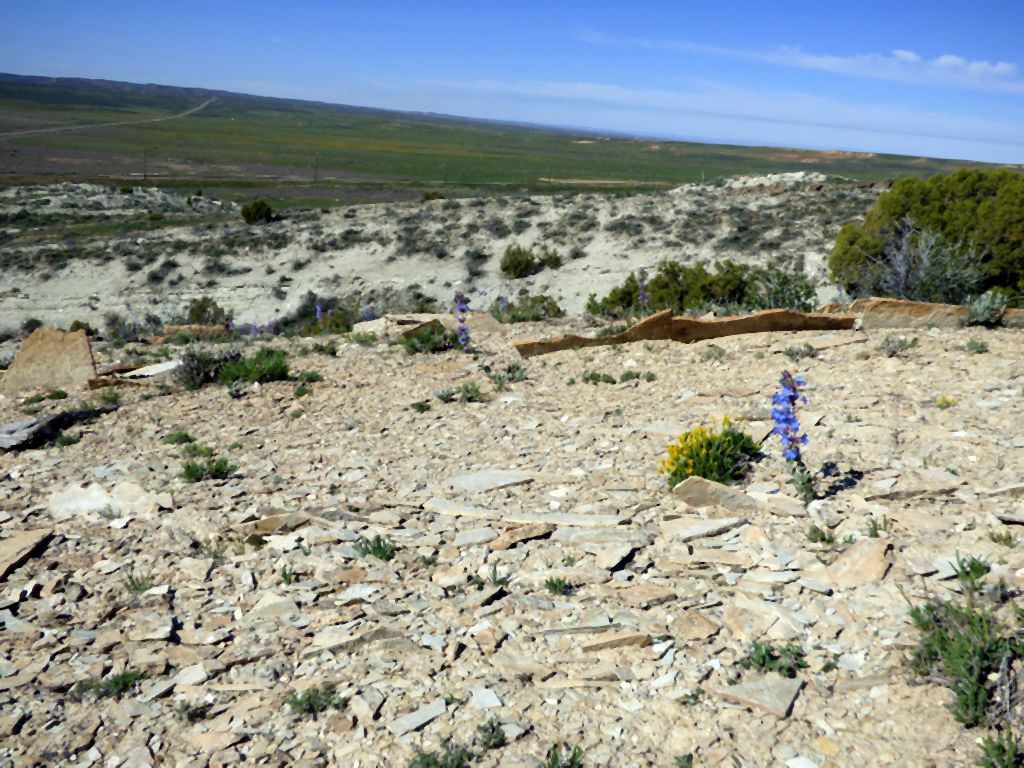
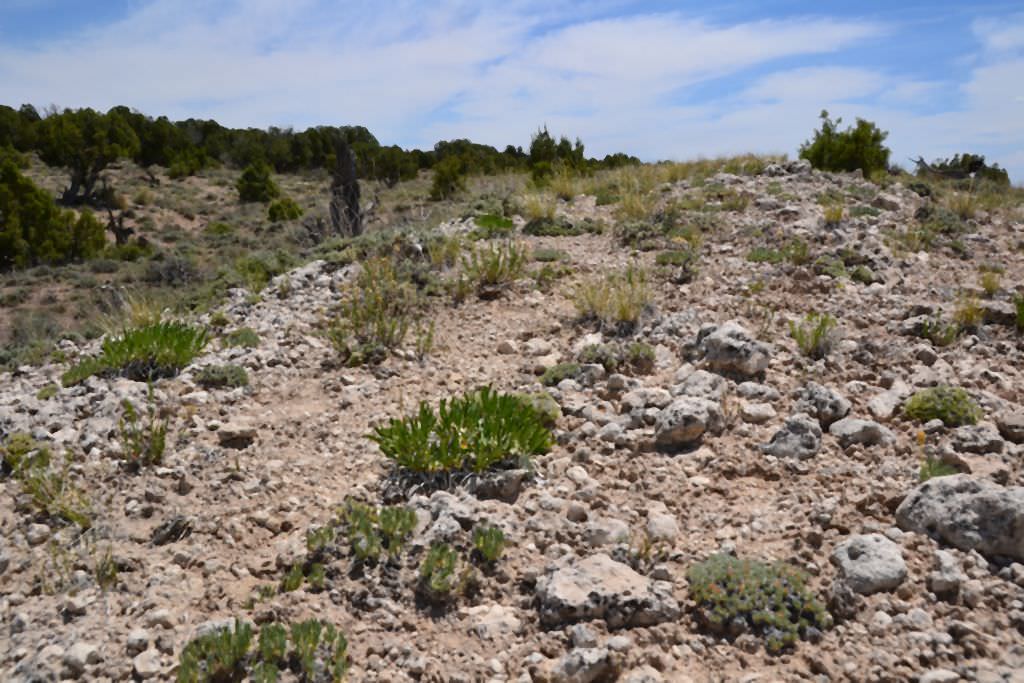
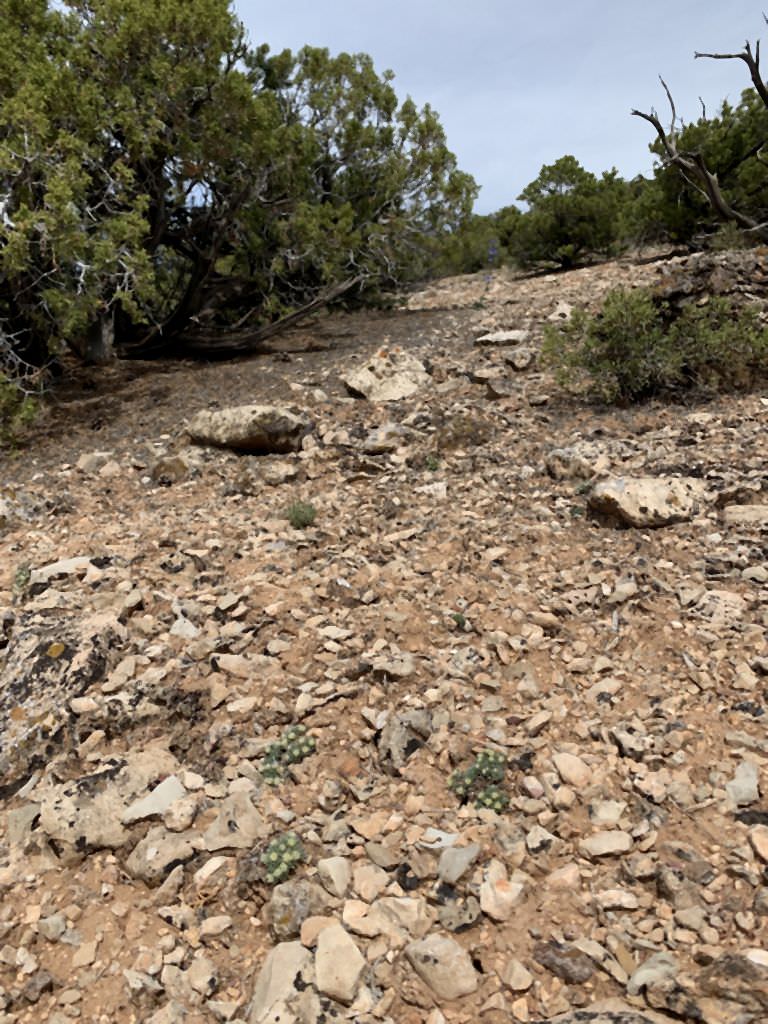
Small areas of qypseous shale or oil shale, white tuffaceous material, selenium rich soils, shale clayey soils, and white shale (Eberle 1980). Barren or semibarren calciferous or gypsiferous outcrops, in salt desert shrub, serviceberry, rabbitbrush, Indian rice-grass, greasebrush, galleta, black sagebrush, pygmy sagebrush, and pinyon-juniper communities (Welsh et al. 1993). Associated species include: Penstemon yampaensis, Haplopappus acaulis, Caulanthus crassicaulis, Eriogonum tumulosum, Townsendia incana, Physaria subumbellata, Penstemon watsonii, Artemisia nova, Gutierrezia sarothrae, Pleuraphis jamesii, Hesperostipa comata, Eriogonum acaule, Pascopyrum smithii, Caulanthus inflatus, Calylophus lavendulifoius, Phlox austromontana,Oenothera lavandulifolia, Castilleja spp., Cercocarpus intricatus, Forsellesia meionandra , Eriogonum ephedroides, Cryptantha rollinsii, Mirabilis multiflora, Phlox hoodii.
click on image to enlarge
 |
 |
 |
 |
Elevation Range:
5,495 - 6,296 feet (1,675 - 1,919 meters)
Distribution
Colorado Endemic:
No
Range:
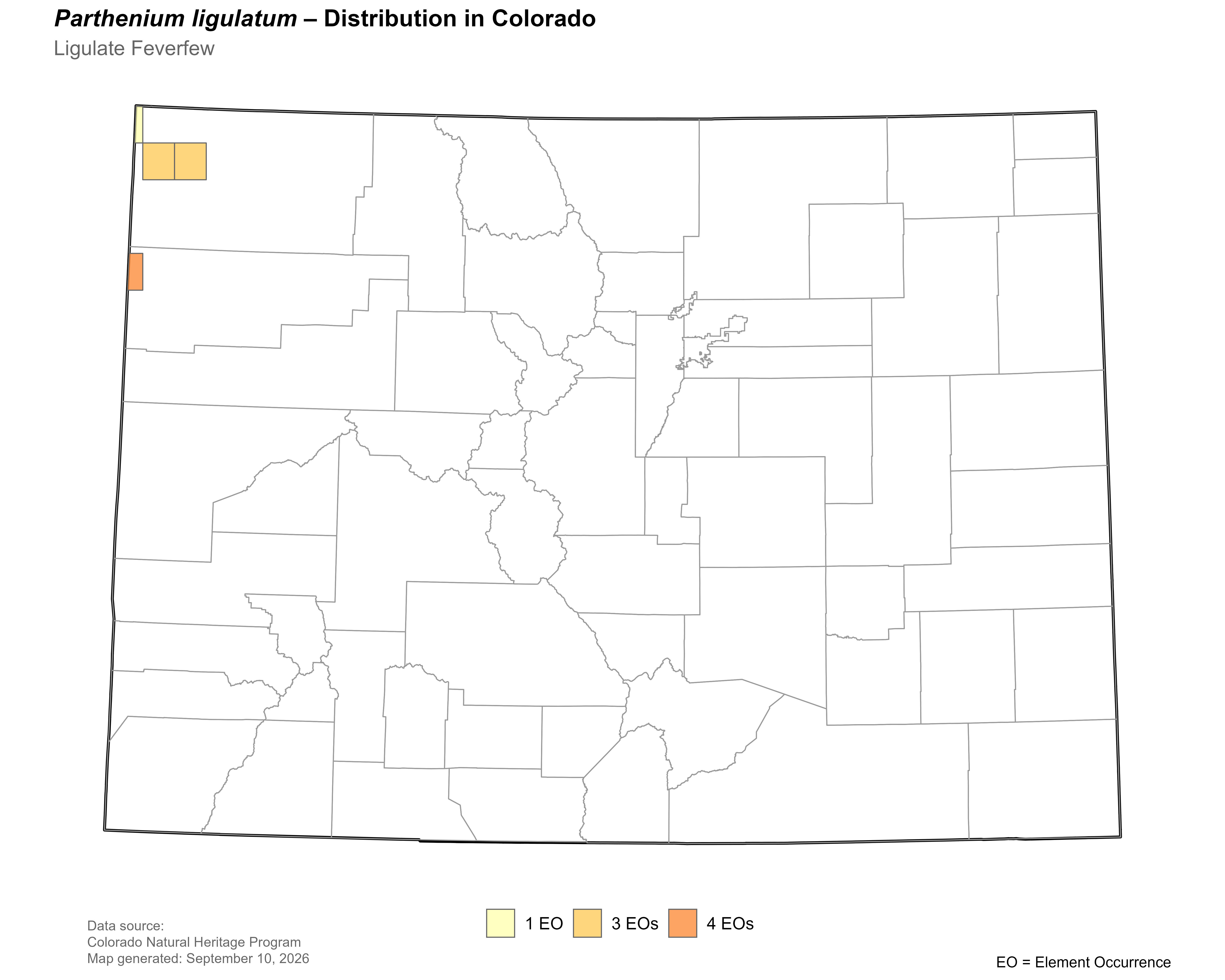
Parthenium ligulatum is known from Moffat and Rio Blanco counties, Colorado, USA. Estimated range extent in Colorado of 1342 square kilometers was calculated in GeoCAT using occurrence data provided by the Colorado Natural Heritage Program (2023). This species can also be found in Nevada and Utah, USA.
Click on map to enlarge |
Threats and Management Issues
Observations from the element occurrence records indicate this species may be threatened by oil and gas development, incompatible livestock grazing, competition from non-native plants and motorized recreation. Livestock grazing and other agricultural development has been documented at nearly 60% of the occurrences. Forty-five percent of occurrences report motorized recreation within the species habitat, and oil and gas development has been noted at 27%. Competition from non-native invasive plants has been documented at 45% of the occurrences. Other low level threats include fragmentation of habitat by roads and hydrologic alterations. Long-term drought throughout the species' range is also a concern. This species is considered to have low adaptive capacity and is expected to be extremely vulnerable to climate change under both RCP 4.5 and 8.5 scenarios, as assessed for the 2025 Colorado State Wildlife Action Plan (CNHP 2025).
References
- Ackerfield, J. 2015. Flora of Colorado. BRIT Press, Botanical Research Institute of Texas, Fort Worth, TX. 818 pp.
- Ackerfield, Jennifer. 2022. Flora of Colorado. Second Edition. Bot. Misc. 60. BRIT Press, Fort Worth Botanic Garden/Botanical Research Institute of Texas, U.S.A. 861 pp.
- Colorado Native Plant Society. 1997. Rare Plants of Colorado, second edition. Falcon Press Publ., Helena, MT.
- Colorado Natural Heritage Program (CNHP). 2023. Biodiversity Tracking and Conservation System (Biotics 5). Colorado Natural Heritage Program, Colorado State University, Fort Collins.
- Colorado Natural Heritage Program (CNHP). 2025. Climate Change Vulnerability Assessment of Colorado Tier 1 and Tier 2 Plant Species of Greatest Conservation Need (SCGN) for the 2025 Colorado State Wildlife Action Plan. Colorado Natural Heritage Program, Colorado State University, Fort Collins, CO.
- Eberle, K.W. 1980. Threatened and endangered plant species: habitat classifications, descriptions, and associated plant species. Unpublished report prepared for the BLM, Craig, CO.
- Harrington, H. D. 1954. Manual of the Plants of Colorado. Sage Books, Denver, CO. 666 pp.
- Kartesz, J.T. 1994. A synonymized checklist of the vascular flora of the United States, Canada, and Greenland. 2nd edition. 2 vols. Timber Press, Portland, OR.
- Spackman, S., B. Jennings, J. Coles, C. Dawson, M. Minton, A. Kratz, and C. Spurrier. 1997. Colorado rare plant field guide. Prepared for Bureau of Land Management, U.S. Forest Service and U.S. Fish and Wildlife Service by Colorado Natural Heritage Program.
- USDA, NRCS. 2013. The PLANTS Database. National Plant Data Team, Greensboro, NC 27401-4901 USA.
- Weber, W. A. and R. C. Wittmann. 2012. Colorado Flora, Western Slope, A Field Guide to the Vascular Plants, Fourth Edition. Boulder, Colorado. 532 pp.
- Welsh, S.L, N.D. Atwood, S. Goodrich, and L.C. Higgins. 1993. A Utah Flora, second edition, revised. Brigham Young University, Provo, UT.