

Scientific Name : Oreocarya pustulosa
Author : Ryd. NatureServe Explorer
Common Name : San Juan Cat's- eye
 Current Research Activities


☰ Click link below for details.
Taxonomy
Boraginaceae (borage family)
Treated as Cryptantha cinerea var. pustulosa by Kartez (1994), the Flora of North America Vol. 15 (in press) considers the taxon as Oreocarya suffruticosa var. pustulosa; Ackerfield (2022) treats it as O. pustulosa.
Ranks and Status
State Rank : S1
State Rank Reason : In Colorado, Oreocarya pustulosa is known primarily from the Great Sand Dunes in the San Luis Valley. Threats are not well documented but rangewide the effects of long-term drought are a concern. This species is considered to have moderate adaptive capacity and is expected to be moderately vulnerable to climate change.
U.S. Endangered Species Act : none
Colorado Threatened and Endangered List : none
Other Statuses : SWAP Tier 2, USFS RGNF
Description and Phenology
General Description:
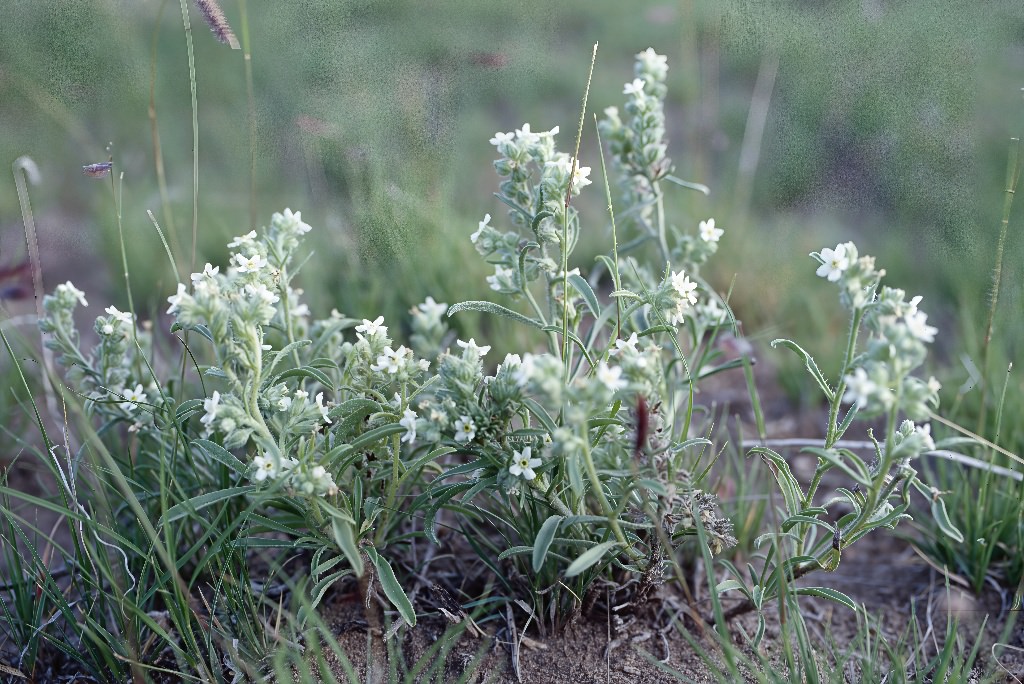
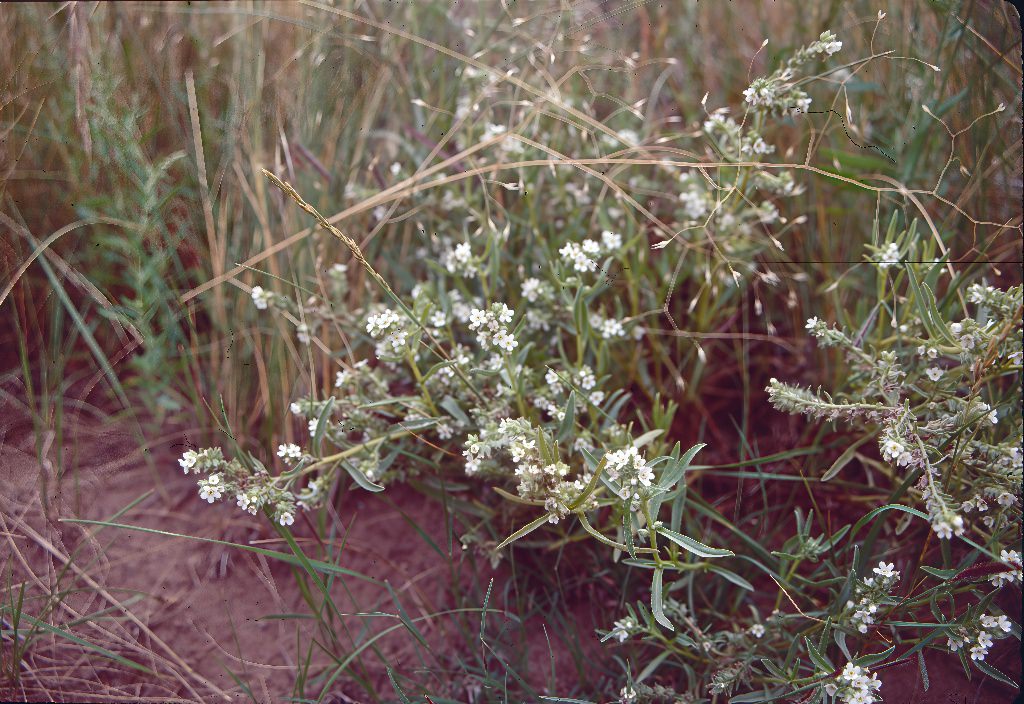
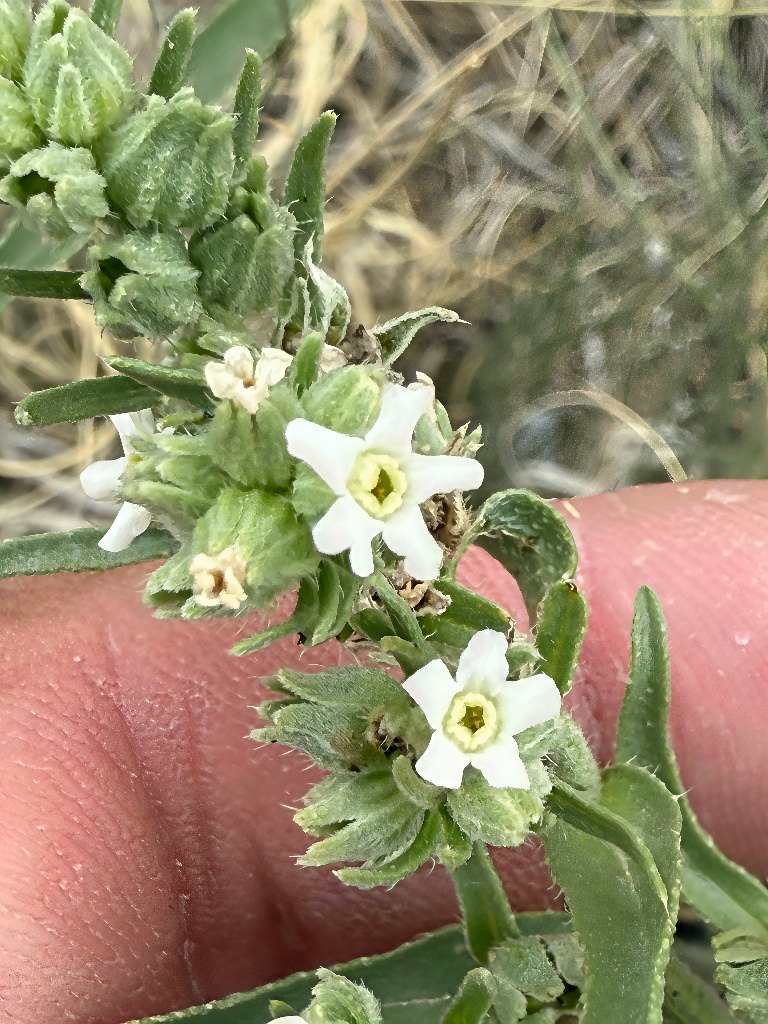
Perennial, 1-6 dm tall; leaves oblanceolate to lance-linear, 3-10 cm long x 0.3-1 cm wide, glabrous above, dense pustulate hairs below; calyx 3-4 mm long in flower, 5-7 mm long in fruit; corolla white with yellow fornices, 5-8 mm wide; nutlets 1-4, ovate, 1-8-2.5 mm long, smooth and glossy (Ackerfiled 2022)..
Look Alikes:
It is distinguished in the keys from Oreocarya suffruticosa which has hairy upper leaf surfaces and is without conspicuous pustulate hairs on the lower leaf surfaces (Ackerfield 2022). O. pustulosa has pustulose hairs on the back of the leaves with glabrous upper surfaces; it is sparsely hairy compared with other Oreocarya species, and has glabrous seeds.
Phenology:
Flowering May-August; fruiting June-August (Ackerfield 2022, Colorado Natural Heritage Program 2026).
Habitat
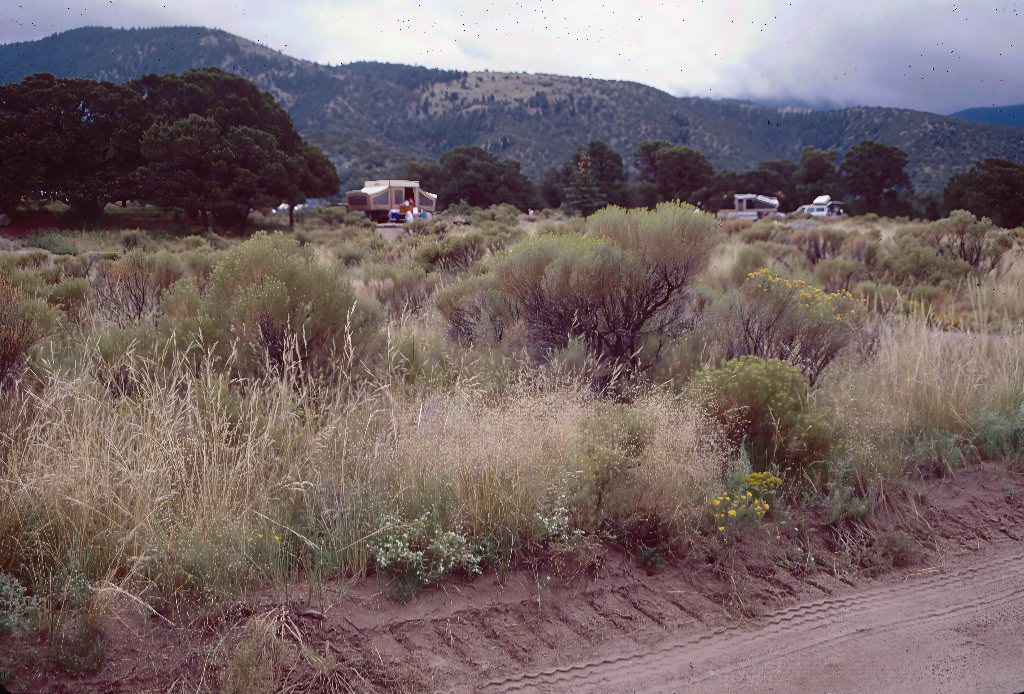
This species is found in sparsely vegetated sandy soils or sand dunes in pinyon-juniper (Pinus edulis-Juniperus scopulorum) woodlands or rabbitbrush (Ericameria nauseosa) shrublands. Associated species include Ericoma hymenoides, Bouteloua gracile, Opuntia polycantha, Psoralidium lanceolatum and Yucca glauca (CNHP 2026).
click on image to enlarge
 |
Elevation Range:
7,438 - 9,058 feet (2,267 - 2,761 meters)
Distribution
Colorado Endemic:
No
Range:
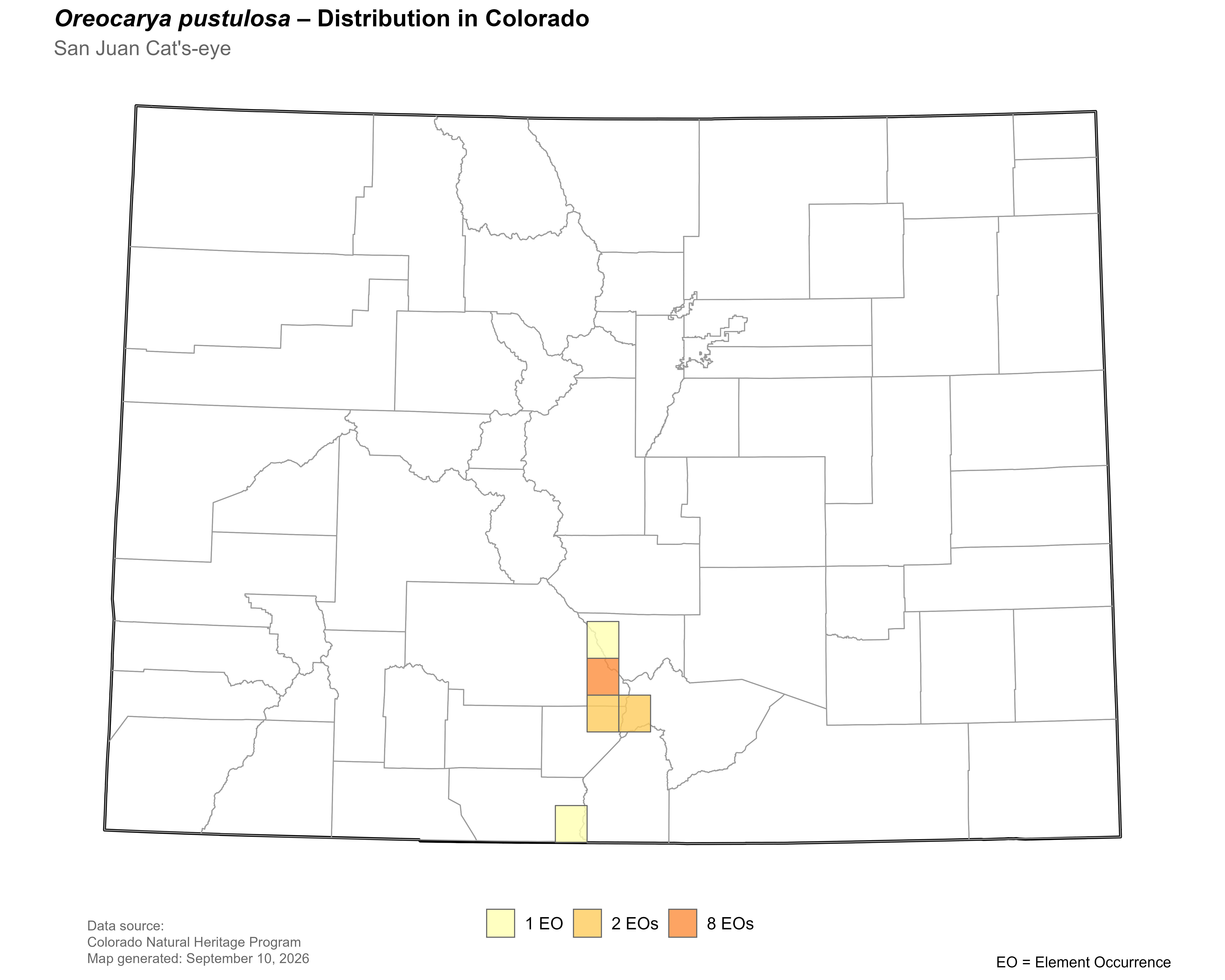
Oreocarya pustulosa is known from the Great Sand Dunes in the San Luis Valley in Saguache and Alamosa counties, and also from one occurrence in Costilla County, Colorado, USA. Estimated range extent in Colorado of 1,164 square kilometers was calculated in GeoCAT using occurrence data provided by the Colorado Natural Heritage Program (2026). This taxon can also be found in Arizona, New Mexico, and Utah, USA.
Click on map to enlarge |
Threats and Management Issues
Observed threats include recreation of various types; hiking, dispersed camping and OHV use. Several occurrences are found within Great Sand Dunes National Park where recreation impacts have been observed. Livestock grazing has been noted at one occurrence, weedy plant species such as cheatgrass (Bromus tectorum) and Salsola sp. have been reported from two sites, and oil and gas development was expected at one. Several occurrences report that there are no threats. Rangewide the effects of long-term drought are a concern. This species is considered to have moderate adaptive capacity and is expected to be moderately vulnerable to climate change under both RCP 4.5 and 8.5 scenarios, as assessed for the 2025 Colorado State Wildlife Action Plan (CNHP 2025).
References
- Ackerfield, Jennifer. 2022. Flora of Colorado. Second Edition. Bot. Misc. 60. BRIT Press, Fort Worth Botanic Garden/Botanical Research Institute of Texas, U.S.A. 861 pp.
- Colorado Natural Heritage Program (CNHP). 2025. Climate Change Vulnerability Assessment of Colorado Tier 1 and Tier 2 Plant Species of Greatest Conservation Need (SCGN) for the 2025 Colorado State Wildlife Action Plan. Colorado Natural Heritage Program, Colorado State University, Fort Collins, CO.
- Colorado Natural Heritage Program (CNHP). 2026. Biodiversity Tracking and Conservation System (Biotics 5). Colorado Natural Heritage Program, Colorado State University, Fort Collins.
- Flora of North America Editorial Committee (FNA). In Press. Flora of North America north of Mexico. Vol. 15. Magnoliophyta: Fouquieriaceae to Boraginaceae. Oxford Univ. Press, New York.
- Kartez, John T. 1994. A Synonymized Checklist of the Vascular Flora of the United States, Canada, and Greenland. Second edition (2 volumes). Timber Press, Inc., Portland, OR.