


Scientific Name : Oenothera acutissima
Author : W.L. Wagner NatureServe Explorer
Common Name : Narrow- leaf Evening Primrose
 Current Research Activities
 1997 profile


☰ Click link below for details.
Taxonomy
Onagraceae (evening primrose family)
Ranks and Status
State Rank : S2
State Rank Reason : In Colorado, Oenothera acutissima is only known from eleven occurrences in Moffat County, Colorado, USA. Two of the occurrences have not been observed in over 20 years, and an additional four occurrences are considered extirpated or possibly extirpated. The principal threats to this species are loss of wetland habitat due to stock pond creation and the associated hydrologic changes, and trampling from livestock grazing. Oenothera acutissima is predicted to be extremely vulnerable to the effects of climate change.
U.S. Endangered Species Act : none
Colorado Threatened and Endangered List : none
Other Statuses : BLM, SWAP Tier 1
Description and Phenology
General Description:
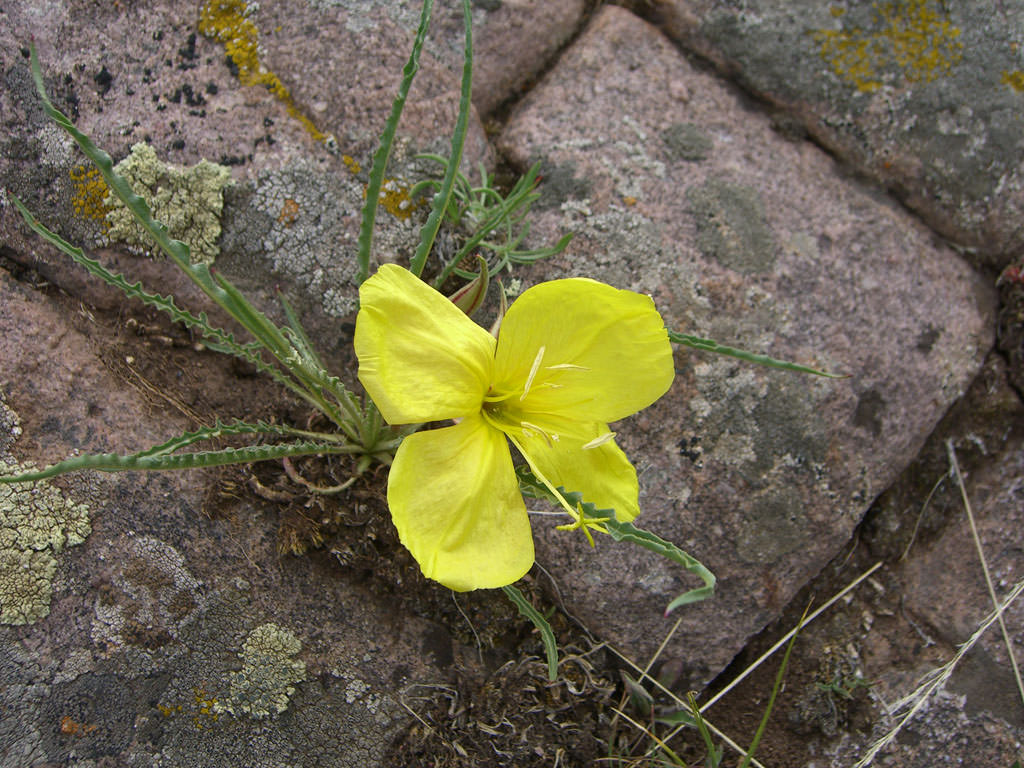
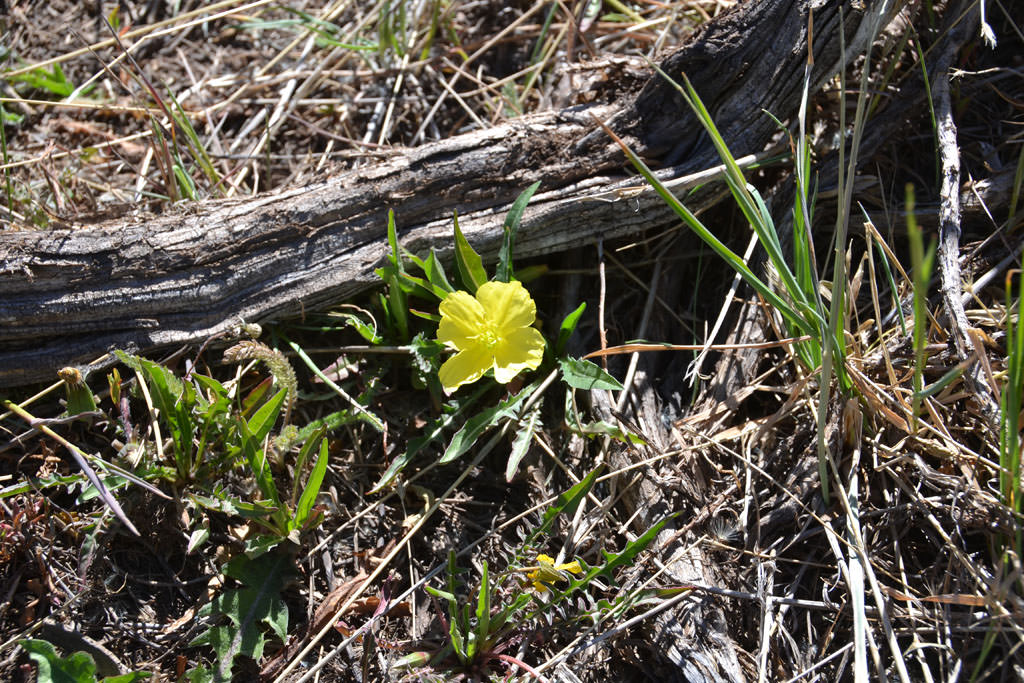
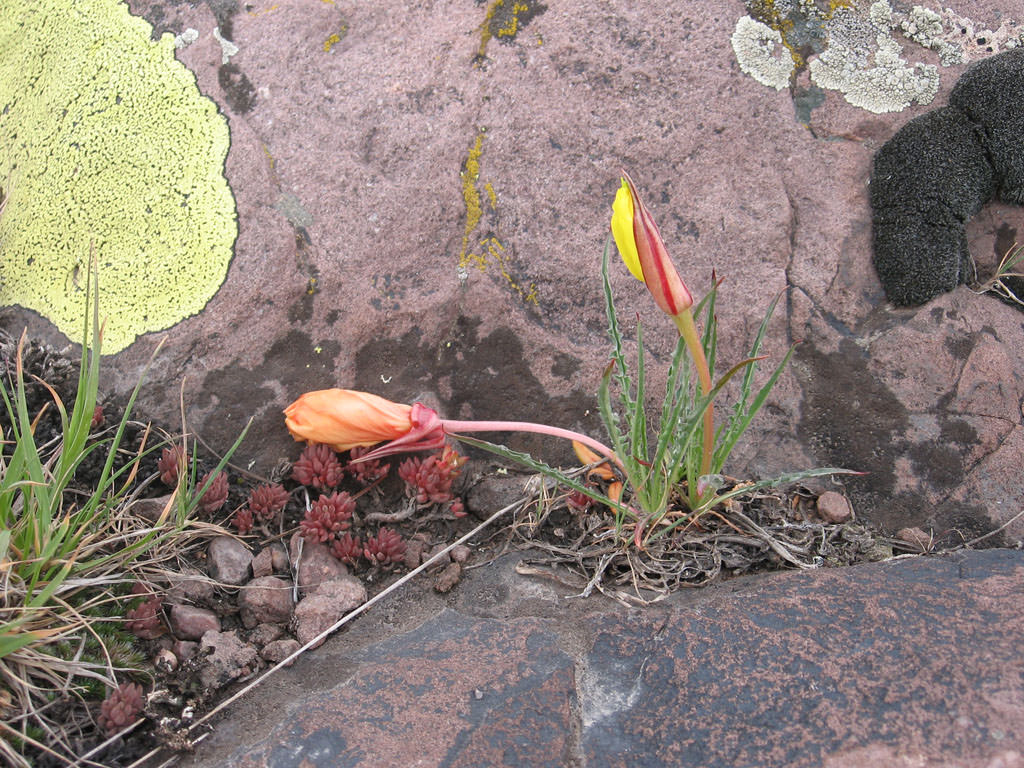
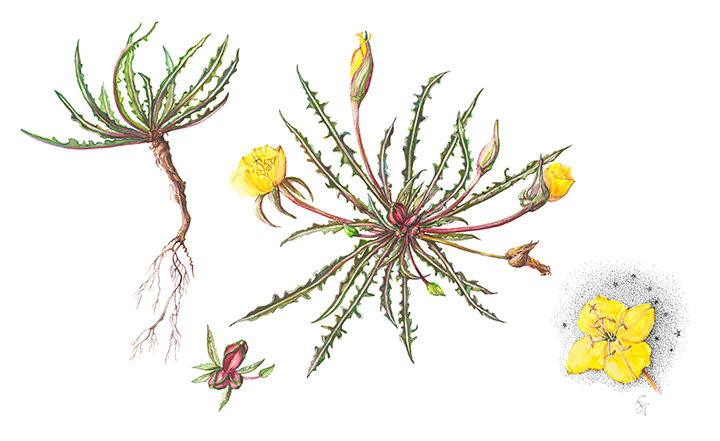
Perennial forb with a basal rosette and a long branching, woody taproot. The linear leaves are bright green to grey-green, moderately thick and stiff, and irregularly dentate. The petals are reddish-orange before blooming, turning yellow with flowering (Denver Botanic Gardens 2008). The hypanthium is prolonged beyond the ovary as a slender tube. Dehiscent capsule is 4-winged; capsule wings are 2-5 mm wide (Spackman et al. 1997).
Look Alikes:
Oenothera flava taproot is fleshy and stout, and capsule wings are 1-2 mm wide (Spackman et al. 1997).
Phenology:
Flowers in late May-June. Flowers open in the evening, and close by mid-morning (Spackman et al. 1997).
 |
Habitat
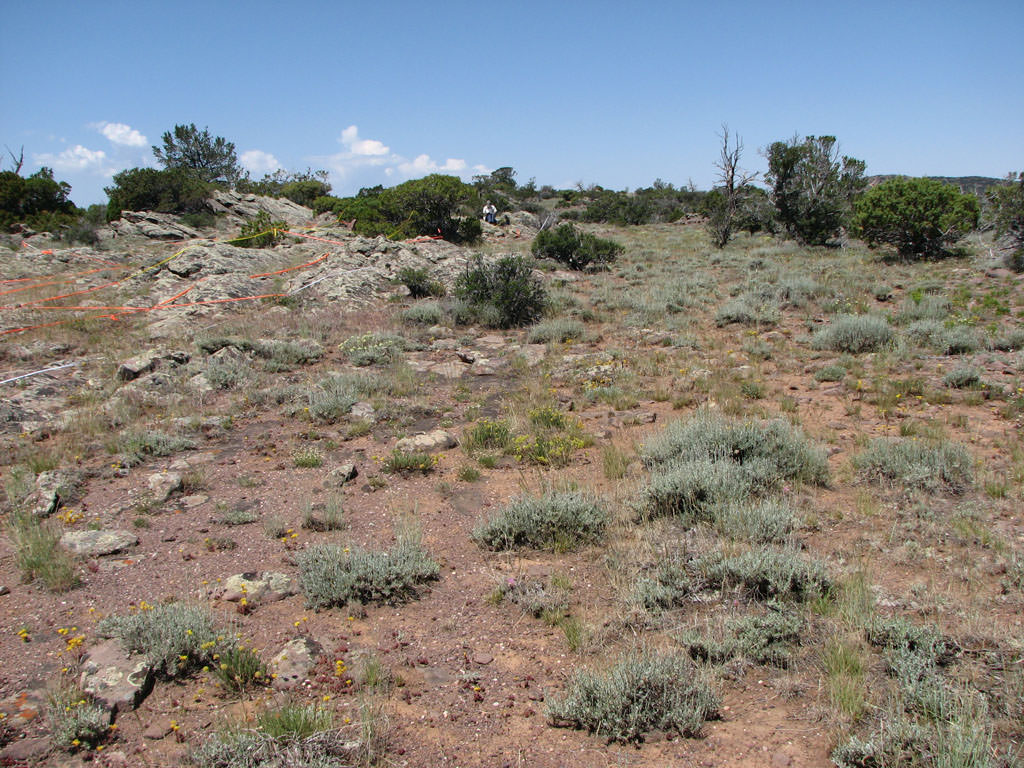
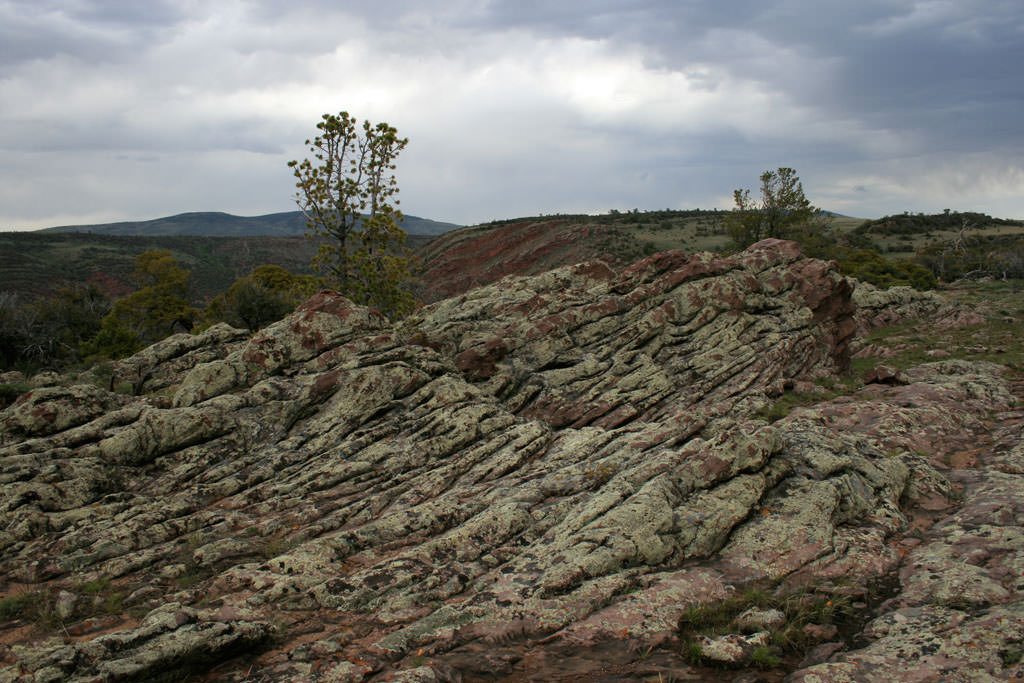
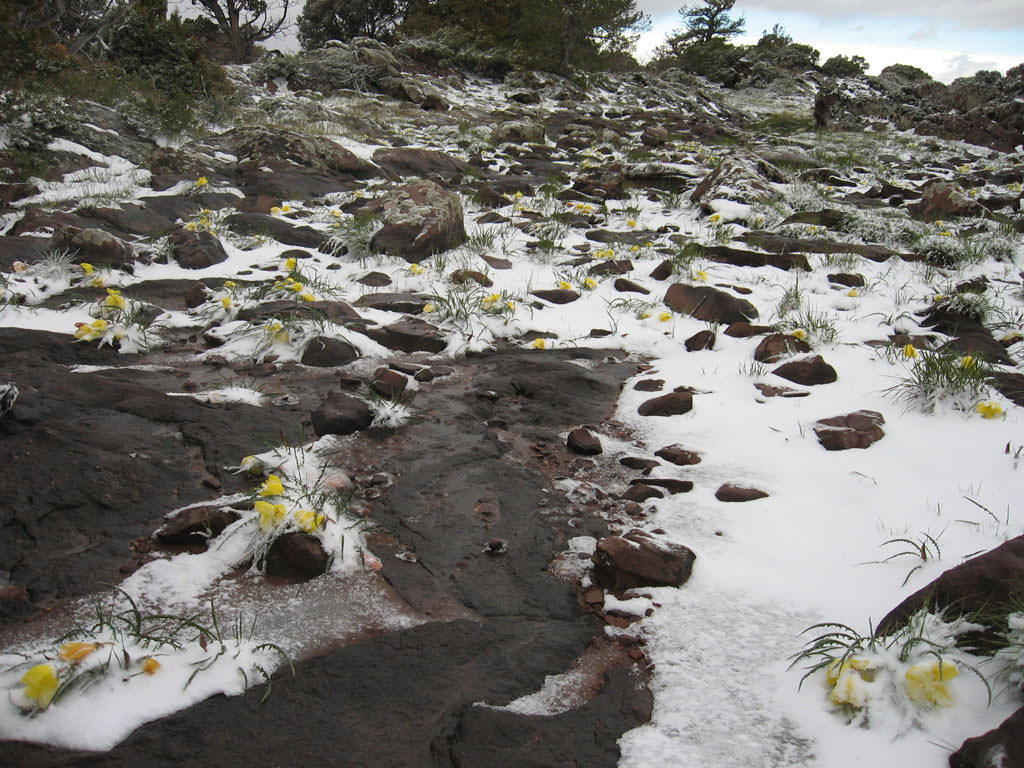
Restricted to sandy, gravelly and rocky soils, in seasonally wet areas; in meadows, depressions, or along arroyos in mixed conifer forest to sagebrush scrub (Wagner 1981). This species occurs in short outcrops or rock reefs, drainages, and gullies (pers. comm. Densie Culver 2014).
click on image to enlarge
 |
 |
 |
Elevation Range:
5,329 - 9,109 feet (1,624 - 2,777 meters)
Distribution
Colorado Endemic:
No
Range:
Oenothera acutissima is known from Moffat County in Colorado, USA. The estimated range extent in Colorado of 1516 square kilometers was calculated in GeoCAT using occurrence data provided by the Colorado Natural Heritage Program (2022). The species can also be found in Utah.
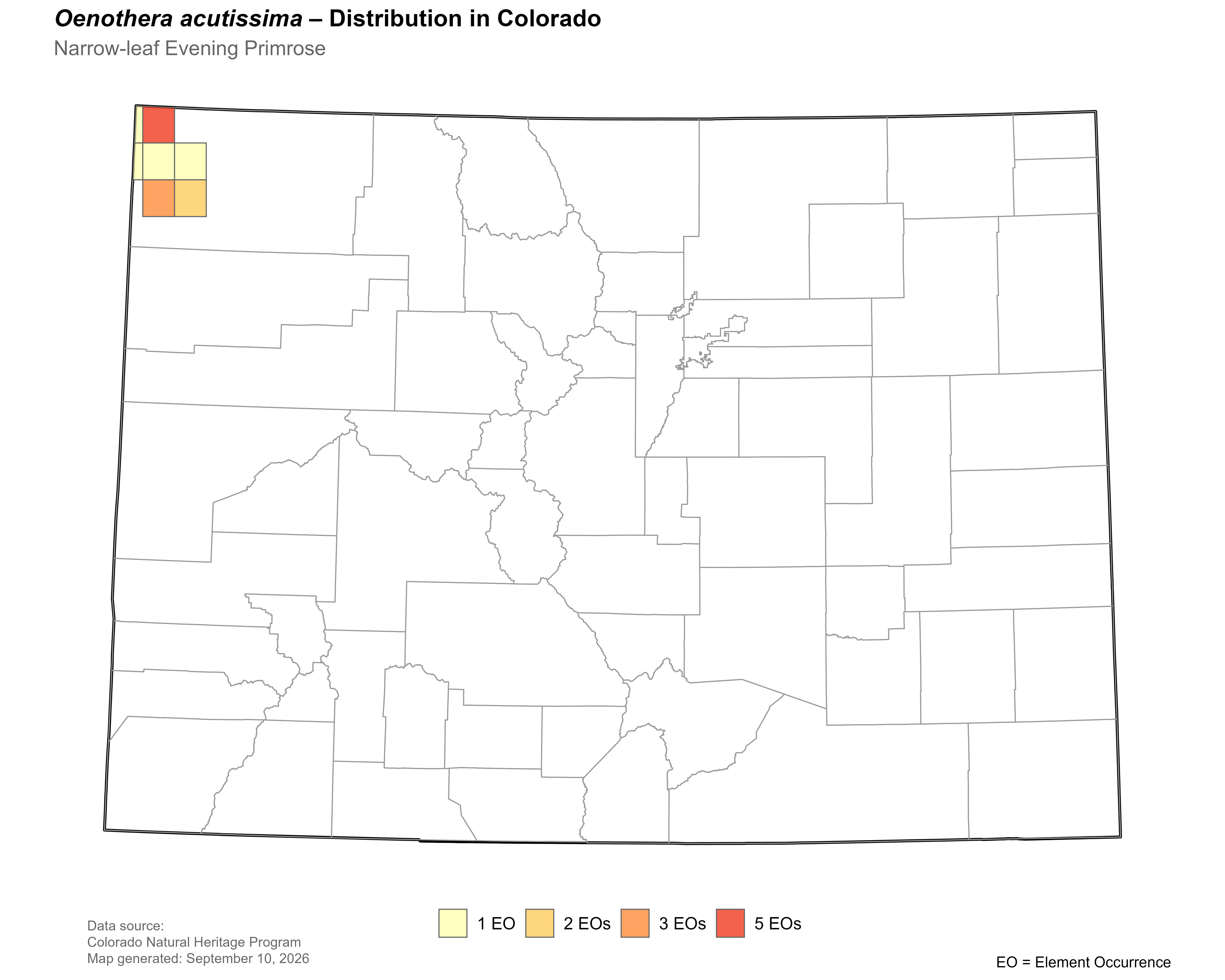
Click on map to enlarge |
Threats and Management Issues
The primary threats to Oenothera acutissima in Colorado are from trampling by livestock and hydrologic alterations related to livestock grazing, including the drying of wetlands from upstream earthen dams, stream downcutting and channelization, and the loss of habitat due to stock pond creation. Livestock grazing was nearly ubiquitous in records of known locations and the trampling of plants was commonly reported. Non-native invasive plant species were observed in several populations, including the aggressive rhizomatous species, Canada thistle (Cirsium arvense) and smooth brome (Bromus tectorum).Oenothera acutissima was predicted to be highly vulnerable to climate change (Handwerk et al. 2015) but at least two observations indicated the species was stable or reproducing during drought. This species is now considered to have low adaptive capacity and is expected to be extremely vulnerable to climate change under both RCP 4.5 and 8.5 scenarios, as assessed for the 2025 Colorado State Wildlife Action Plan (CNHP 2025).
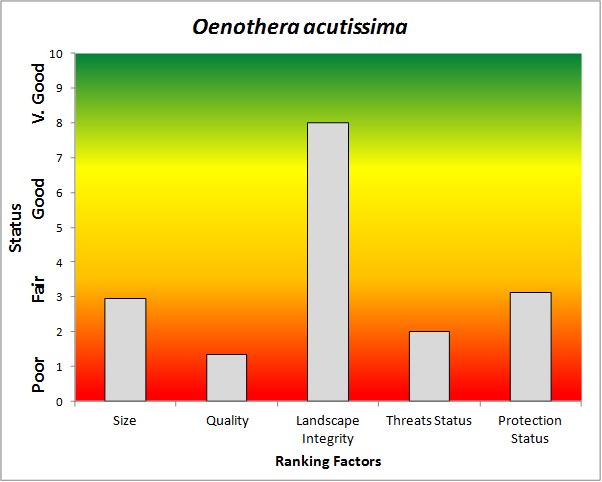
Summary results of an analysis of the status of Oenothera acutissima based on several ranking factors. This species was concluded to be weakly conserved. From Rondeau et al. 2011. |
References
- Ackerfield, J. 2015. Flora of Colorado. BRIT Press, Botanical Research Institute of Texas, Fort Worth, TX. 818 pp.
- Center for Native Ecosystems and Colorado Native Plant Society. 2006. Petition to List Narrowleaf Evening Primrose (Oenothera acutissima) as Threatened or Endangered and Designate Critical Habitat under the Endangered Species Act (16 U.S.C. § 1531, Et Seq.). Submitted 12 April 2006. Online. Available: www.nativeecosystems.org/species/narrowleaf-evening-primrose/index_html/ (Accessed 2008)
- Colorado Native Plant Society. 1989. Rare plants of Colorado. Rocky Mountain Nature Association, Colorado Native Plant Society, Estes Park, Colorado. 73 pp.
- Colorado Natural Heritage Program (CNHP). 2022. Biodiversity Tracking and Conservation System (Biotics 5). Colorado Natural Heritage Program, Colorado State University, Fort Collins.
- Colorado Natural Heritage Program (CNHP). 2025. Climate Change Vulnerability Assessment of Colorado Tier 1 and Tier 2 Plant Species of Greatest Conservation Need (SCGN) for the 2025 Colorado State Wildlife Action Plan. Colorado Natural Heritage Program, Colorado State University, Fort Collins.
- Cronquist, A., A.H. Holmgren, N.H. Holmgren, J.L. Reveal, P.K. Holmgren. 1997. Intermountain Flora, Volume 3, Part A Subclass Rosidae (except Fabales). The New York Botanical Gardens. Bronx, New York. 446 pp.
- Denver Botanic Gardens. 2008. Report to the Bureau of Land Management of the survey work conducted for Oenothera acutissima W.L. Wagner (Flaming gorge or narrowleaf evening primrose).
- Goodrich, S., and E. Neese. 1986. Uinta Basin flora. U.S. Forest Service, Intermountain Region, Ogden, Utah. 320 pp.
- Handwerk, J., L. Grunau, and S. Panjabi. 2015. Colorado Wildlife Action Plan: 2015 Rare Plant Addendum. Colorado Natural Heritage Program, Colorado State University, Fort Collins, Colorado, USA.
- Neely, B., S. Panjabi, E. Lane, P. Lewis, C. Dawson, A. Kratz, B. Kurzel, T. Hogan, J. Handwerk, S. Krishnan, J. Neale, and N. Ripley. 2009. Colorado Rare Plant Conservation Strategy, Developed by the Colorado Rare Plant conservation Initiative. The Nature Conservancy, Boulder, Colorado, 117 pp.
- Raguso, R. A., A. Kelber, M. Pfaff, R. A. Levin, and L. A. McDade. 2007. Floral biology of North American Oenothera sect. Lavauxia (Onagraceae): Advertisements, rewards, and extreme variation in floral depth. Annals of the Missouri Botanical Garden 94(1): 236-257.
- Rondeau, R., K. Decker, J. Handwerk, J. Siemers, L. Grunau, and C. Pague. 2011. The state of Colorado's biodiversity 2011. Prepared for The Nature Conservancy. Colorado Natural Heritage Program, Colorado State University, Fort Collins, Colorado.
- The Colorado Native Plant Society. 1997. Rare Plants of Colorado, second edition. Falcon Press Publishing Co.,Inc. Helena, Montana. 105pp.
- U.S. Fish and Wildlife Service (USFWS). 2009. Endangered and Threatened Wildlife and Plants; 90-Day Finding on a Petition To List Oenothera acutissima (Narrowleaf Evening-primrose) as Threatened or Endangered. Federal Register, 74(109): 27266-27271.
- USDA, NRCS. 2022. The PLANTS Database. National Plant Data Team, Greensboro, NC 27401-4901 USA.
- Utah Native Plant Society. 2003-2007. July 30 last update. Utah Rare Plant Guide. Salt Lake City, UT. Online. Available: http://www.utahrareplants.org (accessed 2007).
- Wagner, W. L. and P. C. Hoch. 2005-. Onagraceae, The Evening Primrose Family website. Online. Available: http://botany.si.edu/onagraceae/index.cfm (Accessed 2008).
- Wagner, W.L. 1981. Oenothera acutissima (Onagraceae), a new species from northwestern Colorado and adjacent Utah. Systematic Botany 6(2): 153-158.
- Weber, W. A. and R. C. Wittmann. 2012. Colorado Flora, Western Slope, A Field Guide to the Vascular Plants, Fourth Edition. Boulder, Colorado. 532 pp.
- Welsh, S.L., N.D. Atwood, S. Goodrich, and L.C. Higgins (eds.) 1993. A Utah flora. 2nd edition. Brigham Young Univ., Provo, Utah. 986 pp.


