


Scientific Name : Mentzelia chrysantha
Author : Engelm. ex Brandeg. NatureServe Explorer
Common Name : Golden Blazingstar
 Current Research Activities
 1997 profile


☰ Click link below for details.
Taxonomy
Loasaceae (blazingstar family)
=Nuttallia chrysantha
Ranks and Status
State Rank : S2
State Rank Reason : Mentzelia chrysantha is endemic to Fremont and Pueblo counties, Colorado, USA where it is known from 22 occurrences. Threats to the species include road construction and maintenance, competition from invasive weedy species, motorized recreation, and habitat loss due to urban development, as well as prolonged drought and habitat shifting and alteration associated with climate change.
U.S. Endangered Species Act : none
Colorado Threatened and Endangered List : none
Other Statuses : BLM, SWAP Tier 1
Description and Phenology
General Description:
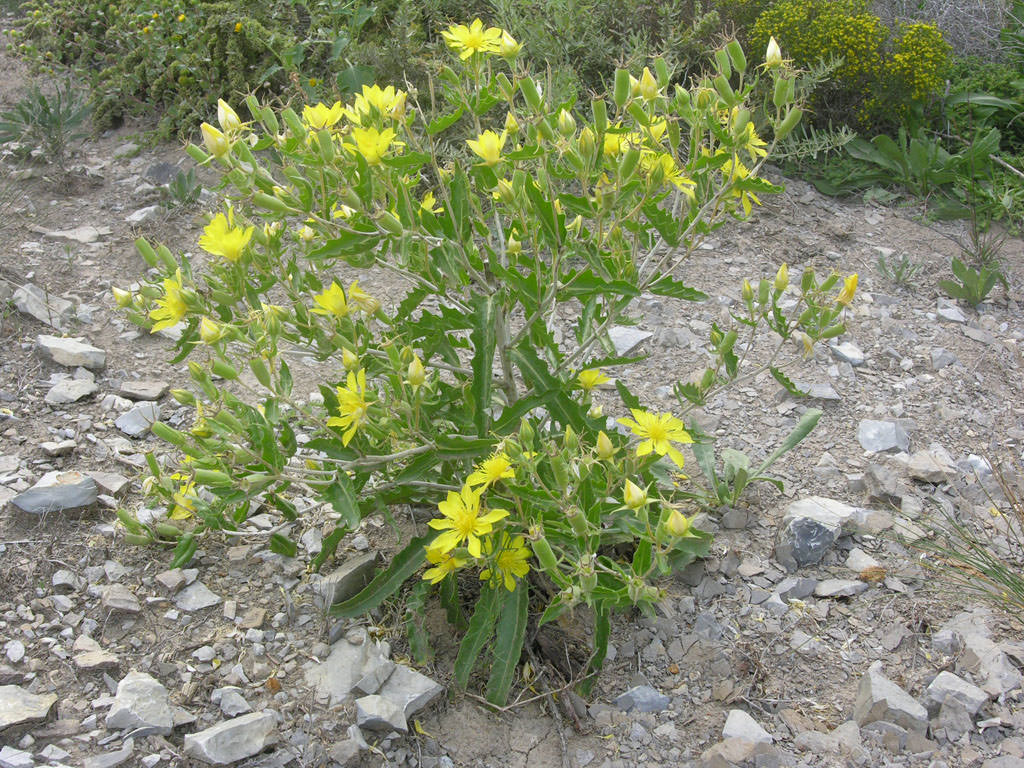
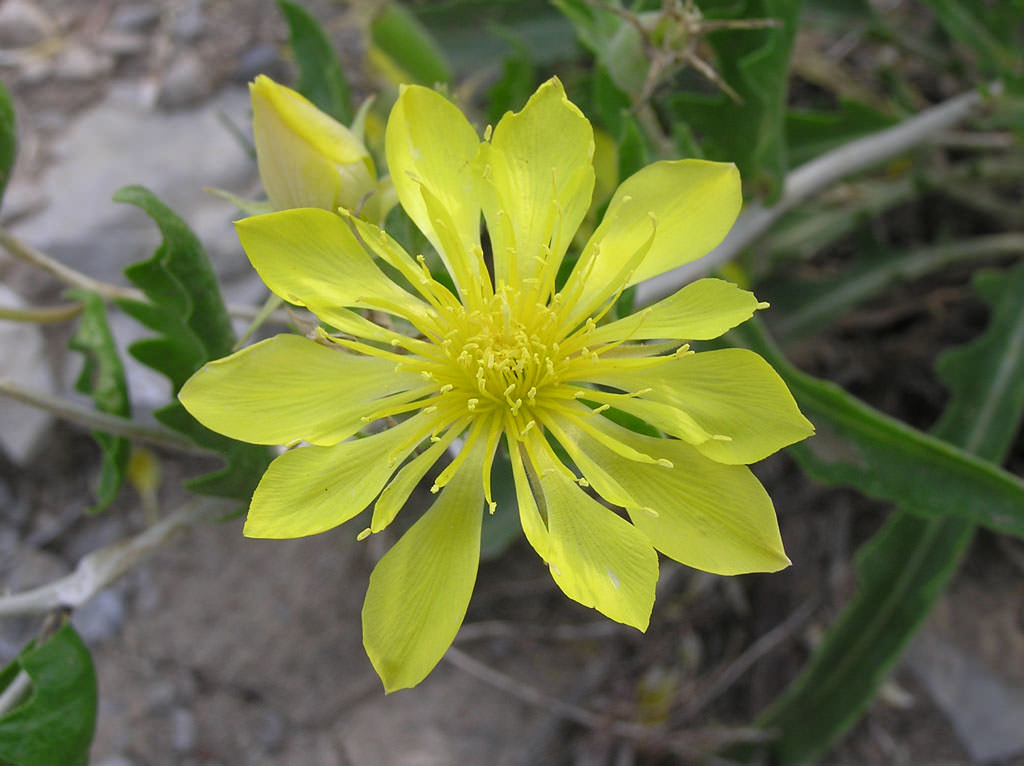
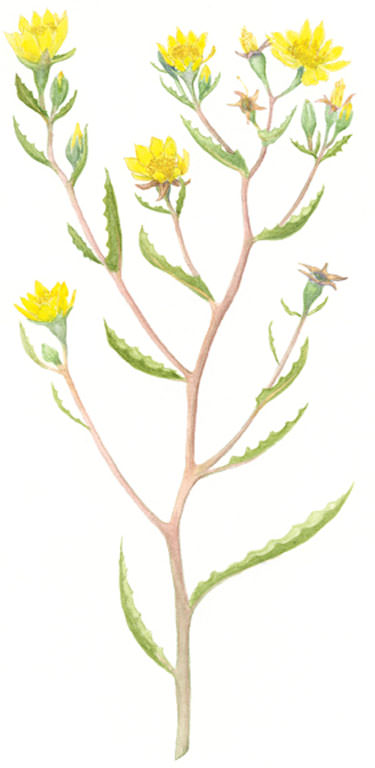
This species is a biennial or monocarpic perennial. In favorable years, it can complete its lifecycle in two years, but it can persist for several years as a rosette awaiting a favorable year. After it bolts and flowers, the plant dies. The plant has thick, erect, mostly unbranched stems, 2 to 6 dm tall. The leaves are 2 to 15 cm long, elongated (ovate-lanceolate to ovate), and sinuous-dentate (Spackman et al. 1997). The leaves, stems, and fruits have a dense covering of hairs. Mentzelia chrysantha produces numerous bright lemon yellow or golden yellow perfect flowers with 10 petals (Spackman et al. 1997). There are 50 to 80 seeds per capsule (Harrington 1954). The seeds are very narrowly winged, with a papillose seed coat (Weber and Wittmann 2001). The characteristics of the seed coat are generally regarded as being of great taxonomic value in Mentzelia (Hill 1976). For identification, the most up-to-date key available is that of Weber and Wittmann (2001), which includes a couplet that can distinguish Mentzelia chrysantha from M. reverchonii. This key and the descriptive information in Spackman et al. (1997) are the two best tools for diagnosing M. chrysantha in the field (Anderson 2006).
Look Alikes:
Weber and Wittmann (2001) distinguish N. reverchonii from N. chrysantha using seed characteristics. Nuttallia reverchonii has broadly winged seeds that have few papillae on the seed coat while the seeds of N. chrysantha have narrow wings and are distinctly papillose. However, these characters are subtle and variable, and make it difficult to identify plants in vegetative or flowering stages. In the rosette stage, N. chrysantha, N. reverchonii, N. decapetala, and N. nuda cannot be reliably distinguished (Anderson 2006). Nuttallia nuda is found with N. chrysantha at some locations. Nuttalia nuda has cream-colored flowers and blooms in June while N. chrysantha has golden yellow flowers and blooms from July to early September (Spackman et al. 1997).
Phenology:
The seeds of Nuttalia chrysantha germinate in the early spring, or in late summer during a wet monsoon year. Nuttallia chrysantha is in flower through most of the late summer months, during which it bears numerous flowers in a tall inflorescence (Anderson 2006). Plants are in bloom from July to early September, and they are in fruit from late August into September (Spackman et al. 1997). Flowers open at 5-6 p.m, and close just after dark. Seeds are dispersed in the fall and winter. Dead stalks with dehisced fruits remain erect through the fall and into winter (Anderson 2006).
 |
Habitat
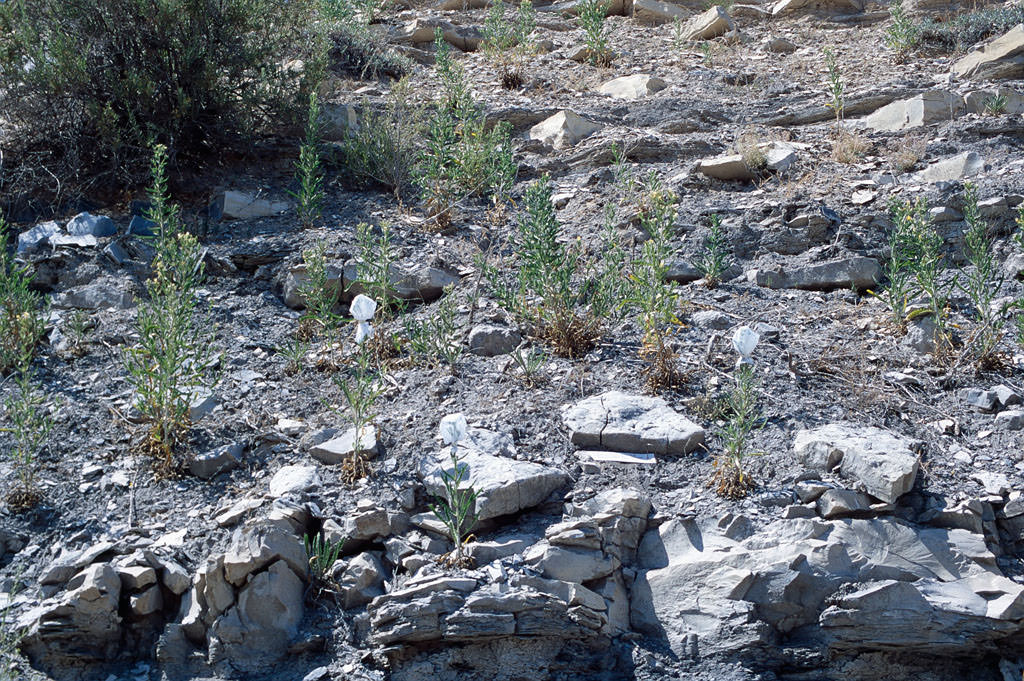
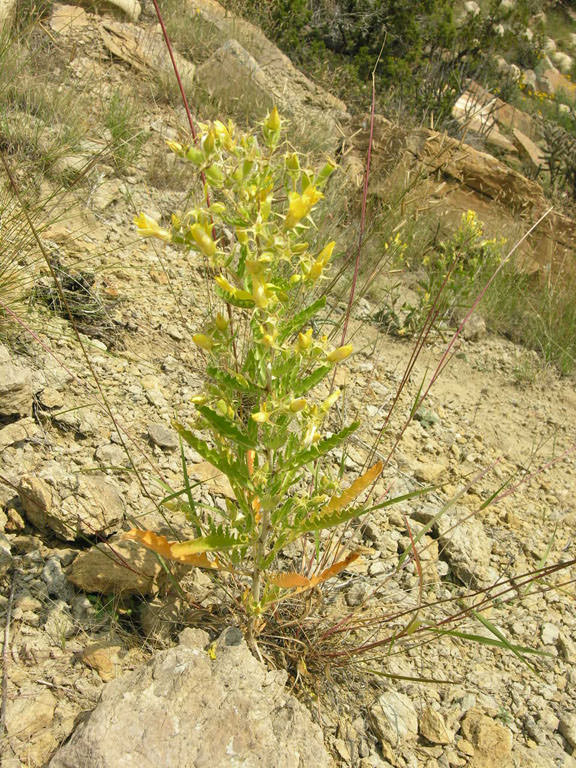
This species is typically found on barren slopes and road cuts of limestone, shale, or alkaline clay. The habitat of M. chrysantha consists of moderately disturbed, wasting slopes such as those above the Arkansas River. Slopes are usually moderately steep in the shale barrens; no particular aspect is favored. Mentzelia chrysantha occupies slopes and road cuts, where it grows prolifically and is often the only plant species growing in large numbers. Mentzelia chrysantha is found on a variety of geologic formations, mainly marine deposits from the upper (late) Cretaceous period. Mentzelia chrysantha is found primarily on the Smoky Hill member of the Niobrara shale, which is widespread throughout the middle Arkansas Valley, especially in the vicinity of Florence. The Smoky Hill member includes seven subunits that vary greatly in texture and color (may be olive black, yellow-brown, olive gray, pale yellow, or yellow gray). Coarse-scale vegetation types in which Mentzelia chrysantha is found include pinyon juniper-woodland and juniper woodland communities. While a few occurrences have actually been documented in pinyon-juniper woodland vegetation, the most commonly associated species are Frankenia jamesii and Atriplex canescens (Anderson 2006). Mentzelia chrysantha is also often associated with other rare plants such as Parthenium tetraneuris and Mirabilis rotundifolia.
click on image to enlarge
 |
 |
Elevation Range:
4,751 - 6,855 feet (1,448 - 2,089 meters)
Distribution
Colorado Endemic:
Yes
Range:
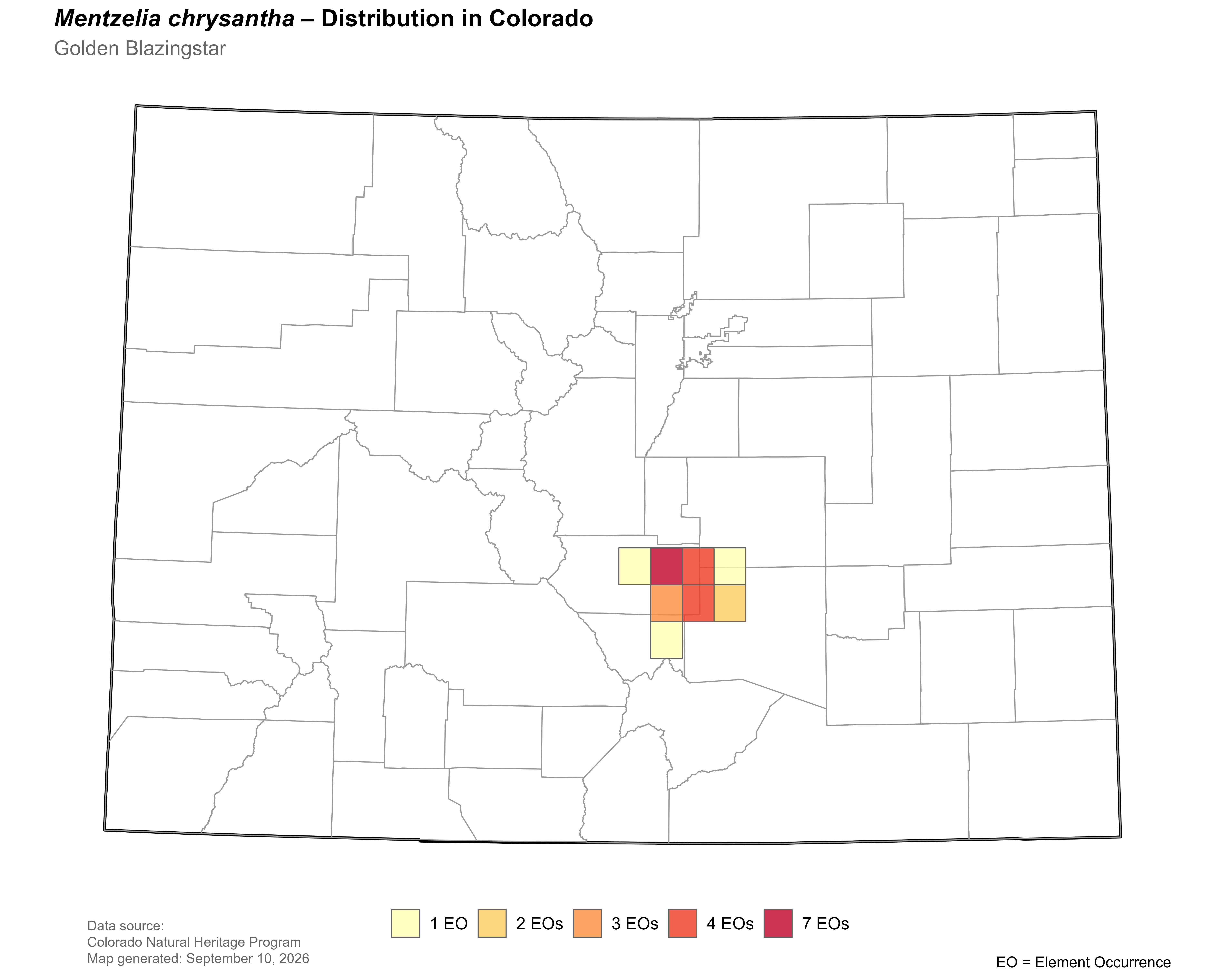
Mentzelia chrysantha is endemic to south central Colorado, USA, where it is known from Fremont and Pueblo counties. Estimated range extent in Colorado of 1337 square kilometers was calculated in GeoCAT using occurrence data provided by the Colorado Natural Heritage Program (2022).
Click on map to enlarge |
Threats and Management Issues
Mentzelia chrysantha threatened by road construction and maintenance, competition from invasive weedy species, motorized recreation and habitat loss due to urban development. Fremont County has been among the fastest growing counties in the United States, and low-density development is proceeding rapidly throughout the Arkansas Valley where M. chrysantha occurs (Anderson 2006). Limestone quarrying and gravel mining is also common within M. chrysantha's range, although no direct impacts have been reported. Approximately one third of the known occurrences are located in highway right-of-ways where they are at risk from road widening and maintenance as well as subsequent weed invasion and management activities (Anderson 2006, CNHP 2022). Additionally, some occurrences are on military lands where they may be disturbed by military exercises, and several other occurrences report impacts from off-highway vehicle use (CNHP 2022). This species is considered to have moderate adaptive capacity and is expected to be moderately vulnerable to climate change under both RCP 4.5 and 8.5 scenarios, as assessed for the 2025 Colorado State Wildlife Action Plan (CNHP 2025).
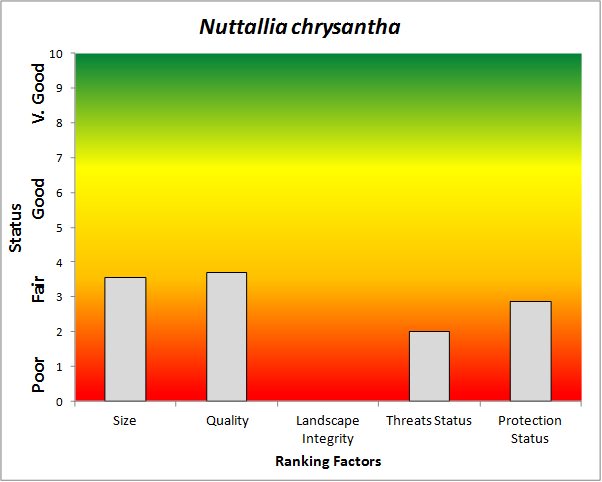
Summary results of an analysis of the status of Nuttallia chrysantha based on several ranking factors. This species was concluded to be under conserved. From Rondeau et al. 2011. |
References
- Ackerfield, J. 2012. The Flora of Colorado. Colorado State University Herbarium. 433 pp.
- Anderson, D.G. (2006, July 3). Mentzelia chrysantha Engelmann ex Brandegee (golden blazing star): a technical conservation assessment. [Online]. USDA Forest Service, Rocky Mountain Region. Available: http://www.fs.fed.us/r2/projects/scp/assessments/mentzeliachrysantha.pdf [date of access].
- Colorado Natural Heritage Program (CNHP). 2022. Biodiversity Tracking and Conservation System (BIOTICS 5). Colorado Natural Heritage Program, Colorado State University, Fort Collins.
- Colorado Natural Heritage Program (CNHP). 2025. Climate Change Vulnerability Assessment of Colorado Tier 1 and Tier 2 Plant Species of Greatest Conservation Need (SCGN) for the 2025 Colorado State Wildlife Action Plan. Colorado Natural Heritage Program, Colorado State University, Fort Collins.
- Handwerk, J., L. Grunau, and S. Panjabi. 2015. Colorado Wildlife Action Plan: 2015 Rare Plant Addendum. Colorado Natural Heritage Program, Colorado State University, Fort Collins, Colorado, USA.
- Harrington, H. D. 1954. Manual of the Plants of Colorado. Sage Books, Denver, CO. 666 pp.
- Hill, R.J. 1976. Taxonomic and phylogenetic significance of seed coat microsculpturing in Mentzelia (Loasaceae) in Wyoming and adjacent western states. Brittonia 28:86-112.
- Neely, B., S. Panjabi, E. Lane, P. Lewis, C. Dawson, A. Kratz, B. Kurzel, T. Hogan, J. Handwerk, S. Krishnan, J. Neale, and N. Ripley. 2009. Colorado Rare Plant Conservation Strategy, Developed by the Colorado Rare Plant conservation Initiative. The Nature Conservancy, Boulder, Colorado, 117 pp.
- Rocky Mountain Society of Botanical Artists. 2009. RARE Imperiled Plants of Colorado, a traveling art exhibition. Exhibition catalogue developed by the Denver Botanic Gardens and Steamboat Art Museum.
- Spackman Panjabi, S. 2004. Visiting Insect Diversity and Visitation Rates for Seven Globally Imperiled Plant Species in Colorado's Middle Arkansas Valley. Prepared for the Native Plant Conservation Alliance and the National Fish and Wildlife Foundation by the Colorado Natural Heritage Program, Fort Collins, CO.
- Spackman, S., B. Jennings, J. Coles, C. Dawson, M. Minton, A. Kratz, and C. Spurrier. 1997. Colorado Rare Plant Field Guide. Prepared for the Bureau of Land Management, the U.S. Forest Service and the U.S. Fish and Wildlife Service by the Colorado Natural Heritage Program.
- Spackman, Susan and Sandra Floyd. 1996. Final Report: Conserving the Globally Imperiled Plants of the Middle Arkansas Valley, Colorado. Colorado Natural Heritage Program, Fort Collins, CO.
- USDA, NRCS. 2022. The PLANTS Database. National Plant Data Team, Greensboro, NC 27401-4901 USA.
- Weber, W. A. and R. C. Wittmann. 2012. Colorado Flora, Eastern Slope, A Field Guide to the Vascular Plants, Fourth Edition. Boulder, Colorado. 555 pp.