

Scientific Name : Luzula subcapitata
Author : (Rydb.) Harrington NatureServe Explorer
Common Name : Colorado Wood- rush
 Current Research Activities


☰ Click link below for details.
Taxonomy
Juncaceae (rush family)
Ranks and Status
State Rank : S3
State Rank Reason : Luzula subcapitata is thought to be endemic to the central Rocky Mountains of Colorado and Wyoming, USA. It has been reported from just over 50 occurrences in Colorado, however, over 60% of them are ranked as historical. Hydrologic alterations are the primary threat to this species. Trampling by lakeside recreationists is also a concern. This species is considered to have moderate adaptive capacity and is expected to be slightly to moderately vulnerable to climate change.
U.S. Endangered Species Act : none
Colorado Threatened and Endangered List : none
Other Statuses : SWAP Tier 2, USFS RGNF
Description and Phenology
General Description:
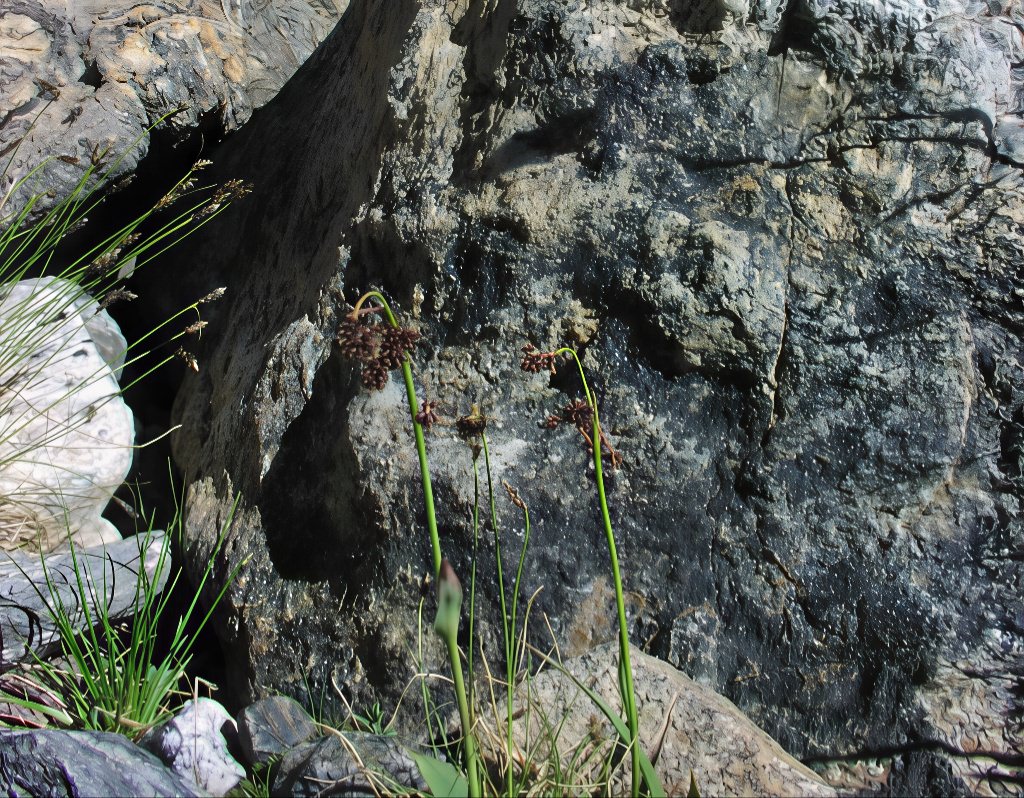
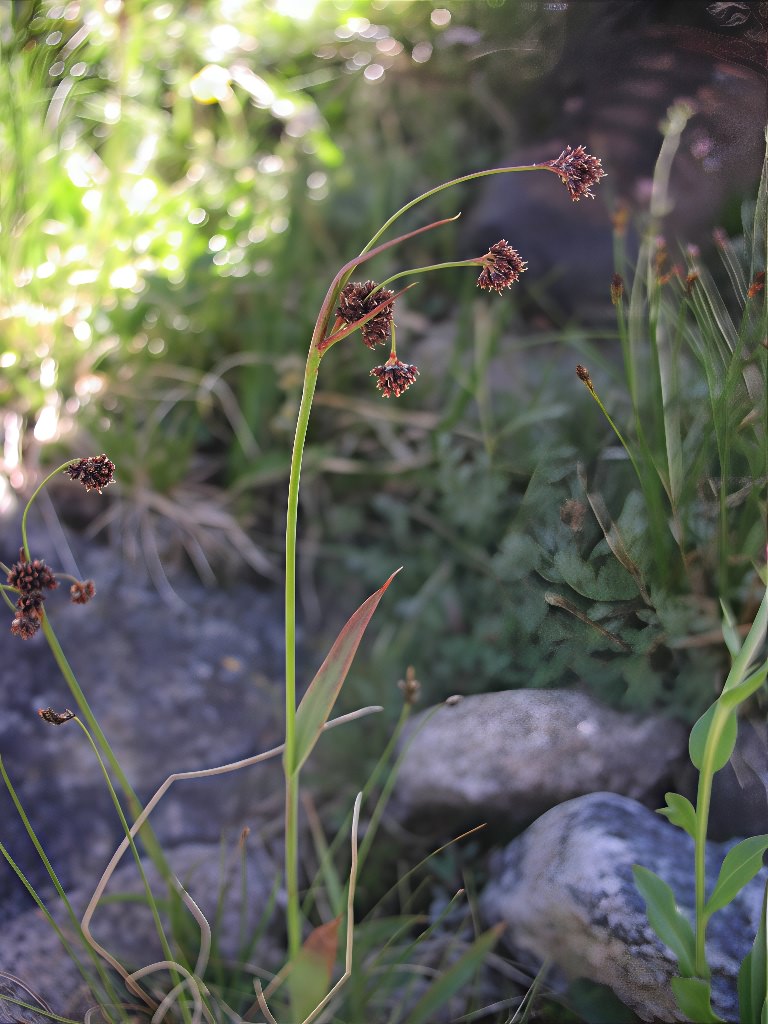
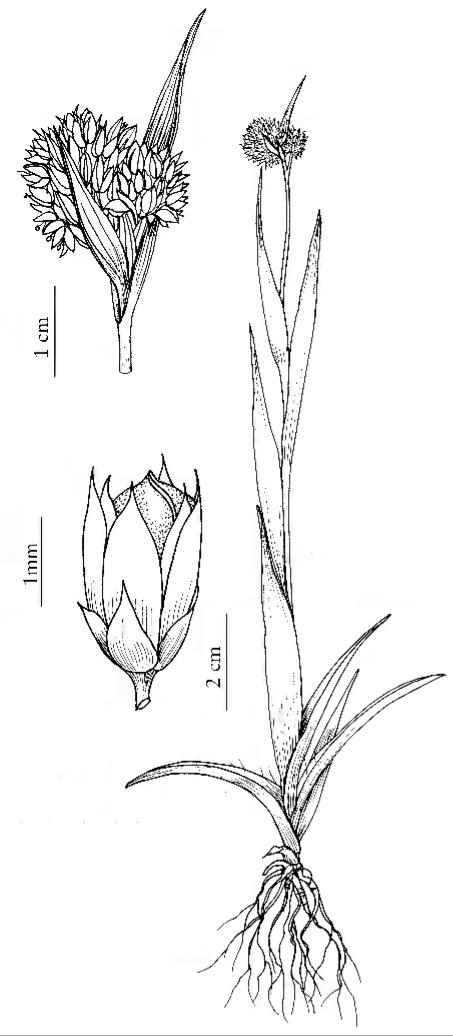
Perennial with round stems; 0.3-3.5 dm tall, with short, stalky rhizomes; culms caespitose 8-40 cm with thickened glabrous bases; basal leaves to 13 cm; cauline leaves with closed sheaths, most less than 5 cm long, with hairs along the margins; involute tips. Inflorescence of 6-10 sessile, spherical clusters, not nodding; tepals brown with clear margins 1.5-2 mm long, stigmas much longer than styles; capsules about equaling the tepals; seeds about 1.3 mm long, lacking a caruncle (Ackerfield 2022, FNA Vol. 22, 2000, Culver and Lemly 2013).
Look Alikes:
Luzula comosa is found along subalpine streams and has short, cylindric spikes versus capitate spikes in L. subcapitata. Also leaf blades in L. comosa are less than 5 mm wide, where L. subcapitata leaf blades are 5-8 mm wide (Culver and Lemly 2013).
Phenology:
Flowering and fruiting from July-September (Ackerfield 2022).
 |
Habitat
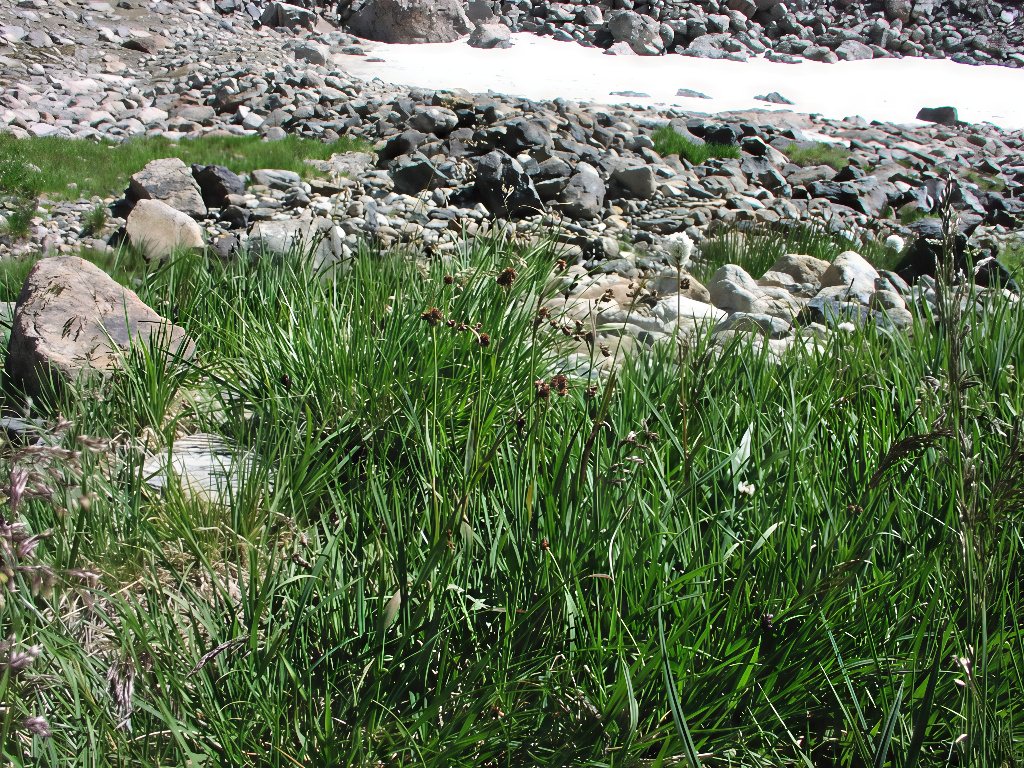
Subalpine and alpine fens and wet meadows (Culver and Lemly 2013). Found along alpine lake shorelines and the margins of fens. Associated species include Artemisia scopulorum, Caltha chionophila, Carex aquatilis, C. elynoides, C. nigricans, C. scopulorum, Deschampsia cespitosa, Juncus drummondii, Pedicularis groenlandica, Salix brachycarpa, and S. planifolia (CNHP 2026).
click on image to enlarge
 |
Elevation Range:
11,873 - 12,936 feet (3,619 - 3,943 meters)
Distribution
Colorado Endemic:
No
Range:
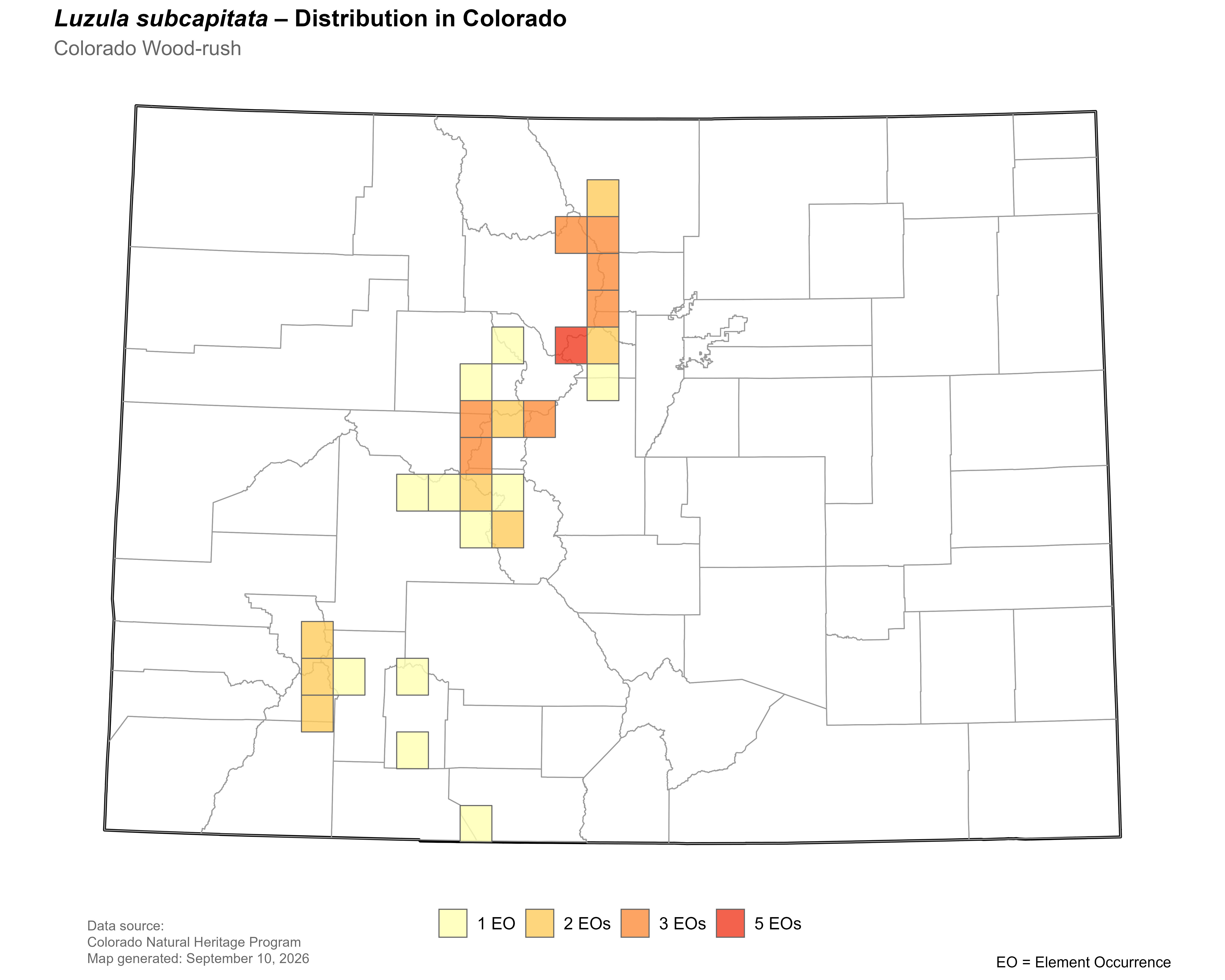
Luzula subcapitata is known from Boulder, Chaffee, Clear Creek, Eagle, Gilpin, Grand, Gunnison, Hinsdale, Park, Pitkin, Lake, Larimer, Mineral, San Juan, Saguache, and Summit counties in Colorado, USA. Estimated range extent in Colorado of 27,057 square kilometers was calculated in GeoCAT using occurrence data provided by the Colorado Natural Heritage Program (2026). This species can also be found in Wyoming, USA.
Click on map to enlarge |
Threats and Management Issues
Hydrologic alterations and trampling by recreationists are the primary threats to this species. However, the timing, scope and severity of these threats are largely unknown. This species is considered to have moderate adaptive capacity and is expected to be slightly to moderately vulnerable to climate change under both RCP 4.5 and 8.5 scenarios, as assessed for the 2025 Colorado State Wildlife Action Plan (CNHP 2025).
References
- Ackerfield, Jennifer. 2022. Flora of Colorado. Second Edition. Bot. Misc. 60. BRIT Press, Fort Worth Botanic Garden/Botanical Research Institute of Texas, U.S.A. 861 pp.
- Colorado Natural Heritage Program (CNHP). 2025. Climate Change Vulnerability Assessment of Colorado Tier 1 and Tier 2 Plant Species of Greatest Conservation Need (SCGN) for the 2025 Colorado State Wildlife Action Plan. Colorado Natural Heritage Program, Colorado State University, Fort Collins, CO.
- Colorado Natural Heritage Program (CNHP). 2026. Biodiversity Tracking and Conservation System (Biotics 5). Colorado Natural Heritage Program, Colorado State University, Fort Collins.
- Culver, D.R. and J.M. Lemly. 2013. Field Guide to Colorado's Wetland Plants; Identification, Ecology and Conservation. Colorado Natural Heritage Program, Colorado State University, Fort Collins, 694 pp.
- Flora of North America Editorial Committee (FNA). 2000. Flora of North America north of Mexico. Vol. 22. Magnoliophyta: Alismatidae, Arecidae, Commelinidae (in part), and Zingiberidae. Oxford Univ. Press, New York. xxiii + 352 pp.
Biotics Export Date : September, 2026