


Scientific Name : Lomatium concinnum
Author : (Osterhout) Mathias NatureServe Explorer
Common Name : Colorado Desert- parsley
 Current Research Activities
 1997 profile
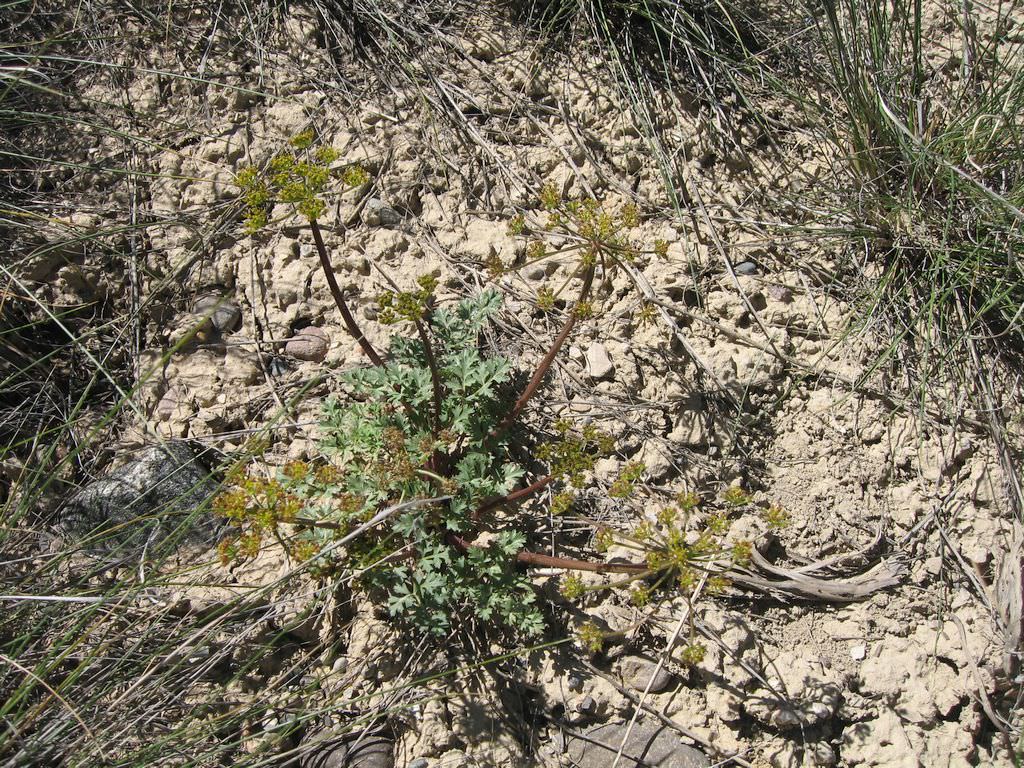
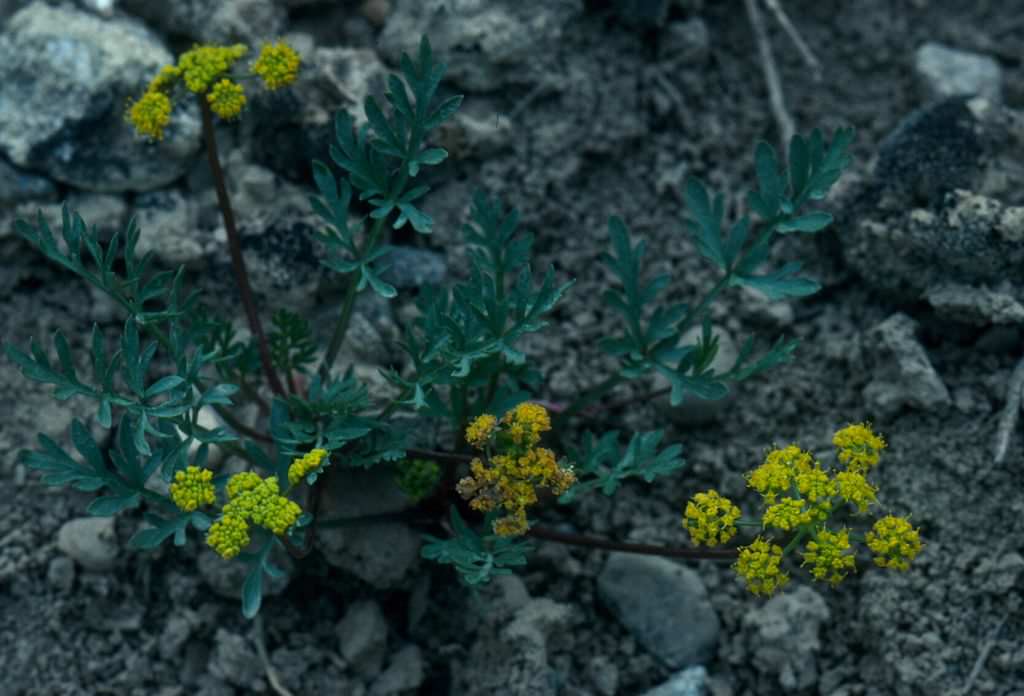
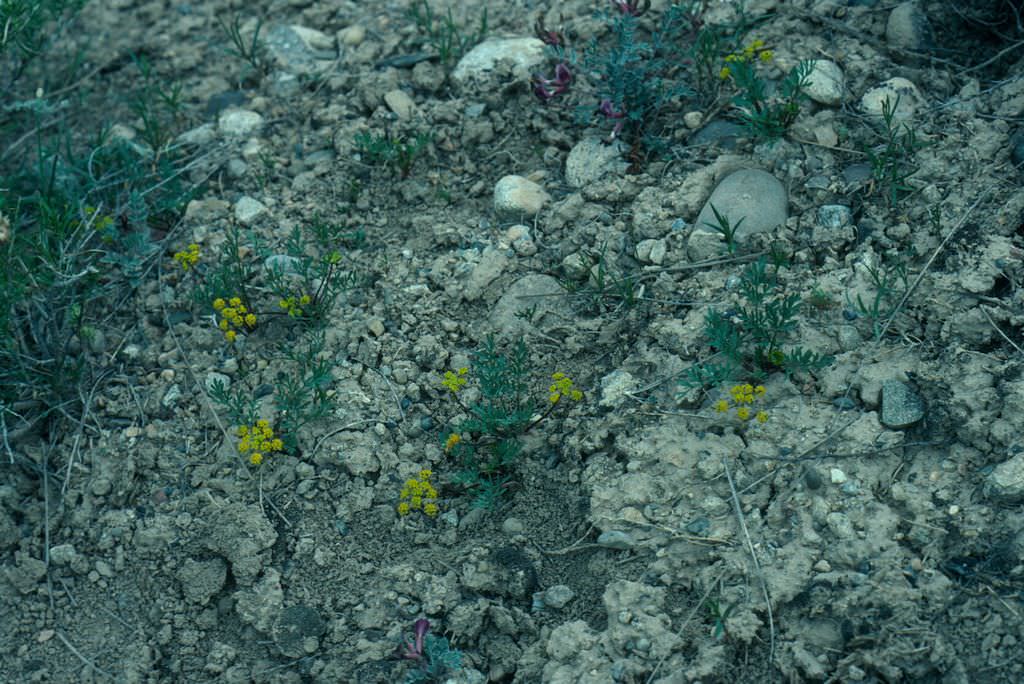


☰ Click link below for details.
Taxonomy
Apiaceae (carrot family)
Listed as Lomatium concinnum by Ackerfield (2015, 2022). Flora of North America (2024) considers this taxon Cymopterus glomeratus var. concinnus.
Ranks and Status
State Rank : S2S3
State Rank Reason : Lomatium concinnum is a Colorado (USA) endemic known from Delta, Montrose, and Ouray counties in the west-central part of the state. There are 22 extant occurrences, many of which have good or excellent viability. There are also 15 occurrences that are based on only historical observations. Threats include habitat loss and degradation from residential growth, incompatible livestock grazing, and off-road vehicle. This species is also considered to be moderately vulnerable to the effects of climate change.
U.S. Endangered Species Act : none
Colorado Threatened and Endangered List : none
Other Statuses : BLM, SWAP Tier 1, USFS GMUG
Description and Phenology
General Description:
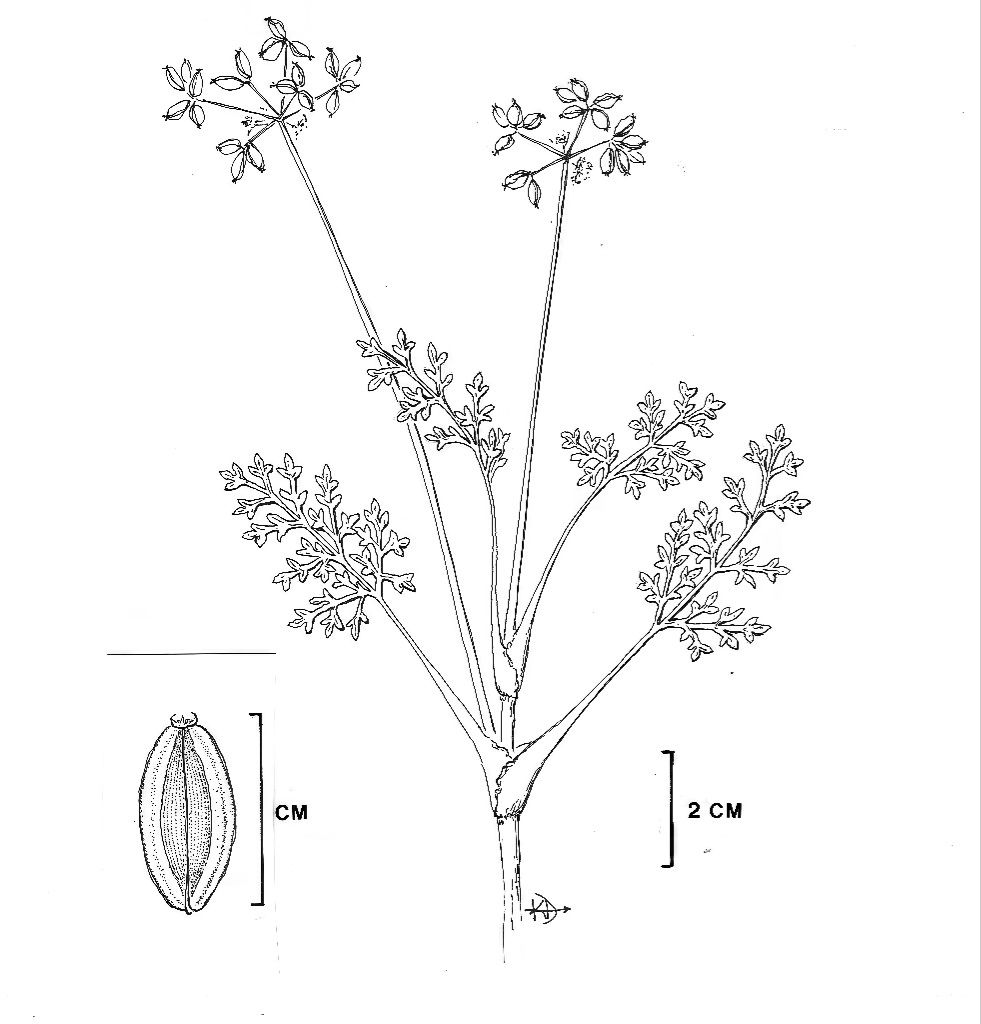
Plants 12-25 cm, glabrous; leaves mostly pininnate, the ultimate divisions narrowly elliptic or linear-lanceolate, 2-11 mm long; rays subequal, 2.5- 4 cm long; involucral bractlets ovate to narrowly elliptic, often fused below; petals yellow; fruit with lateral wings (Ackerfield 2015).
Look Alikes:
Cymopteris bulbosa has greyish foliage, broader leaflets, white/purple flowers, and four-winged fruits. Cymopteris pupureus has broader pointed leaflets, purple or yellow flowers, and occurs primarily in the pinyon-juniper zone. Cymopteris fendleri has broader leaflets, no pedicels and wavy-edged, four-winged fruits. In general, Lomatium species differ from Cymopterus species in having dorsiventrally flattened fruits (Spackman et al. 1997).
Phenology:
Flowers and fruit produced in May.
 |
Habitat
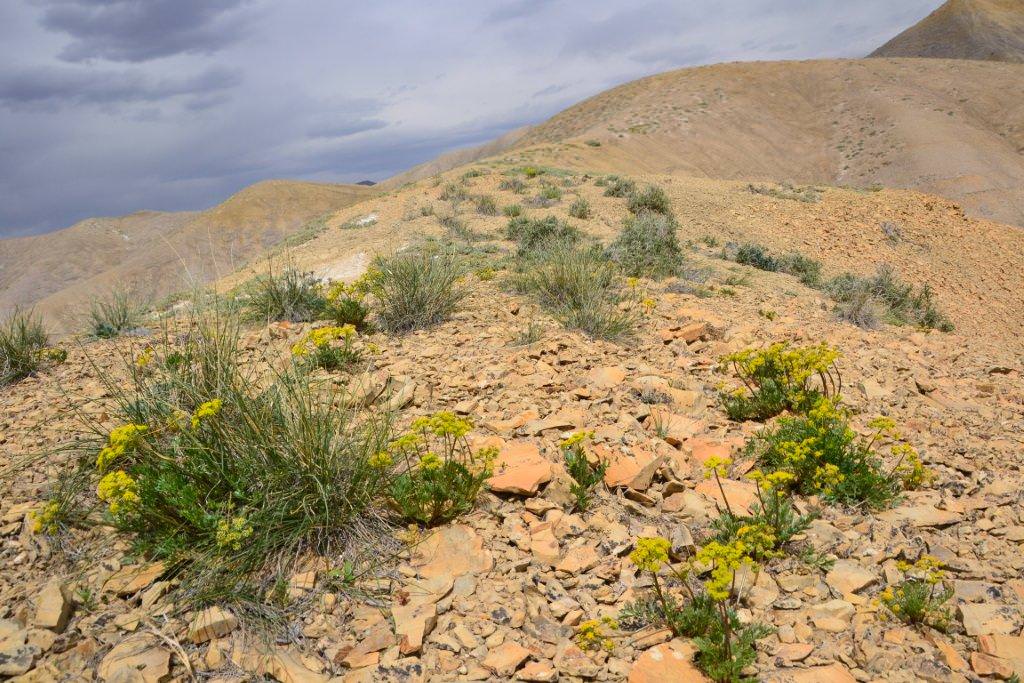
Found on barren adobe soils derived from shales of the Mancos Formation. In shrub-dominated communities, sometimes with another rare plant, the clay-loving wild-buckwheat (Eriogonum pelinophilum). Associated with shrub communities dominated by sagebrush (Artemisia spp.), shadescale (Atriplex spp.), greasewood (Sarcobatus vermiculatus), or scrub oak (Quercus gambellii). Other associated species inlcude Oryzopsis hymenoides, Hilaria jamesii, and Cymopteris spp.
click on image to enlarge
 |
Elevation Range:
5,191 - 7,956 feet (1,582 - 2,425 meters)
Distribution
Colorado Endemic:
Yes
Range:
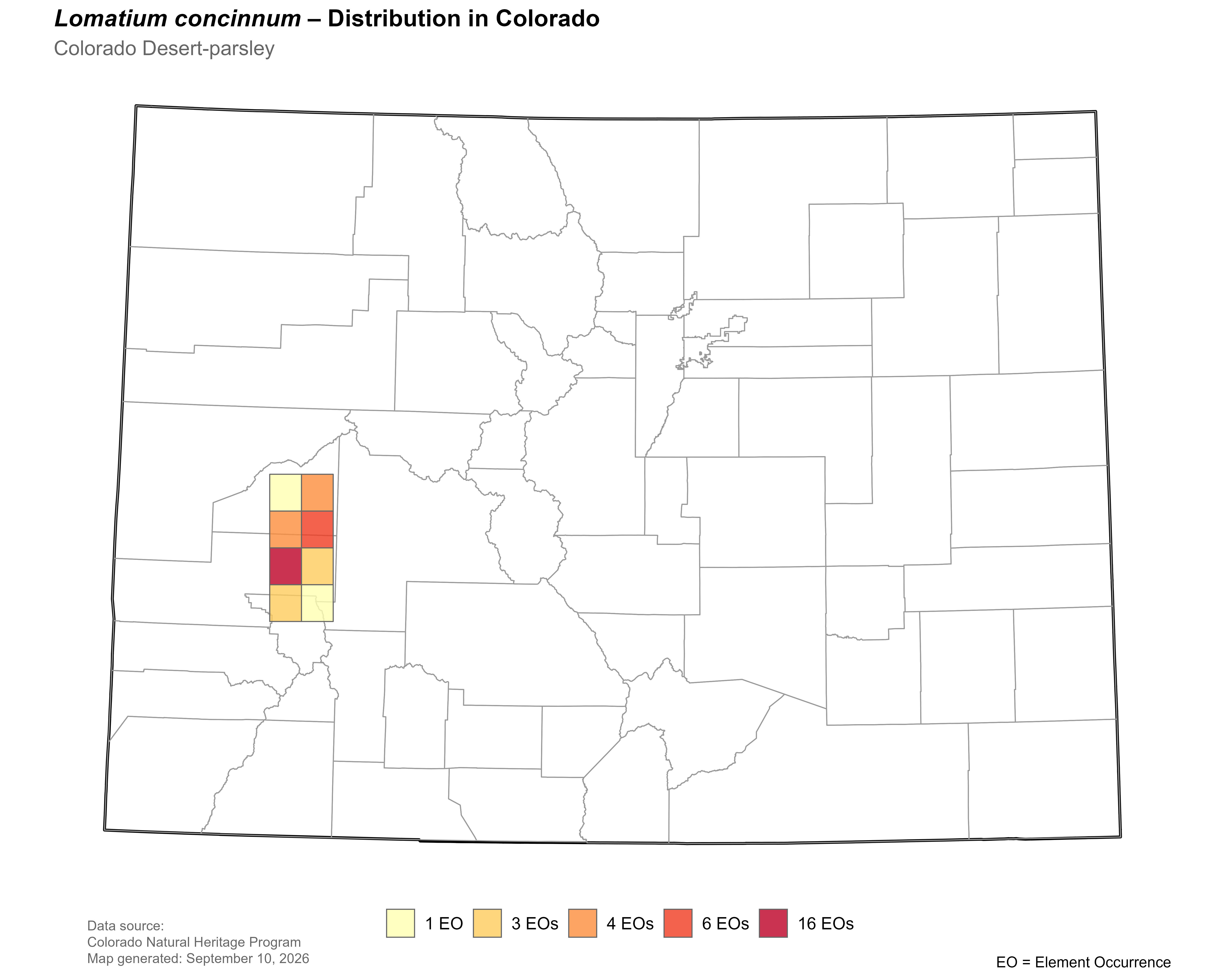
Lomatium concinnum is a Colorado (USA) endemic that is known only from Delta, Montrose, and Ouray counties. Estimated range extent in Colorado of 1533 square kilometers was calculated in GeoCAT using occurrence data provided by the Colorado Natural Heritage Program (2025).
Click on map to enlarge |
Threats and Management Issues
Motorized recreation is considered to be the primary threat to the species at this time on both private and public lands (Rondeau et al. 2011). Nearly 40% of occurrences report ATV activity within the occupied habitat. Invasive plant species including Bromus tectorum, Lepidium perfoliatum, Halogeton glomeratus and Chorispora tenella have been observed at approximately one third of the occurrences. Sheep grazing does not seem to be highly detrimental, however, it is widespread within the species range and trampling and churning of soil by livestock is a concern on both public and private lands. Occurrences on private land are also threatened by residential and commercial development. This species is considered to have moderate adaptive capacity and is expected to be moderately vulnerable to climate change under both RCP 4.5 and 8.5 scenarios, as assessed for the 2025 Colorado State Wildlife Action Plan (CNHP 2025).
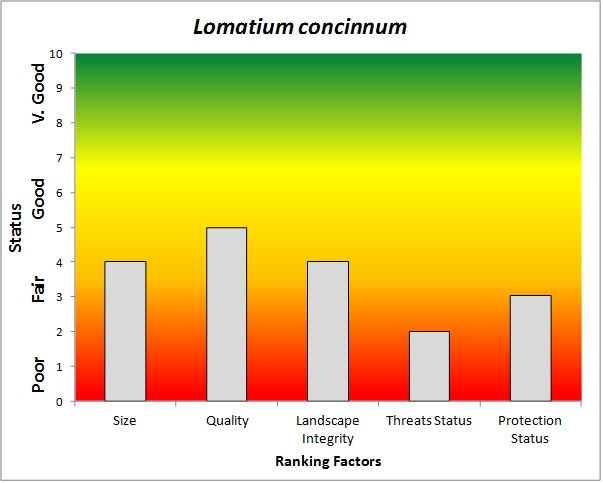
Summary results of an analysis of the status of Lomatium concinnum based on several ranking factors. This species was concluded to be Weakly Conserved. From Rondeau et al. 2011. |
References
- Ackerfield, J. 2015. Flora of Colorado. BRIT Press, Botanical Research Institute of Texas, Fort Worth, TX. 818 pp.
- Colorado Native Plant Society. 1989. Rare plants of Colorado. Rocky Mountain Nature Association, Colorado Native Plant Society, Estes Park, Colorado. 73 pp.
- Colorado Natural Heritage Program (CNHP). 2025. Biodiversity Tracking and Conservation System (Biotics 5). Colorado Natural Heritage Program, Colorado State University, Fort Collins.
- Colorado Natural Heritage Program (CNHP). 2025. Climate Change Vulnerability Assessment of Colorado Tier 1 and Tier 2 Plant Species of Greatest Conservation Need (SCGN) for the 2025 Colorado State Wildlife Action Plan. Colorado Natural Heritage Program, Colorado State University, Fort Collins, CO.
- Handwerk, J., L. Grunau, and S. Panjabi. 2015. Colorado Wildlife Action Plan: 2015 Rare Plant Addendum. Colorado Natural Heritage Program, Colorado State University, Fort Collins, Colorado, USA.
- Neely, B., S. Panjabi, E. Lane, P. Lewis, C. Dawson, A. Kratz, B. Kurzel, T. Hogan, J. Handwerk, S. Krishnan, J. Neale, and N. Ripley. 2009. Colorado Rare Plant Conservation Strategy, Developed by the Colorado Rare Plant conservation Initiative. The Nature Conservancy, Boulder, Colorado, 117 pp.
- O'Kane, S. L. 1988. Colorado's Rare Flora. Great Basin Naturalist. 48(4):434-484.
- Rondeau, R., K. Decker, J. Handwerk, J. Siemers, L. Grunau, and C. Pague. 2011. The state of Colorado's biodiversity 2011. Prepared for The Nature Conservancy. Colorado Natural Heritage Program, Colorado State University, Fort Collins, Colorado.
- Spackman, S., B. Jennings, J. Coles, C. Dawson, M. Minton, A. Kratz, and C. Spurrier. 1997. Colorado rare plant field guide. Prepared for Bureau of Land Management, U.S. Forest Service and U.S. Fish and Wildlife Service by Colorado Natural Heritage Program.
- USDA, NRCS. 2013. The PLANTS Database. National Plant Data Team, Greensboro, NC 27401-4901 USA.
- USDA, NRCS. 2022. The PLANTS Database. National Plant Data Team, Greensboro, NC 27401-4901 USA.
- Weber, W. A. and R. C. Wittmann. 2012. Colorado Flora, Western Slope, A Field Guide to the Vascular Plants, Fourth Edition. Boulder, Colorado. 532 pp.


