

Scientific Name : Ipomopsis globularis
Author : (Brand) W.A. Weber NatureServe Explorer
Common Name : Hoosier Pass Ipomopsis
 Current Research Activities
 1997 profile


☰ Click link below for details.
Taxonomy
Polemoniaceae (phlox family)
Ranks and Status
State Rank : S2
State Rank Reason : Ipomopsis globularis has a narrow geographic range, primarily in the Mosquito Range in central Colorado, USA. There are 13 documented occurrences, three of of which are of poor viability. Motorized recreation is rapidly increasing in areas where this species grows. Mining claims exist throughout the range of Ipomopsis globularis and, although most are not currently active, they represent a potential threat to the species. Additionally, this species is considered to be extremely vulnerable to climate change.
U.S. Endangered Species Act : none
Colorado Threatened and Endangered List : none
Other Statuses : SWAP Tier 1
Description and Phenology
General Description:
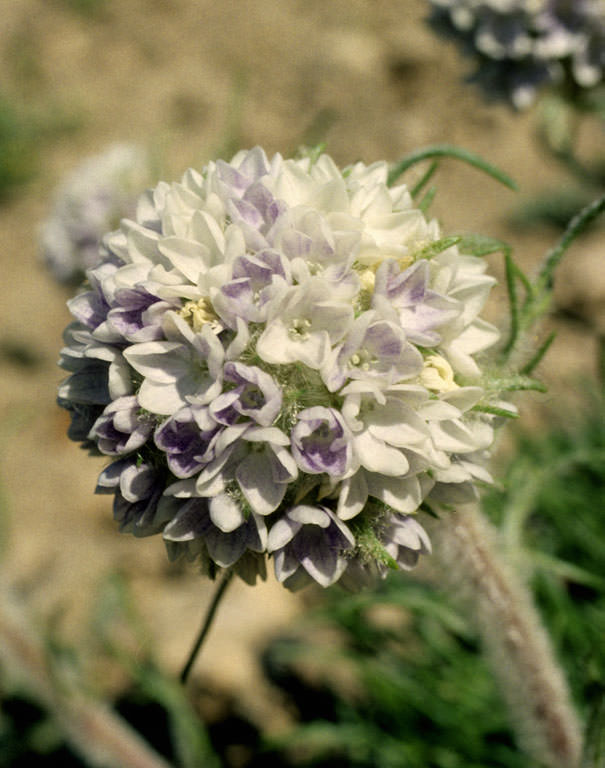
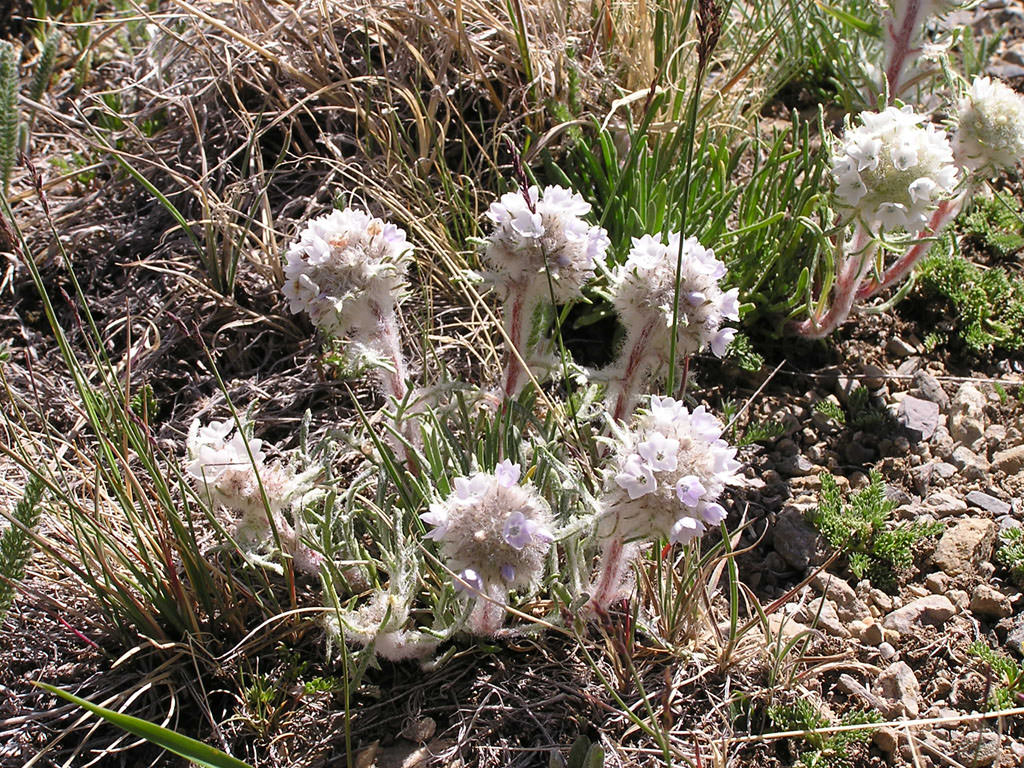
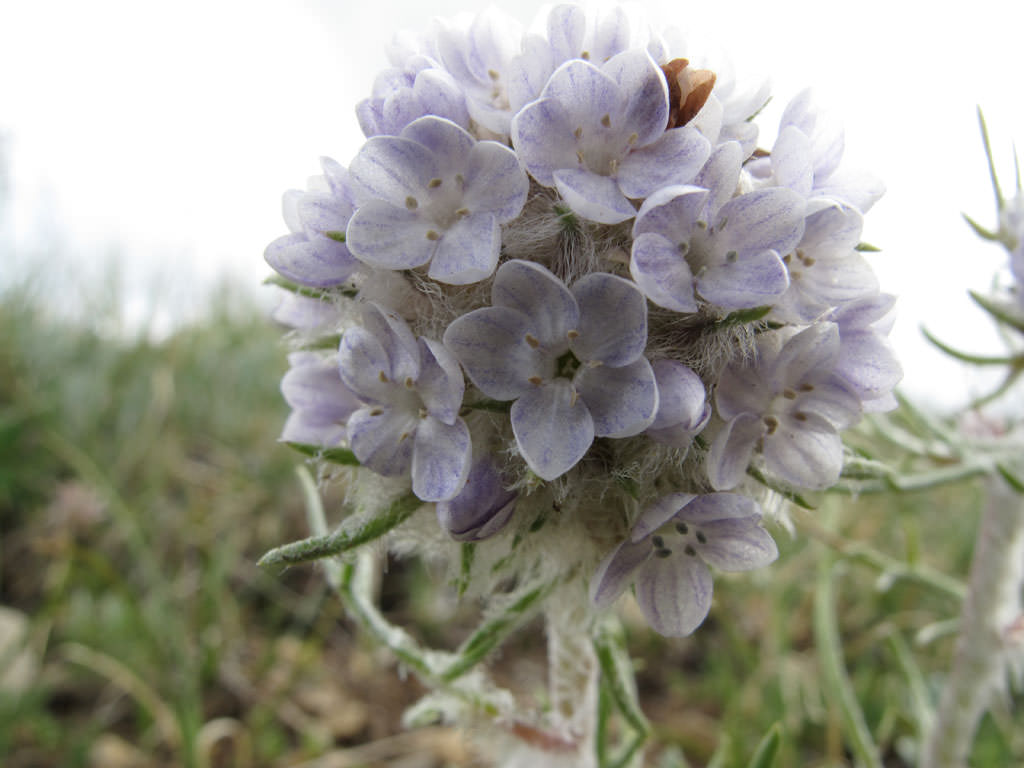
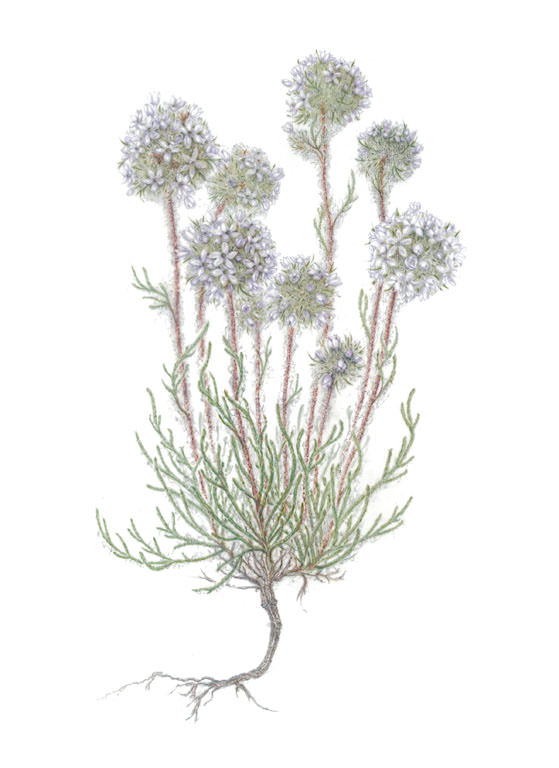
Ipomopsis globularis is a perennial herb growing 10 to 15 cm (4 to 6 inches) tall. Leaves are pinnately lobed, and the lobes are narrowly linear. The larger leaves are basal, but there are a few smaller leaves on the stems. Stems are densely woolly. Flowers are in terminal, ball-like, wooly clusters. Flowers are pale purple and have a strong fragrance (Spackman et al. 1997, FNA 1993+).
Look Alikes:
There are no similar appearing plants on calcareous alpine habitats (Panjabi and Anderson 2005).
Phenology:
Flowers from July to early August (Panjabi and Anderson 2005). Fruits are apparent into late August (Spackman et al. 1997).
 |
Habitat
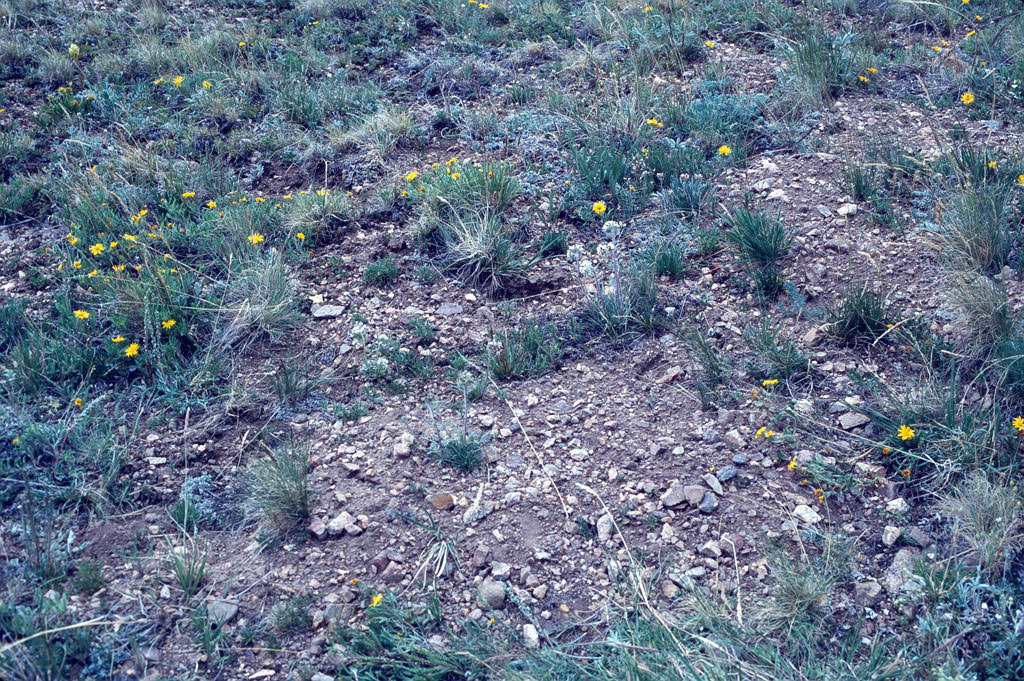
Ipomopsis globularis is found on alpine ridges with gravelly, calcareous soil. Habitats are described as meadows, talus, and scree slopes, often with 50 percent bare soil. Plants have been seen on abandoned mine spoils. Sites are underlain by Leadville limestone and Manitou limestone formations (Panjabi and Anderson 2005). Populations occur on all aspects and flat to very steep slopes. Frequently associated species of Ipomopsis globularis include Geum rossii, Artemisia scopulorum, Bistorta bistortoides, Campanula uniflora, Castilleja occidentalis, Deschampsia cespitosa, Elymus trachycaulus, Lloydia serotina, Oxytropis splendens, Pedicularis scopulorum, Polemonium viscosum, and Silene acaulis (Panjabi and Anderson 2005).
click on image to enlarge
 |
Elevation Range:
10,553 - 13,639 feet (3,217 - 4,157 meters)
Distribution
Colorado Endemic:
Yes
Range:
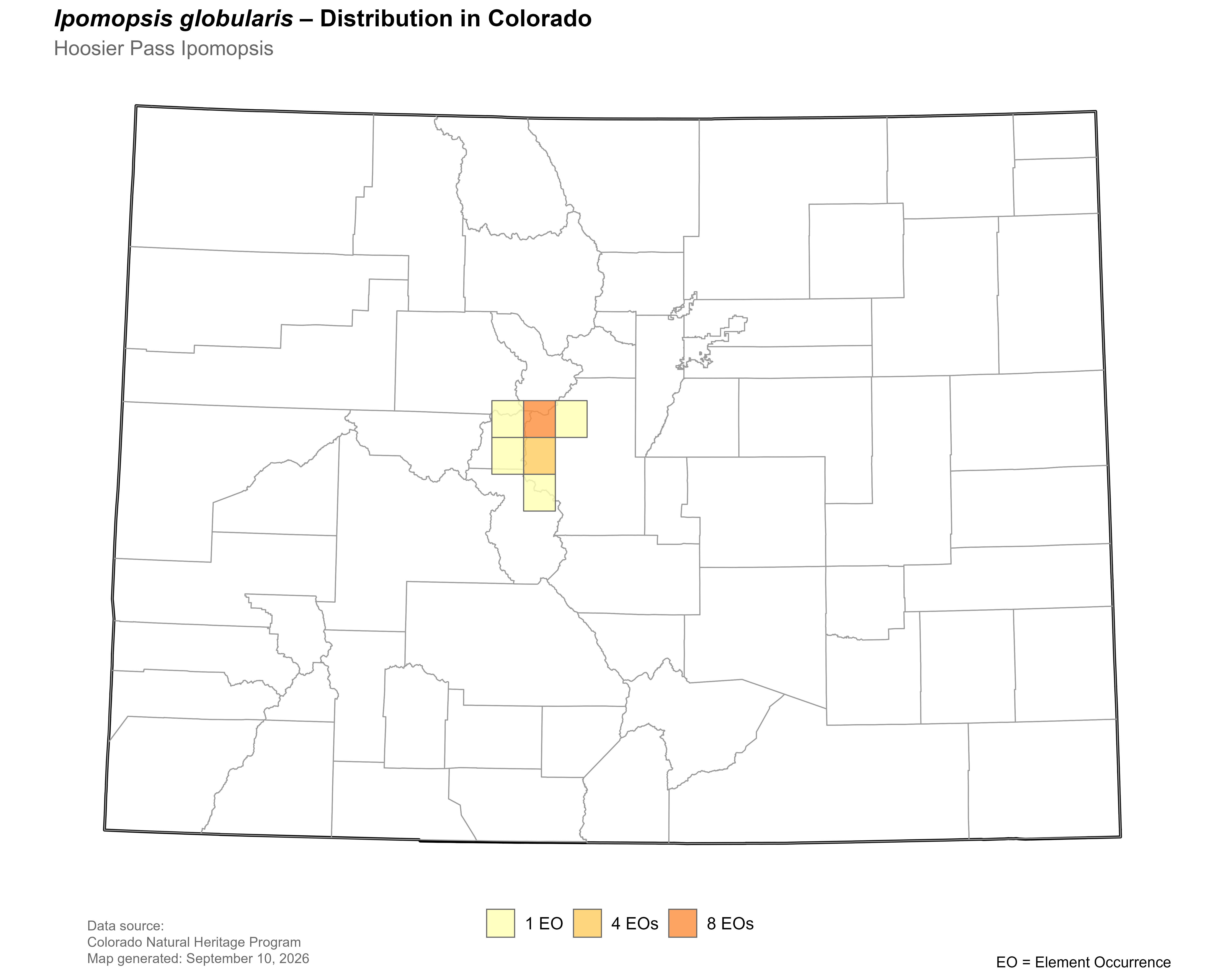
Ipomopsis globularis is endemic to the Mosquito Range in central Colorado, USA, where it is known from Lake, Park, and Summit counties. Estimated range extent in Colorado of 841 square kilometers was calculated in GeoCAT using occurrence data provided by the Colorado Natural Heritage Program (2023).
Click on map to enlarge |
Threats and Management Issues
The primary threat at this time is considered to be motorized recreation (Rondeau et al. 2011). Other potential threats are from mining, exotic species invasion, effects of small population size, collection for horticultural trade, non-motorized recreation, global climate change, and pollution. Motorized recreation is rapidly increasing in areas where this species grows, and it is extremely difficult to enforce regulations or to close access to protect populations. The entire global range of I. globularis is vulnerable to mining development; however, the scale and time frame within which mining activity might occur is unknown. Historical mining is widely evident in this species' habitat. Land ownership patterns are extremely complex within the range of I. globularis and even within individual occurrences. Despite its narrow range, this species is found on lands administered by three ranger districts on two national forests (South Park and Leadville of the Pike-San Isabel, and Dillon of the Arapaho as administered by the White River), and hundreds if not thousands of private landowners. These complex land ownership patterns make conservation efforts difficult. (Spackman Panjabi and Anderson 2005). This species is considered to have moderate adaptive capacity and is expected to be slightly to moderately vulnerable to climate change under both RCP 4.5 and 8.5 scenarios, as assessed for the 2025 Colorado State Wildlife Action Plan (CNHP 2025).
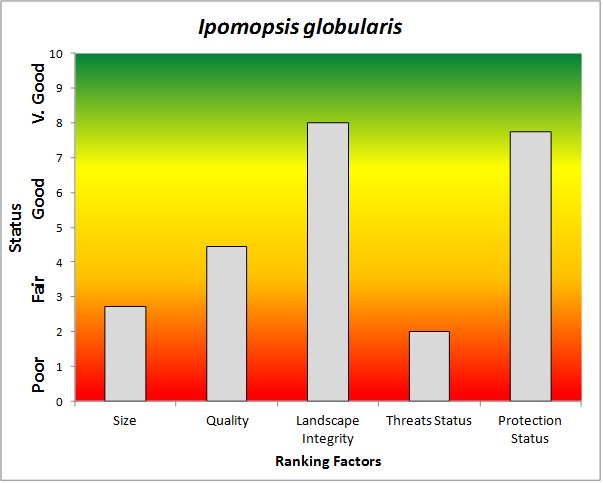
Summary results of an analysis of the status of Ipomopsis globularis based on several ranking factors. This species was concluded to be Moderately Conserved. From Rondeau et al. 2011. |
References
- Ackerfield, J. 2015. Flora of Colorado. BRIT Press, Botanical Research Institute of Texas, Fort Worth, TX. 818 pp.
- Colorado Native Plant Society. 1989. Rare plants of Colorado. Rocky Mountain Nature Association, Colorado Native Plant Society, Estes Park, Colorado. 73 pp.
- Colorado Natural Heritage Program (CNHP). 2023. Biodiversity Tracking and Conservation System (Biotics 5). Colorado Natural Heritage Program, Colorado State University, Fort Collins.
- Colorado Natural Heritage Program (CNHP). 2025. Climate Change Vulnerability Assessment of Colorado Tier 1 and Tier 2 Plant Species of Greatest Conservation Need (SCGN) for the 2025 Colorado State Wildlife Action Plan. Colorado Natural Heritage Program, Colorado State University, Fort Collins, CO.
- Handwerk, J., L. Grunau, and S. Panjabi. 2015. Colorado Wildlife Action Plan: 2015 Rare Plant Addendum. Colorado Natural Heritage Program, Colorado State University, Fort Collins, Colorado, USA.
- Neely, B., S. Panjabi, E. Lane, P. Lewis, C. Dawson, A. Kratz, B. Kurzel, T. Hogan, J. Handwerk, S. Krishnan, J. Neale, and N. Ripley. 2009. Colorado Rare Plant Conservation Strategy, Developed by the Colorado Rare Plant conservation Initiative. The Nature Conservancy, Boulder, Colorado, 117 pp.
- O'Kane, S.L. 1988. Colorado's rare flora. Great Basin Naturalist 48(4): 434-484.
- Panjabi, S.S. and D.G. Anderson (2005, March 15). Ipomopsis globularis (Brand) W.A. Weber (Hoosier Pass ipomopsis): a technical conservation assessment. [Online]. USDA Forest Service, Rocky Mountain Region. Available: http://www.fs.fed.us/r2/projects/scp/assessments/ipomopsisglobularis.pdf [March 2006].
- Panjabi, S.S. and D.G. Anderson. (2005, March 15). Ipomopsis globularis (Brand) W.A. Weber (Hoosier Pass ipomopsis): a technical conservation assessment. [Online]. USDA Forest Service, Rocky Mountain Region. Available: http://www.fs.fed.us/r2/projects/scp/assessments/ipomopsisglobularis.pdf [March 2006].
- Rondeau, R., K. Decker, J. Handwerk, J. Siemers, L. Grunau, and C. Pague. 2011. The state of Colorado's biodiversity 2011. Prepared for The Nature Conservancy. Colorado Natural Heritage Program, Colorado State University, Fort Collins, Colorado.
- Spackman, S., B. Jennings, J. Coles, C. Dawson, M. Minton, A. Kratz, and C. Spurrier. 1997. Colorado rare plant field guide. Prepared for Bureau of Land Management, U.S. Forest Service and U.S. Fish and Wildlife Service by Colorado Natural Heritage Program.
- USDA, NRCS. 2022. The PLANTS Database. National Plant Data Team, Greensboro, NC 27401-4901 USA.
- Weber, W. A. and R. C. Wittmann. 2012. Colorado Flora, Eastern Slope, A Field Guide to the Vascular Plants, Fourth Edition. Boulder, Colorado. 555 pp.
- Weber, W. A. and R. C. Wittmann. 2012. Colorado Flora, Western Slope, A Field Guide to the Vascular Plants, Fourth Edition. Boulder, Colorado. 532 pp.
Biotics Export Date : September, 2026