


Scientific Name : Iliamna angulata
Author : Greene NatureServe Explorer
Common Name : Large- flower Globe- mallow
 Current Research Activities


☰ Click link below for details.
Taxonomy
Malvaceae (mallow family)
This taxon is listed as Iliamna angulata Greene in Ackerfield (2022) with the synonym I. grandiflora (Rydb.) Wiggins. The FNA (2015, Vol. 6) treatment includes Iliamna angulata Greene in the synonymy of I. grandiflora, accepting Iliamna grandiflora as a species, distinct from I. rivularis in which it has been included by some treatments. Welsh et al. (2015) also treats them as distinct. Ackerfield (2015) considered all Iliamna as I. rivularis (Douglas) Greene.
Ranks and Status
State Rank : S2
State Rank Reason : Iliamna grandiflora is known from about 20 small occurrences within nine counties in western Colorado, USA. Threats include logging, grazing, road maintenance, changes in fire frequency and hydrology, and the effects climate change. This species is considered to have moderate adaptive capacity and is expected to be slightly to moderately vulnerable to climate change.
U.S. Endangered Species Act : none
Colorado Threatened and Endangered List : none
Other Statuses : SWAP Tier 2, USFS GMUG
Description and Phenology
General Description:
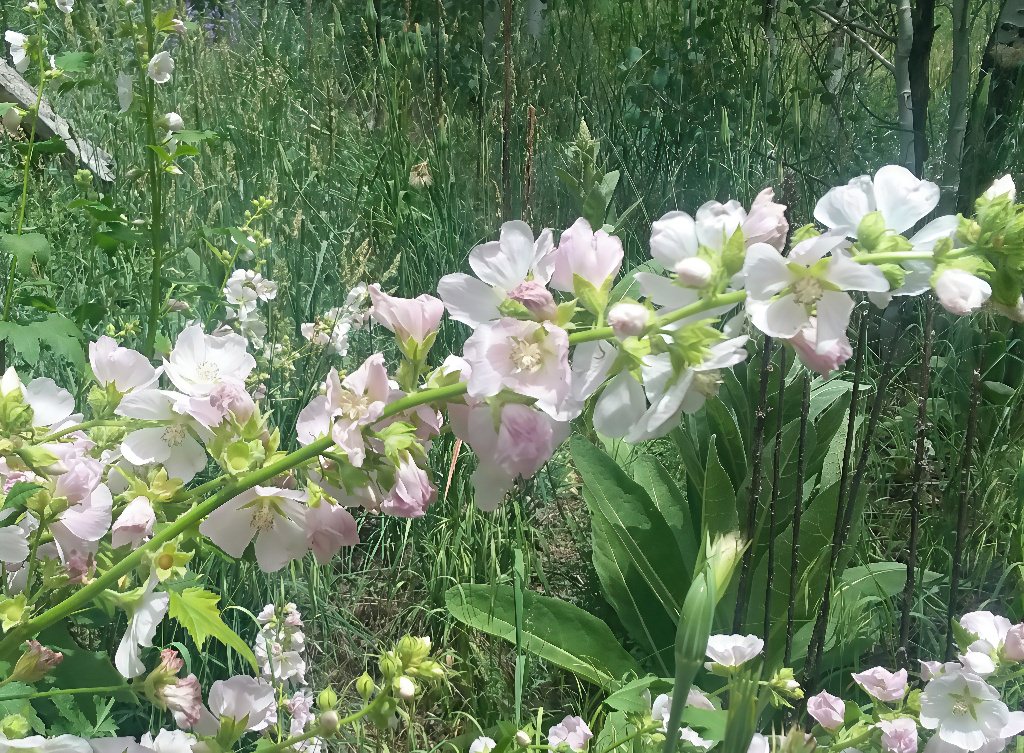
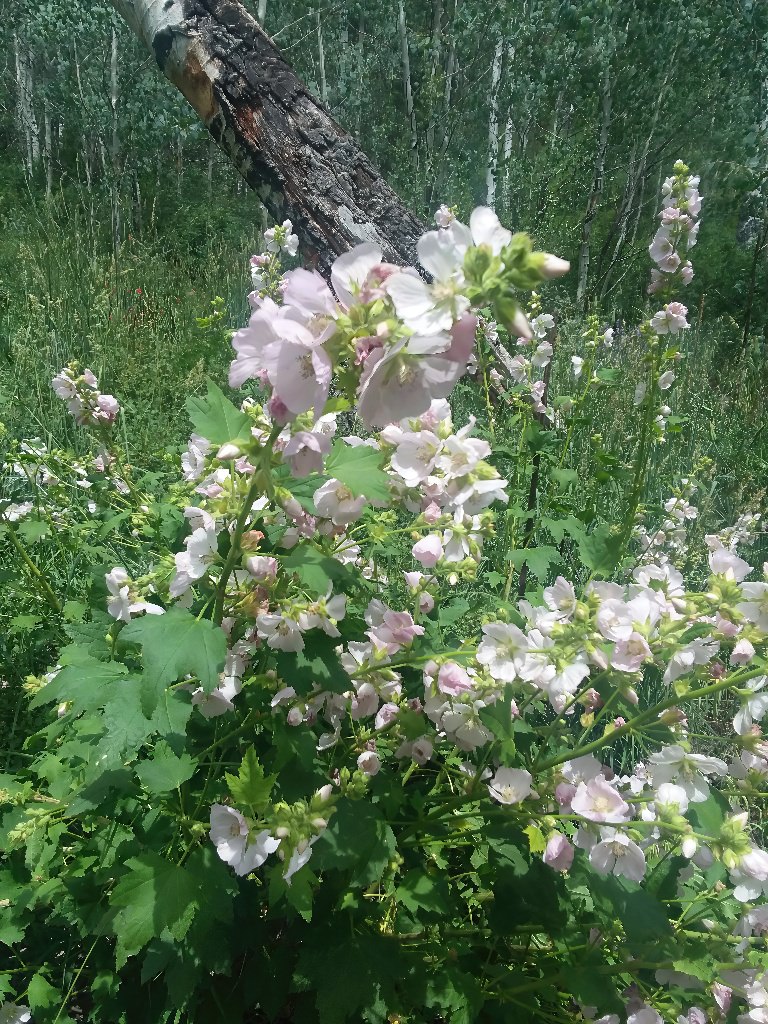
Perennial; 1-2 m tall, stems few to many from a woody caudex. Leaves sparsely stellate-pubescent to glabrate, with 5-7 deep lobes, 6-13 cm wide, lobes lanceolate to triangular, and coarsely toothed. Flowers in interrupted spicate inflorescences, calyx 11-18 mm long, lobes broader than long, densely villous-hirsute; petals pink, drying purplish, 2-3 cm long. Fruit a loculicidal capsule with 2-3 brown seeds per carpel. (Ackerfield 2022, FNA Vol. 6 2015).
Look Alikes:
This species intergrades with Iliamna rivularis and I. crandallii (Harrington 1954). Iliamna crandallii is shorter (5-7 dm) tall, with palmately lobed leaves and calyx lobes 9-12 mm long. Iliamna rivularis is 5-20 dm tall with palmately lobed leaves and calyx lobes 2.5-5.5 mm long. The calyx lobes of I. angulata are 8-10 mm long. All three occur in similar habitat (Ackerfield 2022).
Phenology:
Iliamna angulata (I. grandiflora) flowers from June through August (Ackerfield 2022).
Habitat
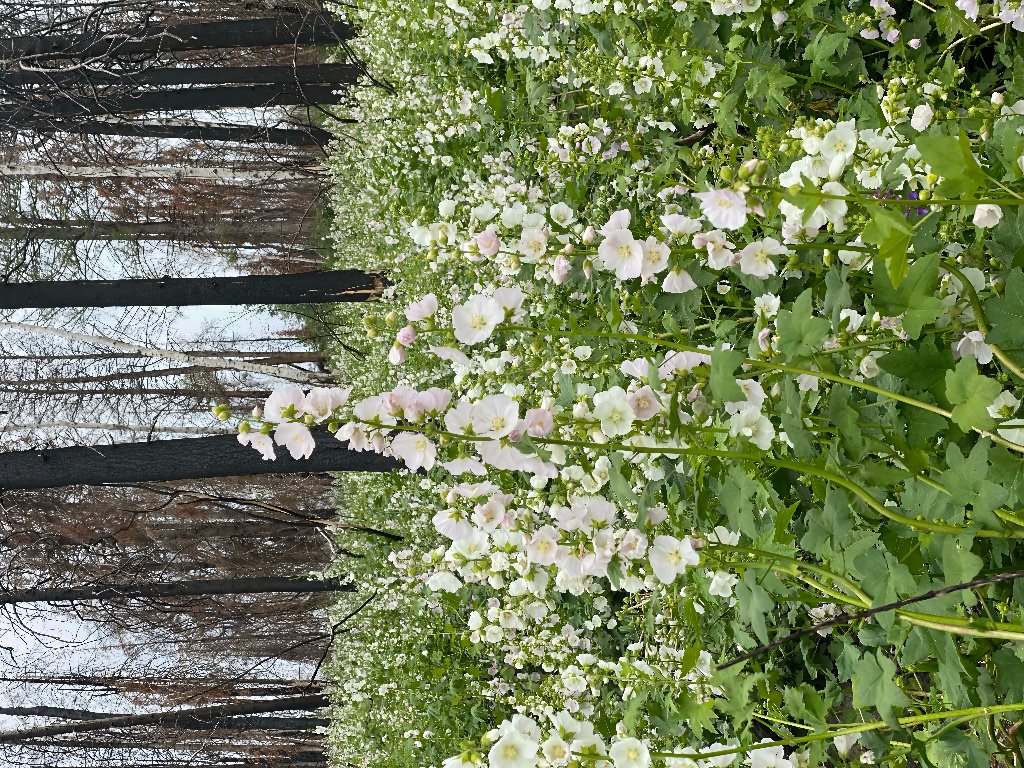
Typically found in moist sites or gravelly roadcuts in Englemann spruce/aspen forests (Picea engelmannii/Populus tremuloides) with Acer glabrum, Ribes wolfii, Rubus parviflorus, Sambucus racemosa, and Sorbus scopulina. It also occurs in the ecotone between oak shrublands and riparian habitat with Artemisia tridentata, Juncus balticus, Galium boreale, Symphoricarpos oreophilus, Lupinus spp., Polemonium foliosissimum and Equisetum arvense (CNHP 2026).
click on image to enlarge
 |
 |
Elevation Range:
6,686 - 10,961 feet (2,038 - 3,341 meters)
Distribution
Colorado Endemic:
No
Range:
Iliamna angulata (I. grandiflora) is known from the mountains of western Colorado, including Eagle, Garfield, Gunnison, La Plata, Mesa, Montezuma, Ouray, Pitkin and Routt counties (CNHP 2026). Estimated range extent in Colorado of 48,773 square kilometers was calculated in GeoCAT using occurrence data provided by the Colorado Natural Heritage Program (2026). This species can also be found in Arizona, New Mexico, and Utah, USA.
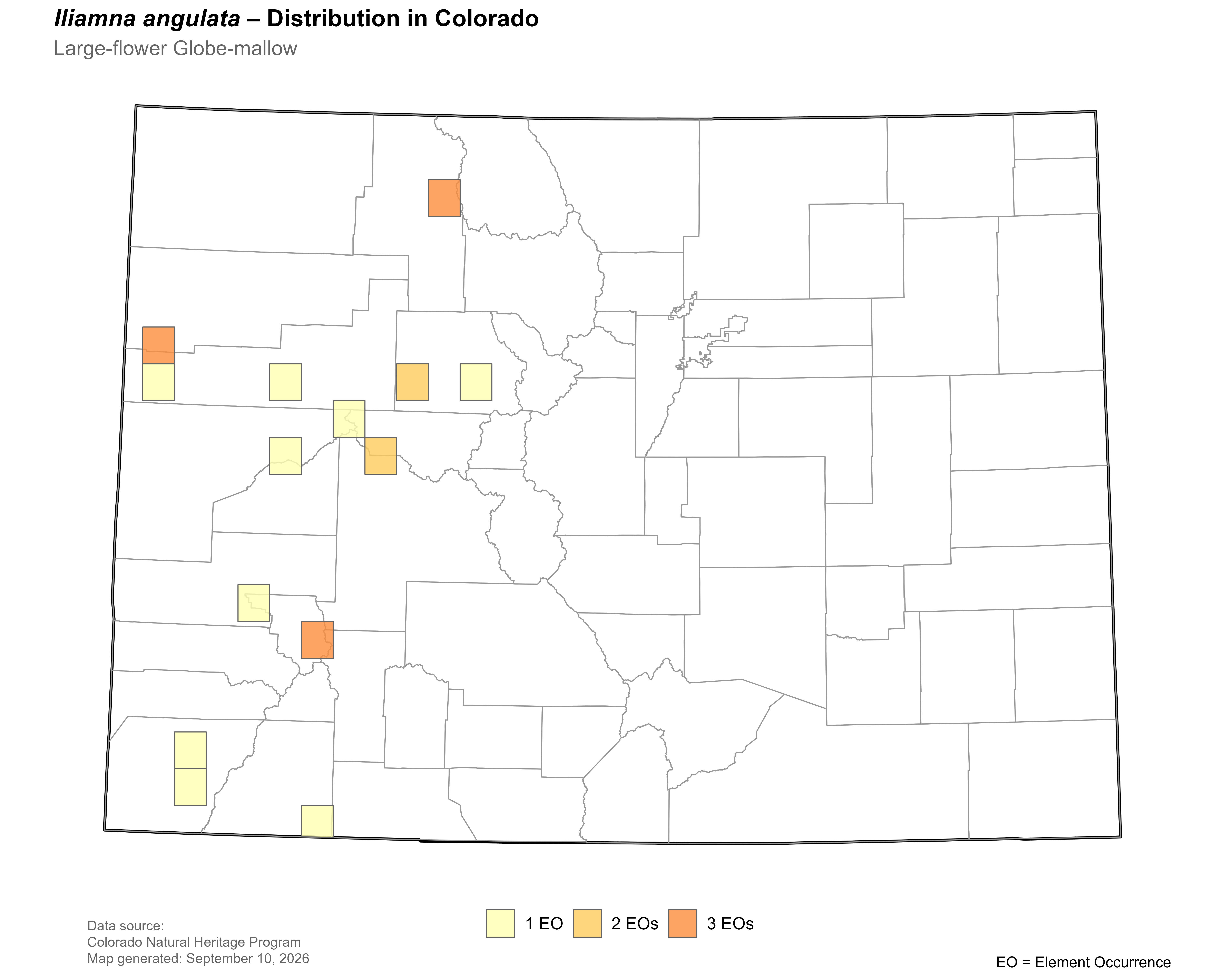
Click on map to enlarge |
Threats and Management Issues
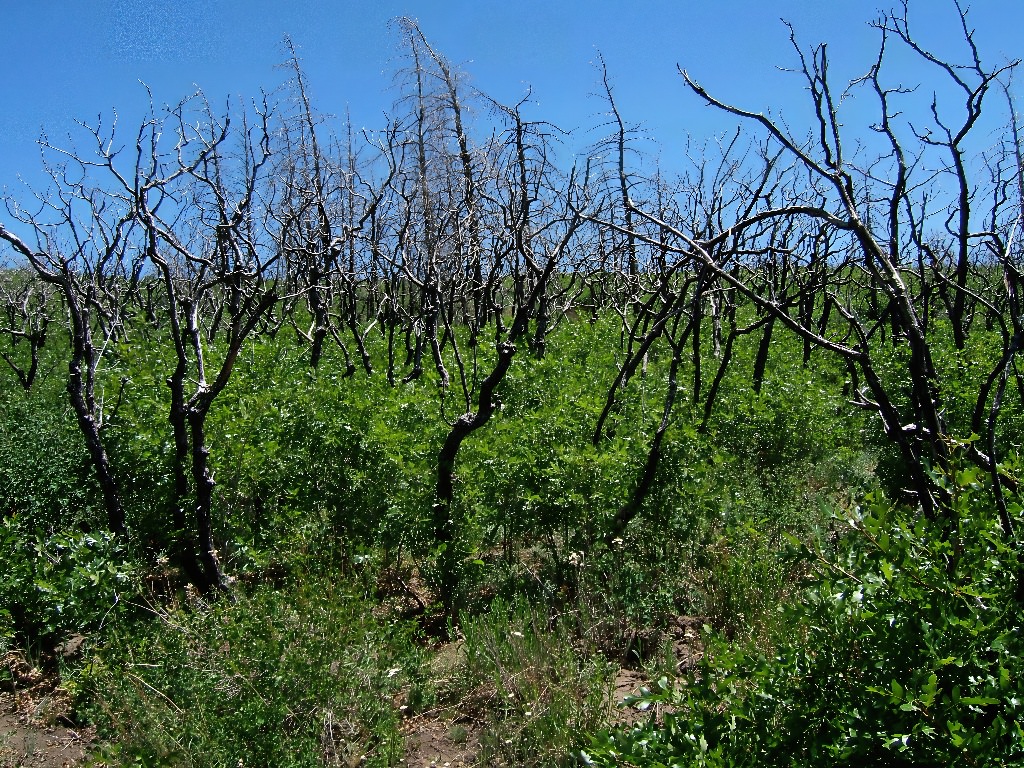
The majority of the occurrences are along roadways and the introduction of invasive plant species is a concern. Grazing by both deer and cattle were noted in the populations. Logging and roadside disturbances were also noted as impacting populations. The plants are associated with moist to wet environments as well as periodic exposure to wildfire within its habitat, and will likely be impacted by changes in fire frequency and hydrology. This species is considered to have moderate adaptive capacity and is expected to be slightly to moderately vulnerable to climate change under both RCP 4.5 and 8.5 scenarios, as assessed for the 2025 Colorado State Wildlife Action Plan (CNHP 2025).
References
- Ackerfield, Jennifer. 2022. Flora of Colorado. Second Edition. Bot. Misc. 60. BRIT Press, Fort Worth Botanic Garden/Botanical Research Institute of Texas, U.S.A. 861 pp.
- Colorado Natural Heritage Program (CNHP). 2025. Climate Change Vulnerability Assessment of Colorado Tier 1 and Tier 2 Plant Species of Greatest Conservation Need (SCGN) for the 2025 Colorado State Wildlife Action Plan. Colorado Natural Heritage Program, Colorado State University, Fort Collins, CO.
- Colorado Natural Heritage Program (CNHP). 2026. Biodiversity Tracking and Conservation System (Biotics 5). Colorado Natural Heritage Program, Colorado State University, Fort Collins.
- Flora of North America Editorial Committee (FNA). 2015. Flora of North America north of Mexico. Vol. 6. Magnoliophyta: Cucurbitaceae to Droserceae. Oxford University Press, New York. 496 pp + xxiv.
- Harrington, H. D. 1954. Manual of the Plants of Colorado. Sage Books, Denver, CO. 666 pp.
- Welsh, S.L., N.D. Atwood, S. Goodrich, and L.C. Higgins. (Eds). 2015. A Utah flora, fifth edition, revised 2015. Monte L. Bean Life Science Museum, Provo, Utah. 987 pp.


