

Scientific Name : Herrickia horrida
Author : Woot. & Standl. NatureServe Explorer
Common Name : Canadian River Spiny Aster
 Current Research Activities
 1997 profile


☰ Click link below for details.
Taxonomy
Asteraceae (sunflower family)
=Eurybia horrida (USDA NRCS 2017).
Ranks and Status
State Rank : S2
State Rank Reason : Herrickia horrida is known from 11 occurrences within a very limited range in Las Animas County, Colorado (USA). Threats are poorly documented but may include impacts from recreation, grazing and prolonged drought. This species is considered vulnerable to the effects of climate change.
U.S. Endangered Species Act : none
Colorado Threatened and Endangered List : none
Other Statuses : SWAP Tier 2
Description and Phenology
General Description:
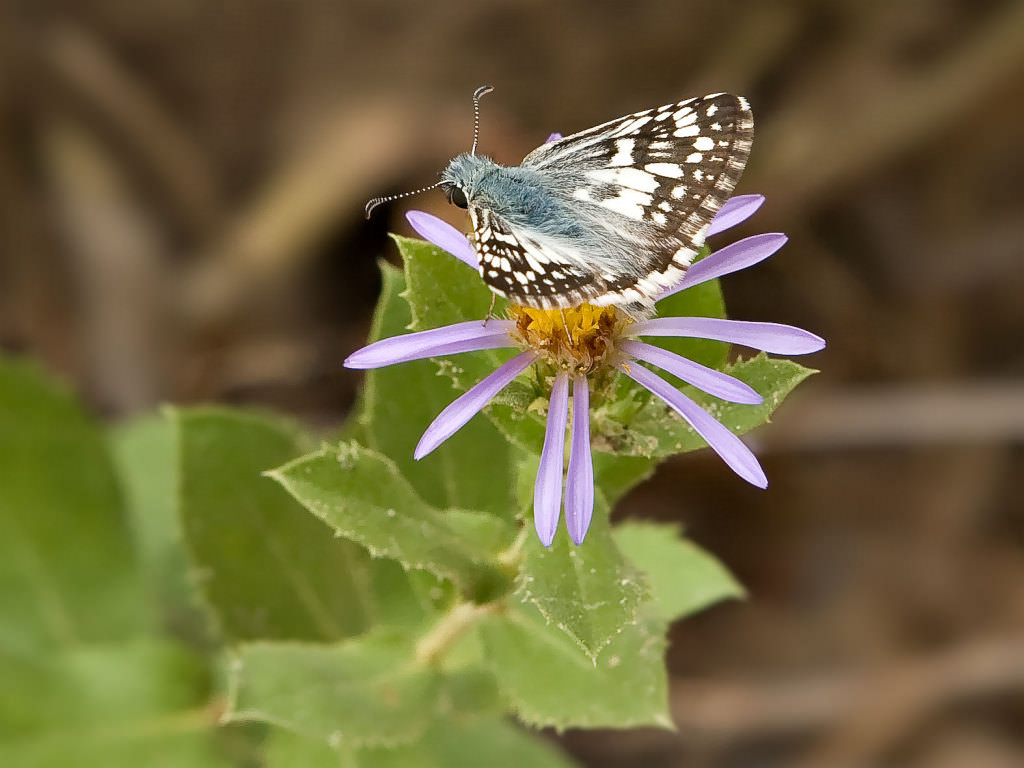
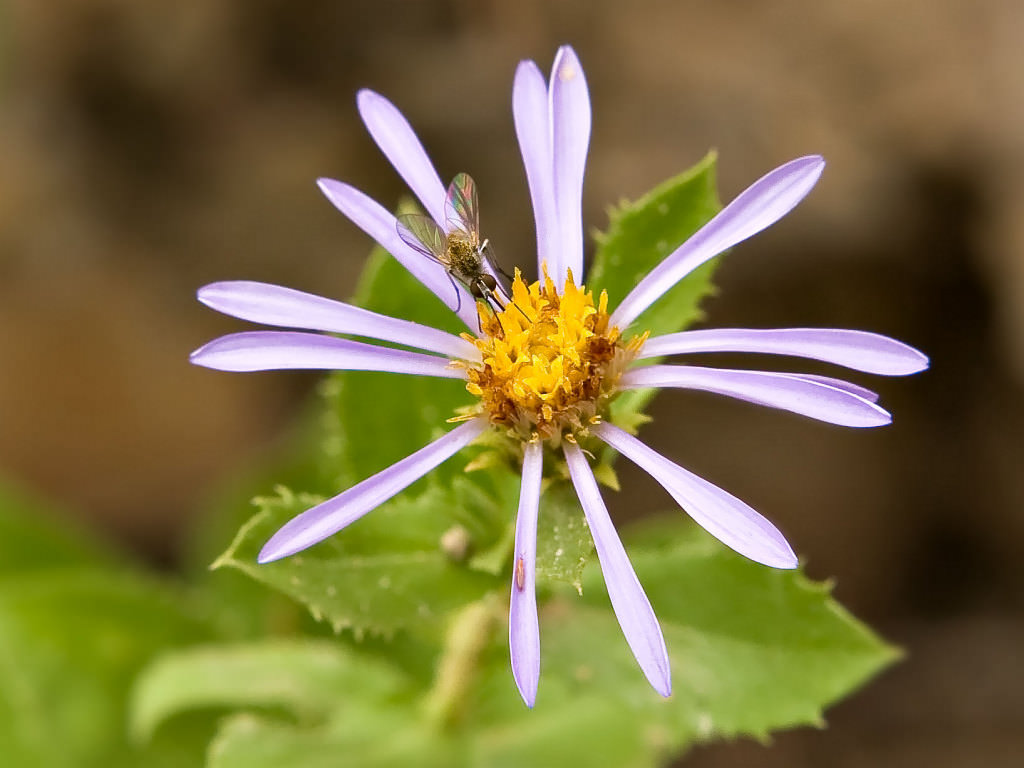
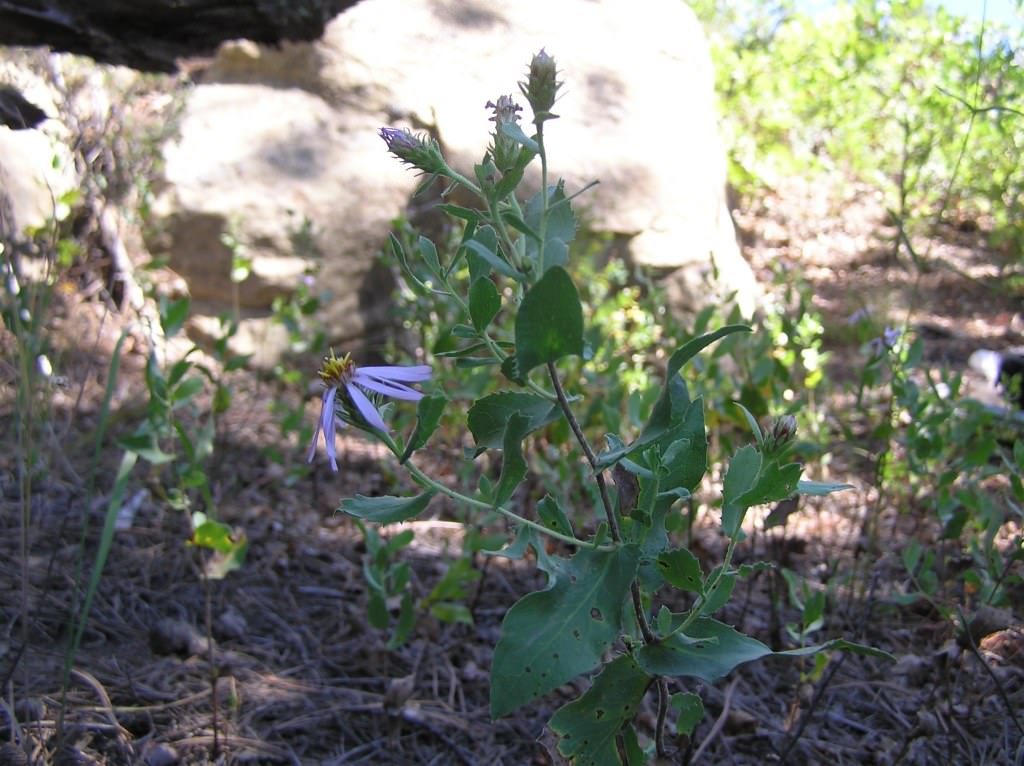
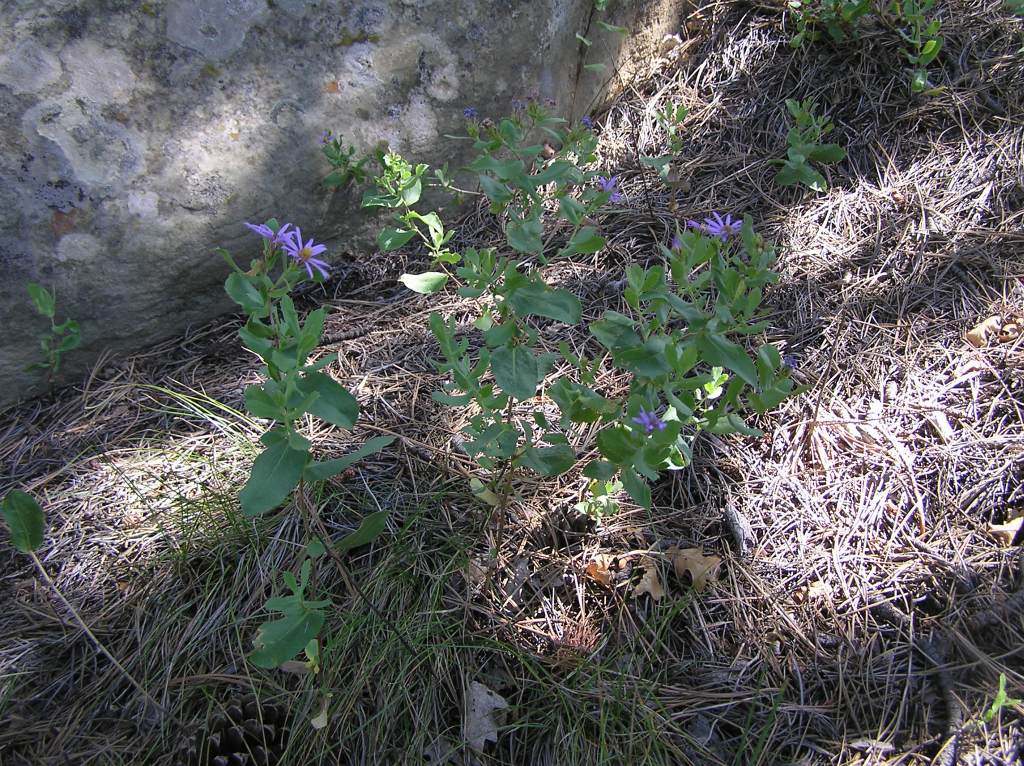
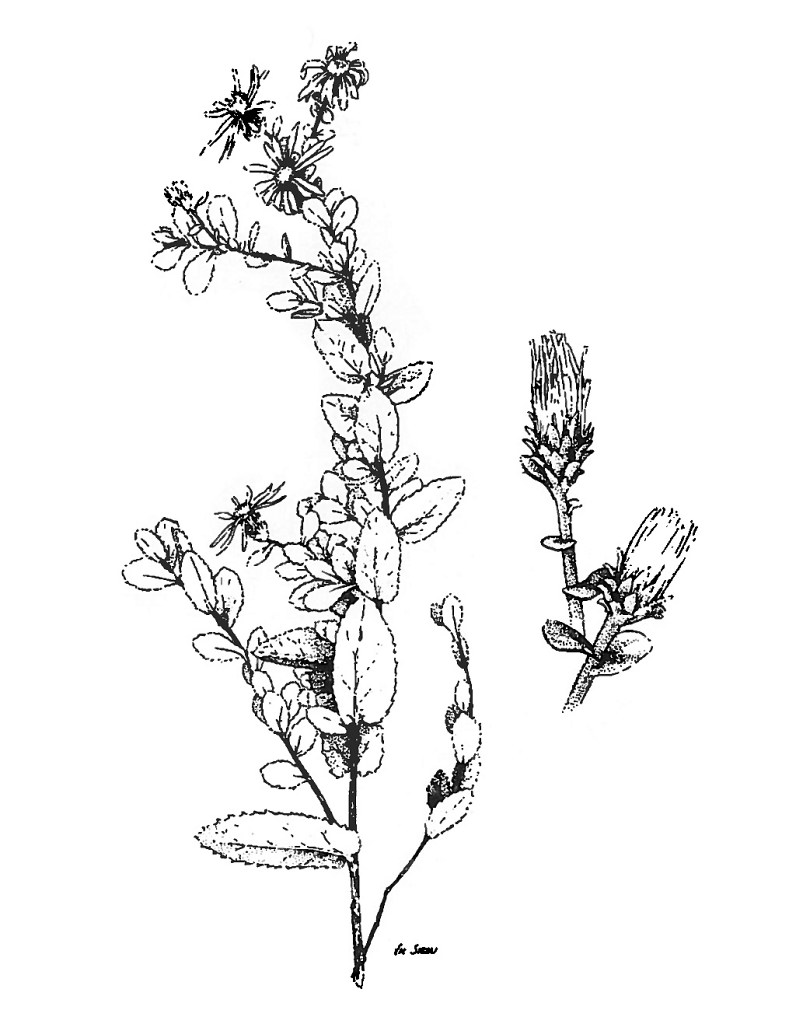
Perennials or subshrubs, 3-6 dm tall. Leaves, oblong to nearly orbiculate, 1-5 cm long, thick, rigid, and the margins coarsely toothed with spine tips (holly-like). Flower heads about 10 mm high. Ray flowers purple, disk flowers yellow (Spackman et al. 1997, Ackerfield 2015).
Look Alikes:
Easily recognized by its holly-like leaves (Weber and Wittmann 2012).
Phenology:
Flowers July-October. Usually in prime flower in mid-August (Spackman et al. 1997).
 |
Habitat
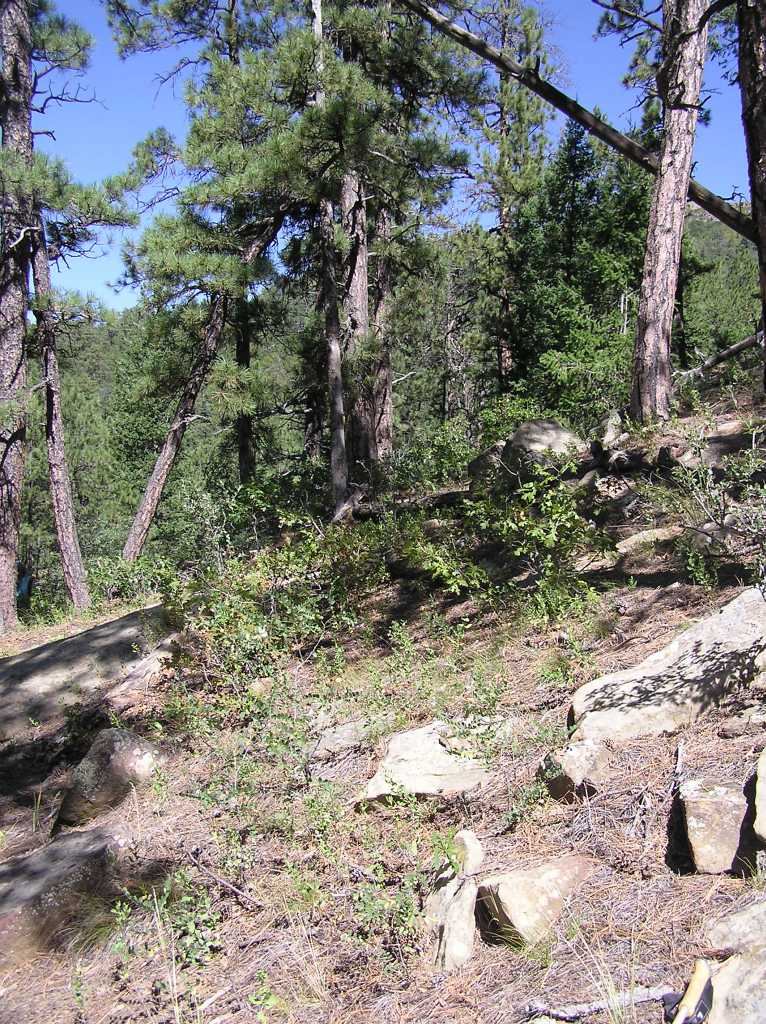
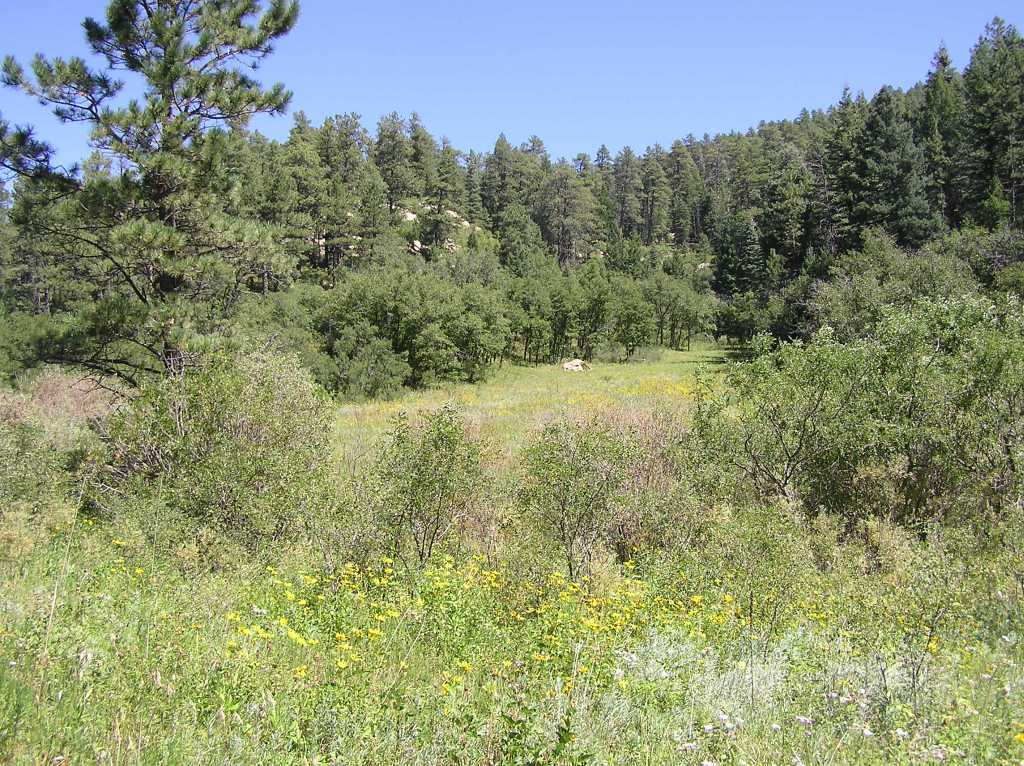
In Colorado this species is found on rocky hillsides and on the sides of canyons, often with Gambel's oak, in dry sandy or rocky soils, and sometimes on almost bare sandstone bedrock. Also found growing in pine duff in openings of Ponderosa pine-Gambel’s oak woodlands. Additional associated plant species: Mountain mahogany (Colorado Native Plant Society 1989, Weber and Wittmann 2012, Ackerfield 2015, Colorado Natural Heritage Program occurrence records 2017).
click on image to enlarge
 |
 |
Elevation Range:
6,668 - 10,635 feet (2,032 - 3,242 meters)
Distribution
Colorado Endemic:
No
Range:
Herrickia horrida is known from Las Animas County in Colorado, USA. Estimated range extent in Colorado of 1366 square kilometers was calculated in GeoCAT using occurrence data provided by the Colorado Natural Heritage Program (2023). This species can also be found in New Mexico, USA.
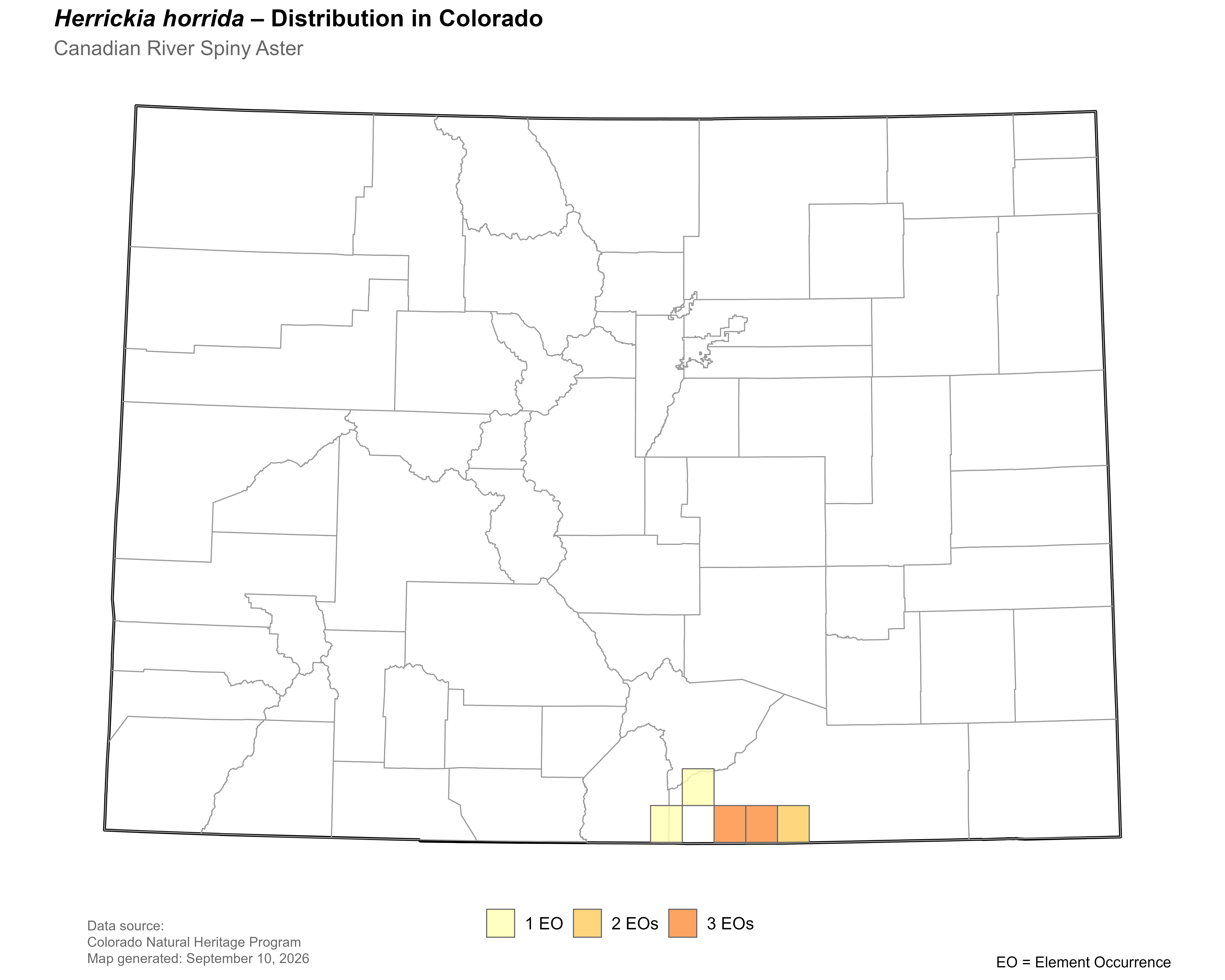
Click on map to enlarge |
Threats and Management Issues
Threats are poorly documented but may include impacts from recreation, grazing and prolonged drought. At least two occurrences are found on public land that will be developed with roads and trails for recreation; one occurrence reports grazing in occupied habitat. Plants occurs on public and private land near Interstate 25 and the New Mexico border. Preferred habitat of species is not suitable for development and is very inaccessible. Some oil and gas drilling occurs within the vicinity of the occurrences with unknown impacts. This species is considered to have moderate adaptive capacity and is expected to be slightly vulnerable to climate change under both RCP 4.5 and 8.5 scenarios, as assessed for the 2025 Colorado State Wildlife Action Plan (CNHP 2025).
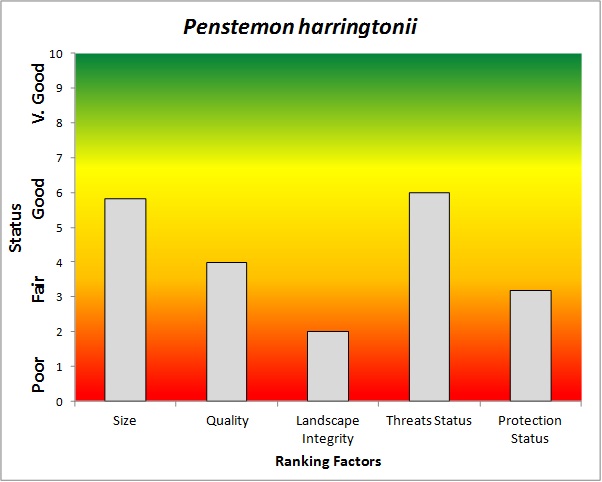
Summary results of an analysis of the status of Herrickia horrida based on several ranking factors. This species was concluded to be "Weakly Conserved. From Rondeau et al. 2011. |
References
- Ackerfield, J. 2015. Flora of Colorado. BRIT Press, Botanical Research Institute of Texas, Fort Worth, TX. 818 pp.
- Colorado Natural Heritage Program (CNHP). 2023. Biodiversity Tracking and Conservation System (Biotics 5). Colorado Natural Heritage Program, Colorado State University, Fort Collins.
- Colorado Natural Heritage Program (CNHP). 2025. Climate Change Vulnerability Assessment of Colorado Tier 1 and Tier 2 Plant Species of Greatest Conservation Need (SCGN) for the 2025 Colorado State Wildlife Action Plan. Colorado Natural Heritage Program, Colorado State University, Fort Collins, CO.
- Colorado Natural Heritage Program and the Geospatial Centroid. 2017. The Colorado Ownership and Protection Map (COMaP). Colorado State University, Ft. Collins, CO.
- Fletcher, R., B. Isaacs, P. Knight, W. Martin, D. Sabo, R. Spellenberg, and T. Todsen. 1984. A Handbook of Rare and Endemic Plants of New Mexico. University of New Mexico Press, Albuquerque, NM.
- Flora of North America Editorial Committee, ed. (FNA). 1993+. Flora of North America North of Mexico. Oxford Univ. Press, New York, Oxford.
- Handwerk, J., L. Grunau, and S. Panjabi. 2015. Colorado Wildlife Action Plan: 2015 Rare Plant Addendum. Colorado Natural Heritage Program, Colorado State University, Fort Collins, Colorado, USA.
- Harrington, H. D. 1954. Manual of the Plants of Colorado. Sage Books, Denver, CO. 666 pp.
- Kartesz, J.T. 1994. A synonymized checklist of the vascular flora of the United States, Canada, and Greenland. 2nd edition. 2 vols. Timber Press, Portland, OR.
- Neely, B., S. Panjabi, E. Lane, P. Lewis, C. Dawson, A. Kratz, B. Kurzel, T. Hogan, J. Handwerk, S. Krishnan, J. Neale, and N. Ripley. 2009. Colorado Rare Plant Conservation Strategy, Developed by the Colorado Rare Plant conservation Initiative. The Nature Conservancy, Boulder, Colorado, 117 pp.
- Nesom, G.L. 2009. Taxonomic overview of Eurybia sect. Herrickia (Asteraceae: Astereae). J. Bot. Res. Inst. Texas 3(1): 161 -167.
- Sivinski, R., and K. Lightfoot, eds. 1994. Inventory of the rare and endangered plants of New Mexico. 2nd edition. Miscellaneous Publication No. 3, New Mexico Forestry and Resources Conservation Division, New Mexico Energy, Minerals and Natural Resources Dept., Santa Fe. 46 pp.
- Spackman, S., B. Jennings, J. Coles, C. Dawson, M. Minton, A. Kratz, and C. Spurrier. 1997. Colorado rare plant field guide. Prepared for Bureau of Land Management, U.S. Forest Service and U.S. Fish and Wildlife Service by Colorado Natural Heritage Program.
- USDA, NRCS. 2022. The PLANTS Database. National Plant Data Team, Greensboro, NC 27401-4901 USA.
- Weber, W. A. and R. C. Wittmann. 2012. Colorado Flora, Eastern Slope, A Field Guide to the Vascular Plants, Fourth Edition. Boulder, Colorado. 555 pp.