

Scientific Name : Gutierrezia elegans
Author : A. Schneider & P. Lyon NatureServe Explorer
Common Name : Lone Mesa Snakeweed
 Current Research Activities


☰ Click link below for details.
Taxonomy
Asteraceae (sunflower family)
Ranks and Status
State Rank : S1
State Rank Reason : Gutierrezia elegans is endemic to Dolores County, Colorado (USA). It is known from a single occurrence that spans private as well as public lands. The species is potentially threatened by inappropriate livestock grazing, changes in the intensity and frequency of wildfires, and the effects of prolonged drought.
U.S. Endangered Species Act : none
Colorado Threatened and Endangered List : none
Other Statuses : BLM, SWAP Tier 1, USFS
Description and Phenology
General Description:
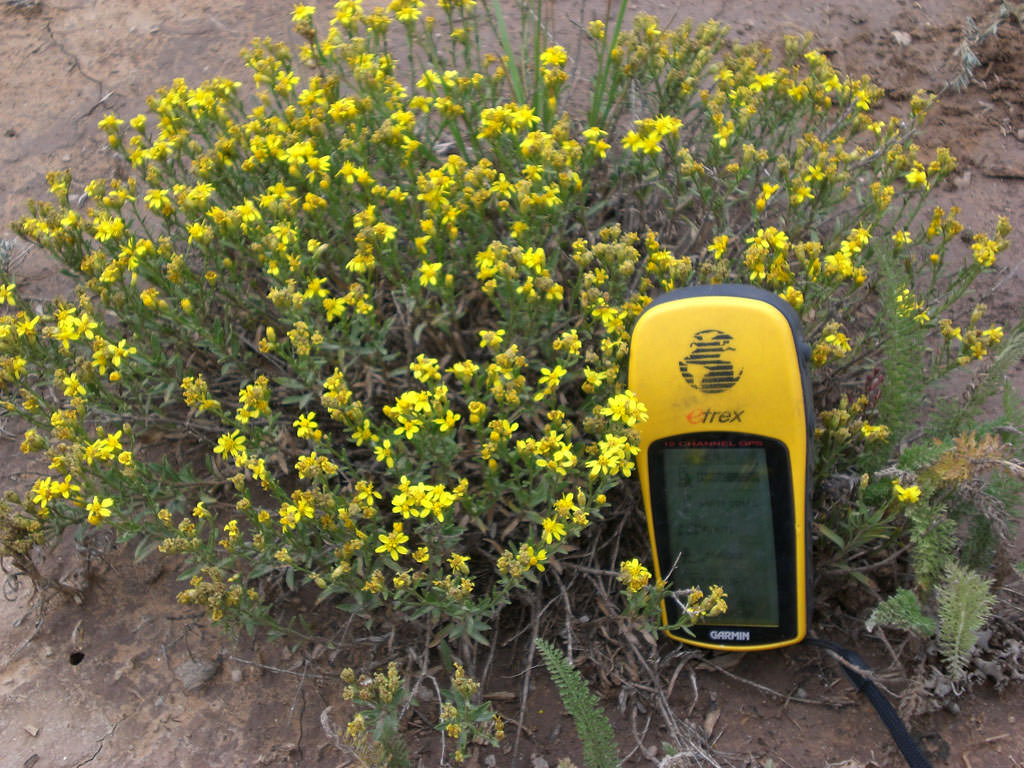
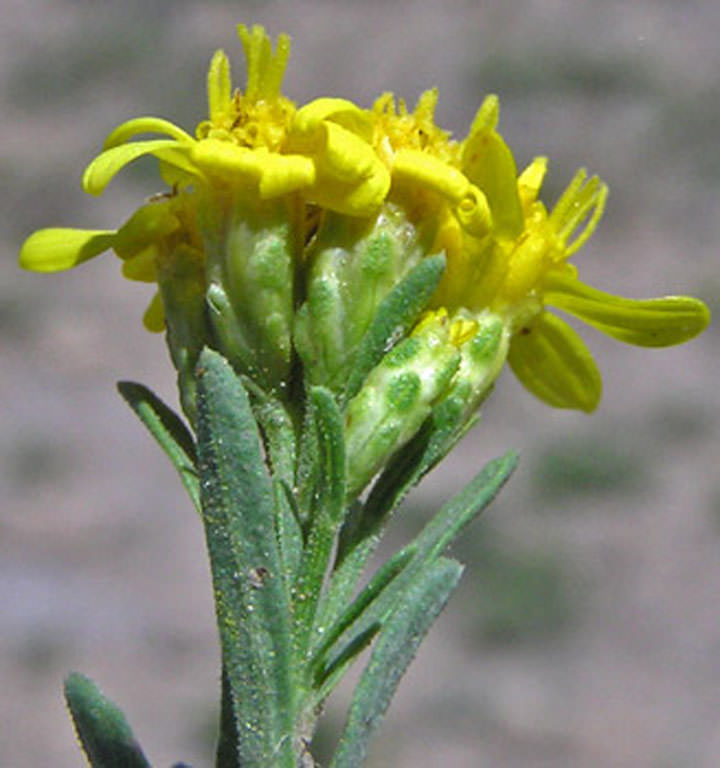
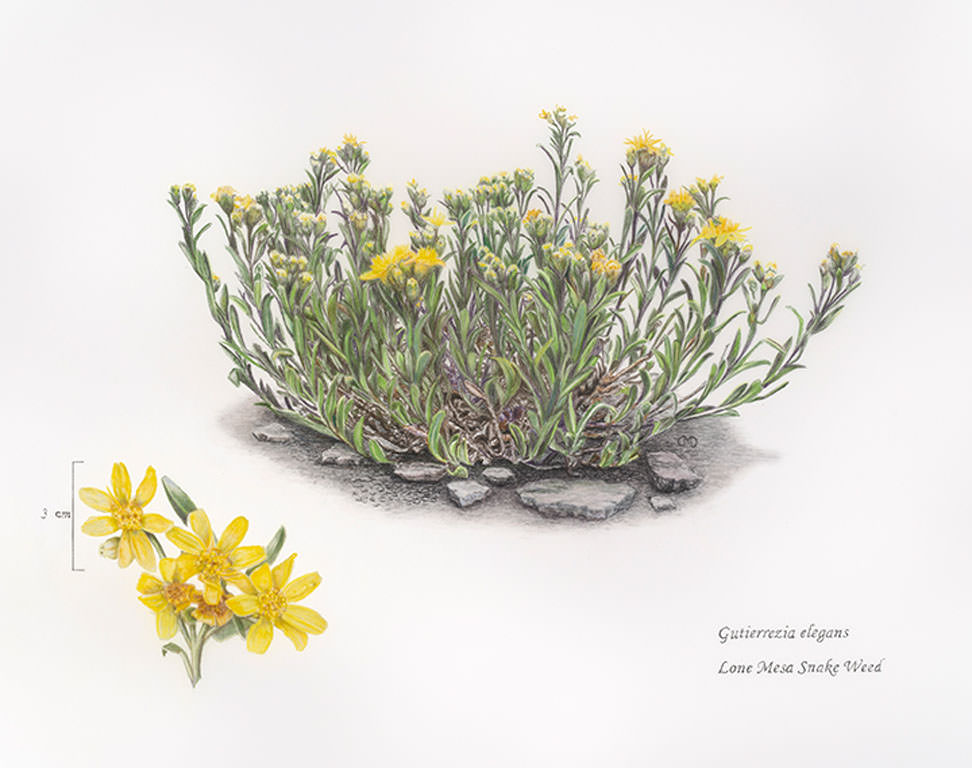
A low, compact subshrub with woody caudex branches and decumbent-ascending leafy stems, yellow flowers in short-pedunculate heads in congested corymboid clusters, and short 3-nerved leaves (Schneider et al. 2008).
Look Alikes:
Differs from other species of Gutierrezia in having larger flowers and shorter, broader leaves (CNHP 2012).
Phenology:
Flowers July through early September; fruits are produced in August and September (Colorado Natural Heritage Program 2012).
 |
Habitat
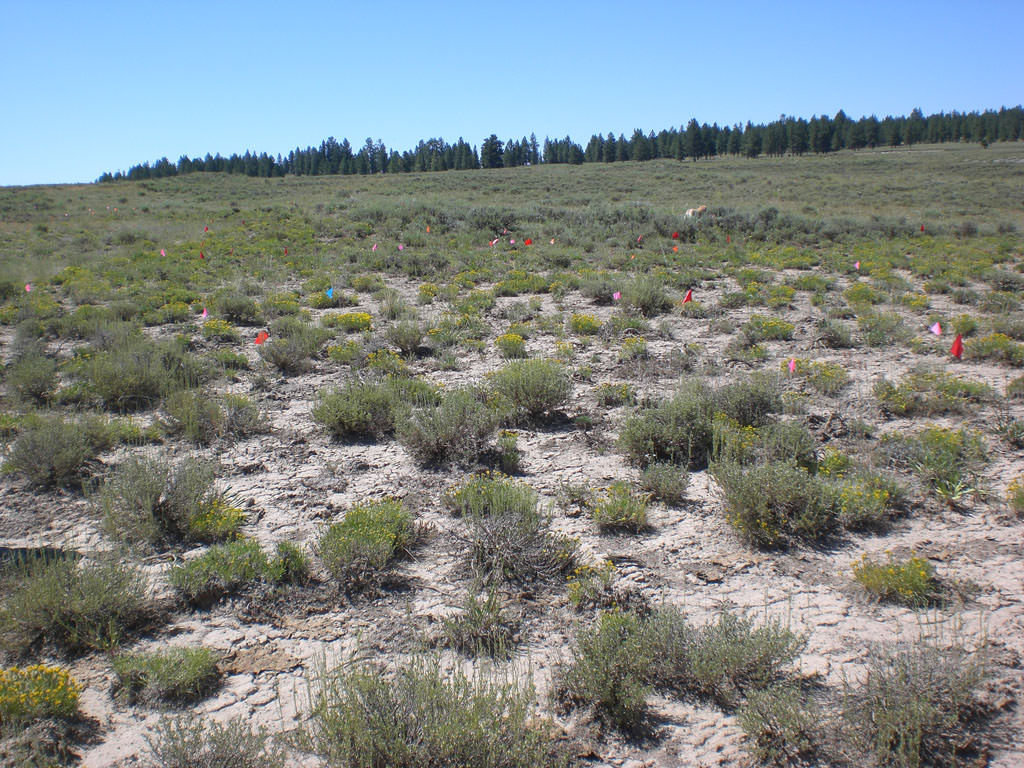
This species is found on outcrops of grayish, argillaceous, bare Mancos shale outcrops with thin soil over the shale. Gutierrezia elegans is scattered to abundant in the barrens and also occurs with Artemisia nova and other species in sites with deeper soil over the shale. Associated species include Helianthella microcephala, Tetraneuris acaulis, Eriogonum lonchophyllum, Petradoria pumila, Astragalus missouriensis var. amphibolus, and Heterotheca villosa Pinus ponderosa and pinyon-juniper characterize the surrounding slopes (Schneider et al. 2008, CNHP 2012).
click on image to enlarge
 |
Elevation Range:
7,526 - 7,806 feet (2,294 - 2,379 meters)
Distribution
Colorado Endemic:
Yes
Range:
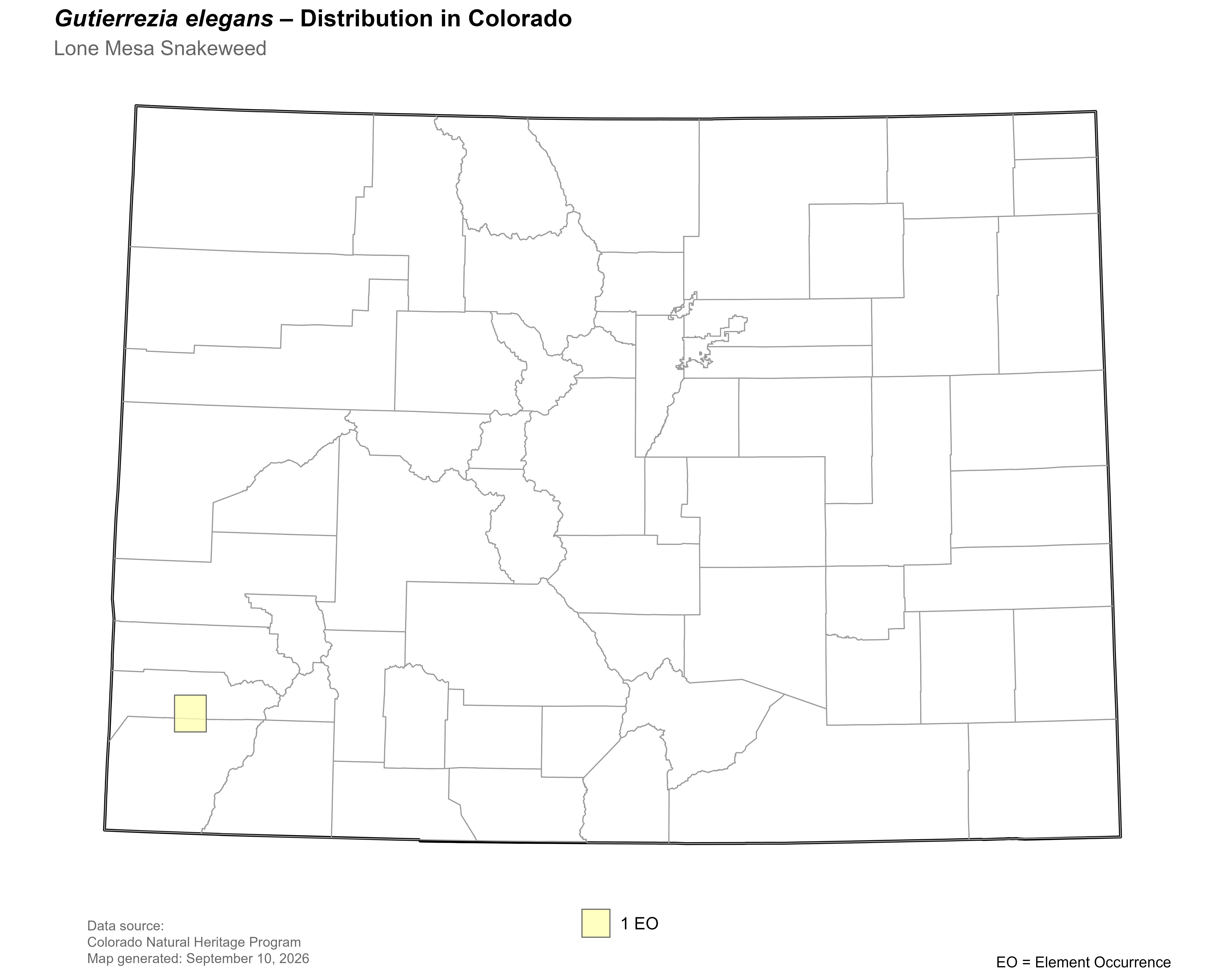
Gutierrezia elegans is known only from Dolores County, Colorado, USA. The estimated range extent in Colorado of 12 square kilometers was calculated in GeoCAT using occurrence data provided by the Colorado Natural Heritage Program (2023).
Click on map to enlarge |
Threats and Management Issues
Potential threats to Gutierrezia elegans arise primarily from inappropriate livestock grazing and changes in the intensity and frequency of wildfires. Livestock grazing occurs throughout the species habitat, however, while livestock do not eat the plants, they trample and uproot them, and disturb the soil. The related G.sarothrae (Broom snakeweed) is a fire-intolerant species that is severely harmed or, more often, killed by fire and it is likely G. elegans will respond in a similar manner (Tirmenstein 1999). Additional potential threats include oil and gas development and roads supporting seismic testing. As of 2011, there was no active oil and gas development but there is potential for that to change. Much of the species occupied habitat is within Lone Mesa State Park, which when opened to the public may increase the potential threats for surface disturbance and trampling by recreationists, however, management plans are likely to address this concern. Some portions of the occurrence are on private land where development could be a threat. Erosion, primarily along an old road, can cause the loss of plants and habitat degradation (Panjabi et al. 2011). Long-term drought in the species range is also ongoing and has reduced the vigor of plants. This species is considered to have moderate adaptive capacity and is expected to be moderately vulnerable to climate change under both RCP 4.5 and 8.5 scenarios, as assessed for the 2025 Colorado State Wildlife Action Plan (CNHP 2025).
References
- Ackerfield, J. 2012. The Flora of Colorado. Colorado State University Herbarium. 433 pp.
- Colorado Natural Heritage Program (CNHP). 2023. Biodiversity Tracking and Conservation System (Biotics 5). Colorado Natural Heritage Program, Colorado State University, Fort Collins.
- Colorado Natural Heritage Program (CNHP). 2025. Climate Change Vulnerability Assessment of Colorado Tier 1 and Tier 2 Plant Species of Greatest Conservation Need (SCGN) for the 2025 Colorado State Wildlife Action Plan. Colorado Natural Heritage Program, Colorado State University, Fort Collins, CO.
- Colorado Natural Heritage Program. 2012. Biodiversity Tracking and Conservation System. Colorado State University, Fort Collins, CO.
- Flora of North America Editorial Committee, ed. (FNA). 1993+. Flora of North America North of Mexico. Oxford Univ. Press, New York, Oxford.
- Handwerk, J., L. Grunau, and S. Panjabi. 2015. Colorado Wildlife Action Plan: 2015 Rare Plant Addendum. Colorado Natural Heritage Program, Colorado State University, Fort Collins, Colorado, USA.
- Lavender, A.E., M.M. Fink, S.E. Linn, D.M. Theobald. 2011. Colorado Ownership, Management, and Protection v9 Database. Colorado Natural Heritage Program and Geospatial Centroid, Colorado State University, Fort Collins, CO. (30 September).
- Neely, B., S. Panjabi, E. Lane, P. Lewis, C. Dawson, A. Kratz, B. Kurzel, T. Hogan, J. Handwerk, S. Krishnan, J. Neale, and N. Ripley. 2009. Colorado Rare Plant Conservation Strategy, Developed by the Colorado Rare Plant conservation Initiative. The Nature Conservancy, Boulder, Colorado, 117 pp.
- Panjabi, S., B. Neely and P. Lyon. 2011. Preliminary Conservation Action Plan for Rare Plants in the Plateau Creek and Miramonte Reservoir West Priority Action Areas. Prepared by The Nature Conservancy and the Colorado Natural Heritage Program. Unpublished report prepared for the National Fish and Wildlife Foundation. 28 pp.
- Schneider, A. 2013. Wildflowers, Ferns, and Trees of the Four Corners Regions of Colorado, New Mexico, Arizona, and Utah. Accessed on-line at http://www.swcoloradowildflowers.com.
- Schneider, A., P. Lyon, and G. Nesom. 2008. Gutierrezia elegans sp. nov. (Asteraceae: Astereae), a shale barren endemic of southwestern Colorado. Journal of the Botanical Research Institute of Texas 2(2): 771-774.
- Tirmenstein, D. 1999. Gutierrezia sarothrae. In: Fire Effects Information System, [Online]. U.S. Department of Agriculture, Forest Service, Rocky Mountain Research Station, Fire Sciences Laboratory (Producer). https://www.fs.usda.gov/database/feis/plants/shrub/gutsar/all.html [2025, March 15].
- USDA, NRCS. 2022. The PLANTS Database. National Plant Data Team, Greensboro, NC 27401-4901 USA.
- Weber, W. A. and R. C. Wittmann. 2012. Colorado Flora, Western Slope, A Field Guide to the Vascular Plants, Fourth Edition. Boulder, Colorado. 532 pp.