

Scientific Name : Frasera coloradensis
Author : (Rogers) D.M. Post NatureServe Explorer
Common Name : Colorado Green Gentian
 Current Research Activities
 1997 profile


☰ Click link below for details.
Taxonomy
Gentianaceae (gentian family)
Ranks and Status
State Rank : S2
State Rank Reason : Frasera coloradensis is known only from the southeastern corner of Colorado, USA. There are 32 occurrences with a limited distribution, 17 of which are of poor viability or historical. Threats include habitat loss and fragmentation from wind energy development and prolonged livestock grazing. This species is considered to be vulnerable to the effects of climate change.
U.S. Endangered Species Act : none
Colorado Threatened and Endangered List : none
Other Statuses : SWAP Tier 1
Description and Phenology
General Description:
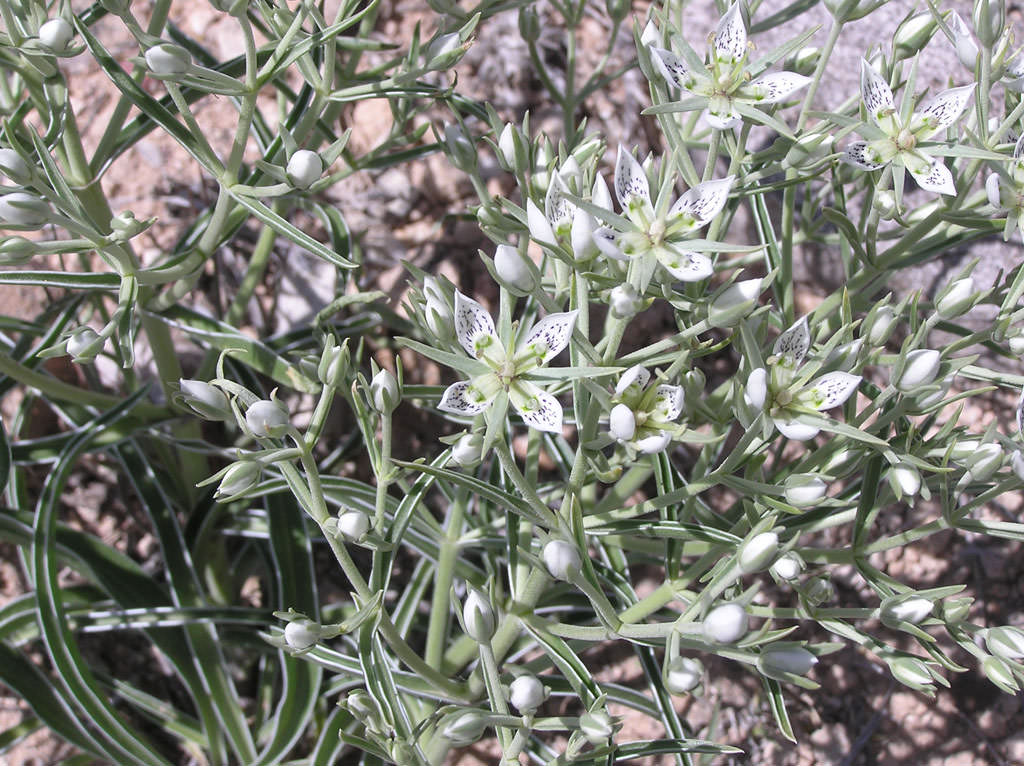
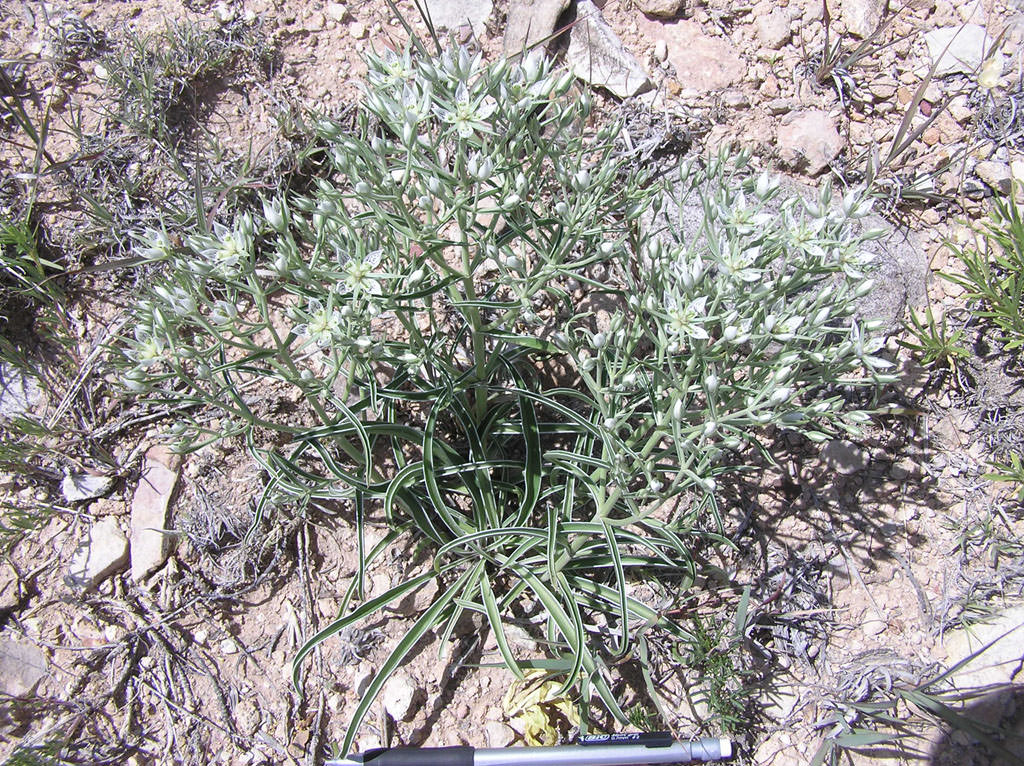
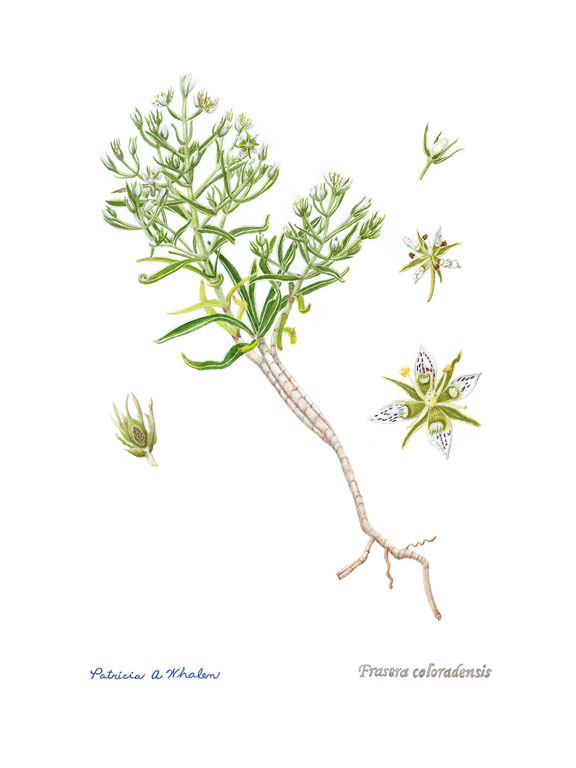
A small (10-20 cm) and variously branched perennial. Leaves are thick, long and narrow, with white margins, glabrous or minutely pubescent. Plants apprear as rosettes before flowers are produced. Flowering structures are typically much branched, with greenish-white flowers. Calyx is deeply 4-parted, with petals 8-10 mm long. A small greenish gland occurs near the base of each petal, and small purplish dots appear on the upper surface of the petals (Naumann 1991, Spackman et al. 1997).
Look Alikes:
It is quite distinctive and is unlikely to be confused with other taxa (Naumann 1991). However, leaves look superficially like the young leaves of Yucca glauca, but on close inspection, Yucca leaves are thicker and more fibrous, with fibers peeling off at the margins.
Phenology:
Flowers in mid-June to mid-July. Produces fruits in July after flowering.
 |
Habitat
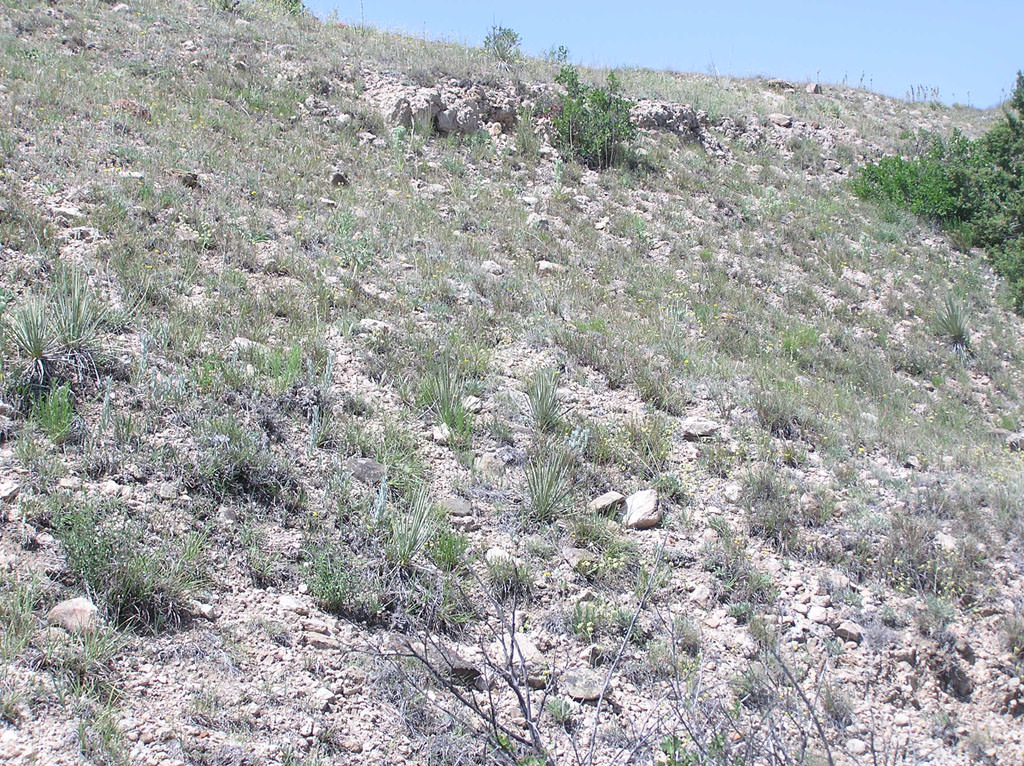
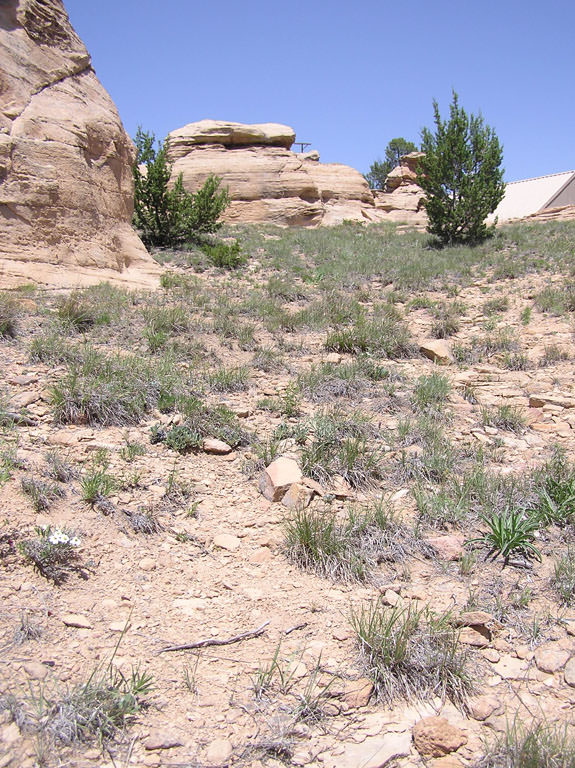
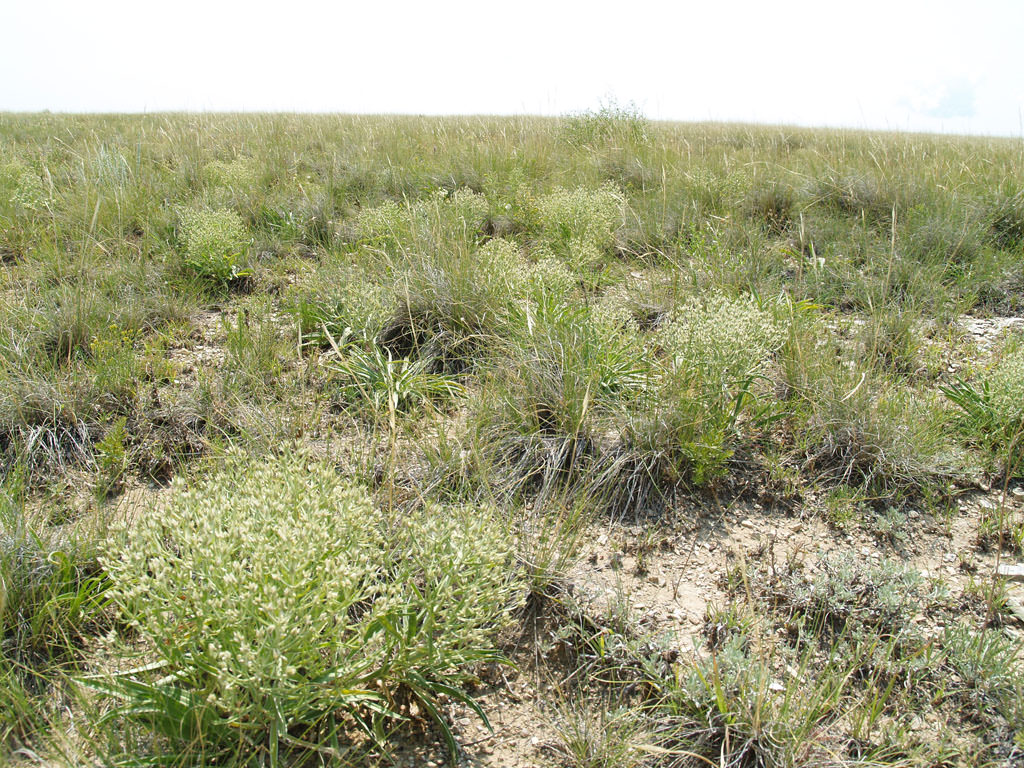
Low sandy/sandstone breaks in grasslands, northerly aspects in between rocks or just below them; shallow slopes. Associated with surface outcrops or shallow-to-bedrock occurrences of Cretaceous rock formations, including Greenhorn limestone, Graneros shale and Dakota sandstone. Plant community generally shortgrass prairie, mixed prairie breaks, or open pinyon-juniper woodlands. Substrate is the best indicator for locations of this species (Naumann 1991, Spackman et al. 1997).
click on image to enlarge
 |
 |
 |
Elevation Range:
4,070 - 5,800 feet (1,241 - 1,768 meters)
Distribution
Colorado Endemic:
Yes
Range:
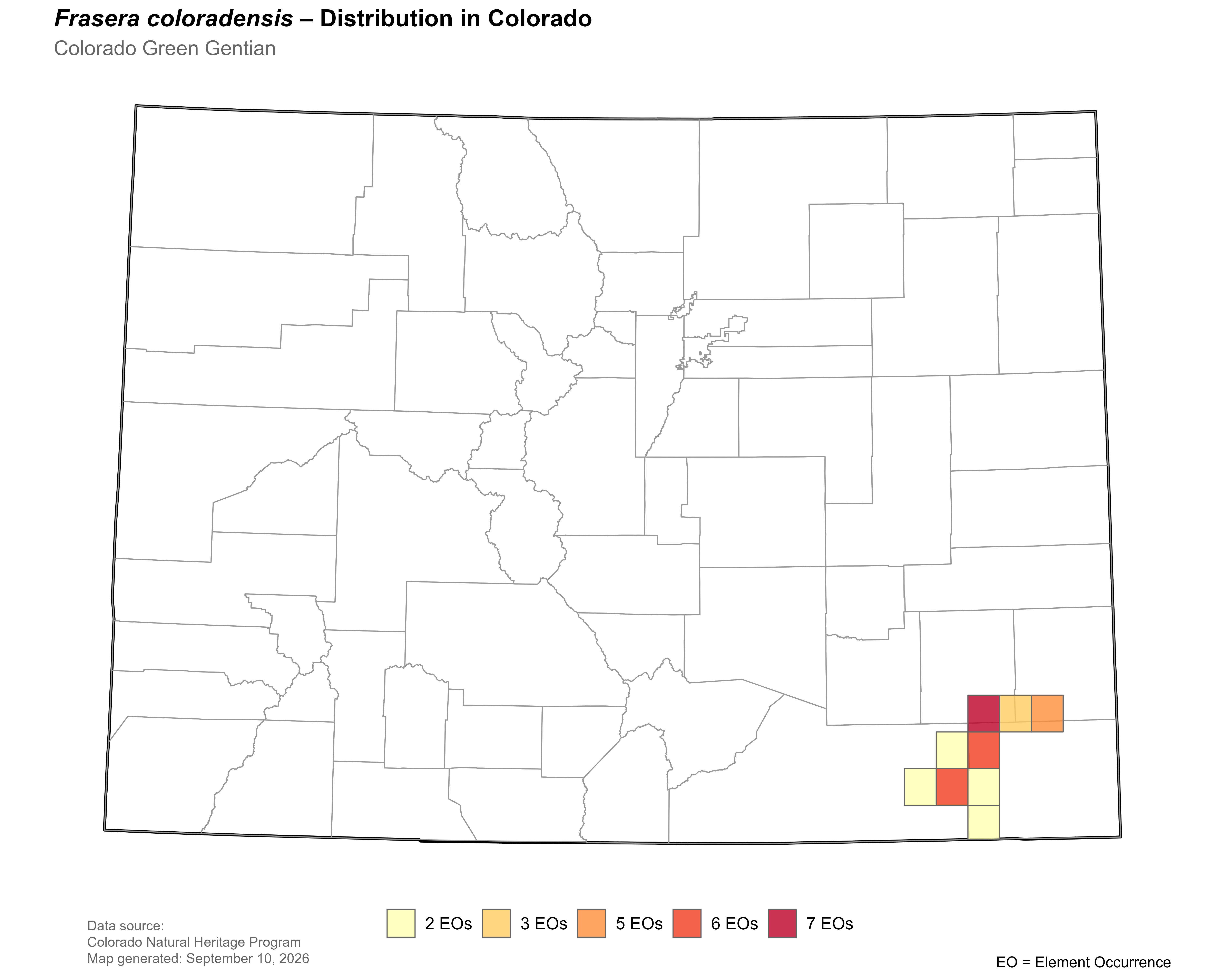
Frasera coloradensis is endemic to Colorado (USA) and is known from four counties: Baca, Bent, Las Animas, and Prowers. Estimated range extent in Colorado of 2845 square kilometers was calculated in GeoCAT using occurrence data provided by the Colorado Natural Heritage Program (2023).
Click on map to enlarge |
Threats and Management Issues
Primarily threatened by wind energy development (pers. comm. Don Hazlett 2014) and inadvertent loss or alteration of naturally limited habitat. It is reported to be moderately threatened by agricultural and road management practices such as herbicide application; grazing may suppress reproduction, but probably doesn't frequently kill established plants except in cases of overgrazing; (Naumann 1991). Cattle are not excluded from most of the sites where the species occurs and mid- to late-summer grazing can prevent the plants from producing mature seed. This species is considered to have low adaptive capacity and is expected to be highly to extremely vulnerable to climate change under both RCP 4.5 and 8.5 scenarios, as assessed for the 2025 Colorado State Wildlife Action Plan (CNHP 2025).
References
- Ackerfield, J. 2015. Flora of Colorado. BRIT Press, Botanical Research Institute of Texas, Fort Worth, TX. 818 pp.
- Colorado Native Plant Society. 1989. Rare plants of Colorado. Rocky Mountain Nature Association, Colorado Native Plant Society, Estes Park, Colorado. 73 pp.
- Colorado Natural Heritage Program (CNHP). 2023. Biodiversity Tracking and Conservation System (Biotics 5). Colorado Natural Heritage Program, Colorado State University, Fort Collins.
- Colorado Natural Heritage Program (CNHP). 2025. Climate Change Vulnerability Assessment of Colorado Tier 1 and Tier 2 Plant Species of Greatest Conservation Need (SCGN) for the 2025 Colorado State Wildlife Action Plan. Colorado Natural Heritage Program, Colorado State University, Fort Collins, CO.
- Handwerk, J., L. Grunau, and S. Panjabi. 2015. Colorado Wildlife Action Plan: 2015 Rare Plant Addendum. Colorado Natural Heritage Program, Colorado State University, Fort Collins, Colorado, USA.
- Kartesz, J.T. 1994. A synonymized checklist of the vascular flora of the United States, Canada, and Greenland. 2nd edition. 2 vols. Timber Press, Portland, OR.
- Locklear, J. 1989. Plight of the Colorado gentian. Bulletin Board 4(1): 55.
- Naumann, T.S. 1991. Status Report for Frasera coloradensis. Unpublished report prepared for the Colorado Natural Areas Program, Denver, CO.
- Rocky Mountain Society of Botanical Artists. 2009. RARE Imperiled Plants of Colorado, a traveling art exhibition. Exhibition catalogue developed by the Denver Botanic Gardens and Steamboat Art Museum.
- Ryke, N., D. Winters, L. McMartin and S. Vest. 1994. Threatened, Endangered and Sensitive Species of the Pike and San Isabel National Forests and Comanche and Cimarron National Grasslands. May 25, 1994.
- Spackman, S., B. Jennings, J. Coles, C. Dawson, M. Minton, A. Kratz, and C. Spurrier. 1997. Colorado rare plant field guide. Prepared for Bureau of Land Management, U.S. Forest Service and U.S. Fish and Wildlife Service by Colorado Natural Heritage Program.
- USDA, NRCS. 2022. The PLANTS Database. National Plant Data Team, Greensboro, NC 27401-4901 USA.
- Weber, W. A. and R. C. Wittmann. 2012. Colorado Flora, Eastern Slope, A Field Guide to the Vascular Plants, Fourth Edition. Boulder, Colorado. 555 pp.