


Scientific Name : Erythranthe gemmipara
Author : (W.A. Weber) G.L. Nesom & N.S. Fraga NatureServe Explorer
Common Name : Rocky Mountain Monkeyflower
 Current Research Activities
 1997 profile


☰ Click link below for details.
Taxonomy
Phrymaceae ()
Listed as Erythranthe gemmipara by Ackerfield (2022) and Mimulus gemmiparus by Ackerfield (2015). Ackerfield (2015, 2022) places the genus Mimulus/Erythranthe in the family Phrymaceae (the Lopseed Family). Weber and Wittmann (2012) place this genus in the Scrophulariaceae family.
Ranks and Status
State Rank : S1
State Rank Reason : Mimulus gemmiparus is a narrowly restricted Colorado (USA) endemic with an unusual biology whereby the species reproduces only vegetatively in small patches. The species is known from 14 naturally occurring populations and several reintroduction sites, but the total patch size and occupied habitat remains very small. Threats include trampling by recreationists, fire and fire mitigation, and drought and hydrologic changes associated with climate change.
U.S. Endangered Species Act : none
Colorado Threatened and Endangered List : none
Other Statuses : SWAP Tier 1, USFS
Description and Phenology
General Description:
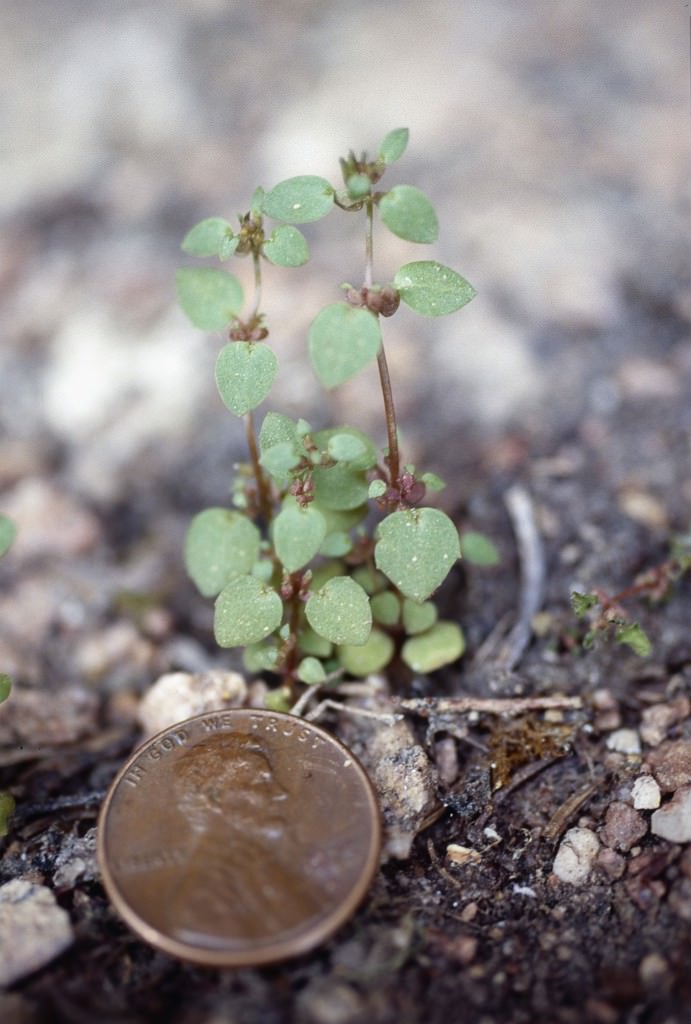
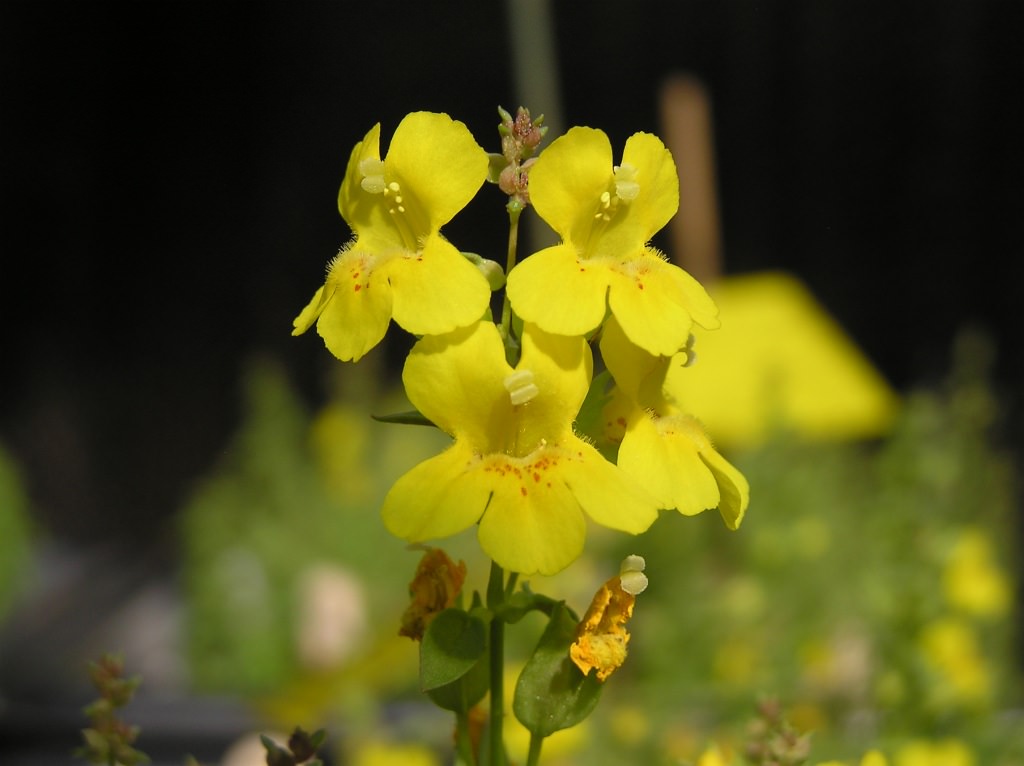
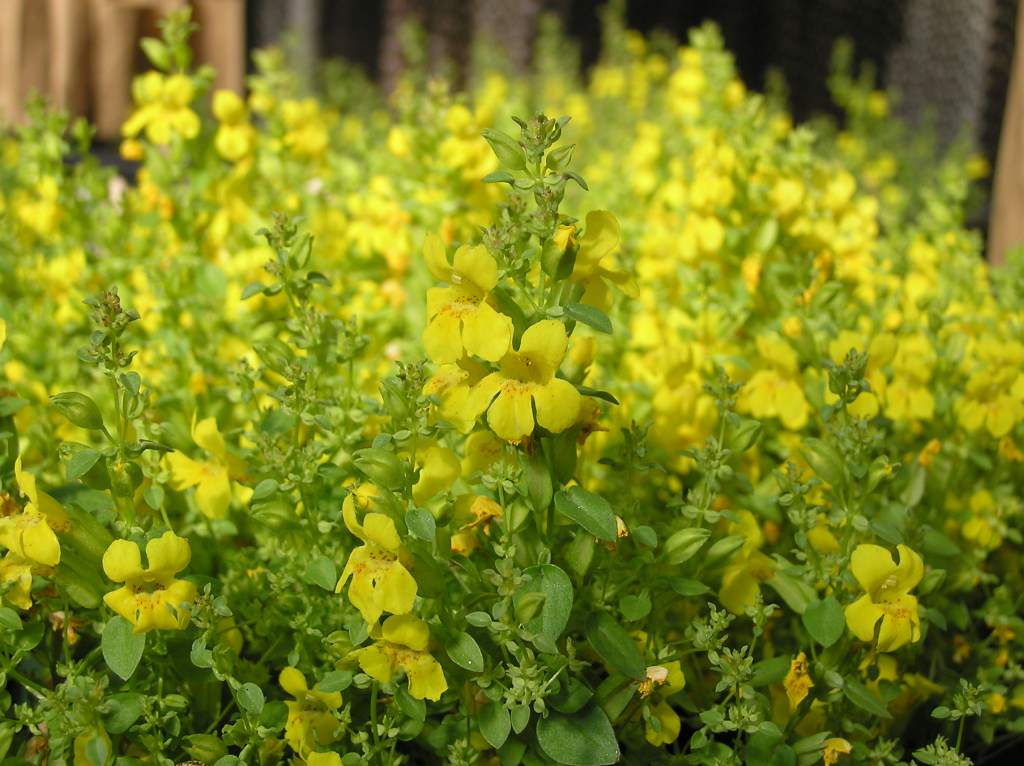
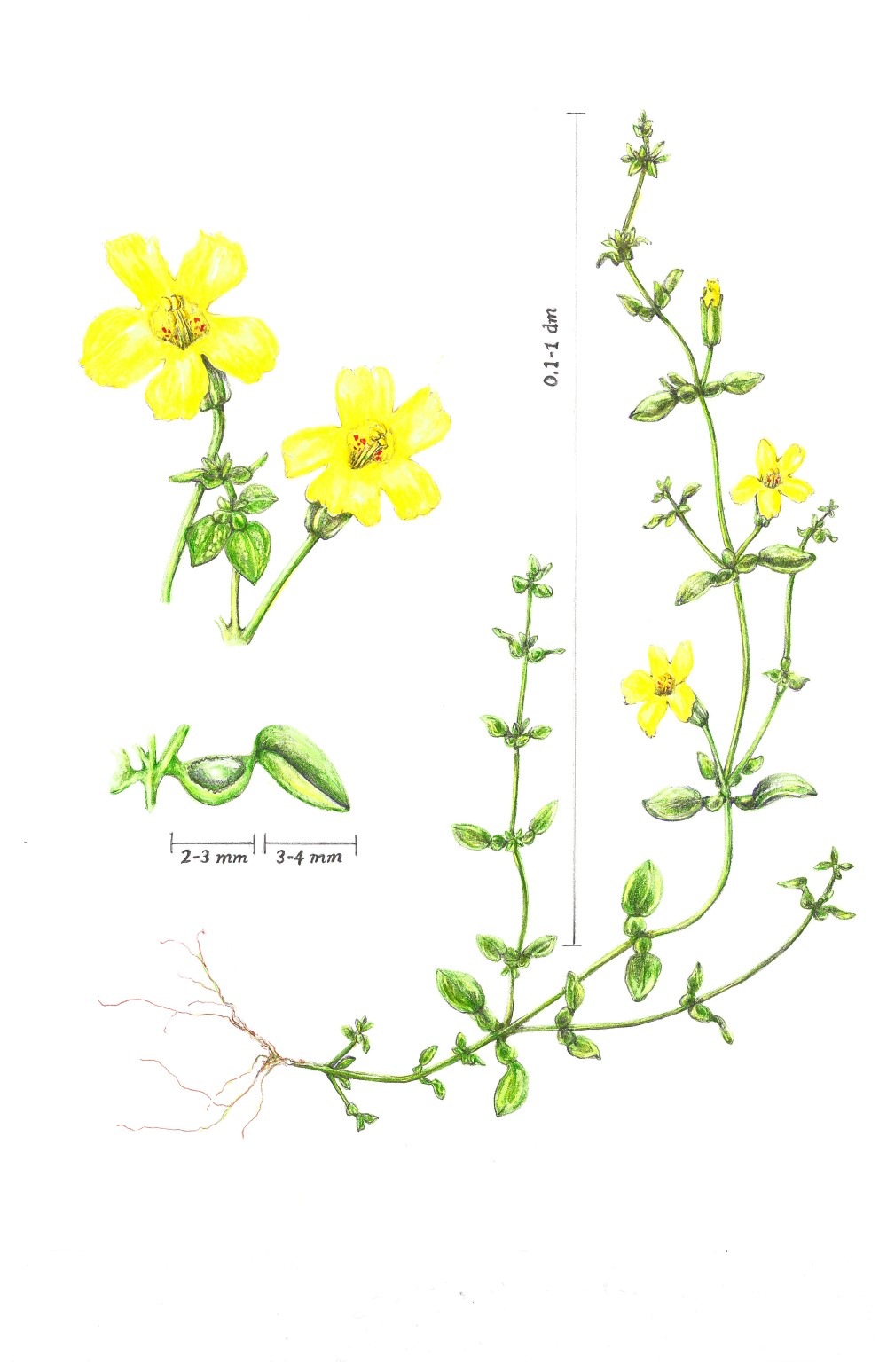
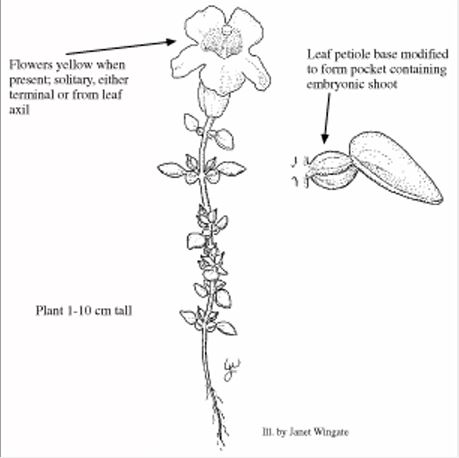
A small, inconspicuous, annual herb, 1-10 cm tall, only infrequently producing sterile flowers and only above ground between 1 and 2 months a year (Beardsley and Steingraeber 2013). Reproduction is by propagule, or bulbil, a dormant embryonic shoot forms inside a modified leaf stem or petiole, which are swollen, and sac-like. These fall off the mother plant as it matures. Flowers yellow when present; 4-5 mm long, solitary, either terminal or from leaf axil (Spackman et al. 1997). Plants are completely glabrous, unbranched, with opposite, ovate leaves up to 10 mm long and 7 mm wide (Peterson 1983).
Look Alikes:
Mimulus gemmiparus is the only Mimulus species with this specific reproductive mechanism. Its leaf petiole bases are modified to form pockets containing dormant embryonic shoots; flowers are usually absent (Spackman et al. 1997).
Phenology:
Flowers are rarely produced in this annual species. When they are produced, they have been observed in mid-July (Spackman et al. 1997).
 |  |
Habitat
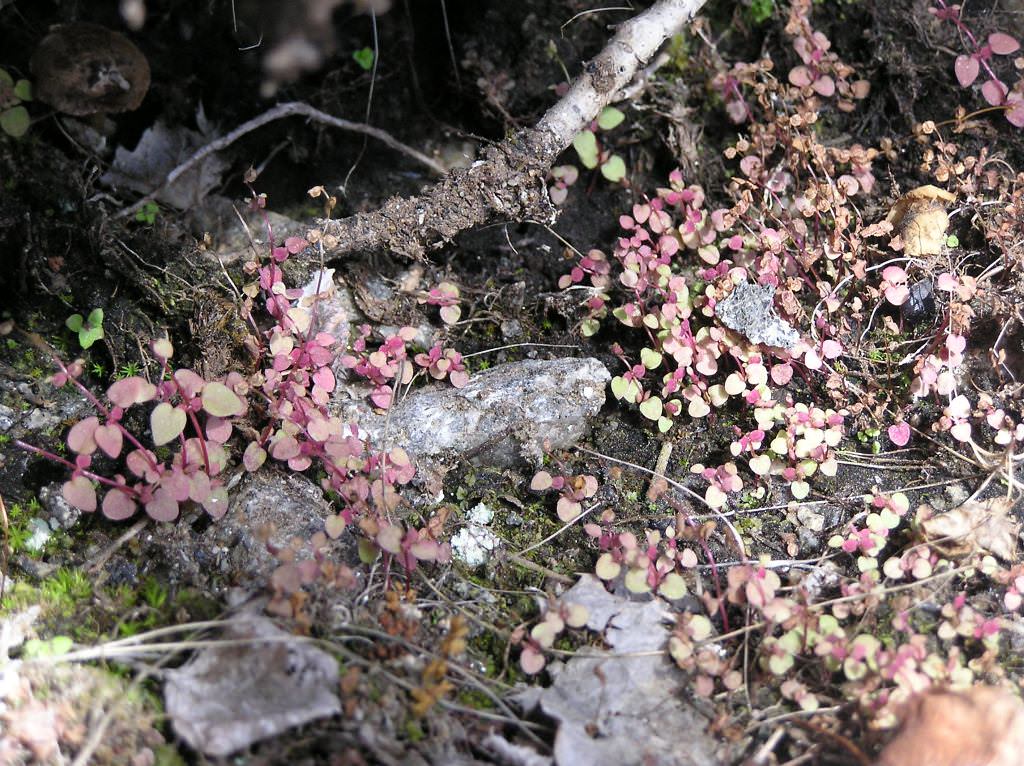
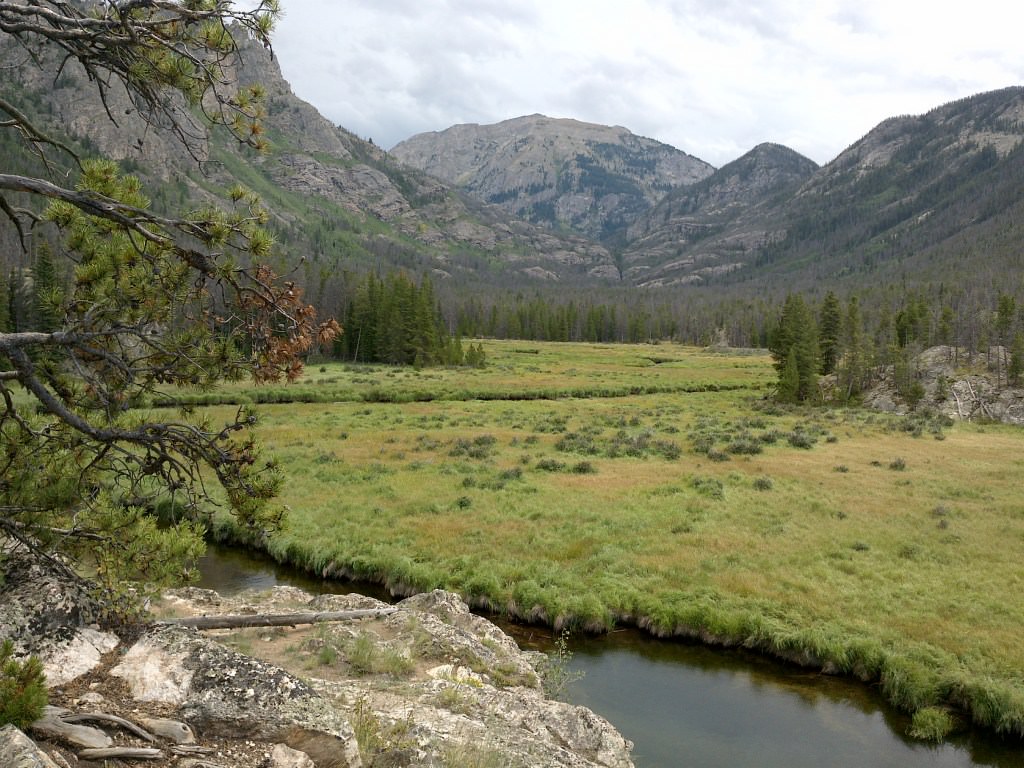
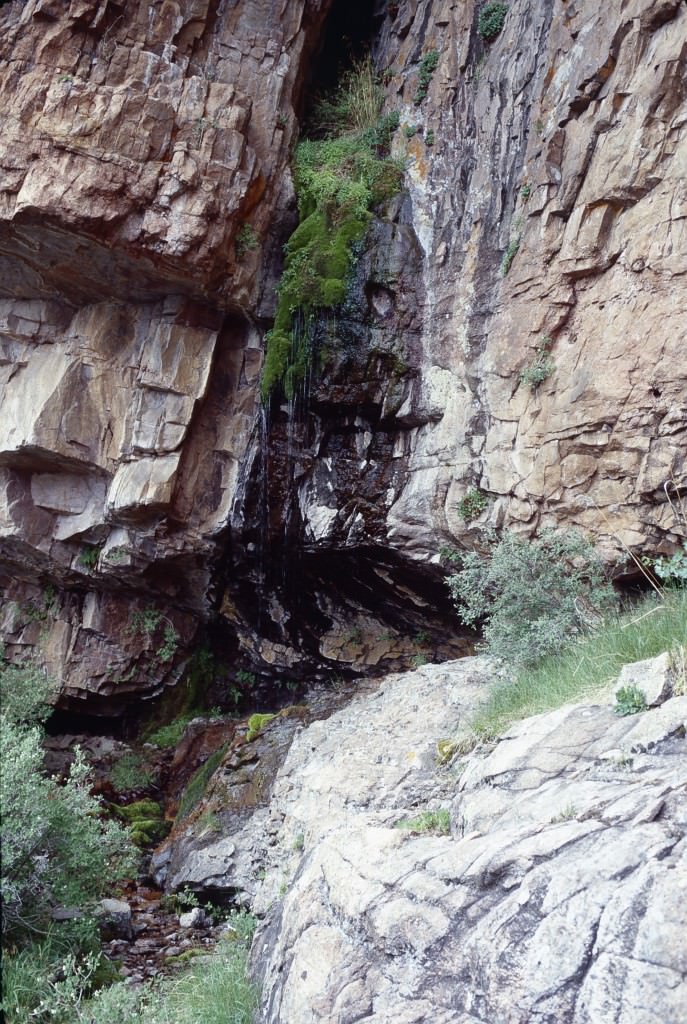
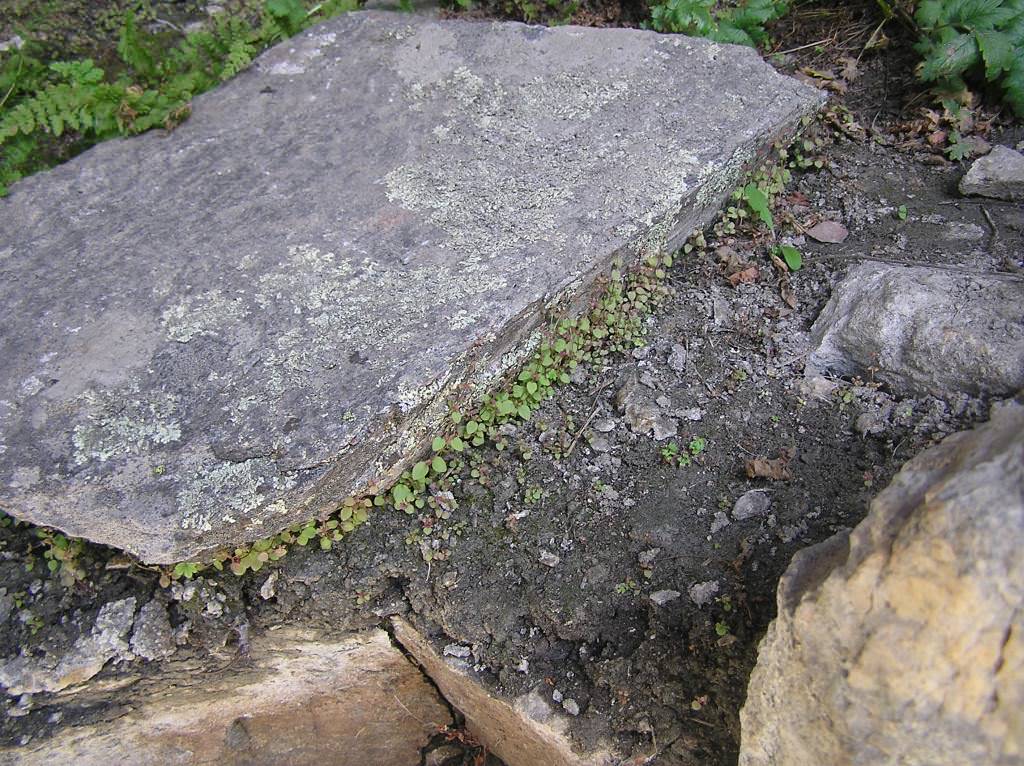
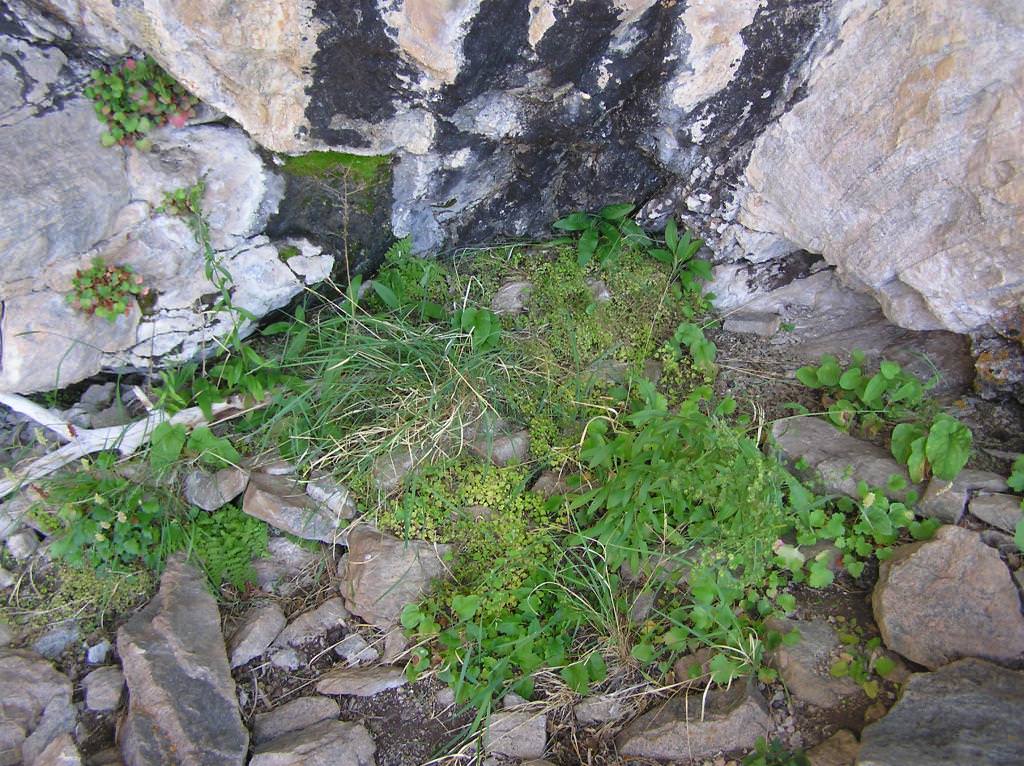
A subalpine species found on granite outcrops with surface seepage water and on moist forest soils near seeps and springs. Usually found in areas protected by granite overhangs and usually associated with other Mimulus species. Also found on an alluvial fan deposited by the Lawn Lake flood. The species' propagules are thought to be water-dispersed. Granitic seeps, slopes and alluvium in open sites within spruce-fir and aspen forests (Spackman et al. 1997, Steingraeber and Beardsley 2005).
click on image to enlarge
 |
 |
 |
 |
Elevation Range:
7,590 - 11,192 feet (2,313 - 3,411 meters)
Distribution
Colorado Endemic:
Yes
Range:
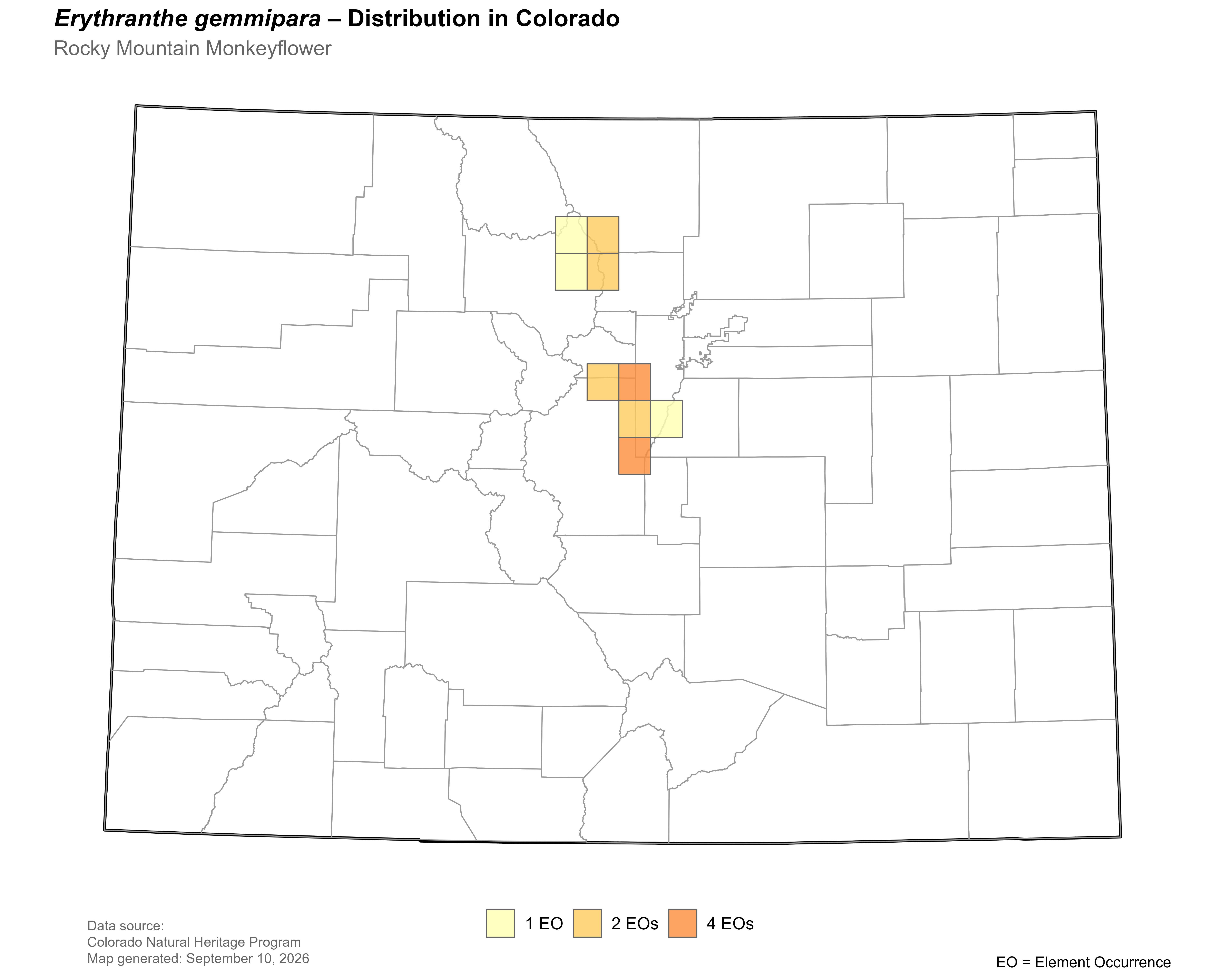
Mimulus gemmiparus is endemic to the central Rocky Mountains in Colorado, USA, where it is known from Boulder, Clear Creek, Douglas, Grand, Jefferson, Larimer, and Park counties. The estimated range extent of 3963 square kilometers was calculated in GeoCAT using occurrence data provided by the Colorado Natural Heritage Program (2025).
Click on map to enlarge |
Threats and Management Issues
Threats to Mimulus gemmiparus include trampling by recreationists, fire and fire mitigation, and changes to the moisture regime resulting from fire effects and long-term drought. Many patches of Mimulus occur on very shallow soil and likely rely on surface flow of water from rain or snowmelt, making it susceptible to drought (Steingraeber and Beardsley 2005). Several of the occurrences are in areas that were impacted by the Hayman and the East Troublesome Fires and are in close proximity to severely burned slopes, making them potentially susceptible to flash flood events or other hydrologic alterations. Because M. gemmiparus tends to grow in dense colonies within small areas, one minor disturbance could extirpate an entire population. Beardsley and Steingraeber (2013) provide evidence that these sorts of events are common and unpredictable. For example, a group of hikers sought refuge from a storm in 2010 under the rock ledge that overhangs a population of M. gemmiparus and could have easily trampled the small plants (Beardsley and Steingraeber 2013). Existing M. gemmiparus populations are also susceptible to ecological or human-related disturbances that could alter soil conditions, affect hydrology, or increase competition with other species. Ecological disturbances could include succession, wildfire, drought, rock fall, flash flood, erosion, climate change, tree blowdown, and invasion of exotic plants (Beatty et al. 2003). Further, Colorado climate scenarios for 2050 suggest temperature will increase by 3-7 F and precipitation may decrease or increase. The impact to any given rare plant habitat is likely to vary. Long-term monitoring that includes weather and soil moisture data is critical to understanding climate impacts. This species is considered to have low adaptive capacity and is expected to be moderately to extremely vulnerable to climate change under both RCP 4.5 and 8.5 scenarios, as assessed for the 2025 Colorado State Wildlife Action Plan (CNHP 2025).
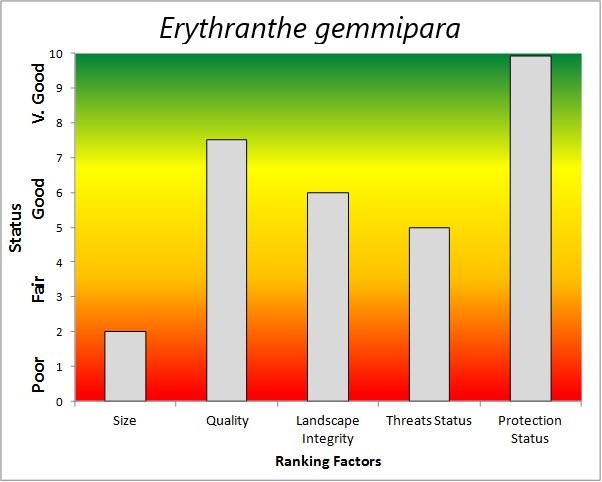
Summary results of an analysis of the status of Erythranthe gemmipara based on several ranking factors. This species was concluded to be "Effectively Conserved. From Rondeau et al. 2011. |
References
- Ackerfield, J. 2015. Flora of Colorado. Botanical Research Institute of Texas, Fort Worth, TX. 818 pp.
- Beardsley, M. 2014. Establishing new patches of Mimulus gemmiparus in Staunton State Park; assisted establishement as a tool for reducing the risk of extinction. Prepared for the Colorado Natural Areas Program 12/31/2014.
- Beardsley, M. 2016. Budding mondeyflower assisted establishment project, 2016 update. Submitted to Colorado Natural Areas Program November 30, 2016.
- Beardsley, M. and D. A. Steingraeber. 2013. Population dynamics, rarity and risk of extirpation for populations of Mimulus gemmiparus (budding monkeyflower) on National Forests of Colorado. A research report submitted to the USFS Forest Service. Arapaho and Roosevelt National Forest and Pawnee National Grassland. pp 17. Accessed online on May 11 at: http://www.r5.fs.fed.us/wildflowers/Rare_Plants/profiles/Critically_Imperiled/mimulus_gemmiparus/documents/USFS_MimulusStatusReport2013.pdf
- Beatty, B.L., W.F. Jennings, and R.C. Rawlinson (2003, November 21). Mimulus gemmiparus W.A. Weber (Rocky Mountain monkeyflower): a technical conservation assessment. [Online]. USDA Forest Service, Rocky Mountain Region. Available: http://www.fs.fed.us/r2/projects/scp/assessments/mimulusgemmiparus.pdf [March 2006].
- Colorado Native Plant Society. 1989. Rare plants of Colorado. Rocky Mountain Nature Association, Colorado Native Plant Society, Estes Park, Colorado. 73 pp.
- Colorado Natural Heritage Program (CNHP). 2022. Biodiversity Tracking and Conservation System (Biotics 5). Colorado Natural Heritage Program, Colorado State University, Fort Collins.
- Colorado Natural Heritage Program (CNHP). 2025. Climate Change Vulnerability Assessment of Colorado Tier 1 and Tier 2 Plant Species of Greatest Conservation Need (SCGN) for the 2025 Colorado State Wildlife Action Plan. Colorado Natural Heritage Program, Colorado State University, Fort Collins, CO.
- Colorado Natural Heritage Program and the Geospatial Centroid. 2017. The Colorado Ownership and Protection Map (COMaP). Colorado State University, Ft. Collins, CO.
- Handwerk, J., L. Grunau, and S. Panjabi. 2015. Colorado Wildlife Action Plan: 2015 Rare Plant Addendum. Colorado Natural Heritage Program, Colorado State University, Fort Collins, Colorado, USA.
- Neely, B., S. Panjabi, E. Lane, P. Lewis, C. Dawson, A. Kratz, B. Kurzel, T. Hogan, J. Handwerk, S. Krishnan, J. Neale, and N. Ripley. 2009. Colorado Rare Plant Conservation Strategy, Developed by the Colorado Rare Plant conservation Initiative. The Nature Conservancy, Boulder, Colorado, 117 pp.
- O'Kane, S. L. 1988. Colorado's Rare Flora. Great Basin Naturalist. 48(4):434-484.
- Peterson, J.S. 1983b. Status report of Mimulus gemmiparus. Unpublished report prepared for the Colorado Natural Areas Program Denver, CO by the Colorado Natural Heritage Program, Ft. Collins, CO.
- Rondeau, R., K. Decker, J. Handwerk, J. Siemers, L. Grunau, and C. Pague. 2011. The state of Colorado's biodiversity 2011. Prepared for The Nature Conservancy. Colorado Natural Heritage Program, Colorado State University, Fort Collins, Colorado.
- Spackman, S., B. Jennings, J. Coles, C. Dawson, M. Minton, A. Kratz, and C. Spurrier. 1997. Colorado rare plant field guide. Prepared for Bureau of Land Management, U.S. Forest Service and U.S. Fish and Wildlife Service by Colorado Natural Heritage Program.
- U.S. Fish and Wildlife Service (USFWS). 2020. Endangered and Threatened Wildlife and Plants; Eleven Species Not Warranted for Listing as Endangered or Threatened Species. Federal Register 85(233):78029-78038.
- USDA, NRCS. 2022. The PLANTS Database. National Plant Data Team, Greensboro, NC 27401-4901 USA.
- Weber, W. A. and R. C. Wittmann. 2012. Colorado Flora, Eastern Slope, A Field Guide to the Vascular Plants, Fourth Edition. Boulder, Colorado. 555 pp.
- Weber, W. A. and R. C. Wittmann. 2012. Colorado Flora, Western Slope, A Field Guide to the Vascular Plants, Fourth Edition. Boulder, Colorado. 532 pp.
- Weber, W.A. 1972. Mimulus gemmiparus sp. Nov. from Colorado. Madrono Vol 21 (6):423-425.