


Scientific Name : Eriogonum tumulosum
Author : (Barneby) Reveal NatureServe Explorer
Common Name : Woodside Buckwheat
 Current Research Activities
 1997 profile
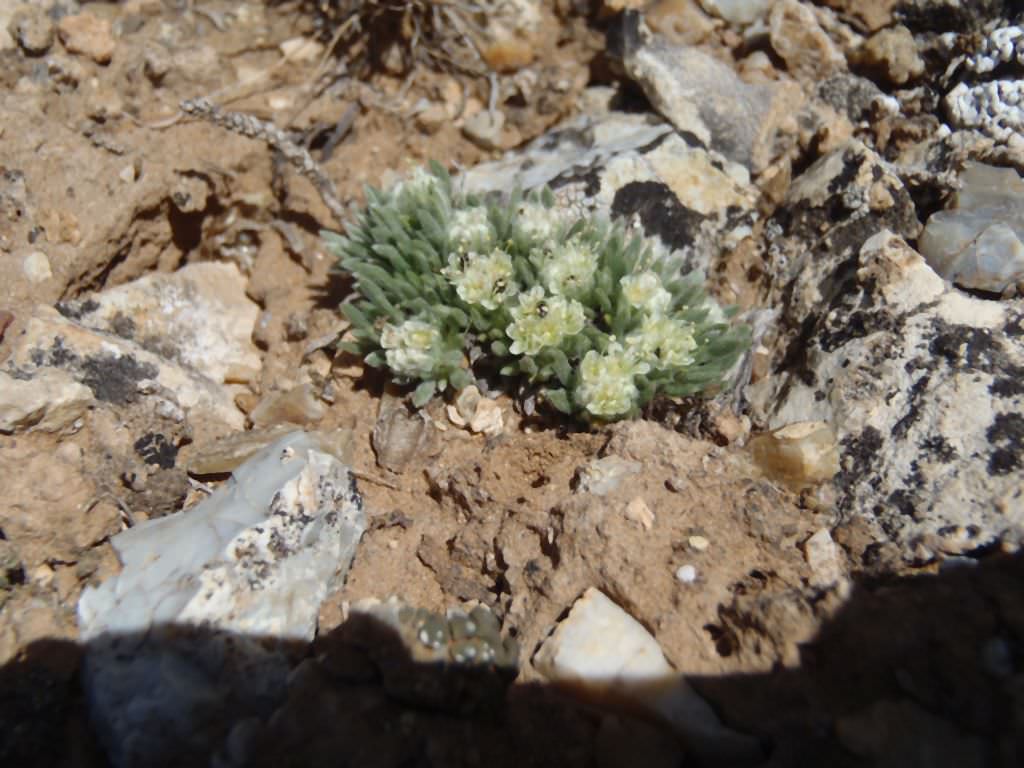
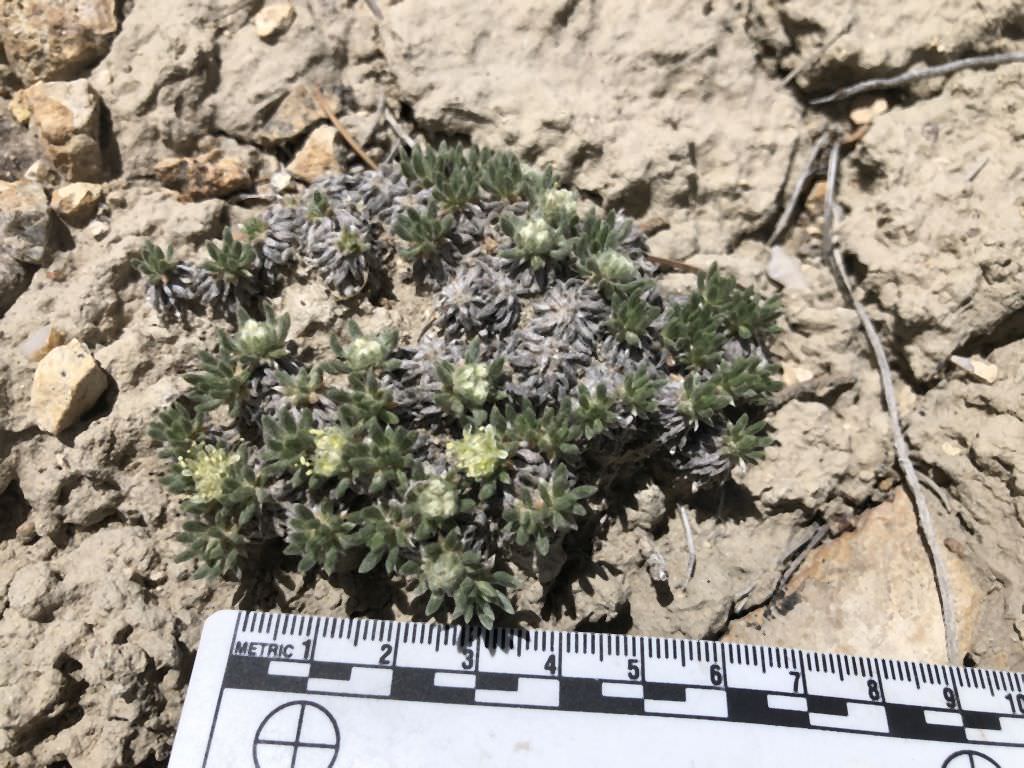
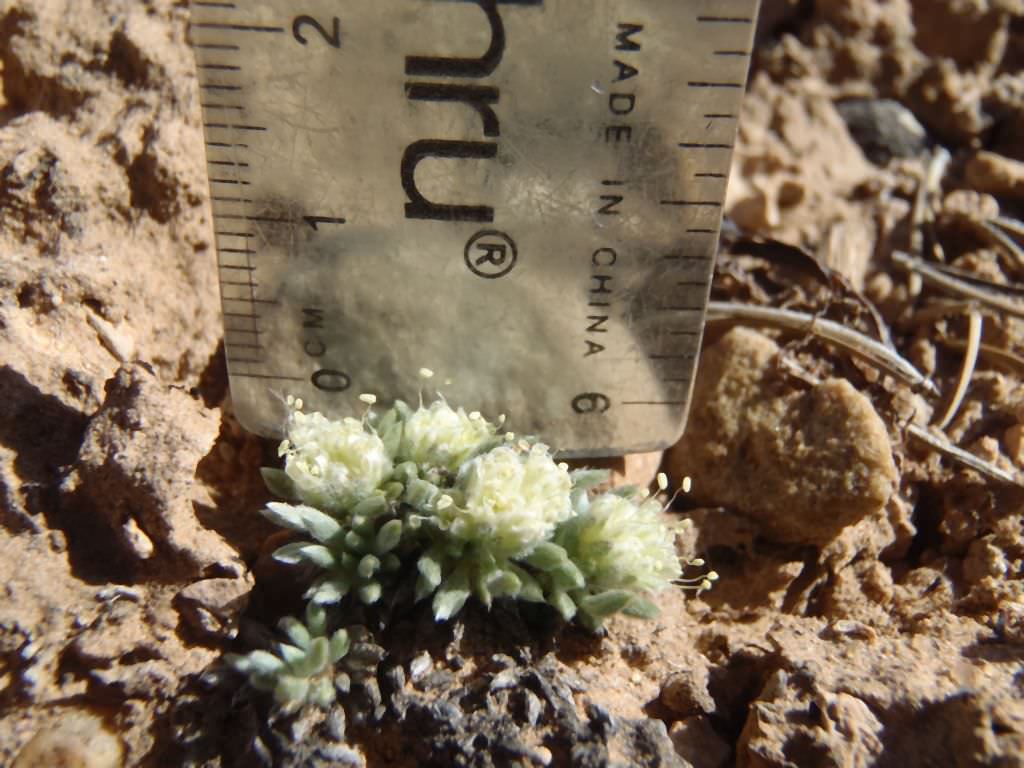


☰ Click link below for details.
Taxonomy
Polygonaceae (buckwheat family)
Ranks and Status
State Rank : S2
State Rank Reason : As of 2025 Eriogonum tumulosum is known from only 11 occurrences in Moffat County, Colorado, USA. At the local level grazing and invasive plant species (cheatgrass) are reported as threats to over half of the occurrences. One third of the occurrences have not been visited in over twenty years and their current status is unknown, therefore retain S2 rank until more information is available.
U.S. Endangered Species Act : none
Colorado Threatened and Endangered List : none
Other Statuses : BLM, SWAP Tier 2
Description and Phenology
General Description:
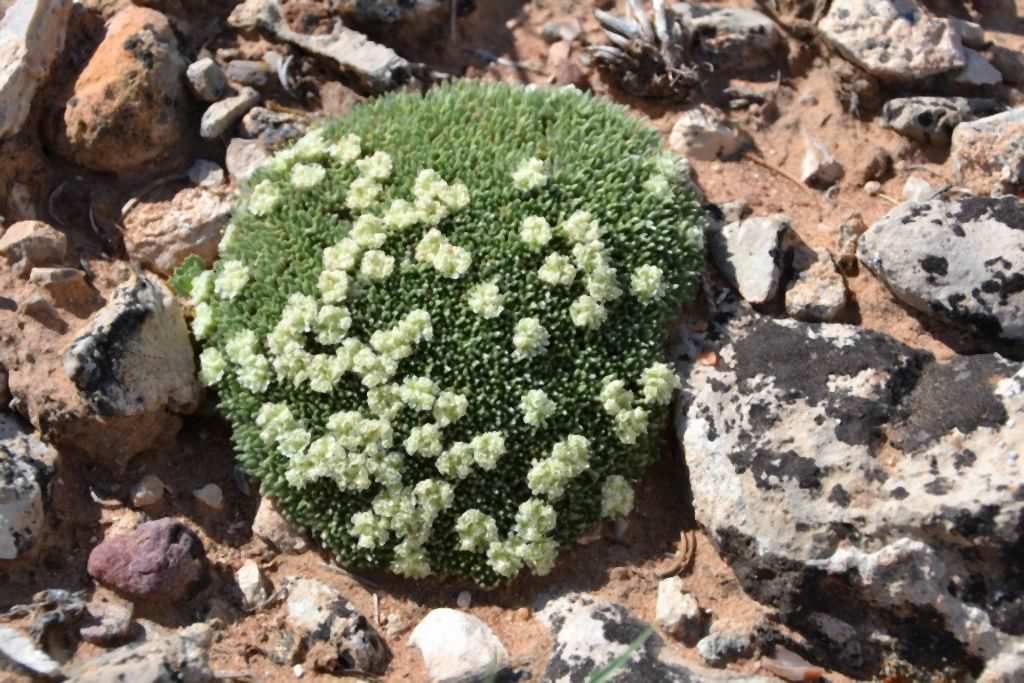
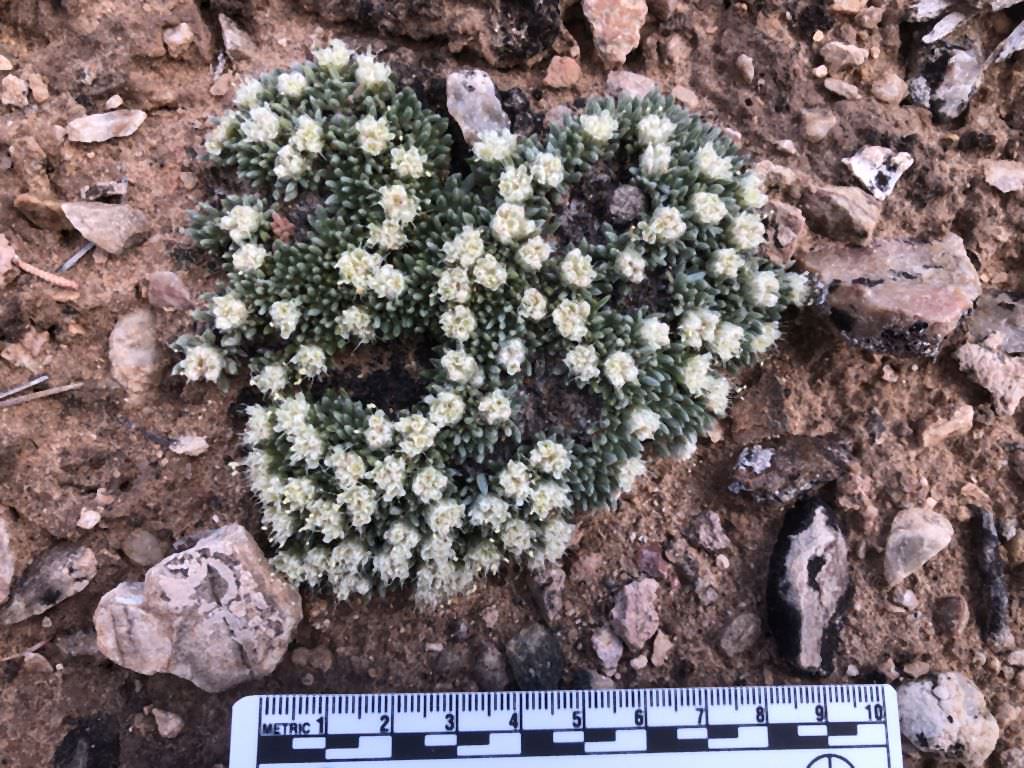
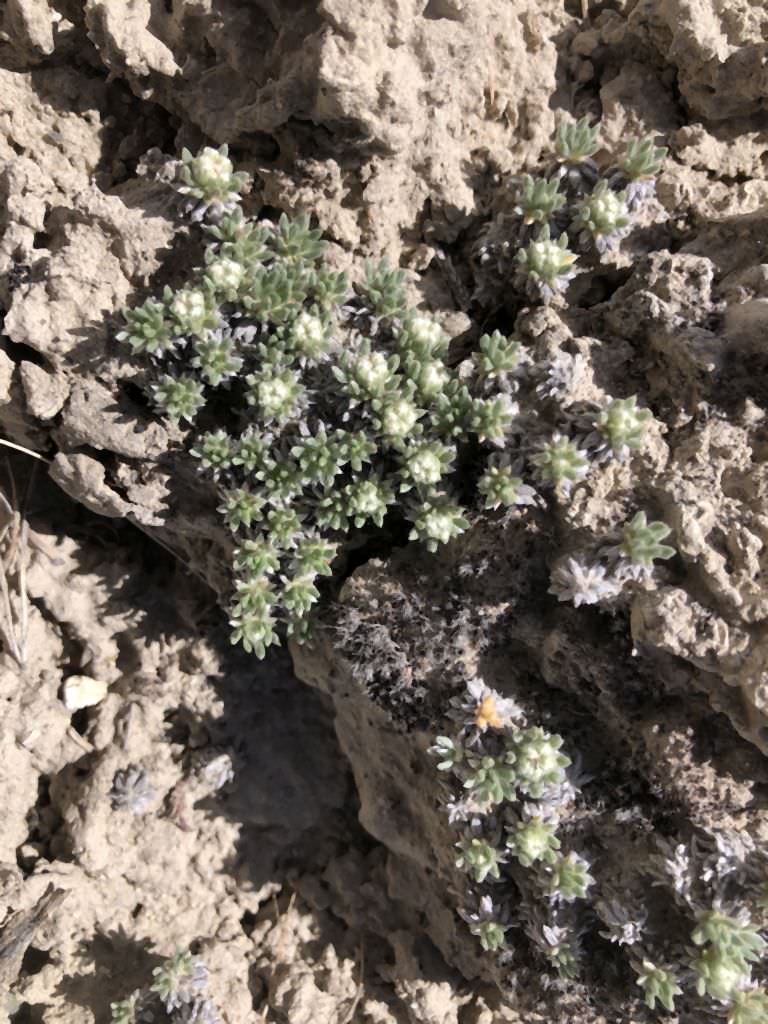
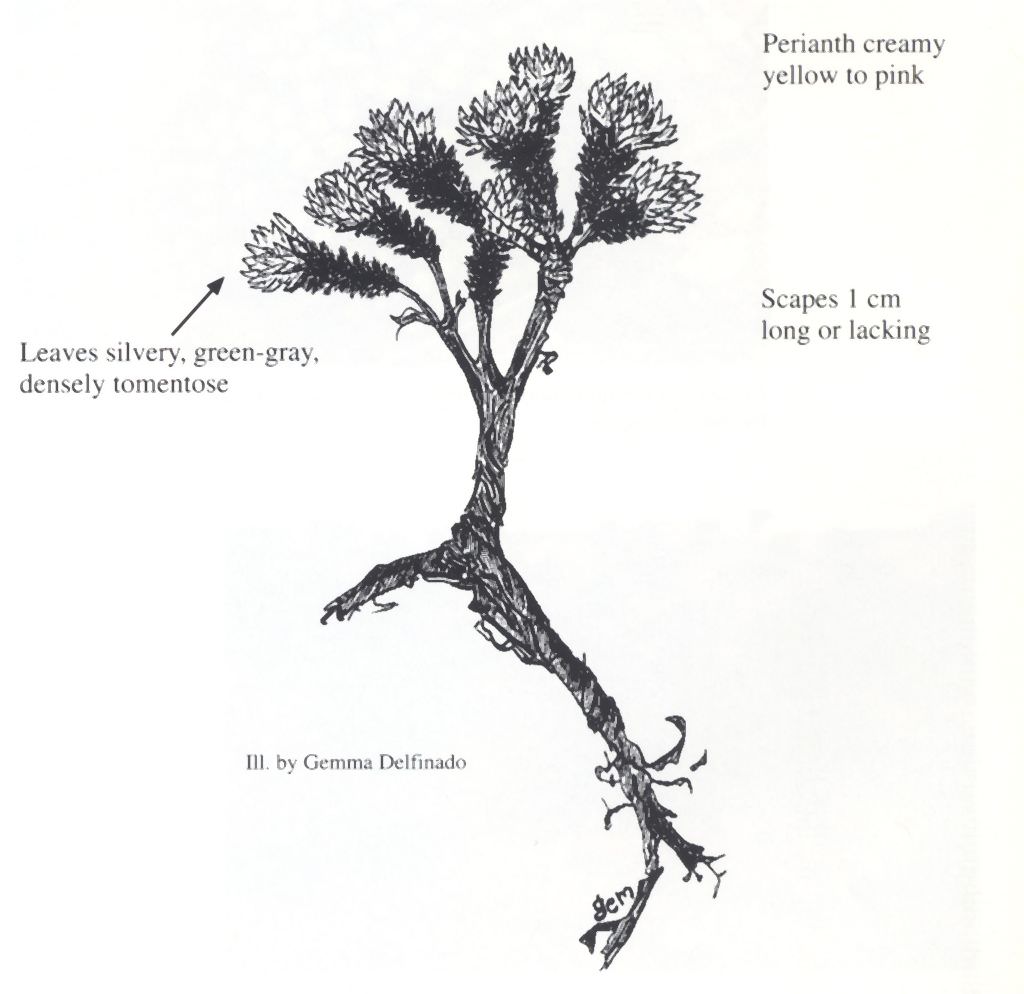
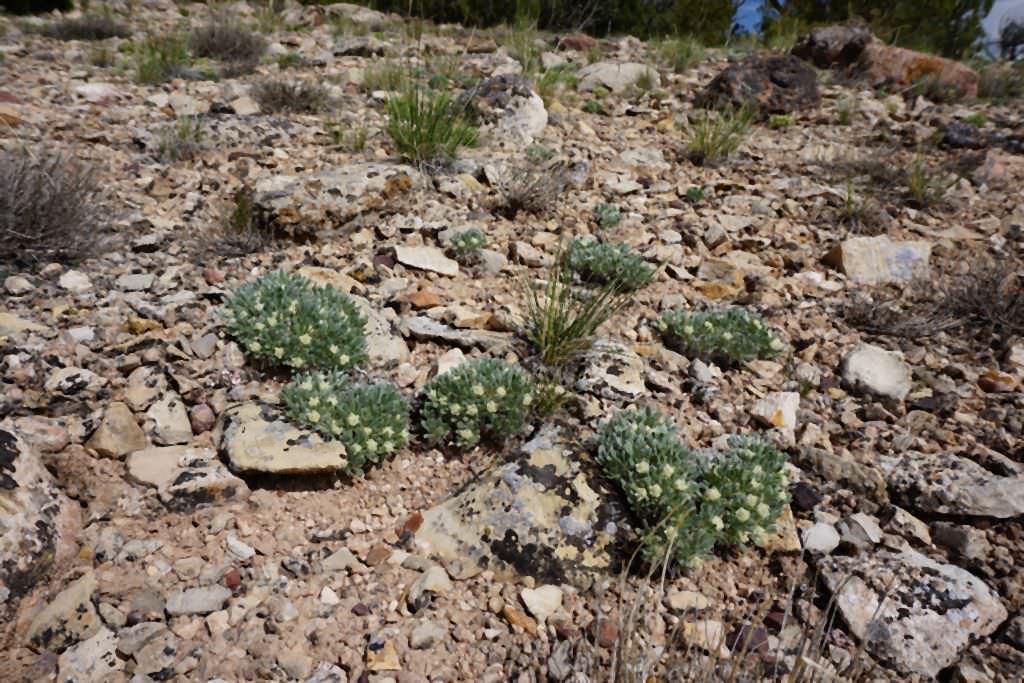
Herbs, matted, scapose, 0.01-0.1 Ã 1-4 dm, villous to silky-tomentose, greenish. Stems matted, with persistent leaf bases, up to 1/ 5 height of plant; caudex stems matted; aerial flowering stems scapelike, erect, slender, solid, not fistulose, 0.01-0.1 dm, villous to silky-tomentose. Leaves basal, fasciculate in terminal tufts, or cauline, 1 per node, sheathing nearly entire length of stem; petiole 0.04-0.07 cm, silky-tomentose; blade oblanceolate to elliptic, 0.3-0.4 Ã 0.07-0.1 cm, margins plane or slightly thickened. Inflorescences capitate, 0.5-0.8(-1) cm; branches absent; bracts 4-5, semileaflike, linear-lanceolate to lanceolate, 2.5-3.5 Ã 0.3-0.4 mm. Peduncles absent. Involucres 1 per node, campanulate, 2-4 Ã (4-)5-8 mm, rigid, tomentose; teeth 7-10, spreading, 1.6-2.2 mm. Flowers 3-4 mm; perianth white to rose, pilose; tepals connate proximal 1/4, monomorphic, oblong; stamens exserted, 3-4 mm; filaments glabrous. Achenes light brown, 2-2.5 mm, glabrous. Herbs, matted, scapose, 0.01-0.1 Ã 1-4 dm, villous to silky-tomentose, greenish. Stems matted, with persistent leaf bases, up to 1/ 5 height of plant; caudex stems matted; aerial flowering stems scapelike, erect, slender, solid, not fistulose, 0.01-0.1 dm, villous to silky-tomentose. Leaves basal, fasciculate in terminal tufts, or cauline, 1 per node, sheathing nearly entire length of stem; petiole 0.04-0.07 cm, silky-tomentose; blade oblanceolate to elliptic, 0.3-0.4 Ã 0.07-0.1 cm, margins plane or slightly thickened. Inflorescences capitate, 0.5-0.8(-1) cm; branches absent; bracts 4-5, semileaflike, linear-lanceolate to lanceolate, 2.5-3.5 Ã 0.3-0.4 mm. Peduncles absent. Involucres 1 per node, campanulate, 2-4 Ã (4-)5-8 mm, rigid, tomentose; teeth 7-10, spreading, 1.6-2.2 mm. Flowers 3-4 mm; perianth white to rose, pilose; tepals connate proximal 1/4, monomorphic, oblong; stamens exserted, 3-4 mm; filaments glabrous. Achenes light brown, 2-2.5 mm, glabrous (Flora of North America 1993+).
Look Alikes:
Eriogonum acaule is similar to E. tumulosum but differs in having linear to oval leaves that are thickly white cottony tomentose (Spackman et al. 1997).
Phenology:
Flowers late April to early July; peak flowering is usually in May (Spackman et al. 1997).
 |
Habitat
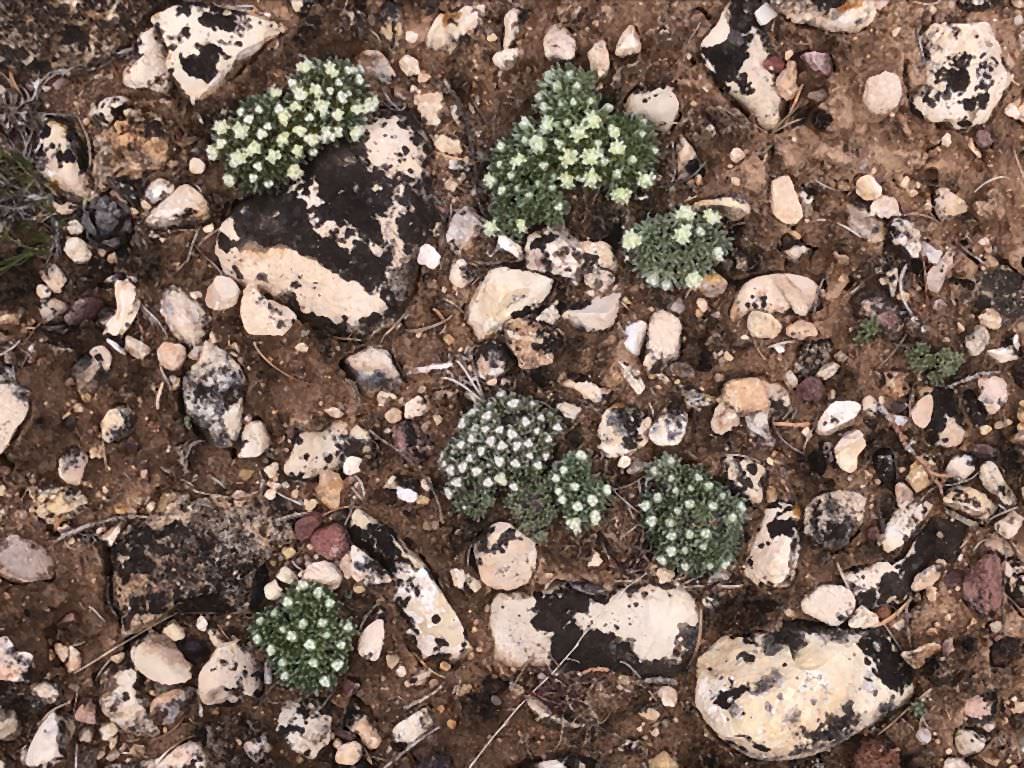
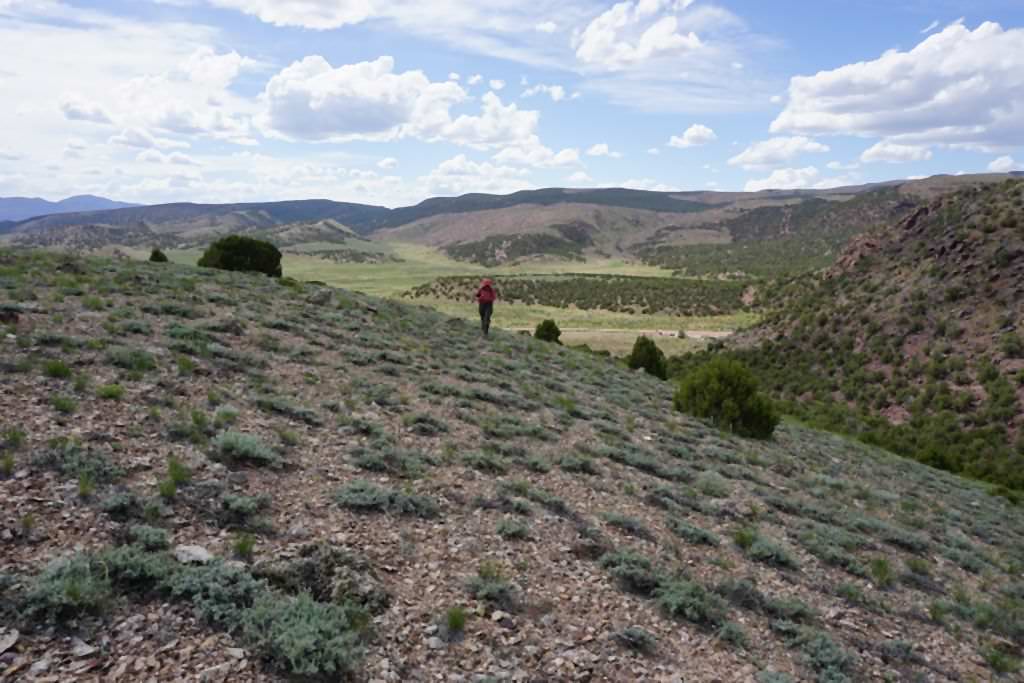
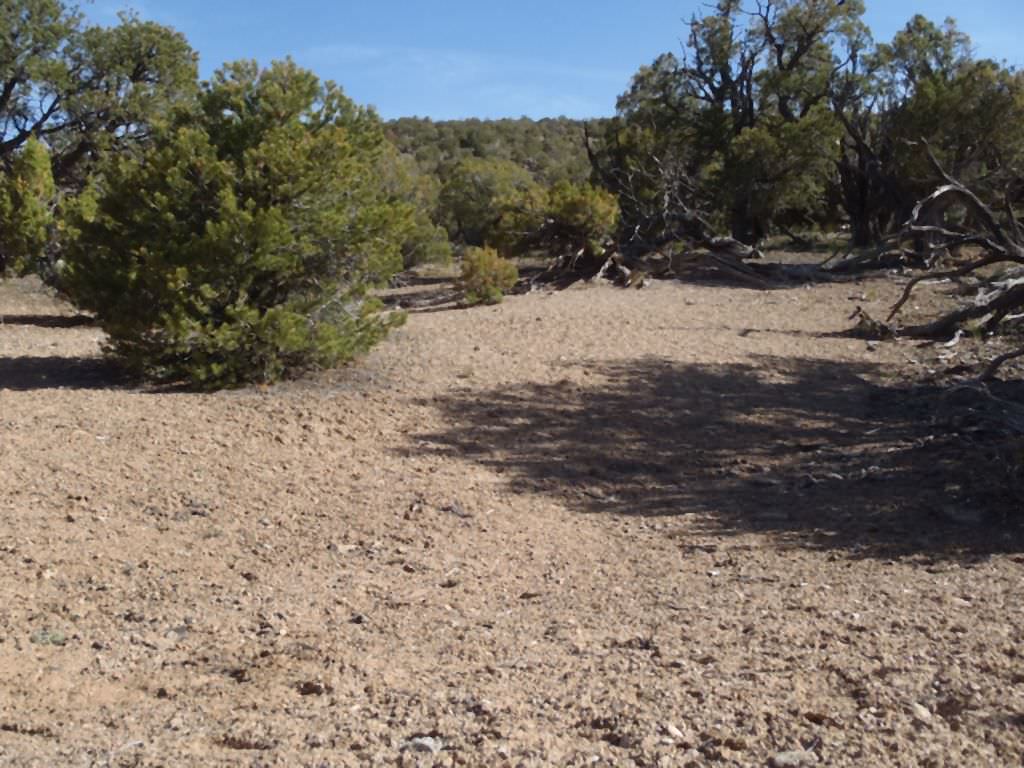
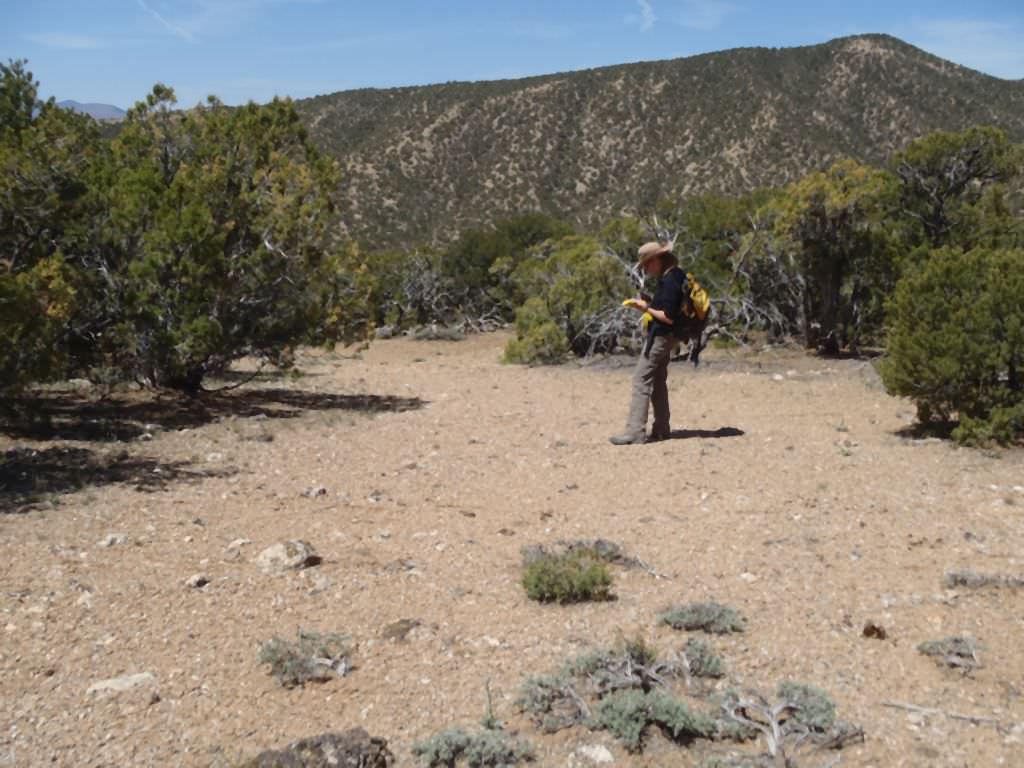
Mixed desert shrub and pinyon-juniper woodlands; on rocky outcrops, sedimentary gravels or clays (Spackman et al. 1997). Associated plant taxa include: Artemisia nova, Artemisia tridentata ssp. wyomingens, Penstemon yampaensis, Phlox austromontana, Stenotus acaulis, Bolophyta ligulata, Atriplex canescens, Pascopyrum smithii, Townsendia incana, Gutierrezia sarothrae, Phlox canescens, Hesperostipa comata, Achnatherum hymenoides, Hilaria jamesii, Penstemon mucronatus, Euphorbia fendleri.
click on image to enlarge
 |
 |
 |
 |
Elevation Range:
5,482 - 7,293 feet (1,671 - 2,223 meters)
Distribution
Colorado Endemic:
No
Range:
Eriogonum tumulosum is known from Moffat County, Colorado, USA. Estimated range extent in Colorado of 782 square kilometers was calculated in GeoCAT using occurrence data provided by the Colorado Natural Heritage Program (2022). This species can also be found in Utah, USA.
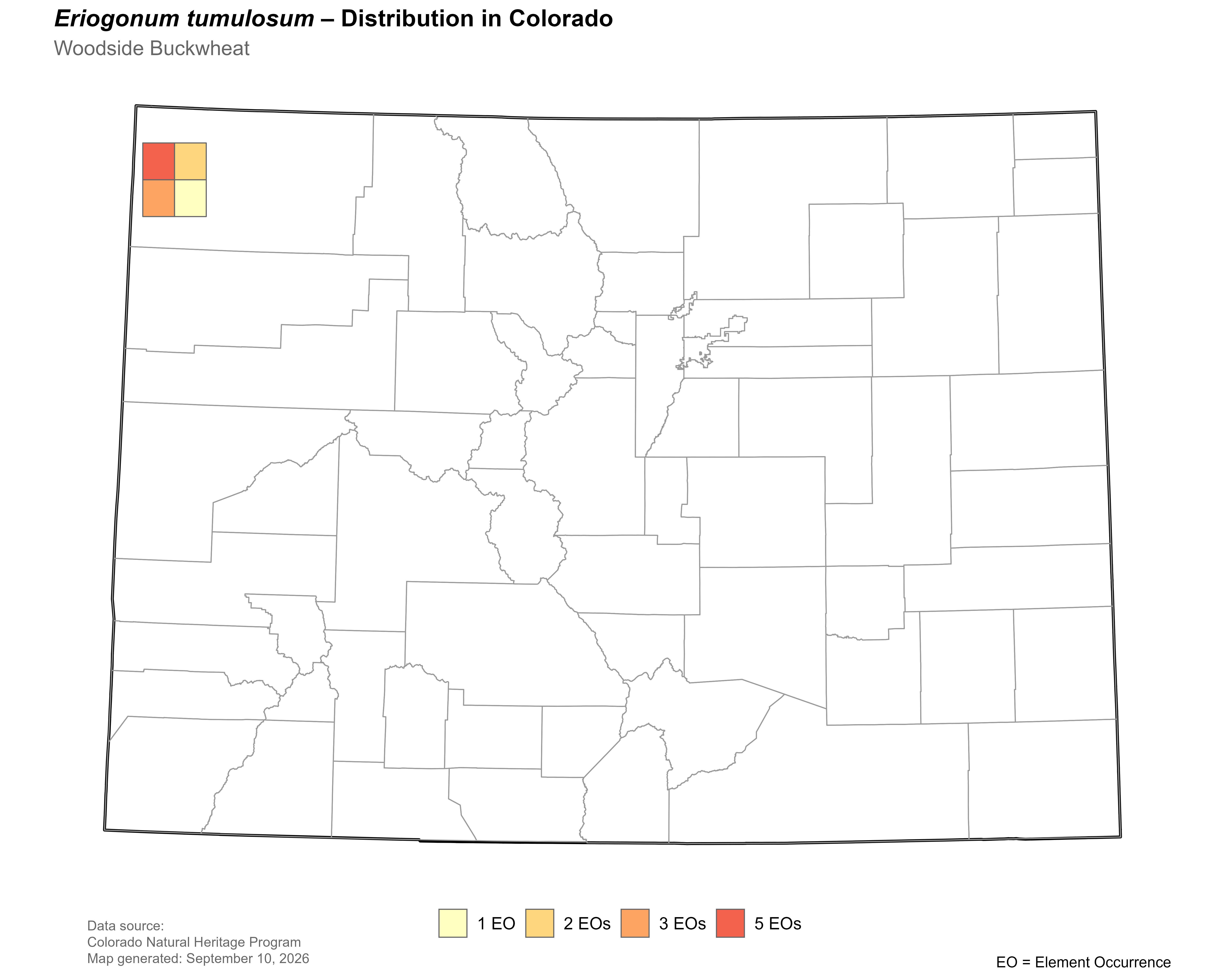
Click on map to enlarge |
Threats and Management Issues
As of 2022, 81% of the occurrences are found in habitat with minimal to low levels of landscape disturbance (CNHP 2021). At the local level grazing and invasive plant species (cheatgrass) are reported as threats to over half of the occurrences. Long term drought is also a concern for this species. This species is considered to have moderate adaptive capacity and is expected to be slightly to moderately vulnerable to climate change under both RCP 4.5 and 8.5 scenarios, as assessed for the 2025 Colorado State Wildlife Action Plan (CNHP 2025).
References
- Ackerfield, Jennifer. 2022. Flora of Colorado. Second Edition. Bot. Misc. 60. BRIT Press, Fort Worth Botanic Garden/Botanical Research Institute of Texas, U.S.A. 861 pp.
- Colorado Native Plant Society. 1997. Rare Plants of Colorado, second edition. Falcon Press Publ., Helena, MT.
- Colorado Natural Heritage Program (CNHP). 2022. Biodiversity Tracking and Conservation System (Biotics 5). Colorado Natural Heritage Program, Colorado State University, Fort Collins.
- Colorado Natural Heritage Program (CNHP). 2025. Climate Change Vulnerability Assessment of Colorado Tier 1 and Tier 2 Plant Species of Greatest Conservation Need (SCGN) for the 2025 Colorado State Wildlife Action Plan. Colorado Natural Heritage Program, Colorado State University, Fort Collins, CO.
- Flora of North America Editorial Committee, ed. (FNA). 1993+. Flora of North America North of Mexico. Oxford Univ. Press, New York, Oxford.
- Reveal, J.L. 1981. Notes on endangered buckwheats (Eriogonum: Polygonaceae) with three newly described from the western United States. Brittonia 33(3):441-448.
- Spackman, S., B. Jennings, J. Coles, C. Dawson, M. Minton, A. Kratz, and C. Spurrier. 1997. Colorado rare plant field guide. Prepared for Bureau of Land Management, U.S. Forest Service and U.S. Fish and Wildlife Service by Colorado Natural Heritage Program.
- USDA, NRCS. 2013. The PLANTS Database. National Plant Data Team, Greensboro, NC 27401-4901 USA.
- Weber, W. A. and R. C. Wittmann. 2012. Colorado Flora, Western Slope, A Field Guide to the Vascular Plants, Fourth Edition. Boulder, Colorado. 532 pp.
- Welsh, S.L., N.D. Atwood, L.C. Higgins and S. Goodrich. 1987. Utah Flora, Great Basin Naturalist Memoirs, No. 9. Brigham Young University, Provo, Utah. 986 pp.


