


Scientific Name : Eriogonum scabrellum
Author : Reveal NatureServe Explorer
Common Name : Westwater Buckwheat
 Current Research Activities


☰ Click link below for details.
Taxonomy
Polygonaceae (buckwheat family)
Ranks and Status
State Rank : S1
State Rank Reason : Eriogonum scabrellum is known from 11 occurrences in southwest Colorado, USA. Of the 11 occurrences, 6 are historical and 4 are not assessed for viability. Threats are largely unknown, but livestock grazing and recreation occur near at least two of the occurrences. Long-term drought has been on-going throughout the species range, however, it is considered to have high adaptive capacity and is expected to be only slightly vulnerable to climate change.
U.S. Endangered Species Act : none
Colorado Threatened and Endangered List : none
Other Statuses : SWAP Tier 2
Description and Phenology
General Description:
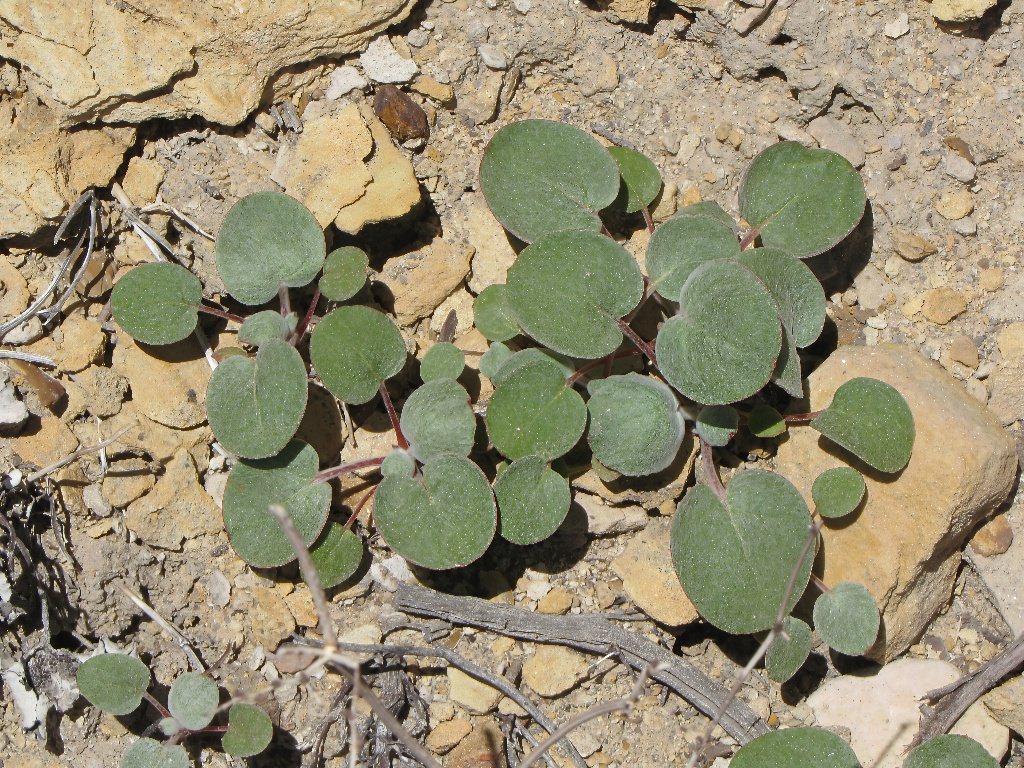
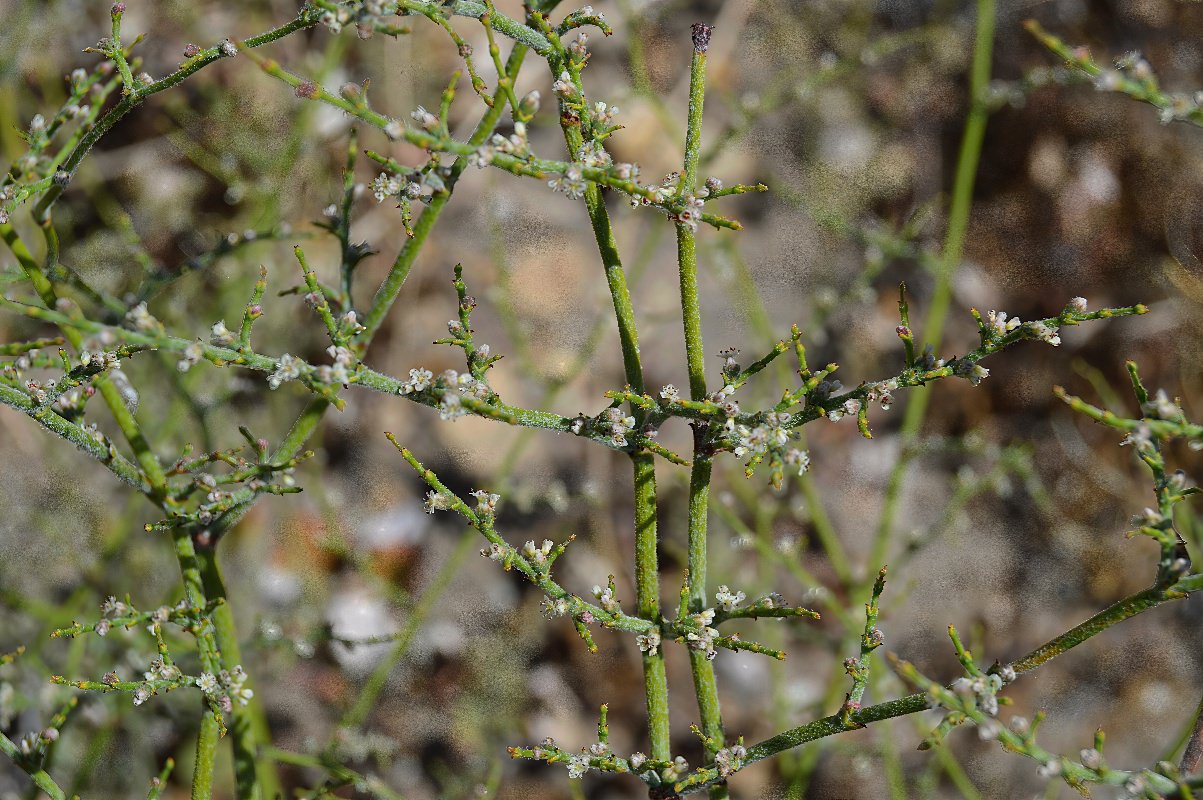
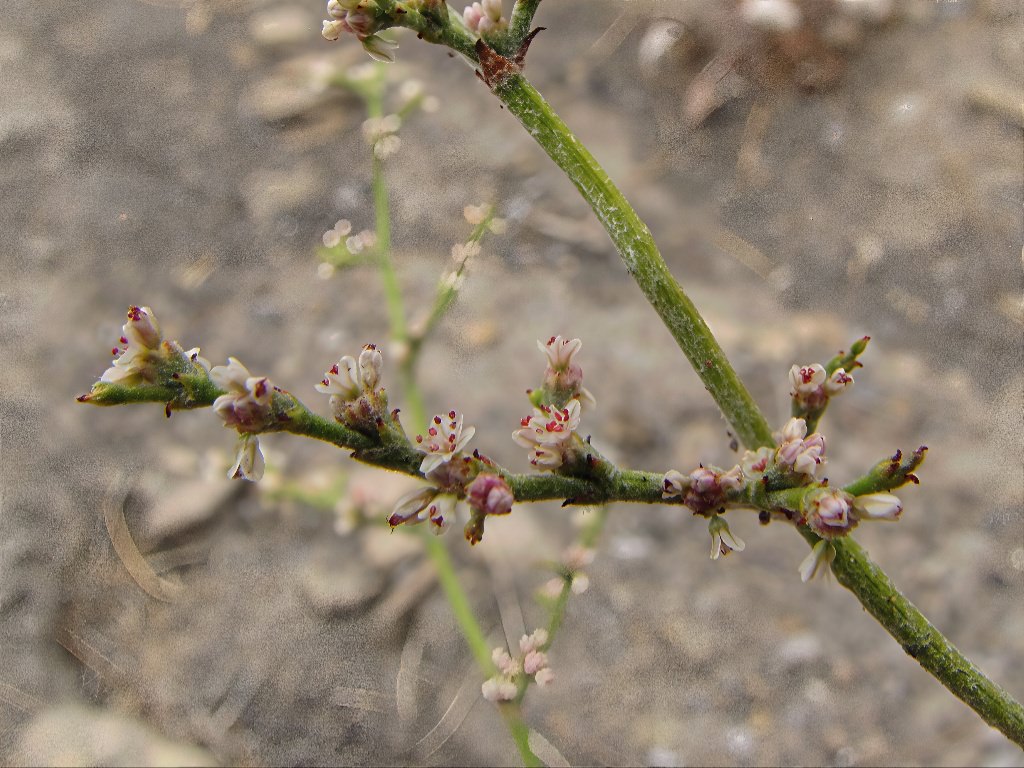
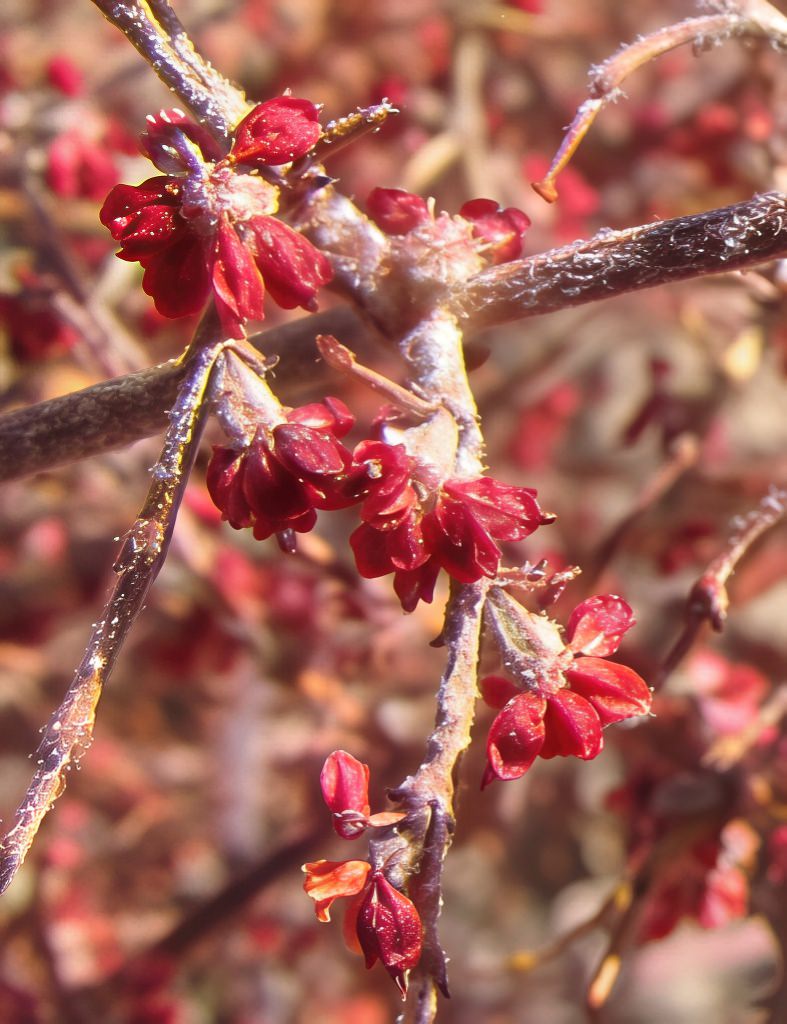
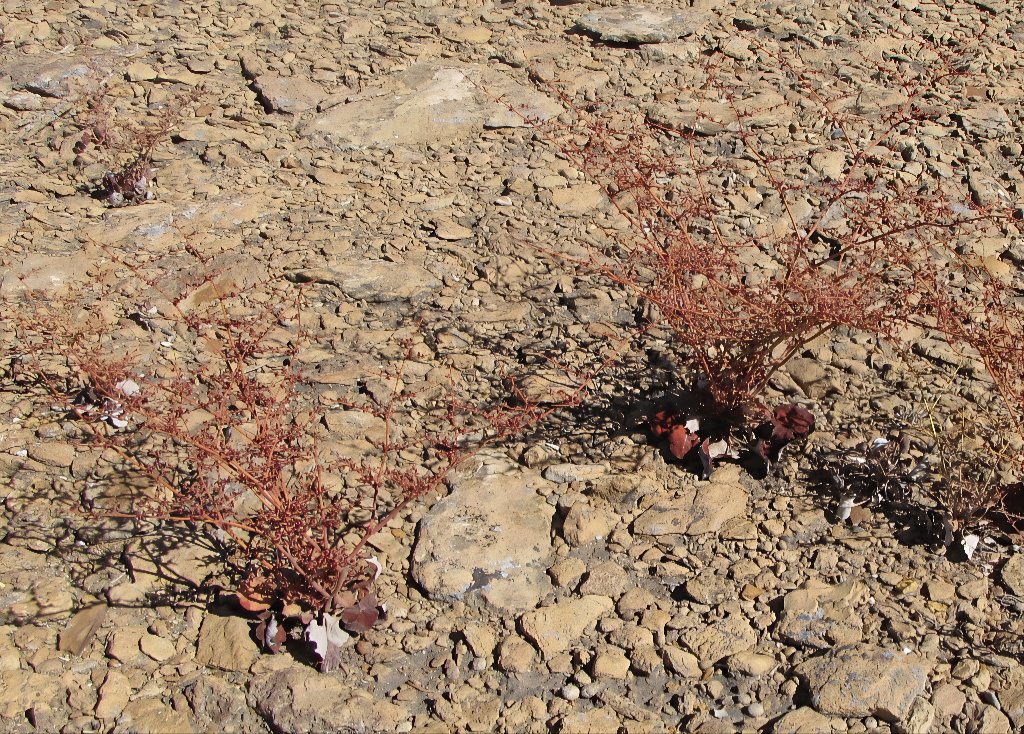
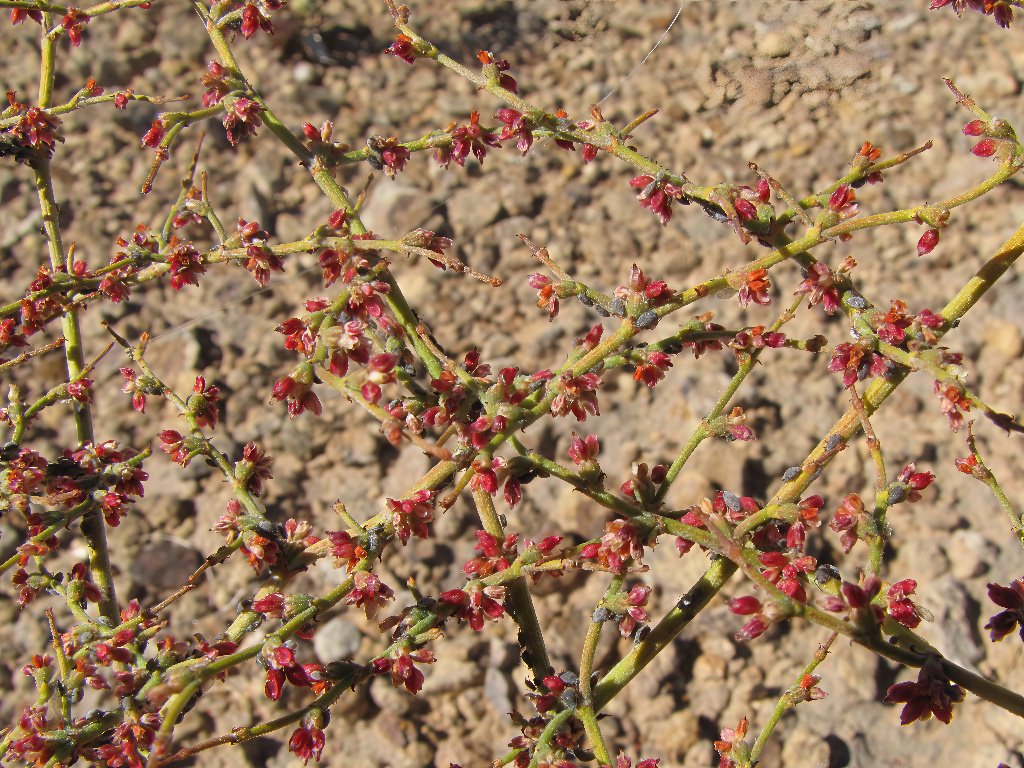
Spreading annual, 1-3 dm tall, with a a rosette of orbicular basal leaves 1-3 cm wide, densely tomentose below and sparsely floccose and green above, the margins crisped and wavy. Flowering stems erect 0.5-1.5 dm, floccose, slightly rough to the touch; inflorescences an open cyme spreading, 5-40 x 20-100 cm, glandular and tomentose; involucres turbinate 1.5-2.5 mm long, tepals white, turning pink or red, 1-1.5 mm long, pustulose. Achenes light brown, glabrous, 2 mm long. (Ackerfield 2022, FNA Vol. 5 2005)
Look Alikes:
Eriogonum palmerianum is generally smaller in height (0.6-3 dm) with smaller leaves (0.5-2 cm), the margins of which are usually not crisped or wavy; the tepals are glabrous not pustulose. E. palmerianum blooms in May-June and E. scabrellum blooms from September-November. (Ackerfield 2022).
Phenology:
Flowering and fruiting September-November (Ackerfield 2022, FNA Vol. 5 2005).
Habitat
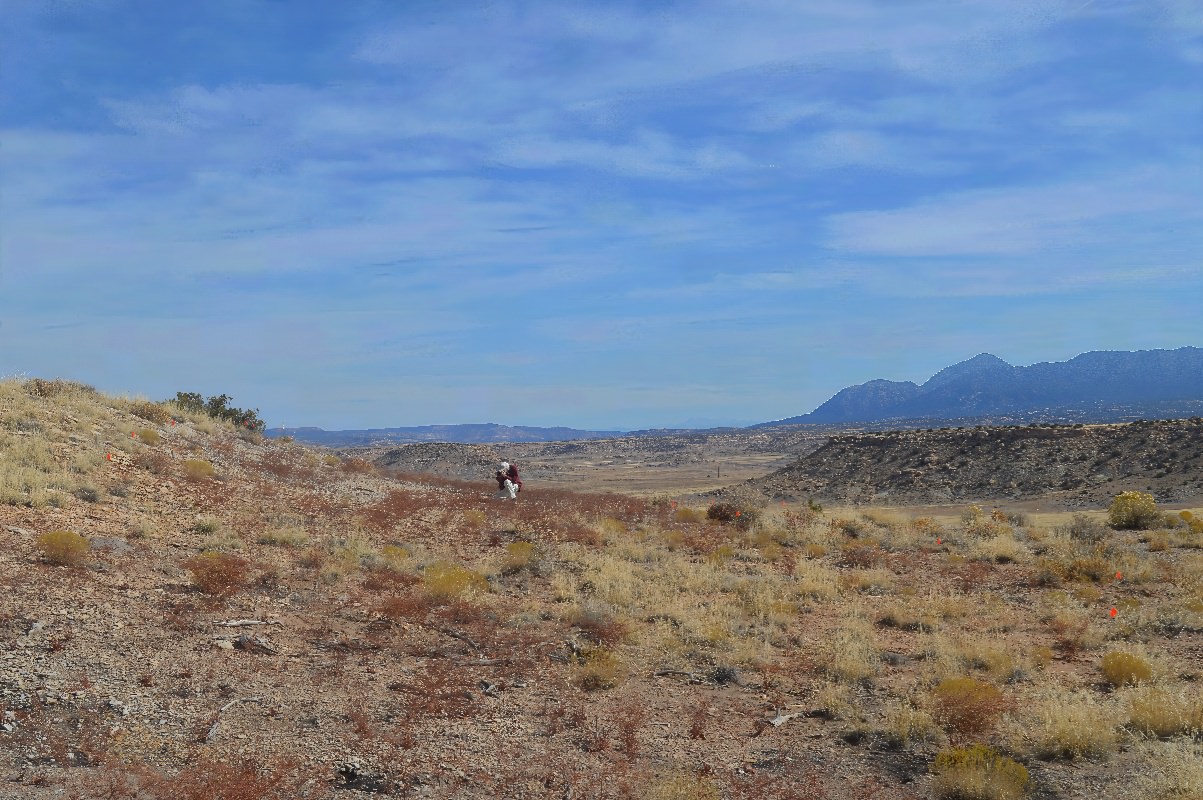
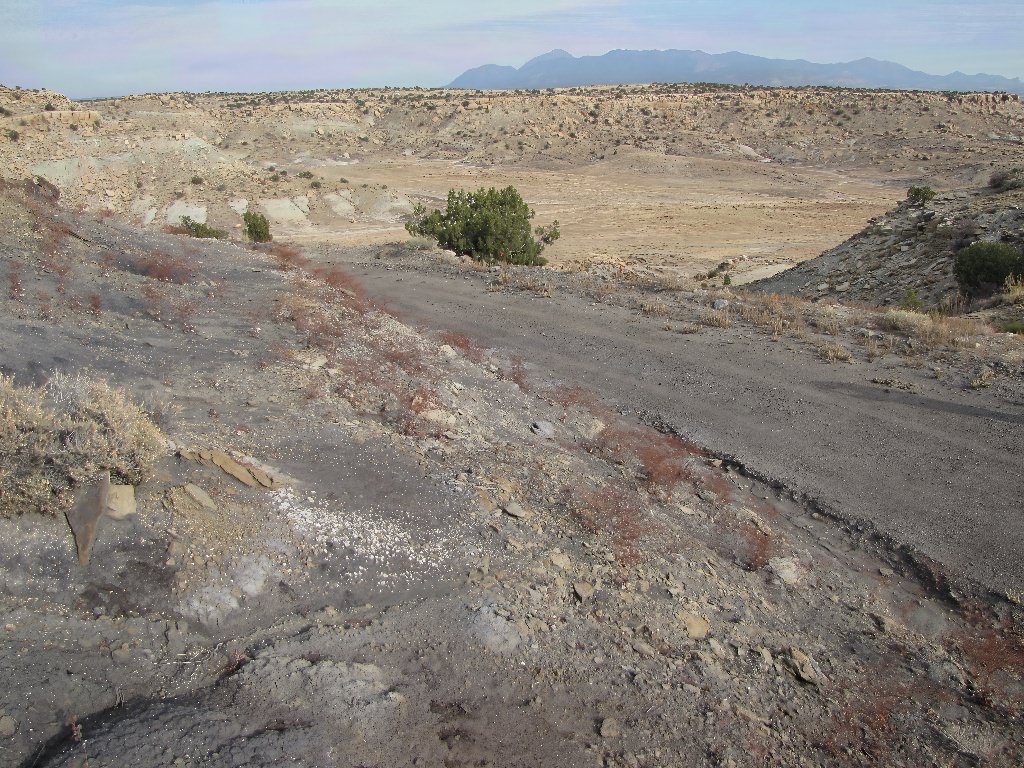
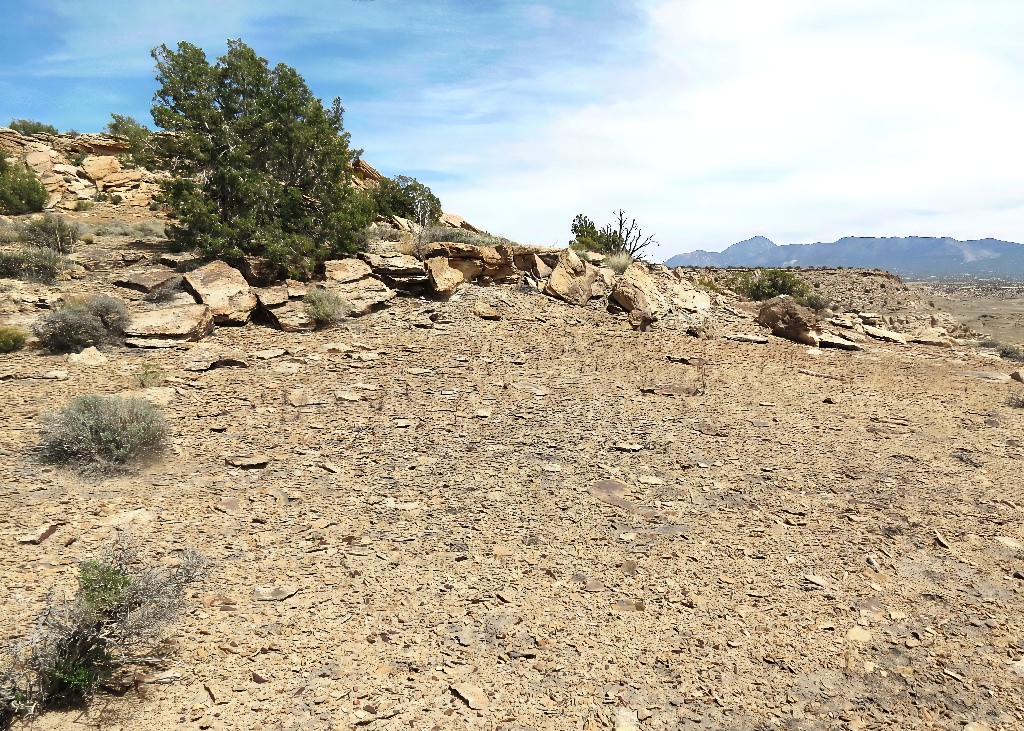
Clayey to gravelly washes, flats, and slopes, saltbush, blackbrush, and sagebrush communities, pinyon-juniper woodlands (FNA Vol. 5 2005). Entrada sandstone rimrock benches above the Colorado River. At some sites plants are limited to very dark to black exposed shale with few other plants. Associated species: Juniperus osteosperma, Atriplex confertifolia, Ephedra viridis, Fraxinus anomala, Gutierrezia sarothrae, Hilaria jamesii, Euphorbia glyptosperma, Eriogonum ovalifolium and Eriogonum microthecum (CNHP 2026).
click on image to enlarge
 |
 |
 |
Elevation Range:
4,662 - 5,515 feet (1,421 - 1,681 meters)
Distribution
Colorado Endemic:
No
Range:
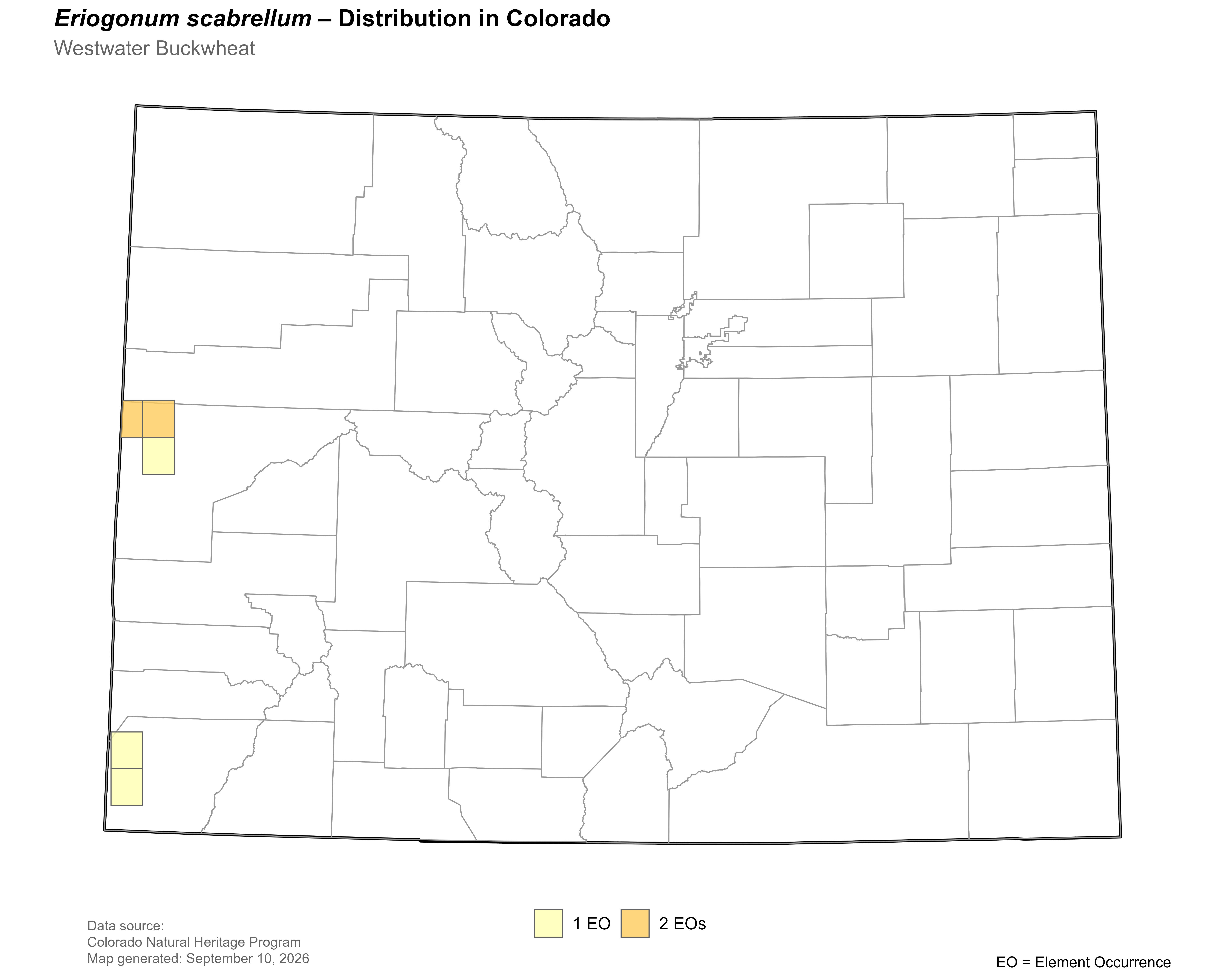
Eriogonum scabrellum is known from Mesa and Montezuma counties in Colorado, USA. Estimated range extent in Colorado of 2,448 square kilometers was calculated in GeoCAT using occurrence data provided by the Colorado Natural Heritage Program (2026). This species can also be found in New Mexico, Utah, and the Navajo Nation, USA.
Click on map to enlarge |
Threats and Management Issues
Threats to this species are largely unknown, however, two occurrences are found along roadsides, and one mentions livestock grazing in the area. Long-term drought has been on-going throughout its range. This species is considered to have high adaptive capacity and is expected to be slightly vulnerable to climate change under both RCP 4.5 and 8.5 scenarios, as assessed for the 2025 Colorado State Wildlife Action Plan (CNHP 2025).
References
- Ackerfield, Jennifer. 2022. Flora of Colorado. Second Edition. Bot. Misc. 60. BRIT Press, Fort Worth Botanic Garden/Botanical Research Institute of Texas, U.S.A. 861 pp.
- Colorado Natural Heritage Program (CNHP). 2025. Climate Change Vulnerability Assessment of Colorado Tier 1 and Tier 2 Plant Species of Greatest Conservation Need (SCGN) for the 2025 Colorado State Wildlife Action Plan. Colorado Natural Heritage Program, Colorado State University, Fort Collins, CO.
- Colorado Natural Heritage Program (CNHP). 2026. Biodiversity Tracking and Conservation System (Biotics 5). Colorado Natural Heritage Program, Colorado State University, Fort Collins.
- Flora of North America Editorial Committee (FNA). 2005. Flora of North America north of Mexico. Vol. 5. Magnoliophyta: Caryophyllidae: Caryophyllales, Polygonales, and Plumbaginales. Oxford Univ. Press, New York. vii + 656 pp.


