

Scientific Name : Eriogonum ephedroides
Author : Reveal NatureServe Explorer
Common Name : Ephedra Buckwheat
 Current Research Activities


☰ Click link below for details.
Taxonomy
Polygonaceae (buckwheat family)
Ranks and Status
State Rank : S2
State Rank Reason : Eriogonum ephedroides is known from less than 10 occurrences in the northwest corner of Colorado, USA. Threats include incompatible grazing, competition from invasive species, motorized recreation, oil and gas development and road construction. This species is also considered vulnerable to the effects of climate change.
U.S. Endangered Species Act : none
Colorado Threatened and Endangered List : none
Other Statuses : BLM, SWAP Tier 2
Description and Phenology
General Description:
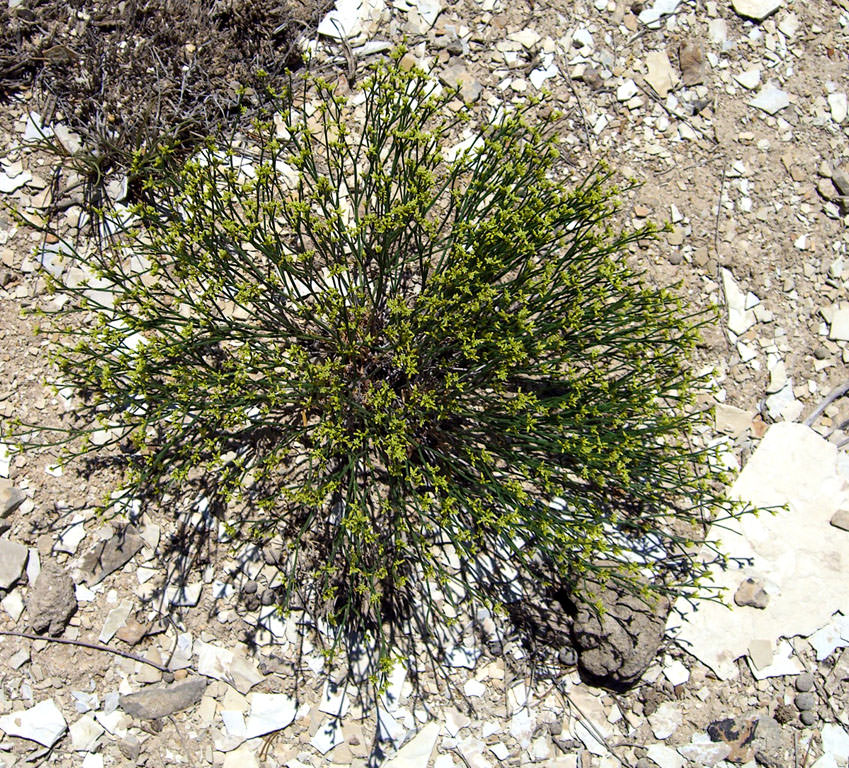
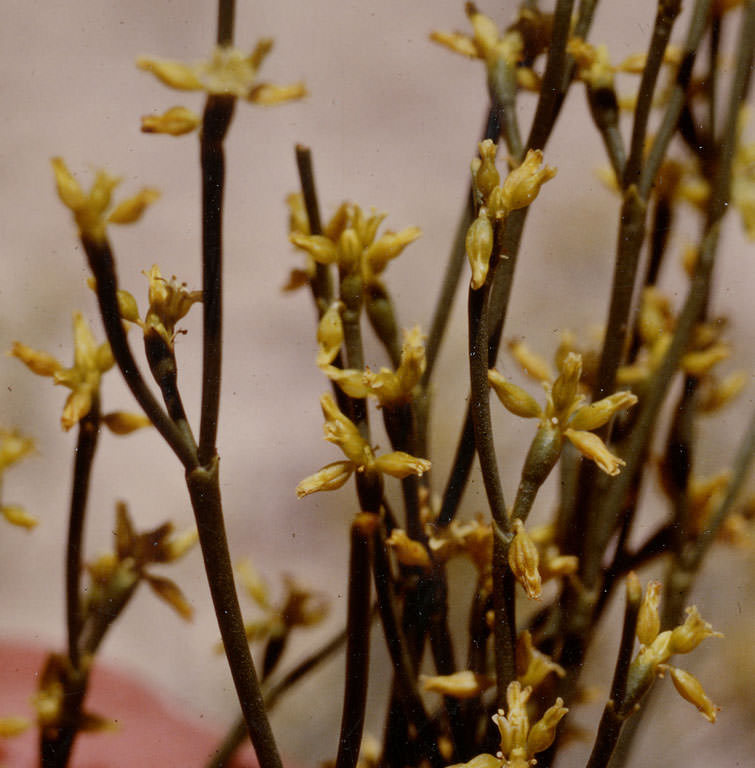
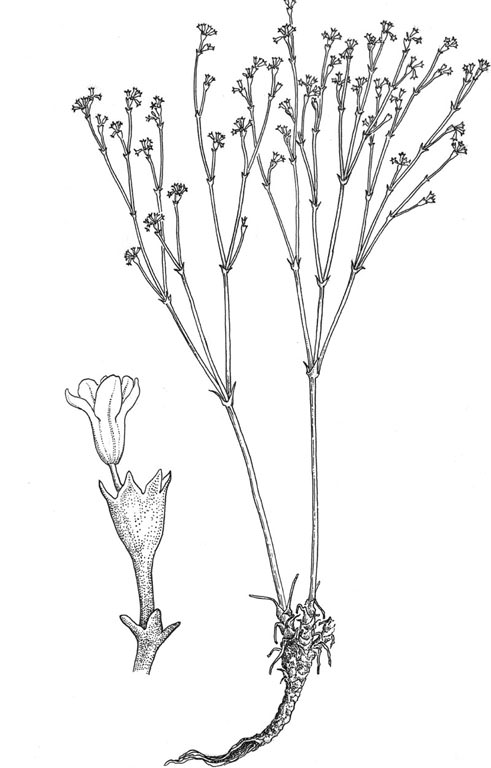
Erect perennial to 20 (35) cm tall. Stems spreading and dying to the base each year. Leaves lanceolate, all basal, short, 2-3 cm long, and with petioles up to 4 cm long. Green stems are noticeable. Root system is stout and knotty. Flowers pale yellow to cream colored, arranged in cymes. The inflorescence is branched from well below the middle of the plant height.
Look Alikes:
E. brevicaule has longer leaves (5 cm), a slender root system, and plants are taller (30 cm).
Phenology:
Flowers occur from June through October (Colorado Natural Heritage Program 2012, Flora of North America 1993+).
 |
Habitat
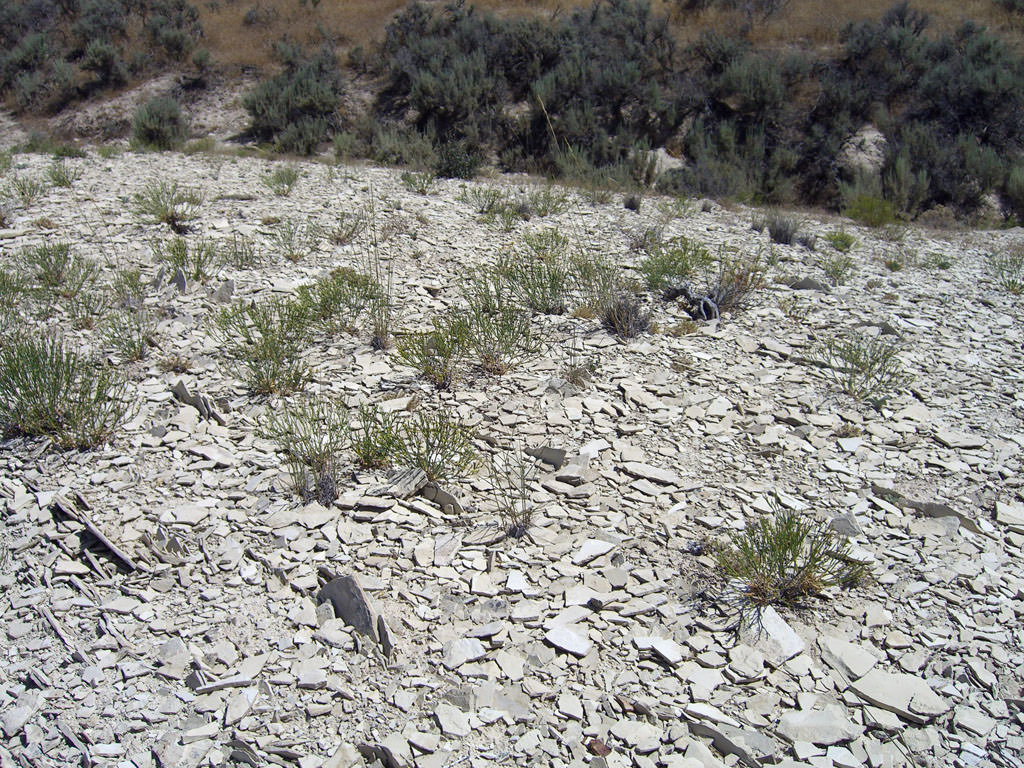
Found in juniper and sagebrush-grass communities on white shale of the Green River Shale Formation. Associated species include Juniperus osteosperma, Cercocarpus montanus, Forsellesia meionandra, Cercocarpus intricatus, Comandra umbellata, Gutierrezia sarothrae, Stanleya pinnata, Petradoria pebescens, Pseudoroegneria spicata, Chorispora tenella, Halogeton glomerata, Artemisia tridentata ssp. tridentata, Ephedra viridis, Tetradymia spinosa, Cryptantha rollinsii, Juniperus utahensis, Atriplex confertifolia, Agropyron spicatum var. inerme, Ephedra viridis, Pinus edulis, Penstemon pachyphyllus, Eriogonum corymbosum, Eriogonum ovalifolium, Chaetopappa ericoides, Draba cuneifolia, Oryzopsis hymenoides, Lappula redowskii, Cercocarpus ledifolius, Astragalus lutosus, Pascopyrum smithii, Artemisia tridentata ssp. wyomingensis, Artemisia pygmaea, Corispora tenella, Hilaria jamesii, Kraschenninnikovia lanata, Phlox hoodii, and Machaeranthera grindelioides (Colorado Natural Heritage Program 2012).
click on image to enlarge
 |
Elevation Range:
5,226 - 6,827 feet (1,593 - 2,081 meters)
Distribution
Colorado Endemic:
No
Range:
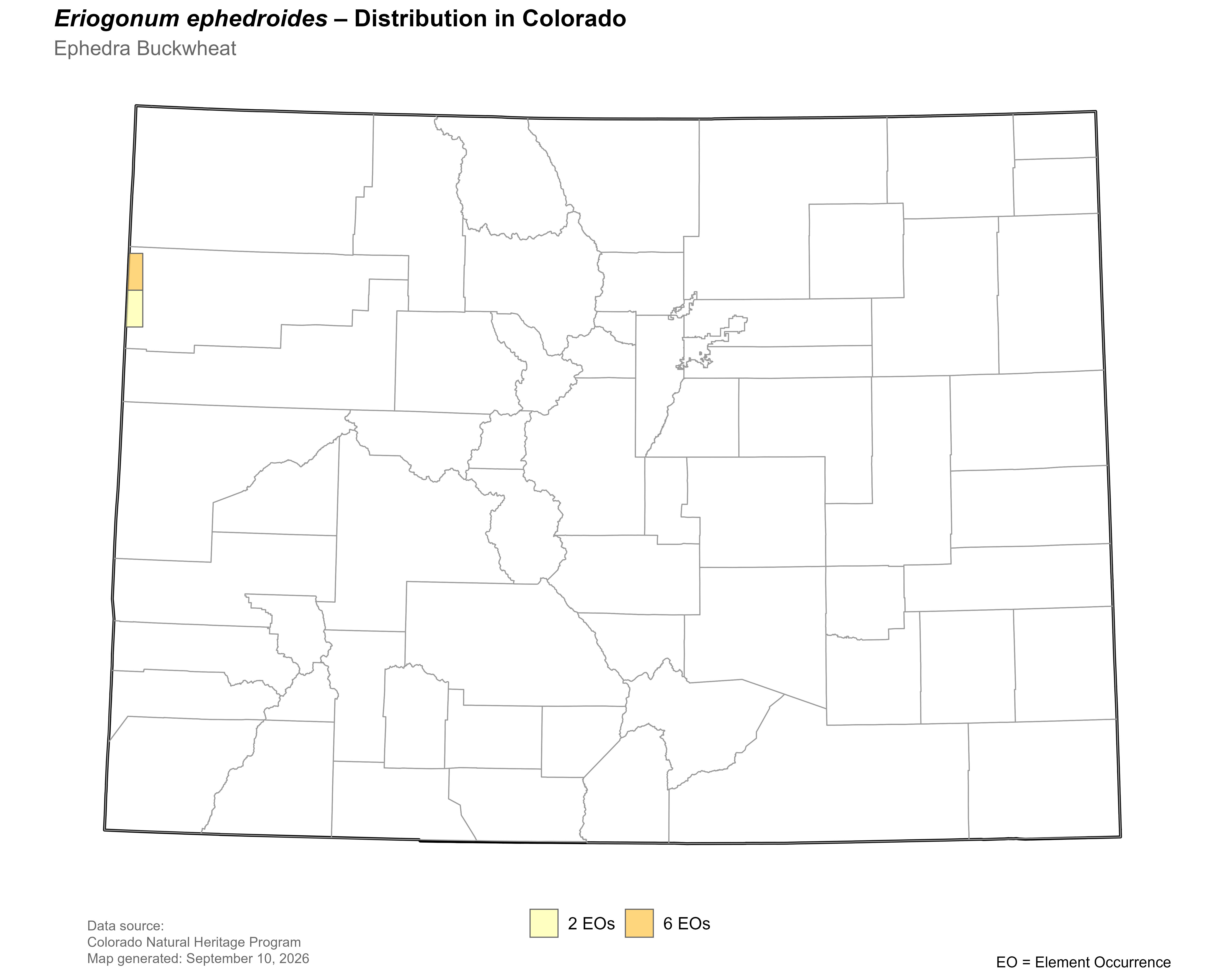
Eriogonum ephedroides is known from Moffat and Rio Blanco counties in Colorado, USA. Estimated range extent in Colorado of 197 square kilometers was calculated in GeoCAT using occurrence data provided by the Colorado Natural Heritage Program (2023). This species is also known from Uintah County, Utah, USA (USDA NRCS 2012).
Click on map to enlarge |
Threats and Management Issues
The primary threats include incompatible livestock grazing and oil and gas development which are both widespread throughout this species' range. The exotic species Bromus tectorum, Chorispora tenella, and Ranunculus testiculatus have been observed within half of the occurrences. This species is considered to have moderate adaptive capacity and is expected to be moderately vulnerable to climate change under both RCP 4.5 and 8.5 scenarios, as assessed for the 2025 Colorado State Wildlife Action Plan (CNHP 2025).
References
- Ackerfield, J. 2012. The Flora of Colorado. Colorado State University Herbarium. 433 pp.
- Colorado Natural Heritage Program (CNHP). 2023. Biodiversity Tracking and Conservation System (Biotics 5). Colorado Natural Heritage Program, Colorado State University, Fort Collins.
- Colorado Natural Heritage Program (CNHP). 2025. Climate Change Vulnerability Assessment of Colorado Tier 1 and Tier 2 Plant Species of Greatest Conservation Need (SCGN) for the 2025 Colorado State Wildlife Action Plan. Colorado Natural Heritage Program, Colorado State University, Fort Collins.
- Emrich, S. and E. Painter. 1978. A Field Inventory of Candidate Threatened and Endangered Plants of the Piceance Basin Including Adjacent Areas and a Floristic Survey at Cross Mountain Canyon.
- Flora of North America Editorial Committee, ed. (FNA). 1993+. Flora of North America North of Mexico. Oxford Univ. Press, New York, Oxford.
- Galatowitsch, S. and S.L. O'Kane, Jr. 1985. Plant species of special concern for state of Colorado.
- K. Decker, L. Grunau, J. Handwerk, and J. Siemers, editors. 2015. Climate Change Vulnerability Assessment for Colorado Bureau of Land Management. Colorado Natural Heritage Program, Colorado State University, Fort Collins, Colorado.
- Lavender, A.E., M.M. Fink, S.E. Linn, D.M. Theobald. 2011. Colorado Ownership, Management, and Protection v9 Database. Colorado Natural Heritage Program and Geospatial Centroid, Colorado State University, Fort Collins, CO. (30 September).
- Reveal. 1968. Madrono 19:295.
- USDA, NRCS. 2022. The PLANTS Database. National Plant Data Team, Greensboro, NC 27401-4901 USA.
- Weber, W. A. and R. C. Wittmann. 2012. Colorado Flora, Western Slope, A Field Guide to the Vascular Plants, Fourth Edition. Boulder, Colorado. 532 pp.
- Welsh, S.L. 1979. Illustrated manual of proposed endangered and threatened plants of Utah. Brigham Young Univ., Provo, UT. 318 pp.
- Welsh, S.L., N.D. Atwood, S. Goodrich, and L.C. Higgins (eds.) 1993. A Utah flora. 2nd edition. Brigham Young Univ., Provo, Utah. 986 pp.