

Scientific Name : Eriogonum contortum
Author : Small NatureServe Explorer
Common Name : Grand Buckwheat
 Current Research Activities
 1997 profile


☰ Click link below for details.
Taxonomy
Polygonaceae (buckwheat family)
Ranks and Status
State Rank : S2
State Rank Reason : Eriogonum contortum is known from less than 20 occurrences within a limited range in west central Colorado, USA. Potential threats include motorized and non-motorized recreation, incompatible grazing, pipeline maintenance and construction, and competition from invasive species. This species is also considered moderately to extremely vulnerable to the effects of long-term drought and climate change.
U.S. Endangered Species Act : none
Colorado Threatened and Endangered List : none
Other Statuses : BLM, SWAP Tier 2
Description and Phenology
General Description:
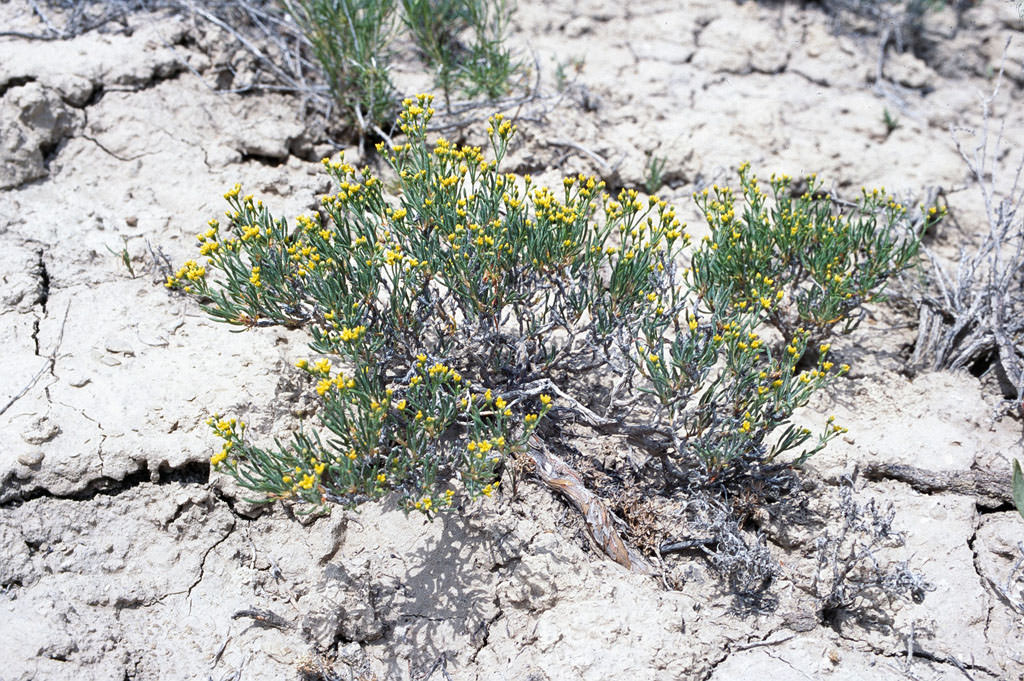
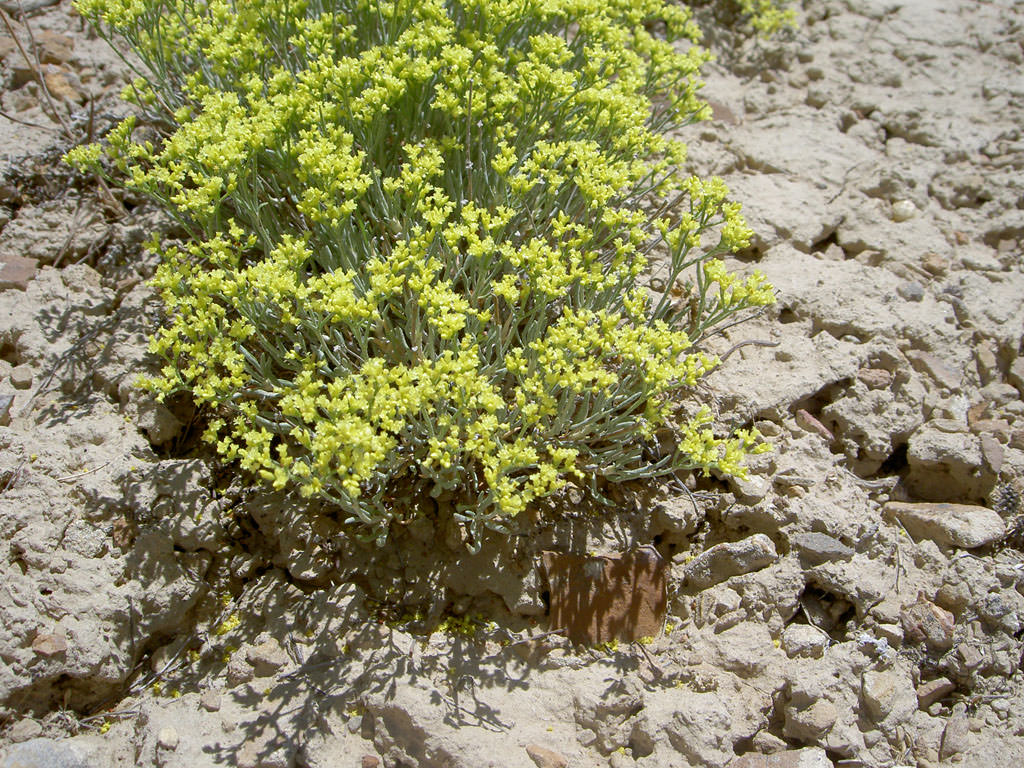
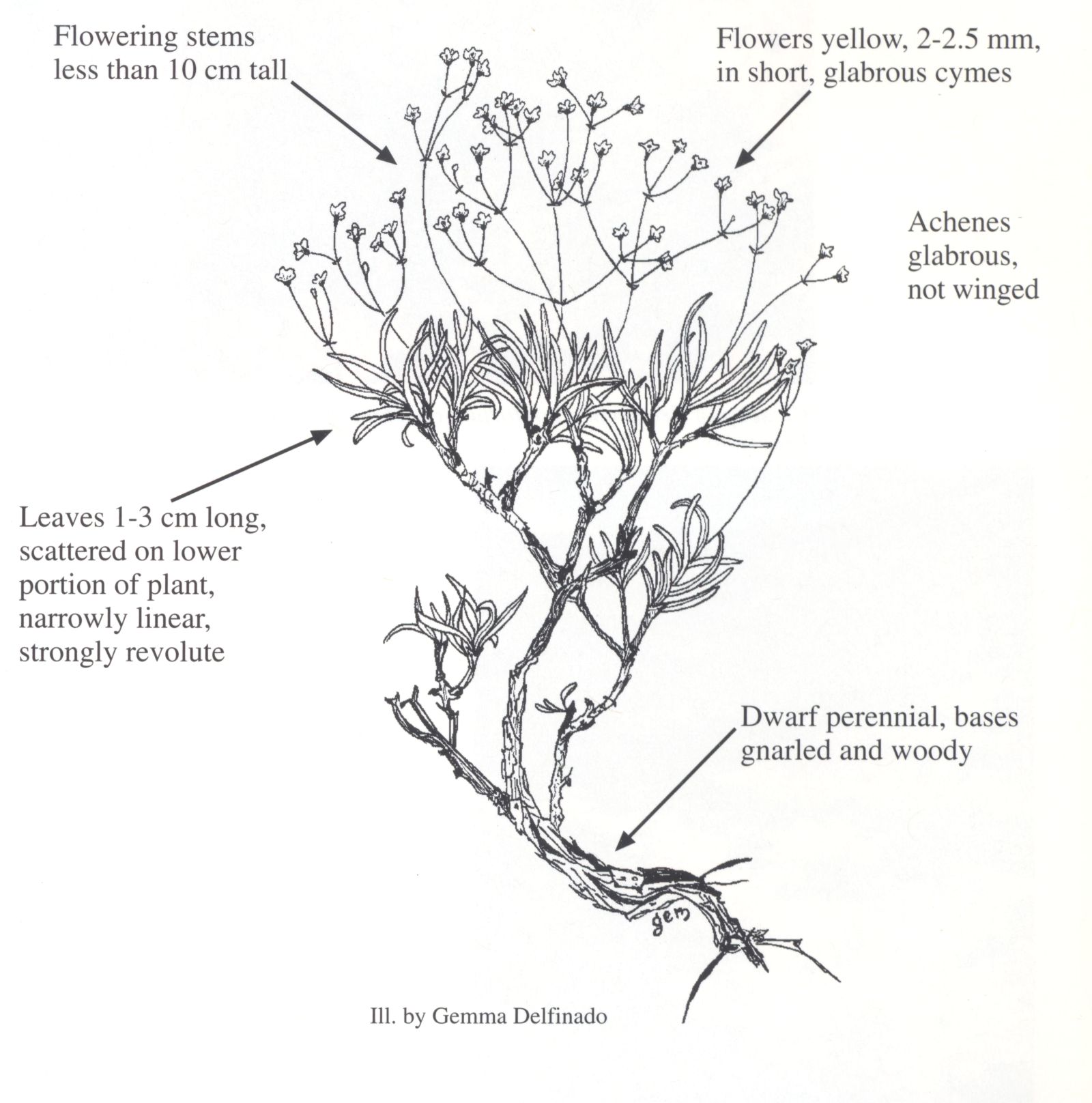
Dwarf shrubs, to 1 dm, the bases gnarled and woody. Flowers yellow, 1.5 - 2.5 mm, in short, glabrous cymes. Leaves 1-3 cm long, scatterd on lower portion of plant, narrowly linear, densely tomentose below, greenish above, strongly revolute. Achenes glabrous, not winged (Spackman et al. 1997, Ackerfield 2015).
Look Alikes:
Eriogonum pelinophilum has white to cream or pink flowers, longer involucres (3-3.5 mm), and occurs farther south than E. contortum (Spackman et al. 1997).
Phenology:
Flowers May to August (Colorado Natural Heritage Program 2012, Ackerfield 2015).
 |
Habitat
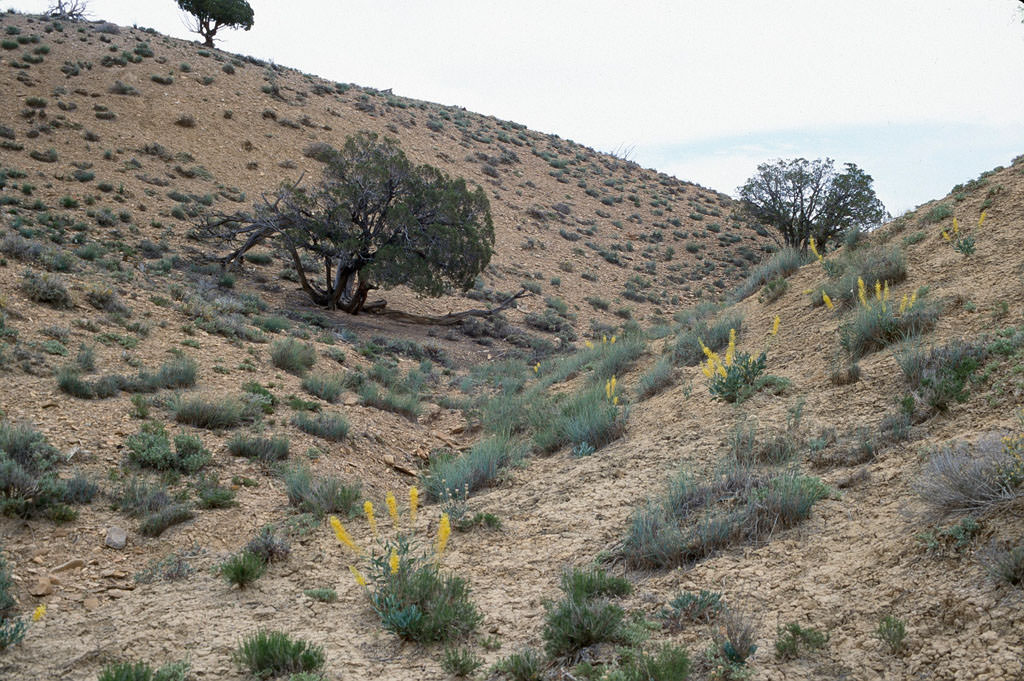
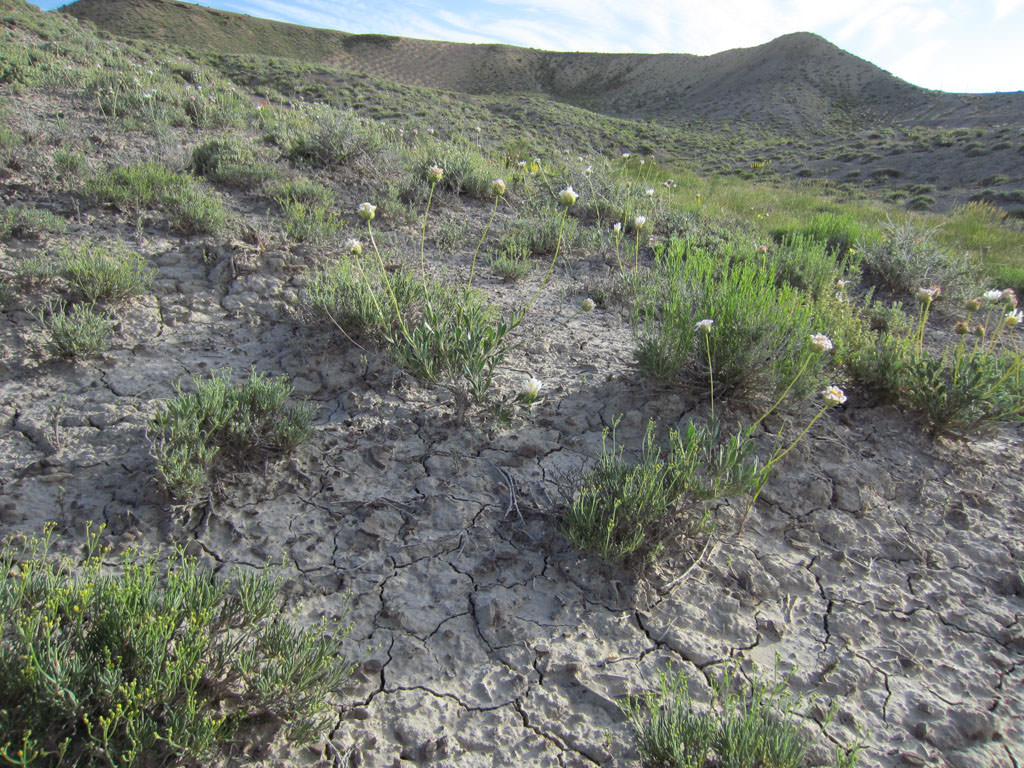
Mancos shale badlands, with shadscale and other salt desert shrub communities (Spackman et al. 1997). Associated species include: Atriplex gardneri, A. confertifolia, A. corrugata, Stanleya pinnata, Eriogonum bicolor, Gutierrezia sarothrae, Tetradymia spinosa, Artemisia spinescens, Hilaria jamesii, Oryzopsis hymenoides, Leymus salina, Astragalus flavus and Calochortus nuttallii.
click on image to enlarge
 |
 |
Elevation Range:
4,547 - 5,550 feet (1,386 - 1,692 meters)
Distribution
Colorado Endemic:
No
Range:
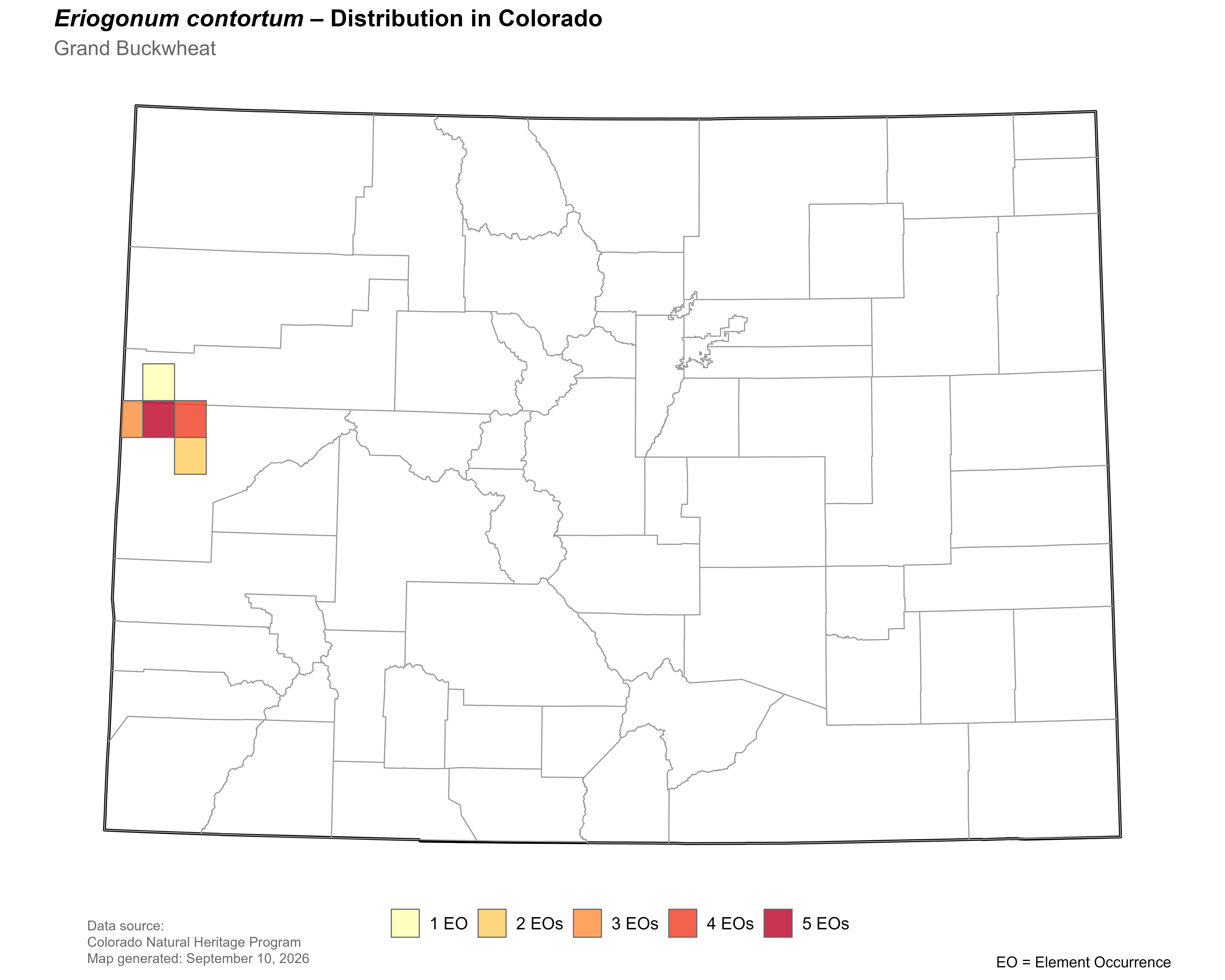
Eriogonum contortum is known from Mesa and Garfield counties in Colorado, USA. Estimated range extent in Colorado of 665 square kilometers was calculated in GeoCAT using occurrence data provided by the Colorado Natural Heritage Program (2025). This species can also be found in Utah, USA.
Click on map to enlarge |
Threats and Management Issues
Threats include motorized and non-motorized recreation, incompatible livestock grazing, rail spur and pipeline maintenance and construction, and competition from invasive species, primarily cheatgrass. Recreation impacts have been observed at a third of the occurrences, invasive species have been reported at four sites, and grazing at three. Two occurrences suffered direct mortality from pipeline construction, and one from the construction of a rail spur. This species is considered to have moderate adaptive capacity and is expected to be moderately to extremely vulnerable to climate change under both RCP 4.5 and 8.5 scenarios, as assessed for the 2025 Colorado State Wildlife Action Plan (CNHP 2025).
References
- Ackerfield, J. 2015. Flora of Colorado. BRIT Press, Botanical Research Institute of Texas, Fort Worth, TX. 818 pp.
- Colorado Natural Heritage Program (CNHP). 2025. Biodiversity Tracking and Conservation System (Biotics 5). Colorado Natural Heritage Program, Colorado State University, Fort Collins.
- Colorado Natural Heritage Program (CNHP). 2025. Climate Change Vulnerability Assessment of Colorado Tier 1 and Tier 2 Plant Species of Greatest Conservation Need (SCGN) for the 2025 Colorado State Wildlife Action Plan. Colorado Natural Heritage Program, Colorado State University, Fort Collins, CO.
- Harrington, H. D. 1954. Manual of the Plants of Colorado. Sage Books, Denver, CO. 666 pp.
- Spackman, S., B. Jennings, J. Coles, C. Dawson, M. Minton, A. Kratz, and C. Spurrier. 1997. Colorado rare plant field guide. Prepared for Bureau of Land Management, U.S. Forest Service and U.S. Fish and Wildlife Service by Colorado Natural Heritage Program.
- USDA, NRCS. 2022. The PLANTS Database. National Plant Data Team, Greensboro, NC 27401-4901 USA.
- Weber, W. A. and R. C. Wittmann. 2012. Colorado Flora, Western Slope, A Field Guide to the Vascular Plants, Fourth Edition. Boulder, Colorado. 532 pp.
- Welsh, S.L., N.D. Atwood, S. Goodrich and L.C. Higgins. (Eds.) 2003. A Utah Flora. 3rd edition. Brigham Young University, Provo, Utah, U.S.A. 912 pp.