

Scientific Name : Eriogonum brandegeei
Author : Rydb. NatureServe Explorer
Common Name : Brandegee Wild Buckwheat
 Current Research Activities
 1997 profile


☰ Click link below for details.
Taxonomy
Polygonaceae (buckwheat family)
Ranks and Status
State Rank : S2
State Rank Reason : Eriogonum brandegeei is known only from the Arkansas River corridor in south-central Colorado, USA. There are eight extant occurrences within its small range of just over 1000 square kilometers. Habitat loss from residential developments, recreational uses, and road construction and maintenance are threats to the species, as are the effects of drought and climate change.
U.S. Endangered Species Act : none
Colorado Threatened and Endangered List : none
Other Statuses : BLM, SWAP Tier 1, USFS
Description and Phenology
General Description:
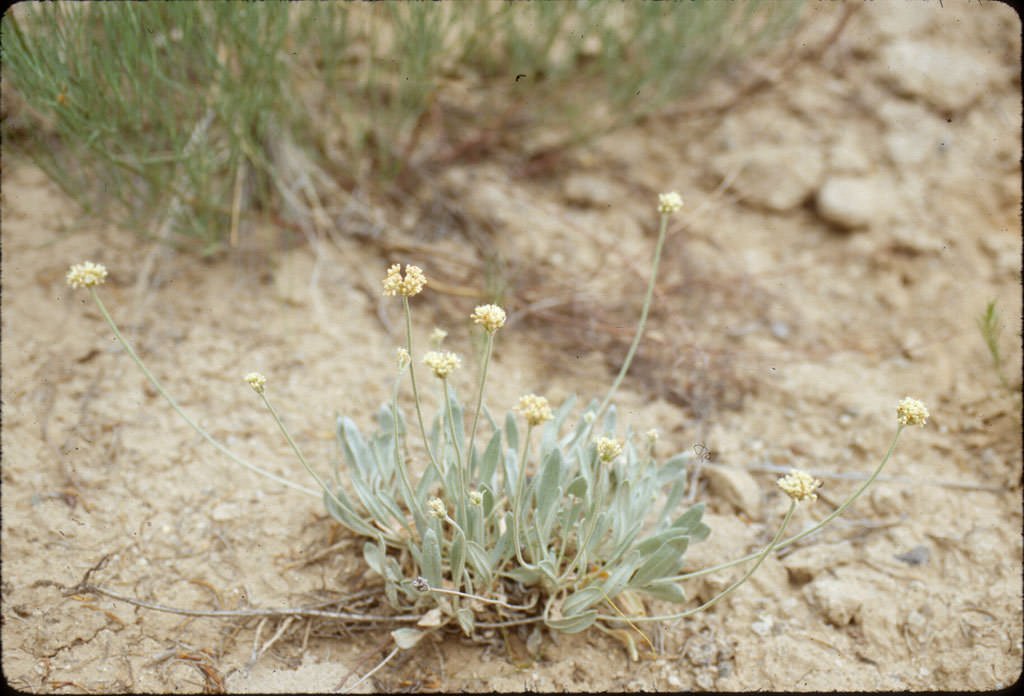
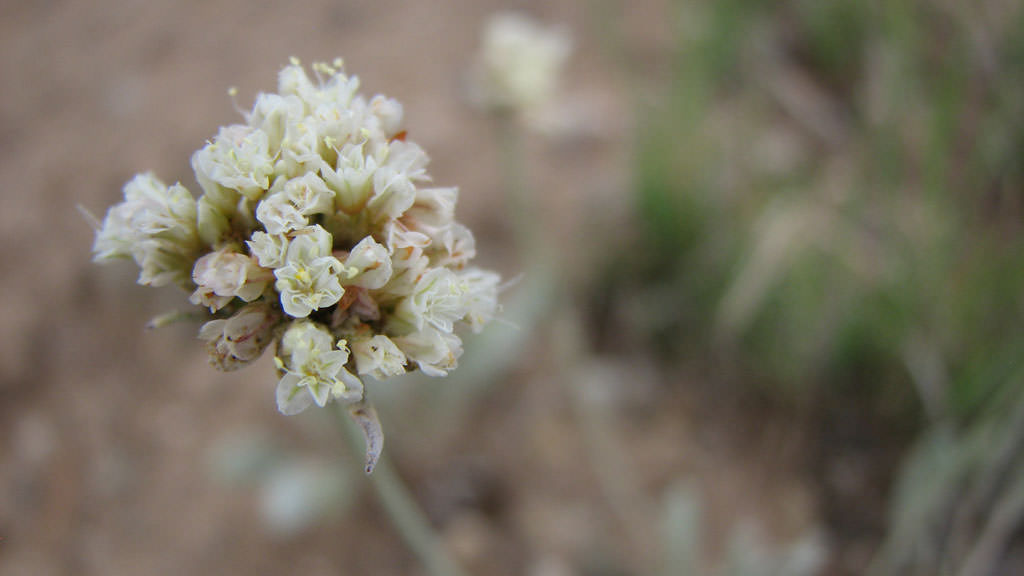
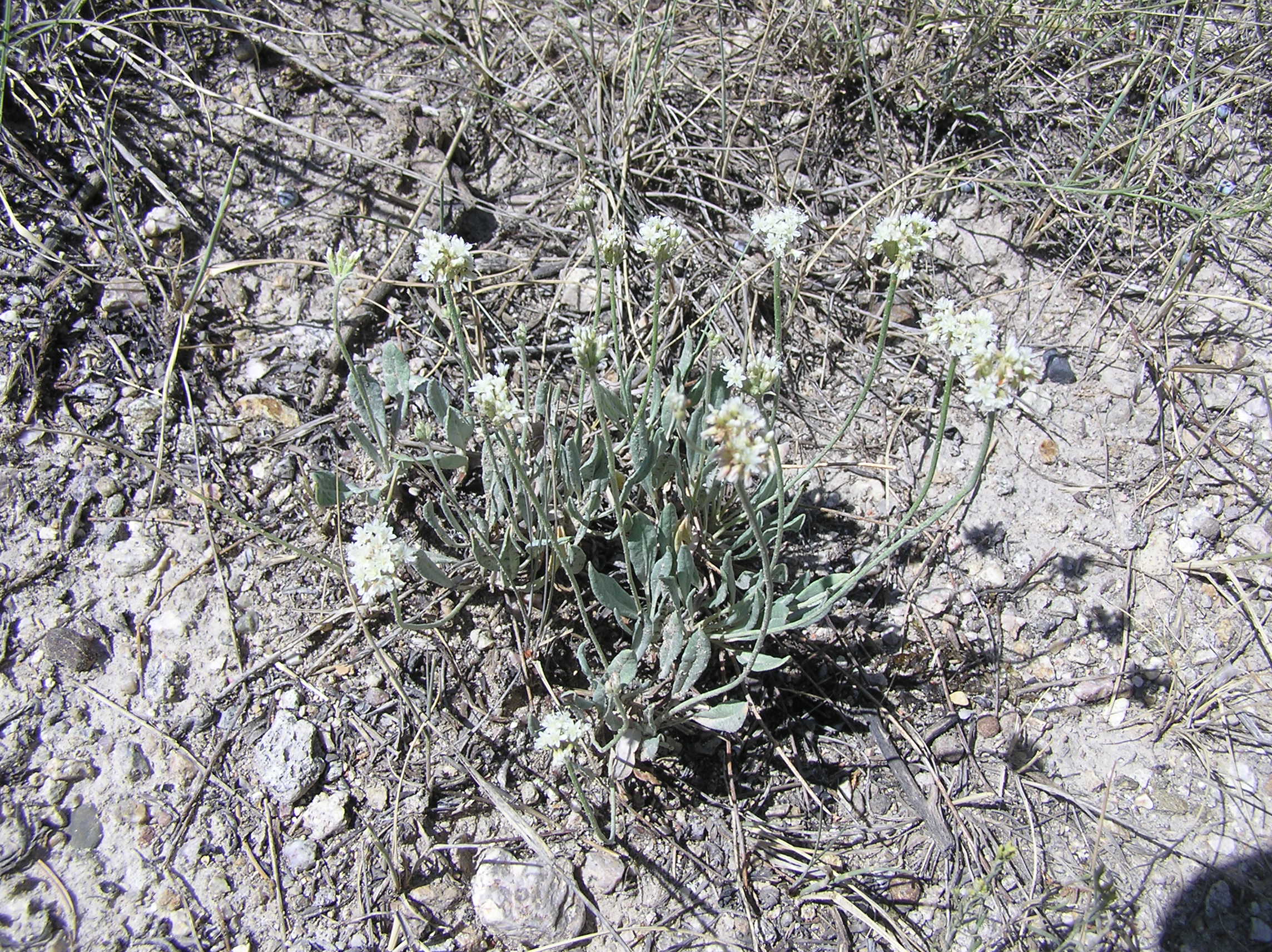
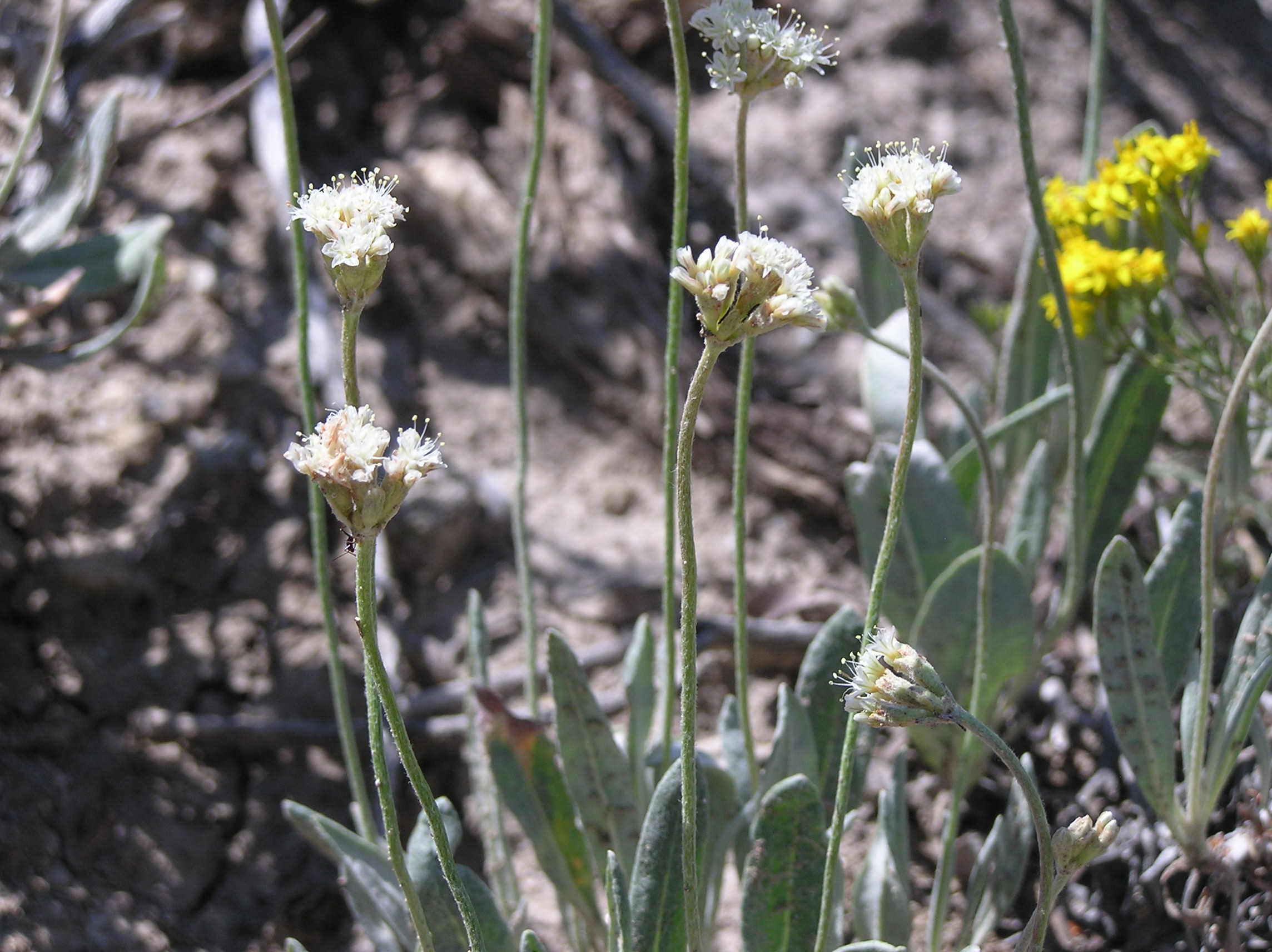
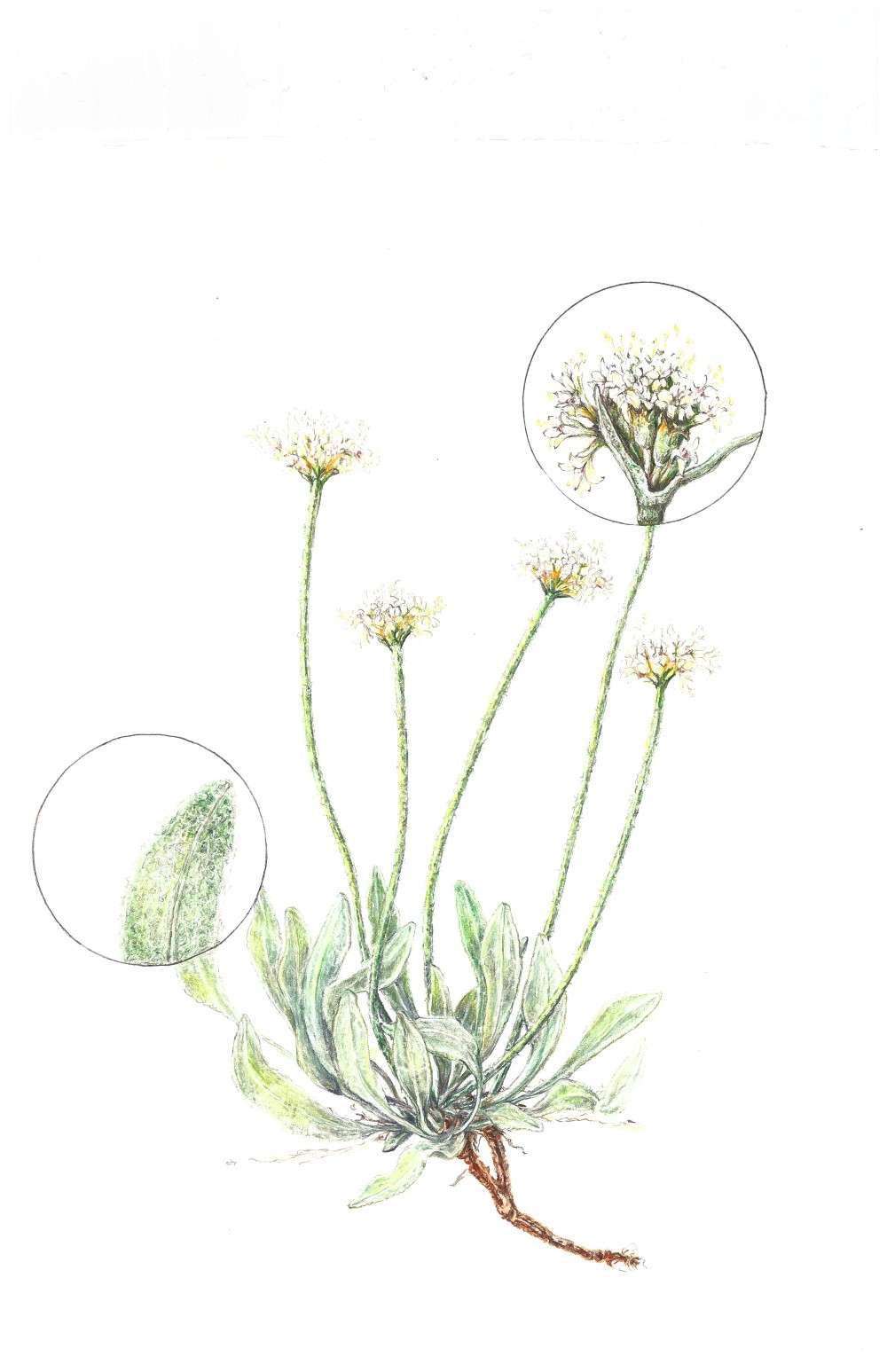
Eriogonum brandegeei is a mat-forming perennial herb. It is typically 10 to 25 cm tall, and mats have been observed from 1 inch in diameter to more than 2 ft. in diameter. Eriogonum brandegeei has an deep, woody taproot that, along with its spreading habit, leaves it well adapted to surviving on steep, unstable slopes. Plants have been observed on pedestals, with much of their woody root exposed. Its leaves are erect and densely hairy on both sides. The dense hair gives the plant a blue-green appearance. Eriogonum brandegeei produces leafless, unbranched flowering stalks that bear terminal clusters of white to pink or rose-colored flowers that are 3 to 3.5 mm long. The stamens are slightly exserted from the flower (Anderson 2006).
Look Alikes:
Eriogonum brandegeei is distinguished from other local Eriogonum species by its leaves, which are densely tomentose on both sides, and by its unbranched flowering stalk (Spackman et al. 1997).
Phenology:
Flowering may occur any time from late June through August, and fruits mature in August or September (Anderson 2006).
 |
Habitat
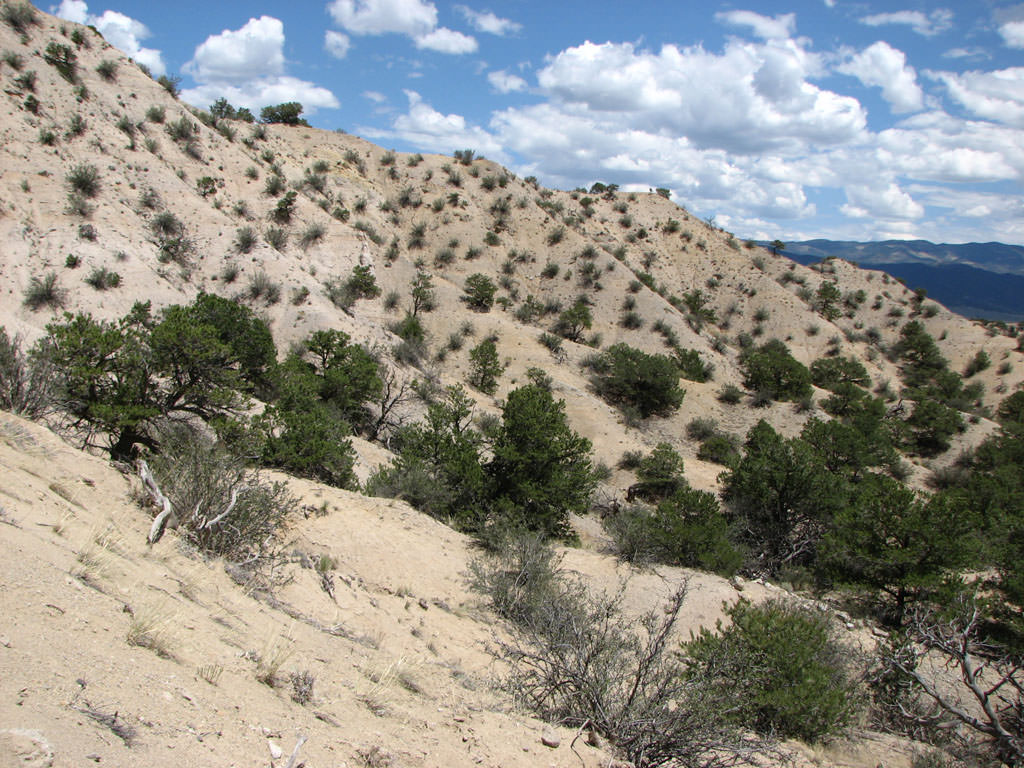
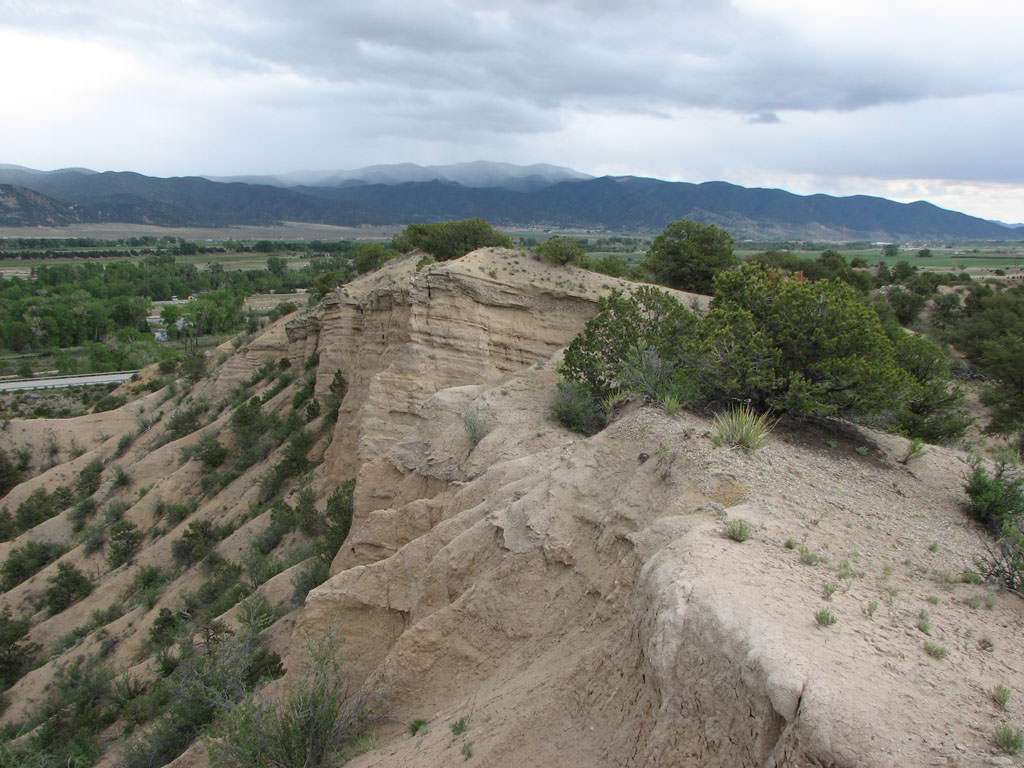
Occurrences of Eriogonum brandegeei are limited mostly to outcrops of the Dry Union Formation (in Chaffee County) and lower members of the Morrison Formation (in Fremont County), or to Quaternary strata that are derived from these formations (O'Kane 1988, Spackman et al. 1997, Anderson 2006). The unifying feature of all the known occurrences is the presence of a significant fraction of bentonite clay in the soil (Anderson 2006). Bentonite is derived from the decomposition of volcanic ash, and is a type of shrink-swell, or 2:1 clay. Eriogonum brandegeei is most commonly found on active slopes that can be as steep as 90 percent. It has been also been documented on flat sites, particularly where erosion has deposited clay soil in small basins (Anderson 2006). In general, this species is found on barren outcrops of white to grayish soils within open sagebrush and pinyon-juniper communities. Frequently associated species include: Atriplex canescens, Opuntia imbricata, Bouteloua gracilis, Oryzopsis hymenoides, Aristida fendleriana, Sphaeralcea coccinea, Cleome serrulata, Melilotus alba, Salsola iberica, Kochia iranica, Melitotus officialis, and Bouteloua curtipendula (Johnston et al. 1981).
click on image to enlarge
 |
 |
Elevation Range:
5,714 - 8,649 feet (1,742 - 2,636 meters)
Distribution
Colorado Endemic:
Yes
Range:
Eriogonum brandegeei is endemic to Fremont and Chaffee counties in Colorado, USA. Six of the nine verified occurrences are located within a 5 by 15 mile area in the Arkansas River Valley in Chaffee County. The other three are about 50 miles away in a 2 by 3 mile area, north of Canon City in Fremont County (Anderson 2006). Questionable reports of E. brandegeei in other areas are considered to be mislabeled (Anderson 2006). Estimated range extent in Colorado of 1156 square kilometers was calculated in GeoCAT using occurrence data provided by the Colorado Natural Heritage Program (2025).
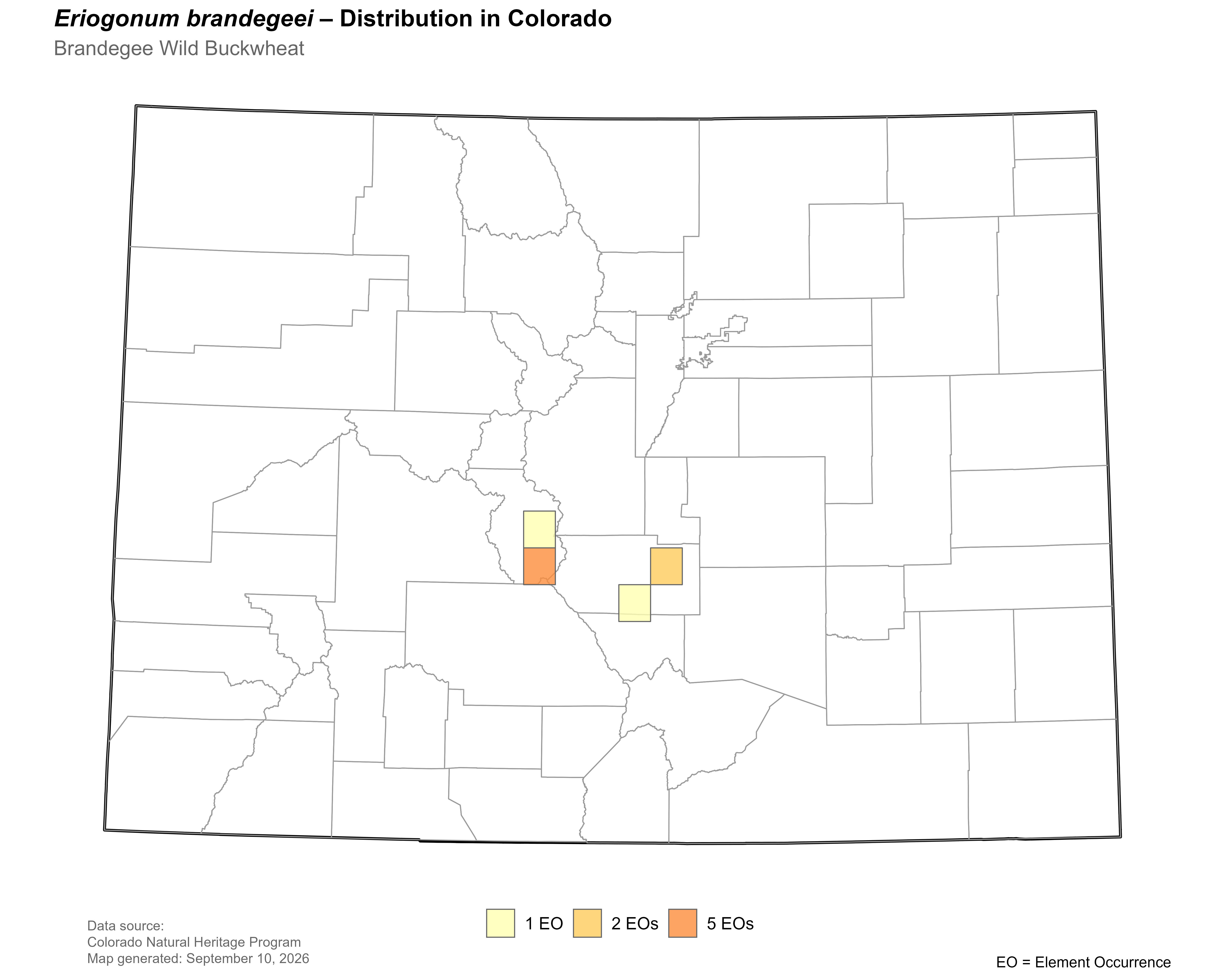
Click on map to enlarge |
Threats and Management Issues
Eriogonum brandegeei is primarily threatened by off-highway vehicle (OHV) use and other recreational uses, development, road construction and road maintenance. Over half of the populations of this species are within or adjacent to recreational areas, including an OHV track and single-track trail systems. Strategies have been taken by state and federal land managers to reduce motorized off-trail use, with barriers, fencing, interpretive signs, and the closure of non-system trails (USFWS 2021), but non-motorized off-trail use has been documented. Populations, especially in the Chaffee County, Colorado, are threatened by residential development. The human population in Chaffee County increased by 14.3% between 2010 and 2020 (USFWS 2021). Highways and county roads bisect at least a third of known populations and they are threatened by fragmentation, road maintenance and weed spraying. Exotic species invasion, grazing, rust (Uromyces intricatus), and wildfire were evaluated but are believed to present a low level of threat (CNHP 2022, USFWS 2021). This species is considered to have moderate adaptive capacity and is expected to be moderately to extremely vulnerable to climate change under both RCP 4.5 and 8.5 scenarios, as assessed for the 2025 Colorado State Wildlife Action Plan (CNHP 2025).
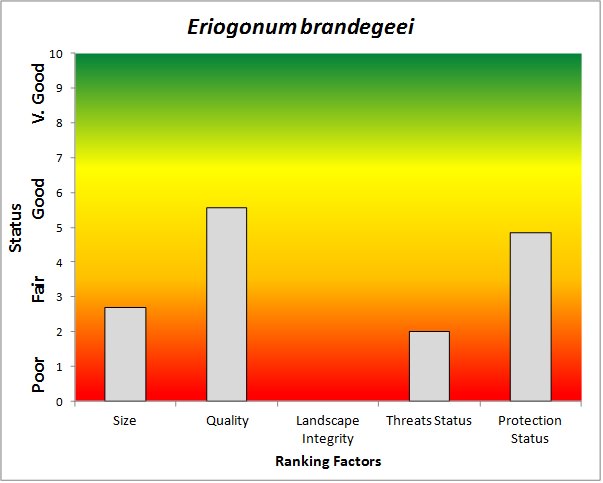
Summary results of an analysis of the status of Eriogonum brandegeei based on several ranking factors. This species was concluded to be weakly conserved. From Rondeau et al. 2011. |
References
- Ackerfield, J. 2012. The Flora of Colorado. Colorado State University Herbarium. 433 pp.
- Anderson, D.G. 2006. Eriogonum brandegeei Rydberg (Brandegee's buckwheat): A Technical Conservation Assessment. [Online]. USDA Forest Service, Rocky Mountain Region. http://www.fs.fed.us/r2/projects/scp/assessments/eriogonumbrandegeei.pdf
- Colorado Native Plant Society. 1989. Rare plants of Colorado. Rocky Mountain Nature Association, Colorado Native Plant Society, Estes Park, Colorado. 73 pp.
- Colorado Natural Heritage Program (CNHP). 2022. Biodiversity Tracking and Conservation System (Biotics 5). Colorado Natural Heritage Program, Colorado State University, Fort Collins.
- Colorado Natural Heritage Program (CNHP). 2025. Biodiversity Tracking and Conservation System (Biotics 5). Colorado Natural Heritage Program, Colorado State University, Fort Collins.
- Colorado Natural Heritage Program (CNHP). 2025. Climate Change Vulnerability Assessment of Colorado Tier 1 and Tier 2 Plant Species of Greatest Conservation Need (SCGN) for the 2025 Colorado State Wildlife Action Plan. Colorado Natural Heritage Program, Colorado State University, Fort Collins.
- Denver Botanic Gardens. 2008. Eriogonum brandegeei Demographic Monitoring Study 2004-2008. Prepared for the U.S. Department of Interior Bureau of Land Management, Colorado State Office.
- DePrenger-Levin, M. 2013. Eriogonum brandegeei Demographic Monitoring Study 2004-2013. Prepared for U.S. Department of Interior Bureau of Land Management, Colorado State Office by the Denver Botanic Gardens' Research, Herbaria and Records Department.
- Grant, T. and M. DePrenger-Levin. 2005. Eriogonum brandegeei Demographic Monitoring Study 2004-2005. Prepared for U.S. Department of Interior Bureau of Land Management, Colorado State Office by the Denver Botanic Gardens' Research, Herbaria and Records Department.
- Handwerk, J. and J.P. Smith. 2021. Monitoring Colorado’s SWAP Tier 1 Plant Species Eriogonum brandegeei, 2020. Colorado Natural Heritage Program, Colorado State University, Fort Collins, Colorado.
- Handwerk, J., L. Grunau, and S. Panjabi. 2015. Colorado Wildlife Action Plan: 2015 Rare Plant Addendum. Colorado Natural Heritage Program, Colorado State University, Fort Collins, Colorado, USA.
- Johnston, B. C., J. S. Peterson and W. Harmon. 1981. Status Report for Eriogonum brandegei. Unpublished report prepared for Colorado Natural Areas Program, Denver, CO.
- Kartesz, John and the Biota of North America Program. 1998. ""A Synonymized Checklist of the Vascular Flora of the United States, Puerto Rico, and the Virgin Islands"". http://plants.usda.gov.
- Neely, B., S. Panjabi, E. Lane, P. Lewis, C. Dawson, A. Kratz, B. Kurzel, T. Hogan, J. Handwerk, S. Krishnan, J. Neale, and N. Ripley. 2009. Colorado Rare Plant Conservation Strategy, Developed by the Colorado Rare Plant conservation Initiative. The Nature Conservancy, Boulder, Colorado, 117 pp.
- O'Kane, S.L. 1988. Colorado's rare flora. Great Basin Naturalist 48(4): 434-484.
- Rocky Mountain Society of Botanical Artists. 2009. RARE Imperiled Plants of Colorado, a traveling art exhibition. Exhibition catalogue developed by the Denver Botanic Gardens and Steamboat Art Museum.
- Rondeau, R., K. Decker, J. Handwerk, J. Siemers, L. Grunau, and C. Pague. 2011. The state of Colorado's biodiversity 2011. Prepared for The Nature Conservancy. Colorado Natural Heritage Program, Colorado State University, Fort Collins, Colorado.
- Smith, J.P. 2022. Monitoring and Surveys for Colorado's SWAP Tier 1 Plant Species Eriogonum brandegeei, 2021. Colorado Natural Heritage Program, Colorado State University, Fort Collins, Colorado.
- Spackman, S., B. Jennings, J. Coles, C. Dawson, M. Minton, A. Kratz, and C. Spurrier. 1997. Colorado rare plant field guide. Prepared for Bureau of Land Management, U.S. Forest Service and U.S. Fish and Wildlife Service by Colorado Natural Heritage Program.
- U.S. Fish and Wildlife Service (USFWS). 2009. Endangered and Threatened Wildlife and Plants; Partial 90-Day Finding on a Petition To List 206 Species in the Midwest and Western United States as Threatened or Endangered With Critical Habitat. Federal Register 74(158): 41649-41662. 18 August 2009.
- U.S. Fish and Wildlife Service (USFWS). 2021. DRAFT Species Status Assessment Report for Brandegee's buckwheat (Eriogonum brandegeei).
- USDA, NRCS. 2022. The PLANTS Database. National Plant Data Team, Greensboro, NC 27401-4901 USA.
- Weber, W. A. and R. C. Wittmann. 2012. Colorado Flora, Eastern Slope, A Field Guide to the Vascular Plants, Fourth Edition. Boulder, Colorado. 555 pp.