


Scientific Name : Eriogonum acaule
Author : Nutt. NatureServe Explorer
Common Name : Single- stemmed Wild Buckwheat
 Current Research Activities


☰ Click link below for details.
Taxonomy
Polygonaceae (buckwheat family)
=Eriogonum caespitosum var. acaule
Ranks and Status
State Rank : S1S2
State Rank Reason : Eriogonum acaule is known from as many as 7 occurrences in the northwest corner of Colorado, USA. Threats include livestock grazing and competition from invasive species, primarily Bromus tectorum. Motorized recreation and long-term drought are also of concern.
U.S. Endangered Species Act : none
Colorado Threatened and Endangered List : none
Other Statuses : BLM, SWAP Tier 2
Description and Phenology
General Description:
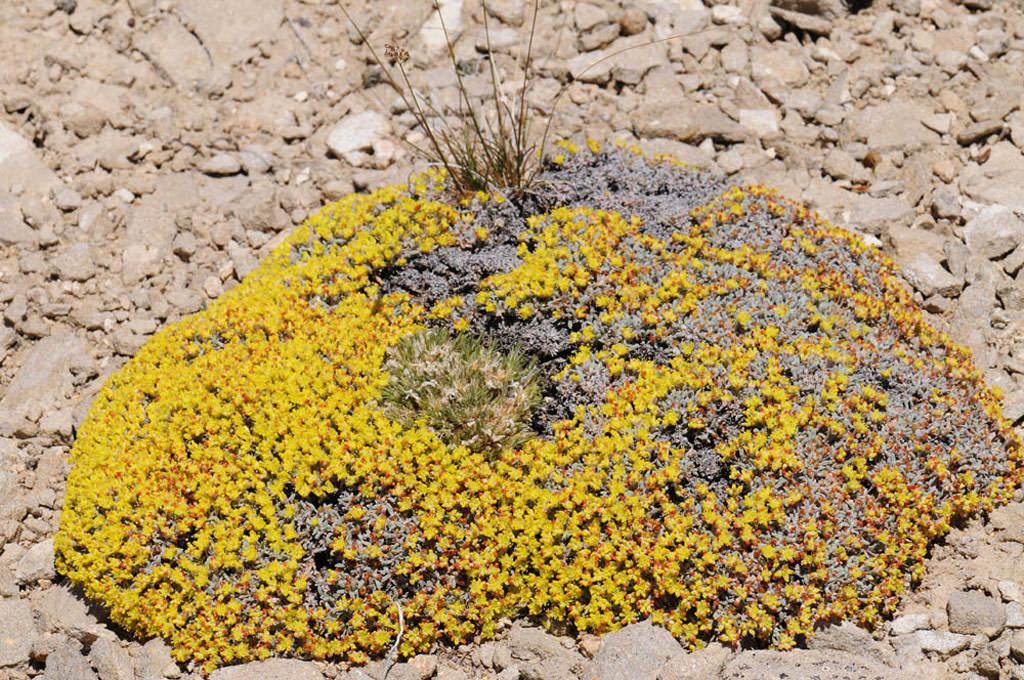
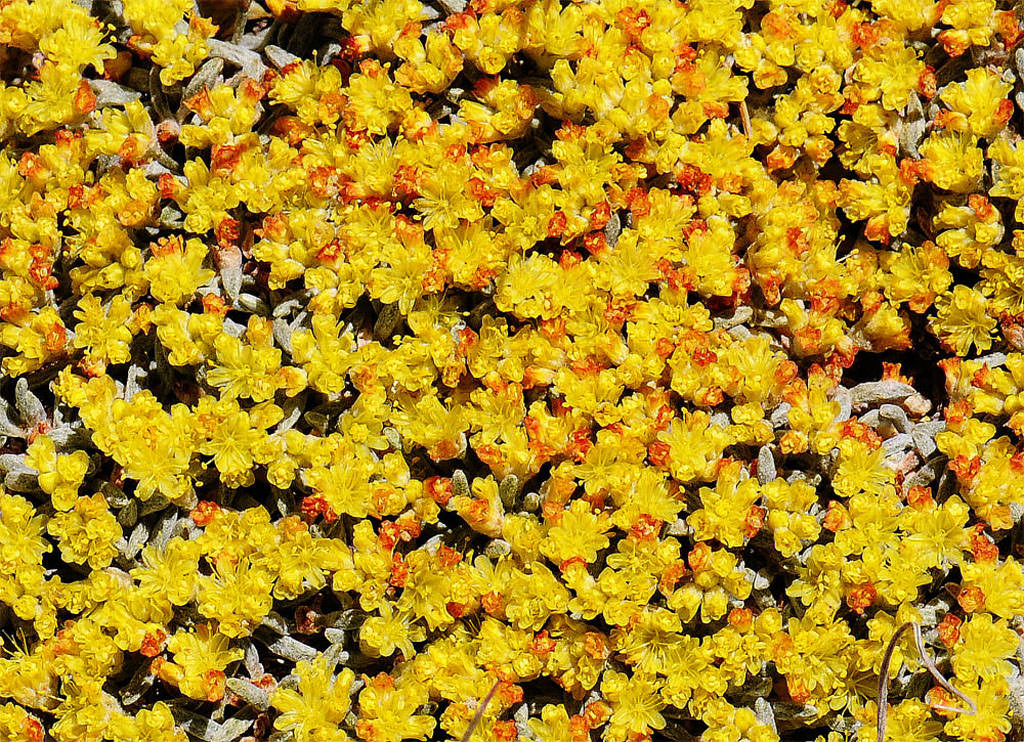
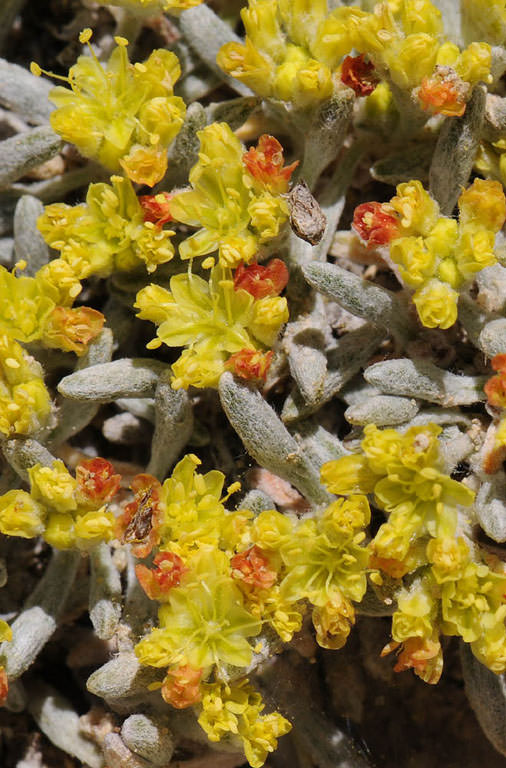
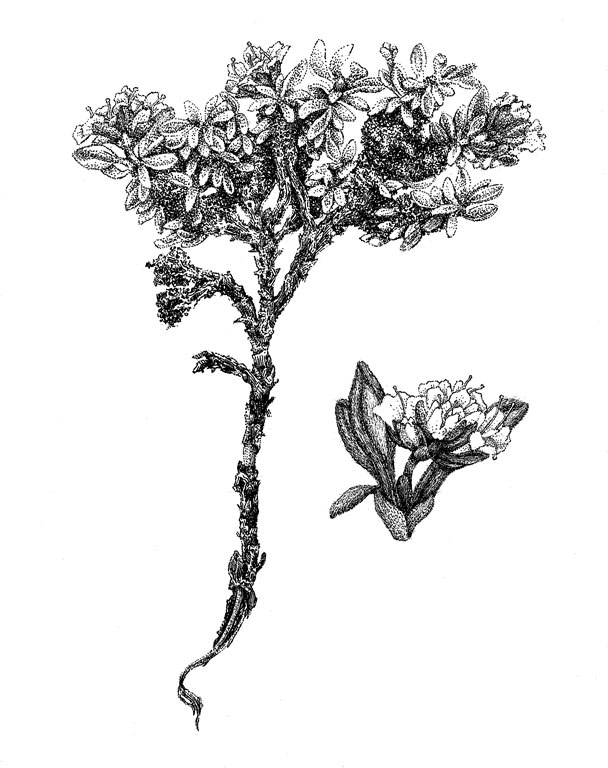
Low, mat-forming perennial. Flowers light yellow; stamens slightly exserted; flowers barely exceeding the leaves with short flowering stems; leaves linear to oblanceolate, tomentose; plants 1.5-3 cm tall and 1-2 cm across.
Look Alikes:
Eriogonum caespitosum is not known to occur in Colorado.
Phenology:
Flowers May to July (Flora of North America 1993+, Colorado Natural Heritage Program 2012).
 |
Habitat
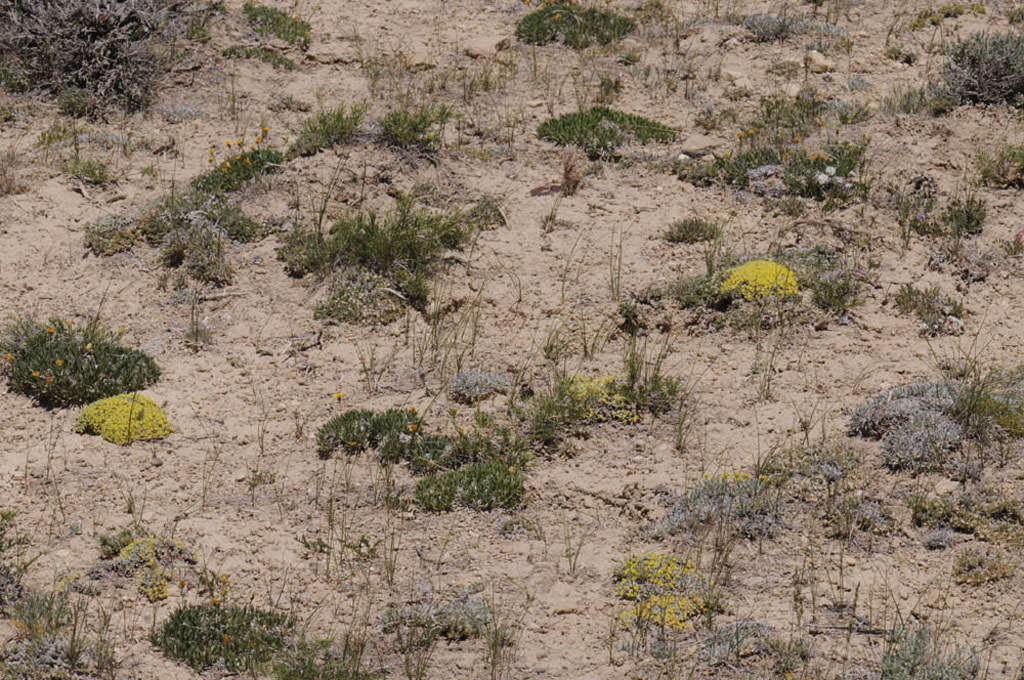
Barren hillsides in fine particle soils (Colorado Natural Heritage Program 2012, Weber and Wittmann 2012). Sandy, barren slopes, often with sagebrush or saltbush (Ackerfield 2012). Associated taxa include Cryptantha, Haplopappus, Agropyron, Artemisia and Arenaria (Colorado Natural Heritage Program 2012).
click on image to enlarge
 |
Elevation Range:
5,743 - 6,870 feet (1,750 - 2,094 meters)
Distribution
Colorado Endemic:
No
Range:
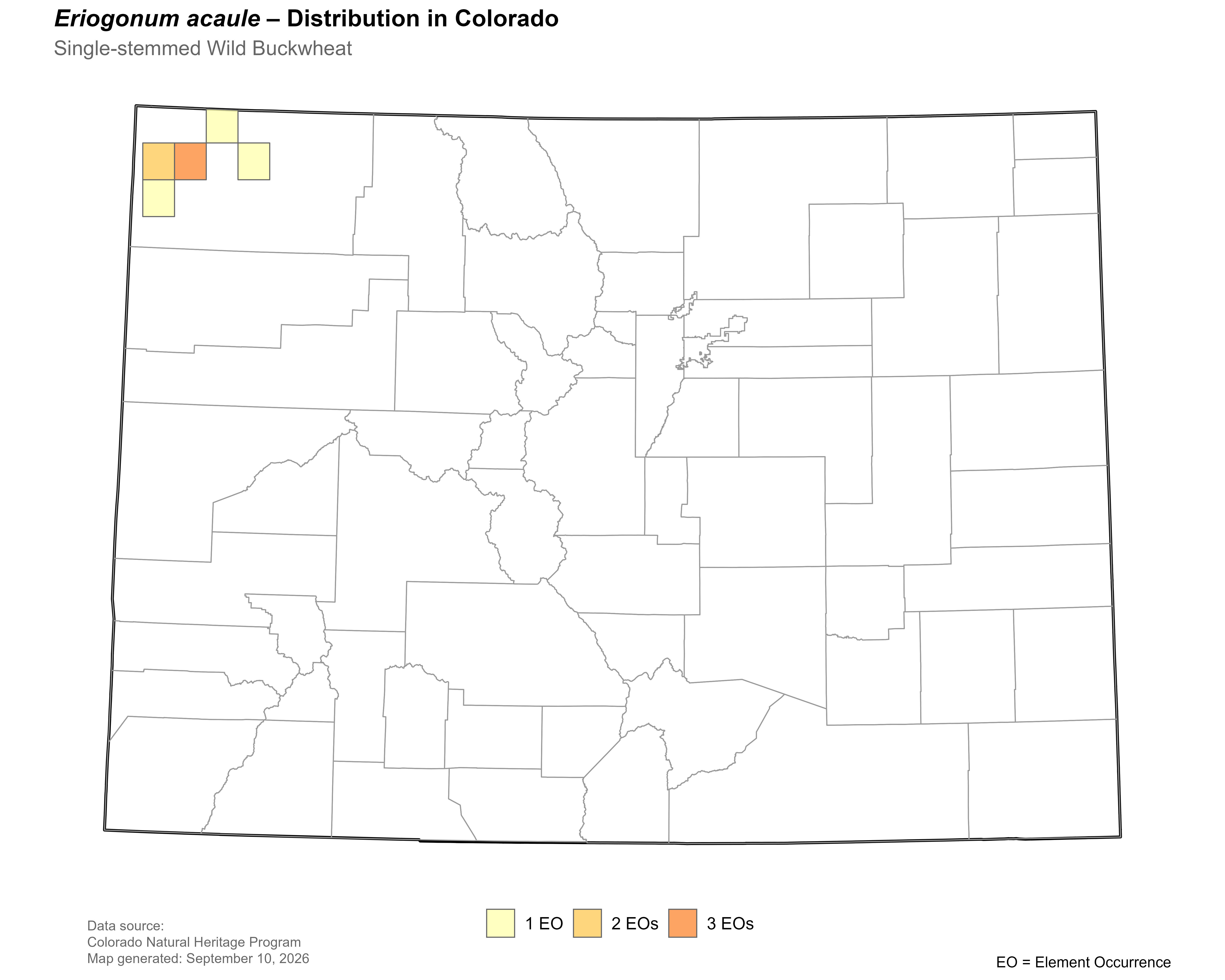
In Colorado, USA, Eriogonum acaule is known only from Moffat County. Estimated range extent in Colorado of 2554 square kilometers was calculated in GeoCAT using occurrence data provided by the Colorado Natural Heritage Program (2025). This species is also known from Utah and Wyoming, USA.
Click on map to enlarge |
Threats and Management Issues
Threats include livestock grazing and competition from invasive species, primarily Bromus tectorum. Motorized recreation and long-term drought are also of concern. The low, matted habit of this rather elegant species makes it attractive to rock garden enthusiasts (Flora of North America 1993+). This species is considered to have low adaptive capacity and is expected to be moderately to extremely vulnerable to climate change under both RCP 4.5 and 8.5 scenarios, as assessed for the 2025 Colorado State Wildlife Action Plan (CNHP 2025).
References
- Ackerfield, J. 2012. The Flora of Colorado. Colorado State University Herbarium. 433 pp.
- Colorado Natural Heritage Program (CNHP). 2025. Biodiversity Tracking and Conservation System (Biotics 5). Colorado Natural Heritage Program, Colorado State University, Fort Collins.
- Colorado Natural Heritage Program (CNHP). 2025. Climate Change Vulnerability Assessment of Colorado Tier 1 and Tier 2 Plant Species of Greatest Conservation Need (SCGN) for the 2025 Colorado State Wildlife Action Plan. Colorado Natural Heritage Program, Colorado State University, Fort Collins.
- Dorn, R.D. 1992. Vascular plants of Wyoming, 2nd edition. Mountain West Publishing, Cheyenne, Wyoming.
- Flora of North America Editorial Committee, ed. (FNA). 1993+. Flora of North America North of Mexico. Oxford Univ. Press, New York, Oxford.
- Harrington, H.D. 1954. Manual of the plants of Colorado. Sage Press, Chicago. 666 pp.
- Lavender, A.E., M.M. Fink, S.E. Linn, D.M. Theobald. 2011. Colorado Ownership, Management, and Protection v9 Database. Colorado Natural Heritage Program and Geospatial Centroid, Colorado State University, Fort Collins, CO. (30 September).
- Reveal, J.L. 2013. A Digital Array of Botanical Images. Website presented by Cornell University, University of Maryland, and the New York Botanical Garden. Available on-line at http://www.plantsystematics.org/reveal/.
- USDA, NRCS. 2022. The PLANTS Database. National Plant Data Team, Greensboro, NC 27401-4901 USA.
- Weber, W. A. and R. C. Wittmann. 2012. Colorado Flora, Western Slope, A Field Guide to the Vascular Plants, Fourth Edition. Boulder, Colorado. 532 pp.


