

Scientific Name : Draba streptobrachia
Author : Price NatureServe Explorer
Common Name : Colorado Divide Draba
 Current Research Activities


☰ Click link below for details.
Taxonomy
Brassicaceae (mustard family)
Draba weberi, once considered to be a distinct taxon has been subsumed with D. streptobrachia, following genetic studies (Naibauer and McGlaughlin 2022).
Ranks and Status
State Rank : S3
State Rank Reason : Draba streptobrachia was thought to be a Colorado endemic but was recently found in northern New Mexico. It is known from over 100 occurrences and is reported as locally common in alpine habitats throughout its range. Draba streptobrachia is somewhat protected by its often inaccessible habitat, but may be threatened by recreational use. It is considered to have moderate adaptive capacity and is expected to be slightly vulnerable to climate change.
U.S. Endangered Species Act : none
Colorado Threatened and Endangered List : none
Other Statuses : SWAP Tier 2, USFS RGNF
Description and Phenology
General Description:
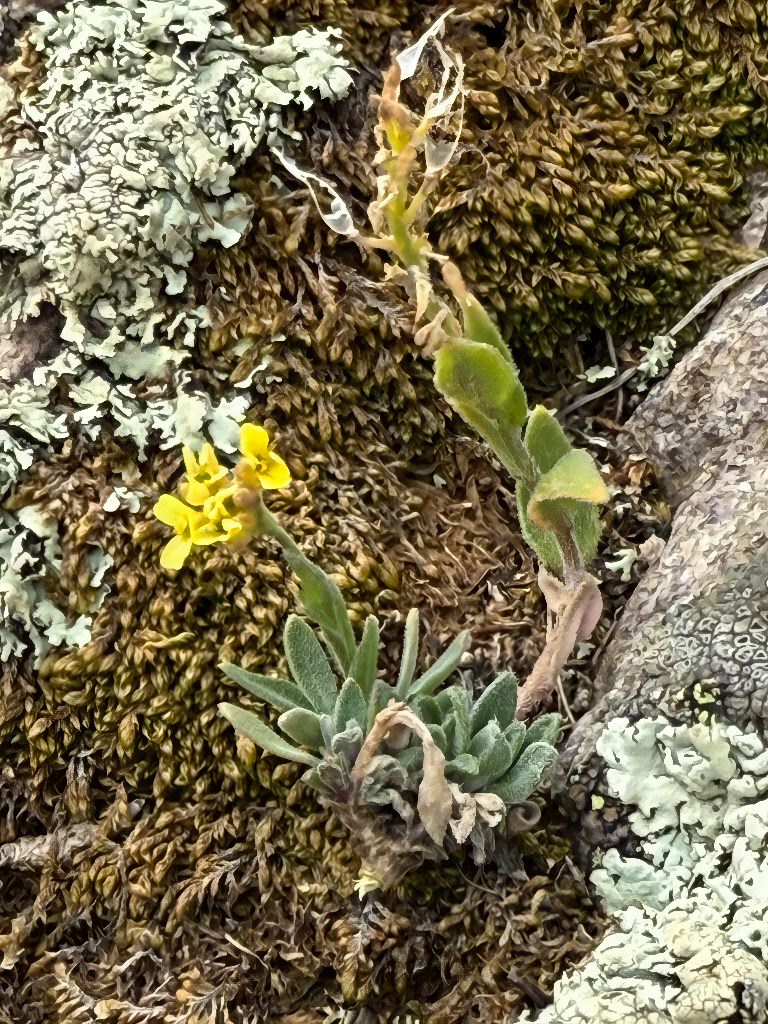
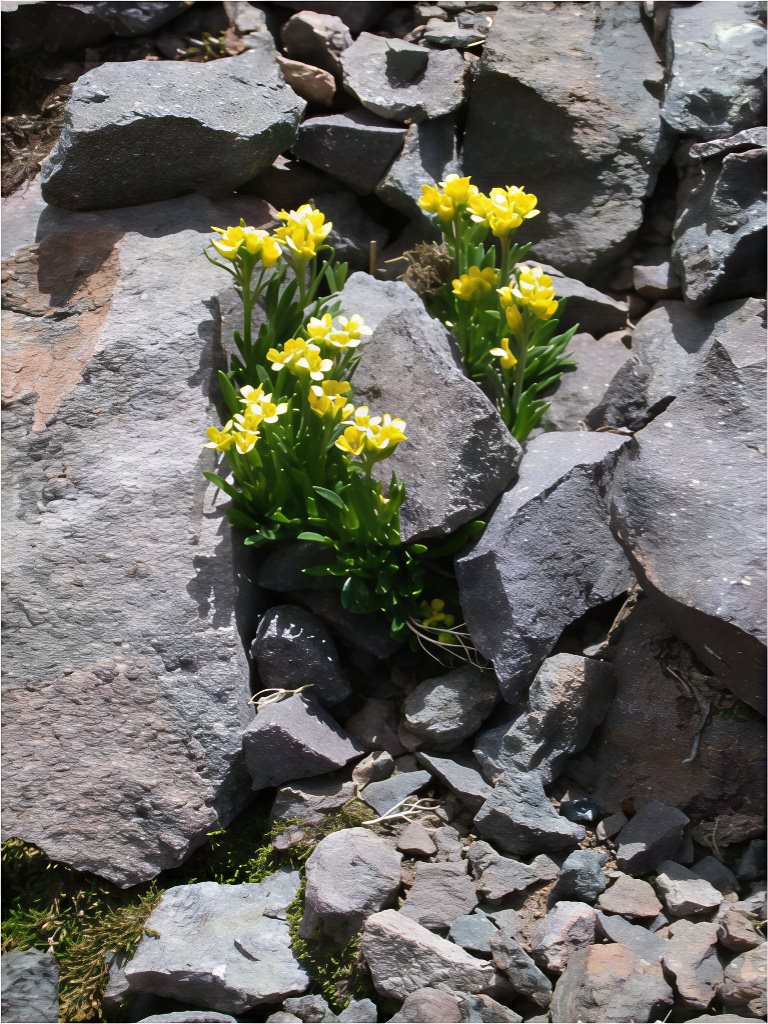
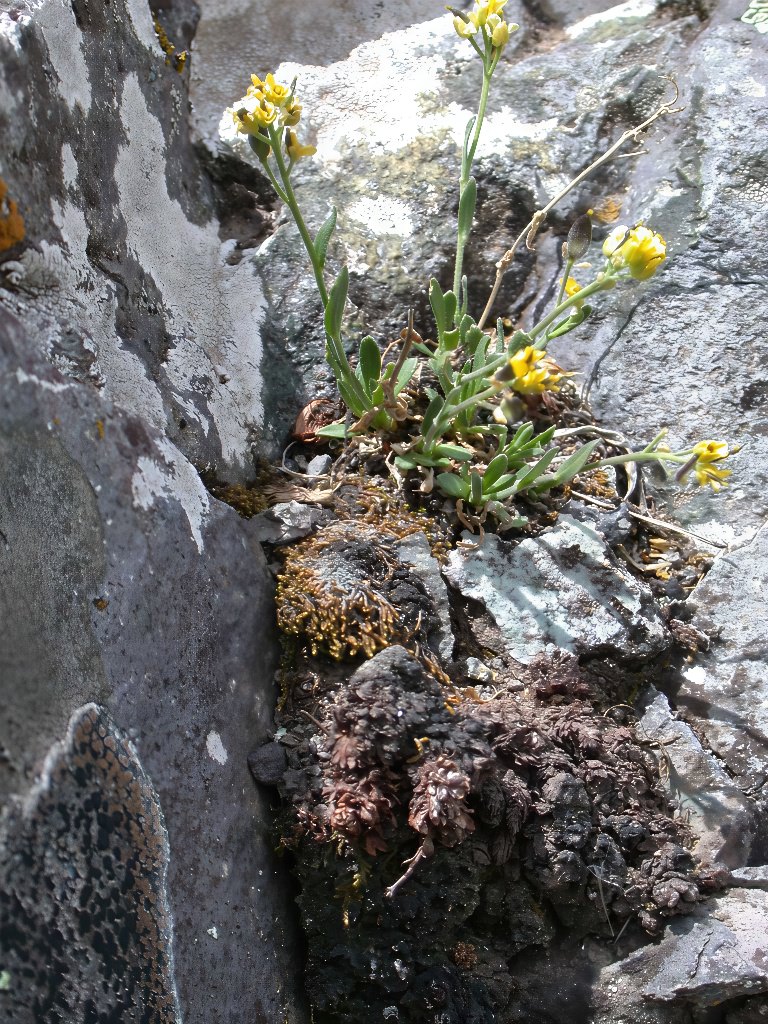
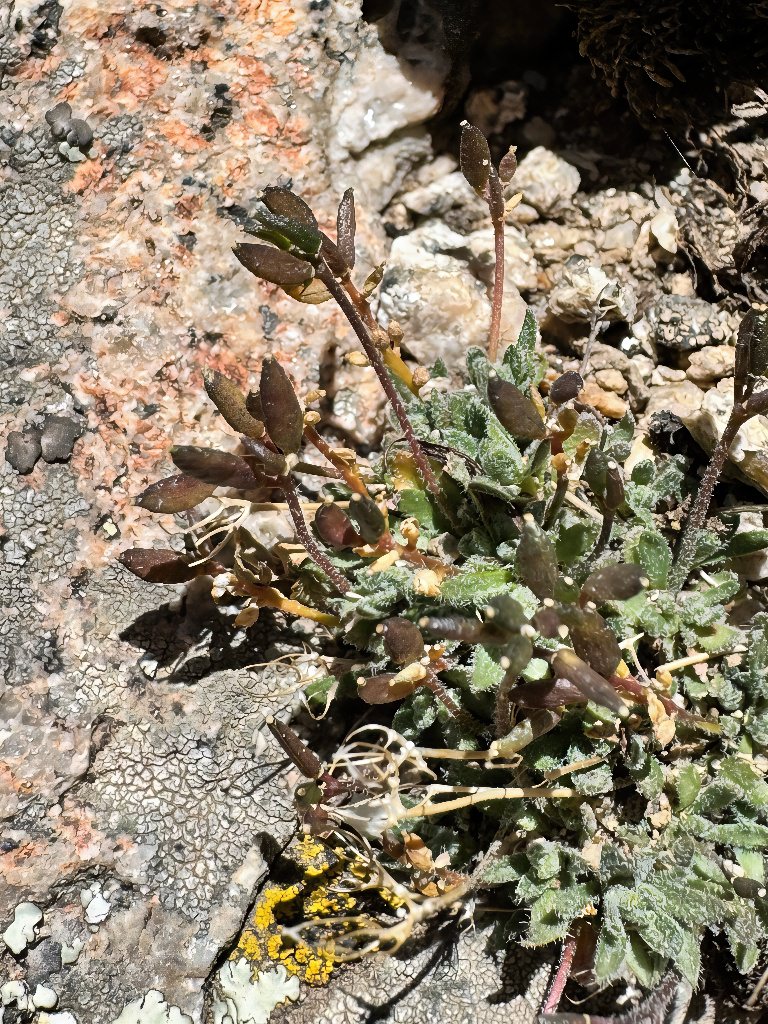
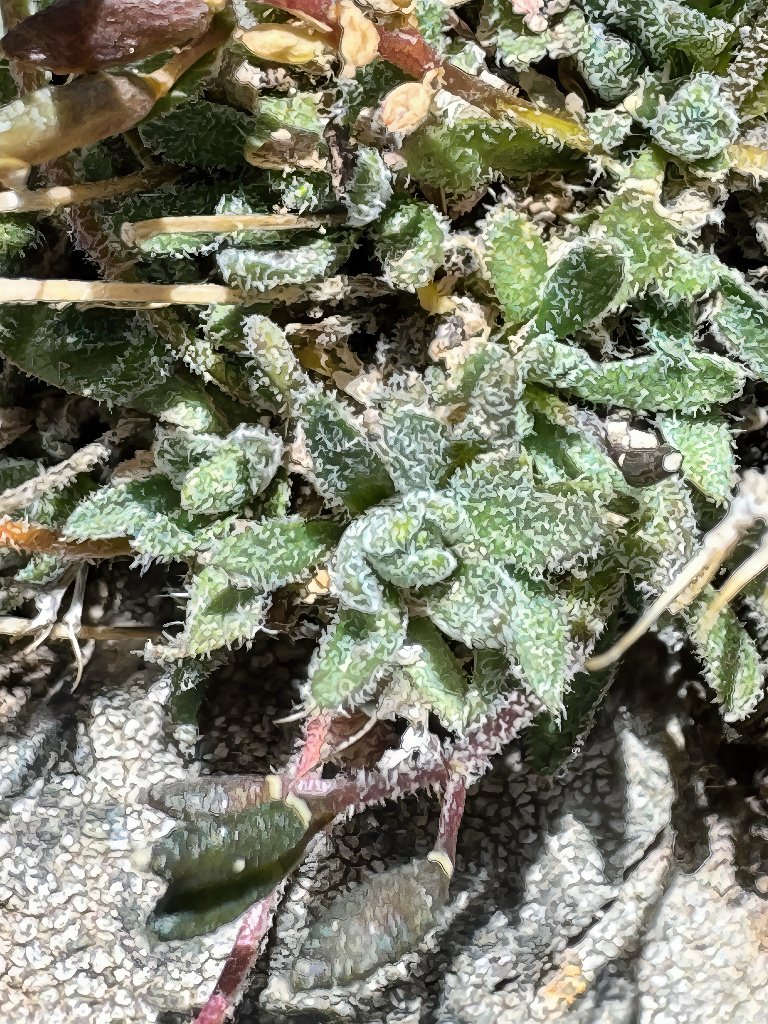
Draba streptobrachia is a perennial herb growing 0.1-1.3 dm tall from a branched caudex. The stems are unbranched 0.2-1 dm long, pubescent throughout with 3-5 rayed stellate hairs. Basal leaves oblanceolate with short stalked 3-8 rayed hairs; cauline leaves 2-4, sessile, oblong to ovate or linear blades with entire margins, surface pubescence as basal leaves. Flowers are borne on racemes. The yellow petals are spatulate, 3 to 5 mm long and clawed (having a narrow stalk at the base); sepals are ovate with simple short stalked 2-4 rayed hairs. Fruiting pedicels ascend upward with ovate to elliptic, slightly twisted or flattened fruit (5-10 mm long x 2-4 mm wide); with simple short stalked 2-4 rayed hairs (Ackerfield 2022, FNA Vol. 7, 2010).
Look Alikes:
Draba streptobrachia is distinguished from other yellow-flowered alpine Drabas having fewer than 4 stem leaves and growing in dry rocky sites as follows: D. crassa has semi-succulent basal leaves with glabrous surfaces (although ciliate margins); D. grayana and D. exunguiculata have simple straight hairs if any, rather than twisted stellate or cruciform hairs; D. crassifolia has shorter styles (less than 0.15 mm long) (Kettler 1993). Draba weberi, once considered to be a distinct taxon has been subsumed with D. streptobrachia, following genetic studies (Naibauer and McGlaughlin 2022).
Phenology:
Draba streptobrachia flowers and fruits from July through August (Ackerfield 2022).
Habitat
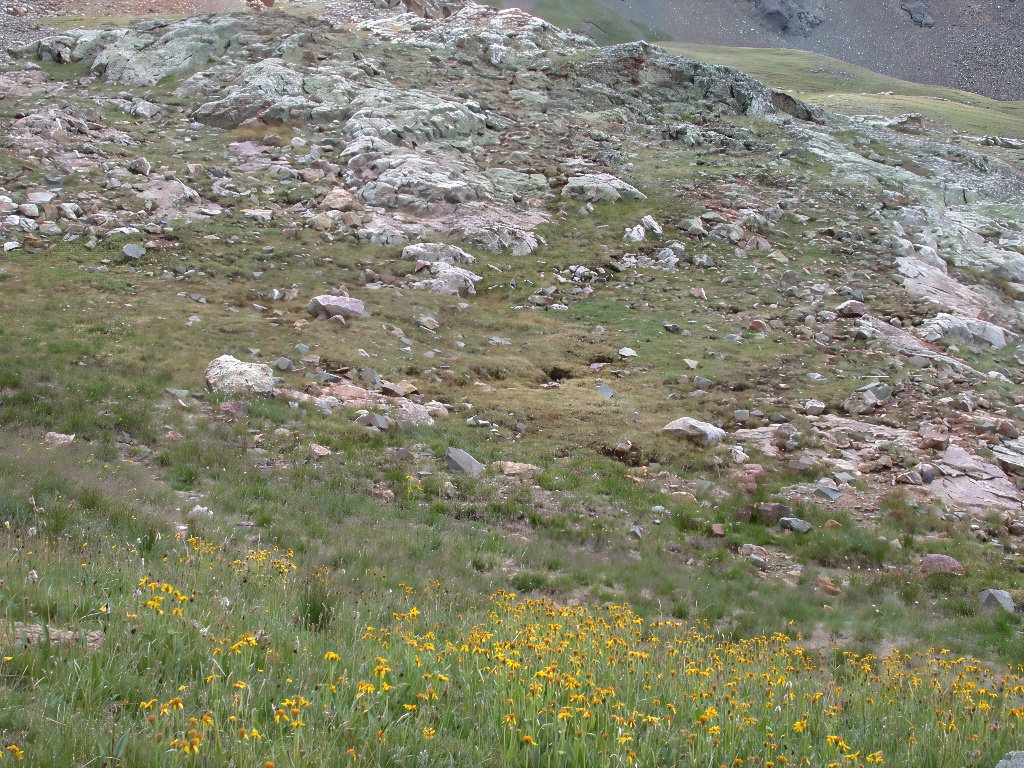
Draba streptobrachia occurs in alpine areas on scree slopes, along the edge of talus slopes, crevices in rock ledges and sometimes in fellfields (Price 1980, FNA Vol. 7, 2010, Ackerfield 2022). Associated species include Geum rossii var. turbinatum, Penstemon harbourii, Phacelia serecia, Polemonium viscosum, Silene acaulis, Smelowskia americana, Trifolium nanum, Festuca brachyphylla, and Trisetum spicatum (CNHP 2026).
click on image to enlarge
 |
Elevation Range:
10,200 - 14,052 feet (3,109 - 4,283 meters)
Distribution
Colorado Endemic:
No
Range:
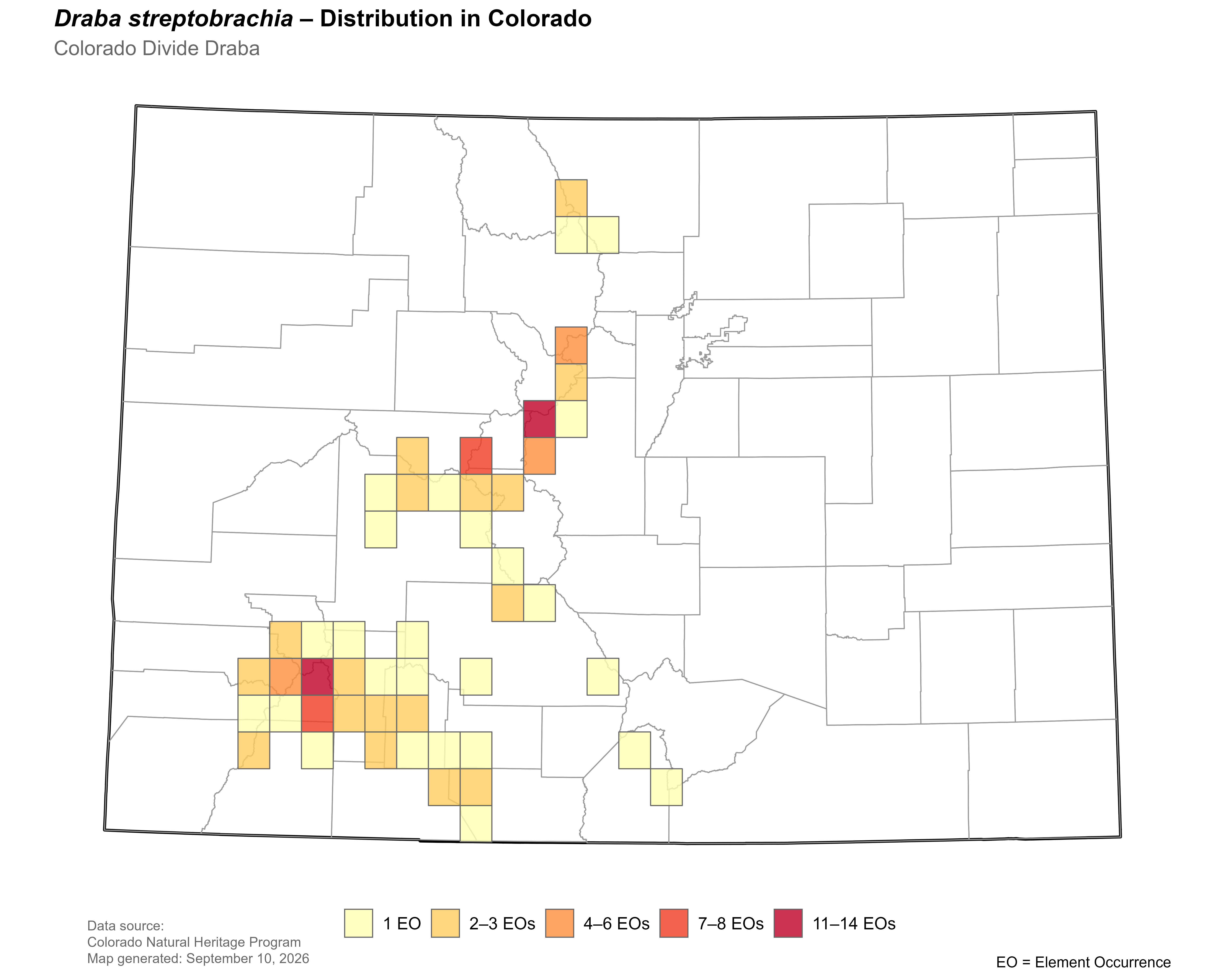
Draba streptobrachia is known from about 20 counties in Colorado, and 1 county in New Mexico, USA. This Colorado near-endemic is apparently restricted to areas above treeline in Colorado where it occurs at a number of localities in the San Juan Mountains and also in the Sawatch, Mosquito, and Front Ranges to the north (Price 1980). Estimated range extent in Colorado of 55,109 square kilometers was calculated in GeoCAT using occurrence data provided by the Colorado Natural Heritage Program (2026).
Click on map to enlarge |
Threats and Management Issues
Potential threats to Draba streptobrachia are not well documented, with only 25% of occurrences commenting on site conditions and/or management concerns. However, it is somewhat protected by its often inaccessible habitat on high steep slopes, but may be threatened by recreational use, particularly hiking, and this was noted as a concern at 22 of the occurrences. This species is considered to have moderate adaptive capacity and is expected to be slightly vulnerable to climate change under both RCP 4.5 and 8.5 scenarios, as assessed for the 2025 Colorado State Wildlife Action Plan (CNHP 2025).
References
- Ackerfield, Jennifer. 2022. Flora of Colorado. Second Edition. Bot. Misc. 60. BRIT Press, Fort Worth Botanic Garden/Botanical Research Institute of Texas, U.S.A. 861 pp.
- Colorado Natural Heritage Program (CNHP). 2025. Climate Change Vulnerability Assessment of Colorado Tier 1 and Tier 2 Plant Species of Greatest Conservation Need (SCGN) for the 2025 Colorado State Wildlife Action Plan. Colorado Natural Heritage Program, Colorado State University, Fort Collins, CO.
- Colorado Natural Heritage Program (CNHP). 2026. Biodiversity Tracking and Conservation System (Biotics 5). Colorado Natural Heritage Program, Colorado State University, Fort Collins.
- Flora of North America Editorial Committee. 2010. Flora of North America North of Mexico, Vol. 7, Magnoliophyta: Salicaceae to Brassicaceae. Oxford University Press, New York.
- Naibauer, S. and M. McGlaughlin. 2022. Exploration of species boundaries and genetic structure of Draba weberi Price & Rollins (Brassicaceae); Final Report - August 30, 2022.
- Price, R. 1980. Draba streptobrachia (Brassicaceae), A New Species From Colorado. Brittonia, 32(2):160-169.