

Scientific Name : Trifolium andinum var. andinum
 NatureServe Explorer
Common Name : Intermountain Clover
 Current Research Activities
 1997 profile


☰ Click link below for details.
Taxonomy
Fabaceae (pea family)
Ranks and Status
State Rank : S2
State Rank Reason : Trifolium andinum var. andinum is known from less than 10 occurrences in a narrow range in and around Dinosaur National Monument in Moffat County, Colorado, USA. Threats include incompatible livestock grazing, non-motorized recreation and competition from invasive species, particularly Bromus tectorum. The effects of long-term drought in the region are also a concern as this species is expected to be moderately to extremely vulnerable to the effects of climate change.
U.S. Endangered Species Act : none
Colorado Threatened and Endangered List : none
Other Statuses : SWAP Tier 2
Description and Phenology
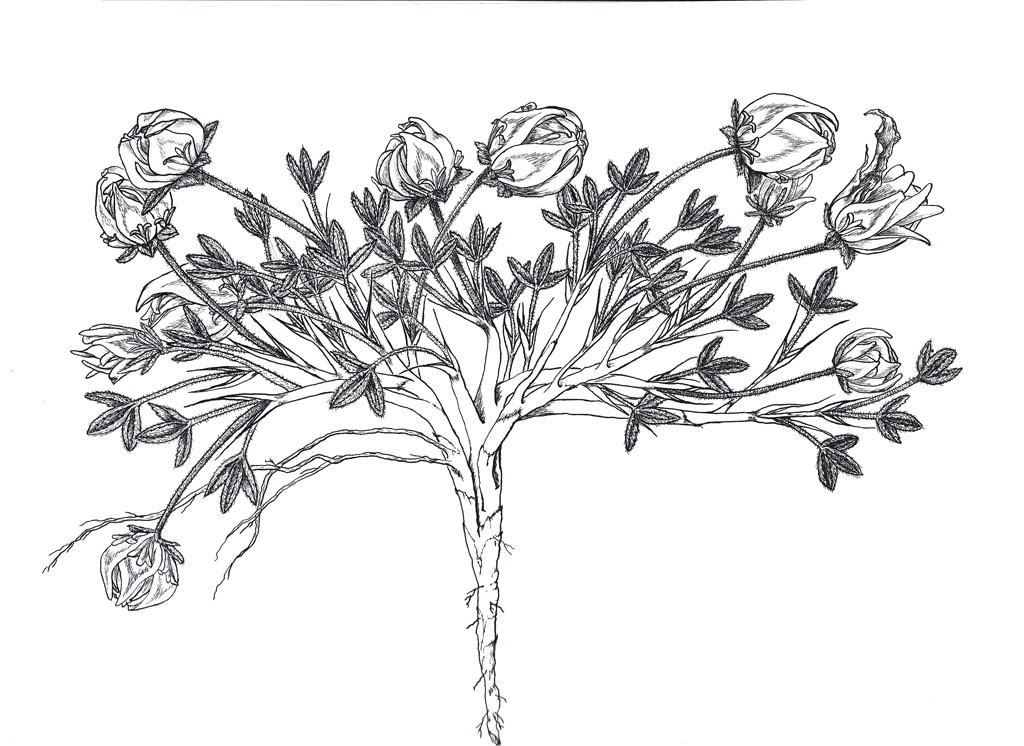
General Description:
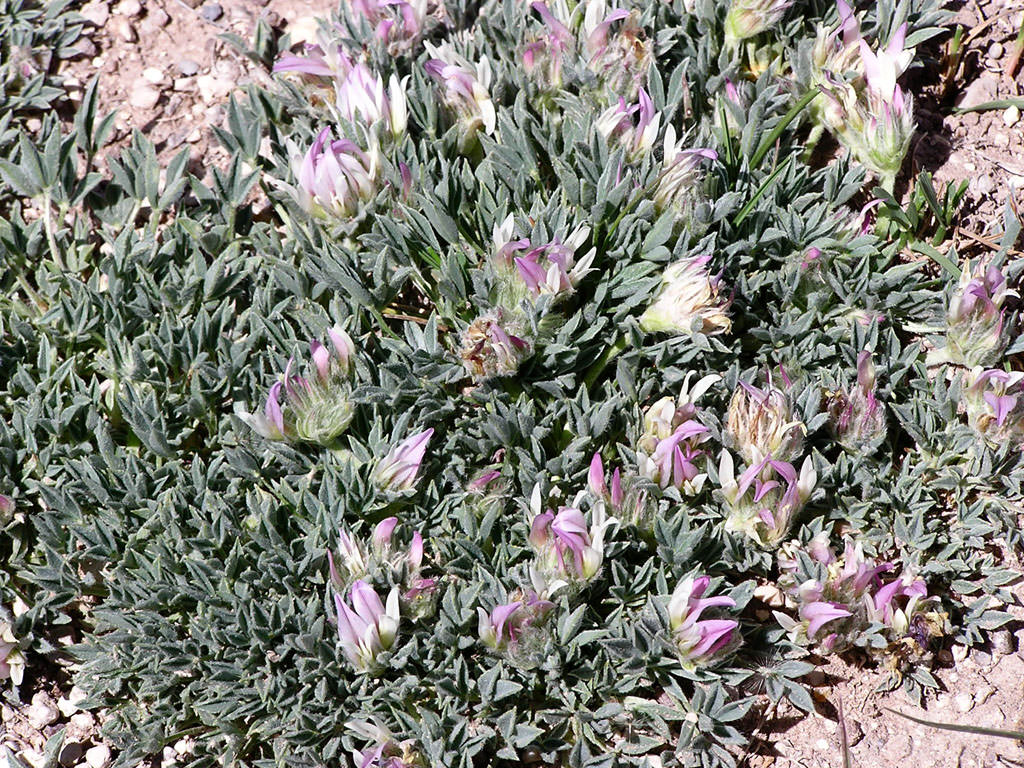
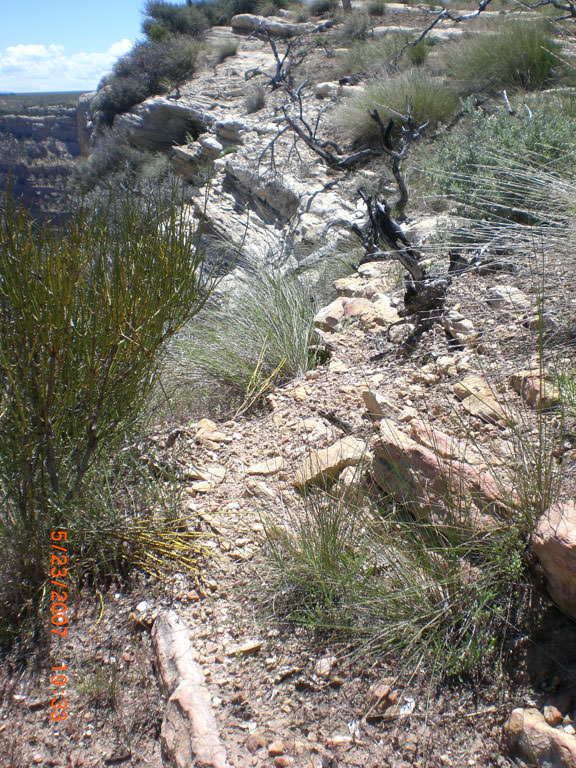
In dry sandy loam washes and exposed ridges and rocky hills in Pinus-Cercocarpus woodlands (O'Kane 1986, Cronquist 1989). Also found in sagebrush, mixed shrub, and pondersoa pine communities (Goodrich and Neese 1986, Spackman et al. 1997).
Look Alikes:
Not likely to be confused with other species within its range in Colorado.
Phenology:
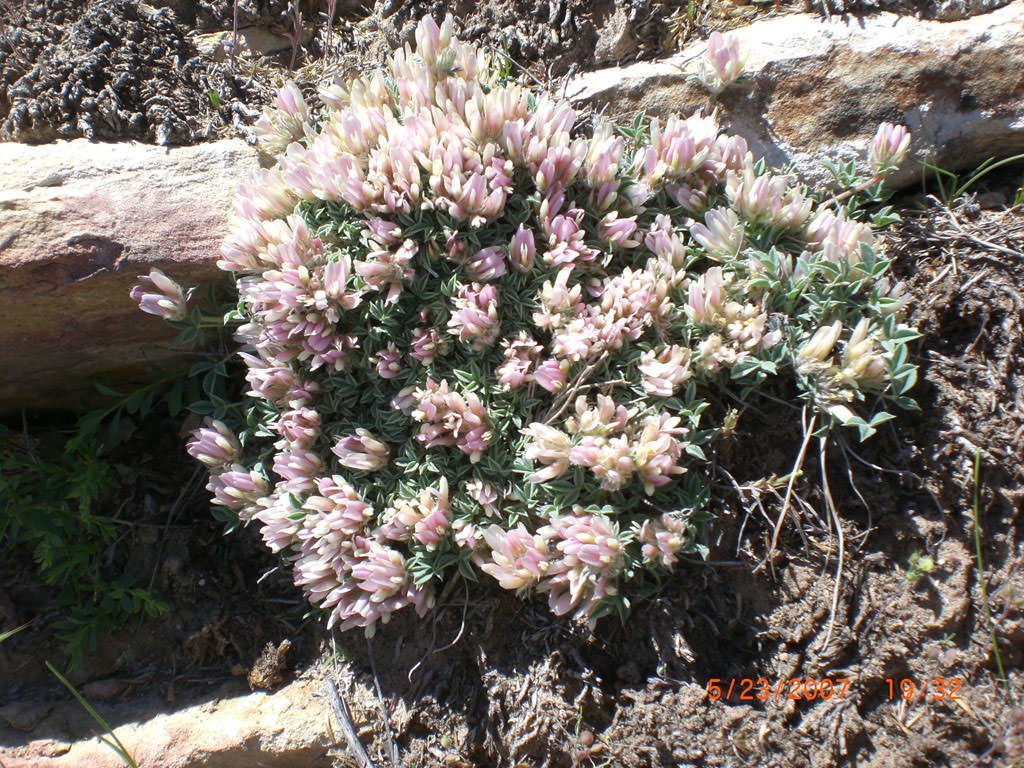
Flowers mid-May through July (Cronquist 1989, Colorado Natural Heritage Program 2012).
 |
Habitat
In dry sandy loam washes and exposed ridges and rocky hills in Pinus-Cercocarpus woodlands (O'Kane 1986, Cronquist 1989). Also found in sagebrush, mixed shrub, and pondersoa pine communities (Goodrich and Neese 1986, Spackman et al. 1997).
click on image to enlarge
 |
Elevation Range:
5,085 - 8,470 feet (1,550 - 2,582 meters)
Distribution
Colorado Endemic:
No
Range:
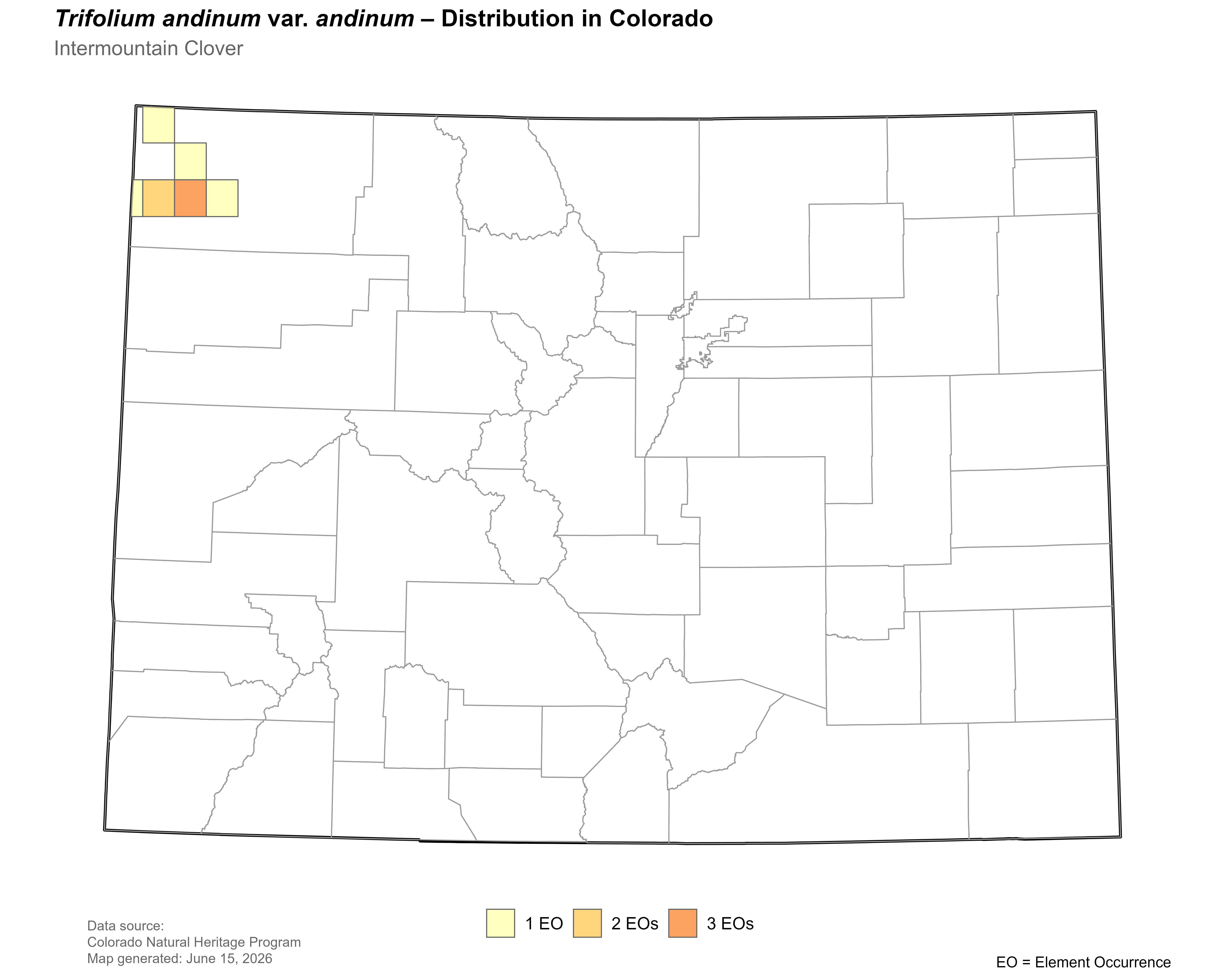
In Colorado, USA, this species is known from Moffat County. Estimated range extent in Colorado of 1561 square kilometers was calculated in GeoCAT using occurrence data provided by the Colorado Natural Heritage Program (2023). This taxon is also known from Arizona, New Mexico, Utah, and Wyoming, USA.
Click on map to enlarge |
Threats and Management Issues
Potential threats include incompatible livestock grazing, non-motorized recreation and competition from invasive species. Several occurrences are found along trails where trampling by hikers has been observed. Livestock impacts have been noted at two sites, and Bromus tectorum has invaded suitable Trifolium habitat at nearly half of the occurrences. The effects of long-term drought in the region are also a concern. This species is considered to have low adaptive capacity and is expected to be moderately to extremely vulnerable to climate change under both RCP 4.5 and 8.5 scenarios, as assessed for the 2025 Colorado State Wildlife Action Plan (CNHP 2025).
References
- Ackerfield, J. 2015. Flora of Colorado. BRIT Press, Botanical Research Institute of Texas, Fort Worth, TX. 818 pp.
- Colorado Natural Heritage Program (CNHP). 2023. Biodiversity Tracking and Conservation System (Biotics 5). Colorado Natural Heritage Program, Colorado State University, Fort Collins.
- Colorado Natural Heritage Program (CNHP). 2025. Climate Change Vulnerability Assessment of Colorado Tier 1 and Tier 2 Plant Species of Greatest Conservation Need (SCGN) for the 2025 Colorado State Wildlife Action Plan. Colorado Natural Heritage Program, Colorado State University, Fort Collins.
- Colorado Natural Heritage Program. 2012. Biodiversity Tracking and Conservation System. Colorado State University, Fort Collins, CO.
- Heil, K.D., S.L. O'Kane Jr., L.M. Reeves, and A. Clifford, 2013. Flora of the Four Corners Region, Vascular Plants of the San Juan River Drainage; Arizona, Colorado, New Mexico, and Utah. Missouri Botanical Garden Press, St. Louis, Missouri. 1098 pp.
- Isely, D. 1998. Native and naturalized Leguminosae (Fabaceae) of the United States (exclusive of Alaska and Hawaii). Monte L. Bean Life Science Museum, Brigham Young University; MLBM Press, Provo, Utah. 1007 pp.
- Kearney, T.H., R.H. Peebles, and collaborators. 1951. Arizona flora. 2nd edition with Supplement (1960) by J.T. Howell, E. McClintock, and collaborators. Univ. California Press, Berkeley. 1085 pp.
- Lavender, A.E., M.M. Fink, S.E. Linn, D.M. Theobald. 2011. Colorado Ownership, Management, and Protection v9 Database. Colorado Natural Heritage Program and Geospatial Centroid, Colorado State University, Fort Collins, CO. (30 September).
- Southwest Environmental Information Network (SEINet). 2021. Collections Databases. Online. Available: https://swbiodiversity.org/seinet/collections/index.php (accessed 2021).
- USDA, NRCS. 2022. The PLANTS Database. National Plant Data Team, Greensboro, NC 27401-4901 USA.
- Utah Division of Wildlife Resources. 2018. Statewide management plan for mountain goat. Utah Division of Wildlife Resources, Utah Department of Natural Resources. Online. Available https://wildlife.utah.gov/pdf/bg/mtn_goat_plan.pdf (Accessed 2021).
- Weber, W. A. and R. C. Wittmann. 2012. Colorado Flora, Western Slope, A Field Guide to the Vascular Plants, Fourth Edition. Boulder, Colorado. 532 pp.
- Welsh, S.L., N.D. Atwood, S. Goodrich, and L.C. Higgins. (Eds). 2015. A Utah flora, fifth edition, revised 2015. Monte L. Bean Life Science Museum, Provo, Utah. 987 pp.